
Latest News
Jadeja’s defiance in vain as England seal dramatic win


Six years ago, Ben Stokes raised his hands in apology. Now he was clenching his fists in triumph. On the anniversary of the day when he made England world champions, he found them a route to victory again. It felt like he couldn’t rest without it.
He bowled seven overs with the second new ball on Saturday, and the coach Brendon McCullum dispatched a member of his staff down to the boundary line to remind him that he is still flesh and bone. On Monday, nobody dared to interfere. Stokes pushed through a 9.2-over spell, came back to deliver a 10-over spell and was essentially such a lord and master of proceedings that a member of the opposition felt the need to ask his permission for a bathroom break.
Ravindra Jadeja was the one who needed to sprint off. Apparently, nature doesn’t care if you’re the only thing standing between your team and defeat. It comes calling. Just as a whole line-up of Englishmen did, looking for his wicket, or even just a mistake. But nothing was forthcoming. India’s allrounder was every bit as heroic as his red-haired, red-faced, red-hot counterpart, scoring a fourth successive half-century and shepherding the tail towards something legendary. Only it wasn’t to be.
In the fifth over after tea, a man with a broken finger got the ball to spin off the middle of the No. 11’s bat and onto the stumps. Lord’s. On July 14. It is not a place for the faint-hearted. Mohammed Siraj did not belong on his feet. Sorrow engulfing him. Shoaib Basheer invaded the sky. Joy propelling him. He had just sealed the closest Test match victory this old place has ever seen.
India woke up in London looking for 135 runs. Instead, they ran into 21.5 overs of hell in the morning session. They’d dished it out four years ago. England felt compelled to return the favour. And they didn’t need to look as far back as the 2021 game to rouse themselves. There’s been plenty of needle over the past three days, starting with Shubman Gill’s irate response to their delay tactics and peaking with Siraj’s send-off to Ben Duckett.
Even the totally chill Jofra Archer couldn’t help but get in Rishabh Pant’s face after knocking back his off stump. It was the third over of the day. He had just been smashed back down the ground, one-handed, and it rubbed him just enough the wrong way that he began to pump his legs harder as he ran in. That extra effort meant the ball bit into the pitch that little bit extra and breezed past the outside edge to make friends with off stump, which couldn’t help but do cartwheels.
Archer usually celebrates the wickets that mean something to him by running off into the distance. The one he took in his first over of this, his first Test in four years, would’ve had him leaping into the crowd if not for Bashir’s intervention. Here, he was starting to do so but quickly changed direction and ran up towards the retreating batter to fire off a few words.
Stokes had demanded this. He wanted noise. He wanted belief. He wanted energy. He wanted India to feel trapped behind enemy lines. “Bang, bang,” he’d said just a few minutes before the Pant dismissal and turned it into prophecy when he got rid of KL Rahul, 18 balls later. He was on the floor appealing for lbw, every bit of him straining to convince umpire Sharfuddoula to lift the finger. He didn’t. Immediately, he poured all of himself into figuring out a reason to review. Really there was only one thing he needed to know. Was height an issue? No, said Joe Root from the slips. He’d seen Rahul was well back in his crease.
The review confirmed Stokes’ instincts. The ball was good. The movement down the slope was devilish. The impact was pad first. And HawkEye revealed three reds. Stokes pumped his fists. Many of the 24,281 people at the ground roared with him. Ten of them were right there beside him. His team-mates, who have seen him do impossible things and who believe they can do similar just because he says they can. That was the picture of this Test match. Stokes at the centre surrounded by the rest of England.
India lost three wickets for 11 runs in four overs. Jadeja and Nitish Kumar Reddy were thrown into the fire and for a while they coped. The ball got soft. The runs came at a trickle. Efforts to rouse the crowd landed on the wrong set of ears as chants of “Indiaaaaaa! Indiaaa!” rang out. The eighth-wicket stitched a partnership of 30 runs in 89 balls and through it they resisted not just good bowling but their own base impulses.
“Not in the IPL,” Harry Brook chirped at Reddy. “Jaddu’s got to score them all.” Stokes tried to engage him too, adding to his own workloads during that marathon spell by extending his followthrough, but the India allrounder just calmly shook his head. “Not saying anything.” It felt like the partnership had survived its biggest test and safety in the form of the lunch break was almost at hand.
That’s when Chris Woakes arrived and turned the game on its head. Although his pace had dropped, and England looked elsewhere when the day started, now they were grateful to their wizard for securing a crucial edge through to the keeper. Reddy, so solid when the ball was close to his body, flirting with a wider line and throwing his head back when the mistake led to his undoing. England walked off the field to resounding cheers.
Jadeja didn’t lift up the anchor even though he only had the bowlers for company and was nearly made to regret it. He was given out lbw to Woakes in the 48th over, with India still 68 runs away. But though the on-field umpire had thumbs-upped the appeal, DRS had other ideas. Jadeja realised how close he’d gotten to disaster and sent the next ball soaring into the stands behind midwicket. That, apparently, was nothing more than a little venting of the nerves. There would be no more boundaries for 11 overs as Jasprit Bumrah showed great resilience and Jadeja, trust in his plan. They were going to do it in singles, particularly off the fourth ball of every over. India’s ninth-wicket partnership held England off for 131 deliveries – 53 of those faced with no trouble by Bumrah but the 54th became a problem.
Stokes again, in the sixth over of another Iron Man spell, went short. He had refrained from doing so previously because the pitch had gone to sleep and digging it in didn’t seem to make sense. Now he was desperate enough to ignore the signs and just have a bit of faith. Bumrah invited the plan when he tried to hook a couple and missed, at which point Jadeja at the other end shook his head so disapprovingly, normal people would have just burst into tears. All this effort and you had to go and do that?
Bumrah didn’t learn his lesson though. He still went hooking and a top edge settled England’s nerves and left India on the brink.
Stokes closed out the over and finally allowed his aura to fade and show some signs of exhaustion. He straight up forgot to pick up his cap from the umpire. He still continued to bowl though. He was still embedded in the fight, exhorting Archer to attack the ball at long-on, cheering Jamie Smith when he prevented a slower ball from sneaking past him, surging towards Ollie Pope when he thought he’d taken the match-winning catch at short leg, slipping under the lid at bat-pad. When what he had worked for finally happened, he just watched the rest of his team take off. He was too tired to join them. So they all came to him instead.
Brief scores:
England 387 and 192 (Joe Root 40; Washington Sundar 4-22) beat India 387and170 (KL Rahul 39, Ravindra Jadeja 61*; Ben Stokes 3-48, Joffra Archer 3-55) by 22 runs
[Cricinfo]

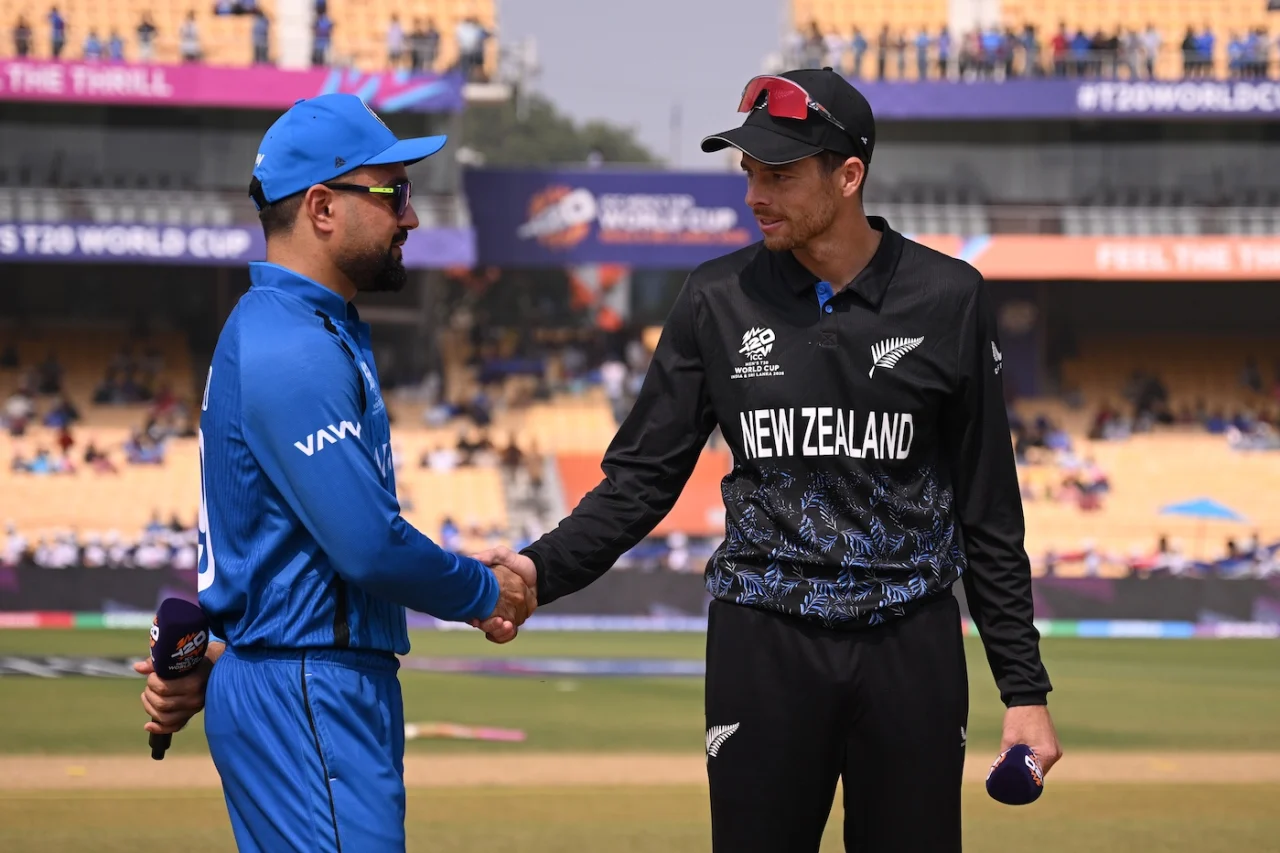
Afghanistan won the toss and elected to bat first in the 2026 T20 World Cup Group D encounter against New Zealand..
New Zealand XI Finn Allen, Tim Seifert (wk), Rachin Ravindra, Glenn Phillips, Mark Chapman, Daryl Mitchell, Mitchell Santner (capt), James Neesham, Matt Henry, Lockie Ferguson, Jacob Duffy
Afghanistan XI Rahmanullah Gurbaz (wk), Ibrahim Zadran, Sediqullah Atal, Darwish Rasooli, Azmatullah Omarzai, Gulbadin Naib, Mohammad Nabi, Rashid Khan (capt), Fazalhaq Farooqi, Ziaur Rahman, Mujeeb Ur Rahman
Latest News
‘I’d like to play on flat tracks’ – Shanaka links Sri Lanka’s batting woes to spin-friendly pitches at home
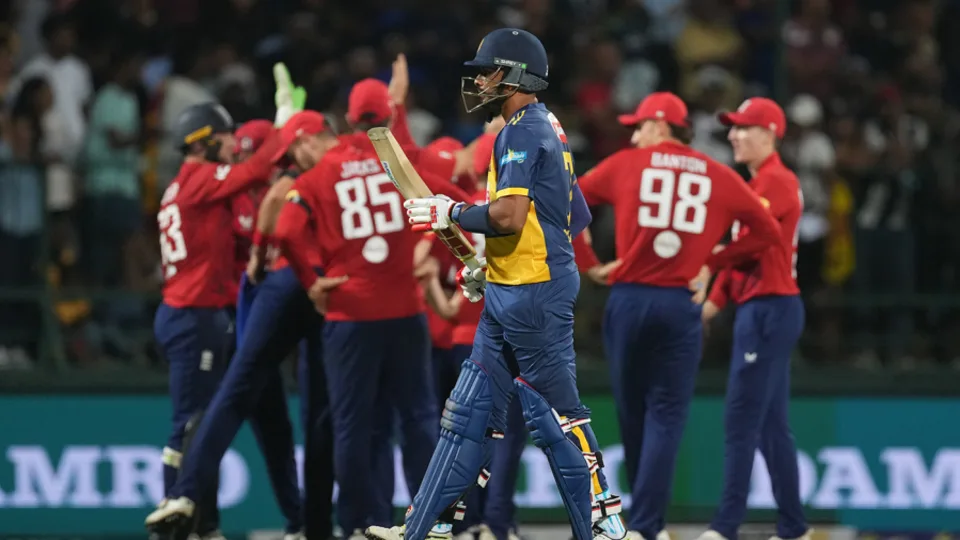
Dasun Shanaka’s got 99 problems, and the pitch is also one. If cricket writers misappropriating Jay Z lyrics from 22 years ago is getting kind of old, so is the complaint, sadly. For years now, Sri Lanka’s captains have been campaigning to get more batting-friendly tracks on the island. For years now, surfaces have been given to substantial spin, depressing totals while envenoming spinners through the middle overs, especially.
At the World Cup, though, a struggling Sri Lankan captain hopes his batters can perform on what he thinks will be better tracks. Sri Lanka arrive at this tournament fresh from a 3-0 bruising at home at the hands of England. Shanaka’s own returns in that recent series were modest. His scores were 20 off 16, 1 and 4.
“I think in this World Cup the ICC has told the groundstaff that they have to leave a certain amount of grass on the pitch,” Shanaka said. “Because of that, I think the number of dismissals will fall. Eventually, I’d like to get a good track on which to show how I can bat, because it’s harder to showcase my striking ability on turning wickets. Lots of people see me negatively because of this.”
In fact, there is no actual official requirement from the ICC regarding length of grass – it is only that there is greater pressure to produce surfaces conducive to good cricket (read: batting tracks) in global events.
In any case, Sri Lanka’s problems at home go back far further than the series against England, however. Since the start of 2024, Sri Lanka have lost 13 and won only nine T20Is at home. Previous captains – Charith Asalanka and Wanindu Hasaranga among them – had asked for flatter decks. But then Sri Lanka were having success on big turners in the ODI format.
“Recently, we’ve had a lot of issues with the pitches,” Shanaka said. “I know the middle order hasn’t performed well. If you want to know why that happened, you should look at the kind of pitches we played on. You’ll be able to figure out why the strike rates are low and we’re losing wickets.
“I was only recently reappointed as the captain. I didn’t know what the plan was before that. In my opinion I’d like to play on flat tracks. Yes, we have some good spinners in our side, but at the same time other teams also have quality spinners. I think giving 50-50 wickets will help in future. I’d like to bat on flat tracks.”
Although Shanaka expects Sri Lankan surfaces to be better for batting, there may still be a gap between Indian tracks and Sri Lankan ones in this World Cup. Since the start of 2020, the T20I strike rate in India is 143 (the highest in the world), compared with 123 in Sri Lanka.
“If you look at India you will see how good the pitches they play on are,” Shanaka said. “Some people have a problem with India scoring so many runs and ask why Sri Lanka can’t do the same. It totally depends on conditions. You’ll be able to assess what the numbers in the World Cup are and what the previous numbers were. I think this will be a good tournament for our batters.”
[Cricinfo]
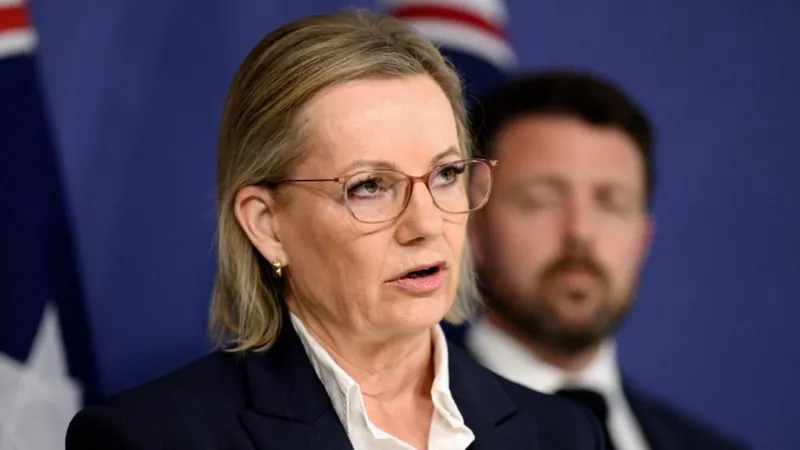
Australia’s Liberal-National Coalition, the country’s main opposition, reunited on Sunday, more than two weeks after the centre-right partners split in a row over hate speech laws.
“The Coalition is back together and looking to the future, not to the past,” Liberal Party leader Sussan Ley said, appearing alongside National Party leader David Littleproud in Canberra.
The Coalition split on 22 January after the Nationals, citing free speech concerns, refused to back reforms moved by the government after two gunmen targeted a Jewish festival at Bondi Beach in December, killing 15 people.
“It’s been disappointing, we’ve got to where we are but it was over a substantive issue,” Littleproud said.
The Coalition suffered a heavy election loss last year and the split last month was the second in less than 12 months.
Last year’s separation in May – largely over climate and energy policy – was resolved within a week.
This time the divisions were sown by hate speech reforms introduced by the centre-left Labor government after the Bondi Beach attack.
While the Liberals sided with the government, their National colleagues abstained from the vote in the lower house and voted against the measure in the senate, saying the measures had been rushed and posed a threat to free speech.
The legislation includes provisions that will ban groups deemed to spread hate and introduce tougher penalties for preachers who advocate violence.
Ley said the coalition had a responsibility to find a way back to government.
“I acknowledge this has been a difficult time. It has been a difficult time for millions of our Coalition supporters, and many other Australians who rely on our two great parties to provide scrutiny and leadership,” she said.
The Liberal Party leader said both parties had struck an agreement that neither party could overturn decisions taken by the Coalition’s joint “shadow cabinet”.
Dating back to the 1940s, the Coalition had not split since 1987 before the brief separation last year.
The National Party mainly represents regional communities and often leans more conservative than the Liberals.
The Coalition is facing pressure from populist Senator Pauline Hanson’s anti-immigration One Nation party, which has surged in polling, while the Liberal Party lost a swath of seats at last year’s federal election.
[BBC]

Afghanistan to bat first against New Zealand

‘I’d like to play on flat tracks’ – Shanaka links Sri Lanka’s batting woes to spin-friendly pitches at home

Washington Post chief executive steps down after mass lay-offs

Australia’s opposition coalition reunites after row over hate-speech laws

Showers may occur in the Western, Uva and Sabaragamuwa provinces and in Matale, Nuwara-Eliya, Ampara, Batticaloa, Galle, Matara and Polonnaruwa districts

King Charles to host Nigeria’s first UK state visit in 37 years

‘Dates have the highest sugar content to fight Coronavirus’

Sunday Island 27 December – Headlines

#SundayIsland 17th December – Headlines

Sunday Island – 28th March

Sunday Island Headlines – 21 March

Sunday Island – 21st February – Headlines
-

 Business1 day ago
Zone24x7 enters 2026 with strong momentum, reinforcing its role as an enterprise AI and automation partner
-

 Business5 days ago
SLIM-Kantar People’s Awards 2026 to recognise Sri Lanka’s most trusted brands and personalities
-

 Business6 days ago
All set for Global Synergy Awards 2026 at Waters Edge
-

 Business1 day ago
HNB recognized among Top 10 Best Employers of 2025 at the EFC National Best Employer Awards
-

 Business5 days ago
API-first card issuing and processing platform for Pan Asia Bank
-

 Editorial3 days ago
All’s not well that ends well?
-

 Business1 day ago
GREAT 2025–2030: Sri Lanka’s Green ambition meets a grid reality check
-

 Features3 days ago
Phew! The heat …