
Features
It’s the Guns, Stupid


by Vijaya Chandrasoma
I have used a variance of the catchphrase, “It’s the Economy, Stupid”, which became the mantra of the successful Clinton presidential campaign in 1992, when the US was facing an economic recession during the presidency of George H.W. Bush. The slogan served to highlight and exploit one key issue in the minds of a majority of voters, the economic downturn, and make it the central point of the successful Clinton campaign.
In 2004, the central issue for the voters was the illegal, pre-emptive war against Iraq waged by the younger Bush. The Democrats did not exploit overwhelming opposition of the electorate against the US invasion of a sovereign nation. They failed to rally voters behind the strategic slogan, “It’s the War, Stupid”, out of a sense of misplaced patriotism, which probably cost them the presidency.
As the New York Times stated, “The Democratic leaders never united around a substantive alternative vision to the administration’s pre-emptive war against the thug of Baghdad. That isn’t patriotism, it’s abdication”.
The Democrats seem to be heading in the same direction in their preliminary campaigns for the 2022 midterms just five months away and the 2024 presidential election. Despite all the dangerous threats the nation faces today – the end to democracy, high inflation and the possibility of a recession, the Republican Supreme Court’s ruling to take away women’s rights to reproductive freedom, the one single issue is, and has been for years, the proliferation of military-style weapons and the resultant loss of 40,000 lives per year, especially the murder of toddlers.
After all, according to the National Rifle Association, the Republican Party and the huntin’, fishin’ cowboys of America, the dead have no need for rights and freedoms.
The current public hearings of the Bipartisan Committee presented overwhelming evidence that the insurrection was being planned by Trump and his closest “advisors” even before the presidential election, when the polls indicated that Trump would lose the election.
The first public hearing of the Committee laid the framework of Trump’s treasonous plan to cling to power, with an extensive propaganda campaign that the election was stolen from him. The Big Lie still believed by 50% of Republican voters, who refuse to trust the evidence of their own eyes.
The Deputy Chairman of the January 6 Committee, Republican Liz Cheney made an opening statement, considered to be one of the finest prosecutorial orations in recent times.
Towards the end of her speech, Cheney offered a stark warning to members of her party who continue to support former President Donald Trump and downplay the events of January 6. “Tonight I say this to my Republican colleagues who are defending the indefensible: There will come a day when Donald Trump is gone, but your dishonour will remain”.
Previously unheard and unseen evidence, from police and congressional witnesses, Trump’s previous associates and a video filmed by a documentarian, were made public during the televised hearings. They provided incontrovertible evidence of Trump’s treason, that Trump knew that the Big Lie was indeed a Big Lie, but still spread false propaganda in a desperate, seditious attempt to cling to power.
He defrauded his own supporters for funds to the tune of an estimated $250 million, in an ostensible appeal to fight non-existent “election fraud”. The Committee proved that these donations went straight into the personal coffers of Trump and his family, potentially a prosecutable federal crime of Mail Fraud.
During the second hearing, then Attorney General William Barr stated that he told Trump a few days after the election that there was no evidence of election fraud. He also said that “Trump was detached from reality” and his claim of election fraud was “bullshit”. Ivanka Trump, the former president’s daughter and his “chief adviser” was also present at this meeting. She confirmed under oath that Trump had accepted Barr’s findings and knew that he had lost the election. Predictably, Trump has now turned against his favourite lady.
These crimes have been long known to the public, but there is little hope that even the comprehensive evidence provided by the January 6 Committee will sway the entrenched minds of Trump supporters. They will continue to downplay four years of crimes while Trump was at the White House and his leading role in the January 6 insurrection. They still worship him, and their cult-like support will be shown at future elections. Whatever the crimes, including treason, that Trump has been proven to commit, his supporters will pretend to disbelieve, forgive, even ignore them as long as he keeps their dreams of white supremacy alive.
And there is no doubt that if Trump, or any of his closest associates are indicted for fomenting a coup that came very close to the destruction of American democracy, there will be widespread violence resembling another Civil War. Millions of white supremacists armed with military style weapons, who form the base of the Trump cult, will take to the streets in a nationwide insurrection to preserve the privileges of the white race. This threat of domestic terrorism and white supremacy which emerged during Trump’s presidency, may be brought to the boil, one way or another, perhaps even before the midterms in November.
The next hearing is scheduled for Thursday, June 16, when the Committee will show evidence of the extreme pressure Trump put on Vice President Pence, ordering him to illegally overturn the votes of the Electoral College on January 6, an act against the Constitution. To his credit, Pence refused to succumb, even at the risk to his own life.
However, the monotonous regularity of the murder of 40,000 people per year, including little children, seems to be the current central issue. It is bad enough that there have been 228 mass shootings (defined so when four or more people are killed), including 27 school shootings this year. We are still in June.
We have witnessed the mutilation of children, between six and 10 years of age, and teachers who spent their lives on education. The worst were in Columbine, Colorado (1999), in Newtown, Connecticut (2014), in Parkland, Florida (2018), the last, two weeks ago in Uvalde, Texas. With hundreds of lesser school shootings sprinkled among these four major tragedies.
What sadistic cretin can still find excuses for the imposition of gun control regulations after the constant mutilation of innocent children? The answer is the NRA and their bought and paid for puppets in the Republican Party.
Where gun regulations are concerned, these corrupt Republican Congressmen do not represent the opinion of the vast majority of Americans, including moderate conservatives and independents.
Except for the five million members of the NRA, which include all Republican members of Congress, there is none who would not have been touched, saddened, even angered, at the speech made by actor Mathew McConaughey from the podium of the White House Press room, days after the Uvalde shooting. McConaughey grew up in Uvalde, Texas, his mother taught elementary school a mile away from the massacre. He still has friends and relations in that little town, and a shared grief in the tragedy.
In an impassioned speech lasting 21 minutes, McConaughey said, “we have an epidemic of indiscriminate mass shootings, of parents burying their children, of inaction. Buck passing to save the unnecessary loss of lives is not a partisan issue”.
He spoke tenderly of each of the little ones by name, talking of their individual dreams: of 10-year-old Alithia, whose dream was to attend art school in Paris and one day share her art with the world. Of nine-year old Maite, who dreamed of being a marine biologist. Maite wore green high top Converse (shoes) with a heart she had hand-drawn on the right toe. Green because they represented her love of nature. “Wore them every day. These are the same green Converse on her feet that turned out to be the only clear evidence of her identity after the shooting. How about that?”
One little girl explained, in pre-recorded testimony, that she had smeared her classmate’s blood on herself to play dead, and graphically described the moment the gunman shot her teacher in the head. What wonderful childhood memories she will carry the rest of her life?
According to Dr. Roy Guerrero, a Paediatrician who testified in Uvalde, “Two children whose bodies had been pulverized by bullets fired at them, decapitated, with their flesh ripped apart. The only clues to their identities were their blood-splattered cartoon clothes still clinging to them, clinging for life and finding none”. How about that?
The reconstruction of these little bodies was beyond the expertise of morticians’ cosmetologists, whose job was to beautify corpses for public viewing at funerals. An impossible task for these mutilated little bodies. How about that?
“This moment is different. We’re in a moment of opportunity that we have not been in before, a window of opportunity where real change can happen. So while we honour and acknowledge the victims, we need to recognize that this time it seems something is different. There is a sense that perhaps there is a viable path forward. Responsible parties in this debate seem to at least be committed to sitting down and having a real conversation about a new and improved path forward – a path that can bring us closer and make us safer as a country, a path that can actually get something done this time”, concluded McConaughey.
This time may be different, even to a minimal extent. A bipartisan group of Republican and Democratic Senators are trying to find common ground. Whatever they come up with will be unlikely to involve any sweeping reforms.
The reforms under discussion – mental health, improving school safety and support for children and ensuring that those who are adjudicated as mentally ill cannot purchase assault rifles – fall far short of the serious action that needs to be taken to significantly diminish gun violence – increase of the age of those allowed to purchase guns to 21, universal background checks, waiting periods, mental health and red flag laws, a total ban on military style assault rifles, the weapon of choice of most mass murderers.
On Thursday, more than 220 CEOs of major companies – all contributors to Republican campaigns, called on the Senate to take “immediate action” to reduce gun violence following the spate of recent shooting deaths.
These business leaders wrote, “Taken together, the gun violence epidemic represents a public health crisis that continues to devastate communities – especially Black and Brown communities – and harm our national economy”.
In my opinion, if more meaningful steps are not taken to curb gun violence and the massacre of little children, those politicians who prefer to hide these tragedies under an avalanche of thoughts and prayers and nothing else, will be routed in any future election.
America is at the tipping point on the threats to many freedoms – women’s, LGBTQ and civil rights, voting rights, police reform, inflation, recession – and democracy itself. In spite of this, the central issue in any future election will be gun control, until stringent regulations are enacted capable of finally lowering gun deaths to levels enjoyed by every other advanced nation.
Today, the economy is the central issue, the main concern amongst 48% of the electorate; gun violence is a distant second, at 17%.
However, inflation and economic downturns are global and temporary. Gun violence is American are permanent. My thoughts and prayers go to the men and women who will realize that that the lives of our little children are more important than the price of gas, as they go to the polls in November.



 On 8 January 2026, I delivered a talk at an event at the University of Colombo marking the retirement of my longtime friend and former Professor of Sinhala, Ananda Tissa Kumara and his appointment as Emeritus Professor of Sinhala in that university. What I said has much to do with decolonising social sciences and humanities and the contributions countries like ours can make to the global discourses of knowledge in these broad disciplines. I have previously discussed these issues in this column, including in my essay, ‘Does Sri Lanka Contribute to the Global Intellectual Expansion of Social Sciences and Humanities?’ published on 29 October 2025 and ‘Can Asians Think? Towards Decolonising Social Sciences and Humanities’ published on 31 December 2025.
At the recent talk, I posed a question that relates directly to what I have raised earlier but drew from a specific type of knowledge scholars like Prof Ananda Tissa Kumara have produced over a lifetime about our cultural worlds. I do not refer to their published work on Sinhala, Pali and Sanskrit languages, their histories or grammars; instead, their writing on various aspects of Sinhala culture. Erudite scholars familiar with Tamil sources have written extensively on Tamil culture in this same manner, which I will not refer to here.
To elaborate, let me refer to a several essays written by Professor Tissa Kumara over the years in the Sinhala language: 1) Aspects of Sri Lankan town planning emerging from Sinhala Sandesha poetry; 2) Health practices emerging from inscriptions of the latter part of the Anuradhapura period; 3) Buddhist religious background described in inscriptions of the Kandyan period; 4) Notions of aesthetic appreciation emerging from Sigiri poetry; 5) Rituals related to Sinhala clinical procedures; 6) Customs linked to marriage taboos in Sinhala society; 7) Food habits of ancient and medieval Lankans; and 8) The decline of modern Buddhist education. All these essays by Prof. Tissa Kumara and many others like them written by others remain untranslated into English or any other global language that holds intellectual power. The only exceptions would be the handful of scholars who also wrote in English or some of their works happened to be translated into English, an example of the latter being Prof. M.B. Ariyapala’s classic, Society in Medieval Ceylon.
The question I raised during my lecture was, what does one do with this knowledge and whether it is not possible to use this kind of knowledge profitably for theory building, conceptual and methodological fine-tuning and other such essential work mostly in the domain of abstract thinking that is crucially needed for social sciences and humanities. But this is not an interest these scholars ever entertained. Except for those who wrote fictionalised accounts such as unsubstantiated stories on mythological characters like Rawana, many of these scholars amassed detailed information along with their sources. This focus on sources is evident even in the titles of many of Prof. Tissa Kumara’s work referred to earlier. Rather than focusing on theorising or theory-based interpretations, these scholars’ aim was to collect and present socio-cultural material that is inaccessible to most others in society including people like myself. Either we know very little of such material or are completely unaware of their existence. But they are important sources of our collective history indicating what we are where we have come from and need to be seen as a specific genre of research.
In this sense, people like Prof. Tissa Kumara and his predecessors are human encyclopedias. But the knowledge they produced, when situated in the context of global knowledge production in general, remains mostly as ‘raw’ information albeit crucial. The pertinent question now is what do we do with this information? They can, of course, remain as it is. My argument however is this knowledge can be a serious source for theory-building and constructing philosophy based on a deeper understanding of the histories of our country and of the region and how people in these areas have dealt with the world over time.
Most scholars in our country and elsewhere in the region believe that the theoretical and conceptual apparatuses needed for our thinking – clearly manifest in social sciences and humanities – must necessarily be imported from the ‘west.’ It is this backward assumption, but specifically in reference to Indian experiences on social theory, that Prathama Banerjee and her colleagues observe in the following words: “theory appears as a ready-made body of philosophical thought, produced in the West …” As they further note, in this situation, “the more theory-inclined among us simply pick the latest theory off-the-shelf and ‘apply’ it to our context” disregarding its provincial European or North American origin, because of the false belief “that “‘theory’ is by definition universal.” What this means is that like in India, in countries like ours too, the “relationship to theory is dependent, derivative, and often deeply alienated.”
In a somewhat similar critique in his 2000 book, Provincialising Europe: Postcolonial Thought and Historical Difference Dipesh Chakrabarty points to the limitations of Western social sciences in explaining the historical experiences of political modernity in South Asia. He attempted to renew Western and particularly European thought “from and for the margins,” and bring in diverse histories from regions that were marginalised in global knowledge production into the mainstream discourse of knowledge. In effect, this means making histories of countries like ours relevant in knowledge production.
The erroneous and blind faith in the universality of theory is evident in our country too whether it is the unquestioned embrace of modernist theories and philosophies or their postmodern versions. The heroes in this situation generally remain old white men from Marx to Foucault and many in between. This indicates the kind of unhealthy dependence local discourses of theory owe to the ‘west’ without any attempt towards generating serious thinking on our own.
In his 2002 essay, ‘Dismal State of Social Sciences in Pakistan,’ Akbar Zaidi points out how Pakistani social scientists blindly apply imported “theoretical arguments and constructs to Pakistani conditions without questioning, debating or commenting on the theory itself.” Similarly, as I noted in my 2017 essay, ‘Reclaiming Social Sciences and Humanities: Notes from South Asia,’ Sri Lankan social sciences and humanities have “not seriously engaged in recent times with the dominant theoretical constructs that currently hold sway in the more academically dominant parts of the world.” Our scholars also have not offered any serious alternate constructions of their own to the world without going crudely nativistic or exclusivist.
This situation brings me back to the kind of knowledge that scholars like Prof. Tissa Kumara have produced. Philosophy, theory or concepts generally emerge from specific historical and temporal conditions. Therefore, they are difficult to universalise or generalise without serious consequences. This does not mean that some ideas would not have universal applicability with or without minor fine tuning. In general, however, such bodies of abstract knowledge should ideally be constructed with reference to the histories and contemporary socio-political circumstances
from where they emerge that may have applicability to other places with similar histories. This is what Banerjee and her colleagues proposed in their 2016 essay, ‘The Work of Theory: Thinking Across Traditions’. This is also what decolonial theorists such as Walter Mignolo, Enrique Dussel and Aníbal Quijano have referred to as ‘decolonizing Western epistemology’ and ‘building decolonial epistemologies.’
My sense is, scholars like Prof. Tissa Kumara have amassed at least some part of such knowledge that can be used for theory-building that has so far not been used for this purpose. Let me refer to two specific examples that have local relevance which will place my argument in context. Historian and political scientist Benedict Anderson argued in his influential 1983 book, Imagined Communities: Reflections on the Origin and Spread of Nationalism that notions of nationalism led to the creation of nations or, as he calls them, ‘imagined communities.’ For him, unlike many others, European nation states emerged in response to the rise of ‘nationalism’ in the overseas European settlements, especially in the Western Hemisphere. But it was still a form of thinking that had Europe at its center.
Comparatively, we can consider Stephen Kemper’s 1991 book, The Presence of the Past: Chronicles, Politics, and Culture in Sinhala Life where the American anthropologist explored the ways in which Sinhala ‘national’ identity evolved over time along with a continual historical consciousness because of the existence of texts such as Mahawamsa. In other words, the Sinhala past manifests with social practices that have continued from the ancient past among which are chronicle-keeping, maintaining sacred places, and venerating heroes.
In this context, his argument is that Sinhala nationalism predates the rise of nationalist movements in Europe by over a thousand years, thereby challenging the hegemonic arguments such as those of Anderson, Ernest Gellner, Elie Kedourie and others who link nationalism as a modern phenomenon impacted by Europe in some way or another. Kemper was able to come to his interpretation by closely reading Lankan texts such as Mahawamsa and other Pali chronicles and more critically, theorizing what is in these texts. Such interpretable material is what has been presented by Prof. Tissa Kumara and others, sans the sing.
Similarly, local texts in Sinhala such as kadaim poth’ and vitti poth, which are basically narratives of local boundaries and descriptions of specific events written in the Dambadeniya and Kandyan periods are replete with crucial information. This includes local village and district boundaries, the different ethno-cultural groups that lived in and came to settle in specific places in these kingdoms, migratory events, wars and so on. These texts as well as European diplomatic dispatches and political reports from these times, particularly during the Kandyan period, refer to the cosmopolitanism in the Kandyan kingdom particularly its court, the military, town planning and more importantly the religious tolerance which even surprised the European observers and latter-day colonial rulers. Again, much of this comes from local sources or much less focused upon European dispatches of the time.
Scholars like Prof. Tissa Kumara have collected this kind of information as well as material from much older times and sources. What would the conceptual categories, such as ethnicity, nationalism, cosmopolitanism be like if they are reinterpreted or cast anew through these histories, rather than merely following their European and North American intellectual and historical slants which is the case at present? Among the questions we can ask are, whether these local idiosyncrasies resulted from Buddhism or local cultural practices we may not know much about at present but may exist in inscriptions, in ola leaf manuscripts or in other materials collected and presented by scholars such as Prof. Tissa Kumara.
For me, familiarizing ourselves with this under- and unused archive and employing them for theory-building as well as for fine-tuning what already exists is the main intellectual role we can play in taking our cultural knowledge to the world in a way that might make sense beyond the linguistic and socio-political borders of our country. Whether our universities and scholars are ready to attempt this without falling into the trap of crude nativisms, be satisfied with what has already been collected, but is untheorized or if they would rather lackadaisically remain shackled to ‘western’ epistemologies in the sense articulated by decolonial theorists remains to be seen.

Climate change is no longer a distant or abstract threat to Sri Lanka’s biodiversity. It is already driving local extinctions — particularly among lizards trapped in geographically isolated habitats, where even small increases in temperature can mean the difference between survival and disappearance.
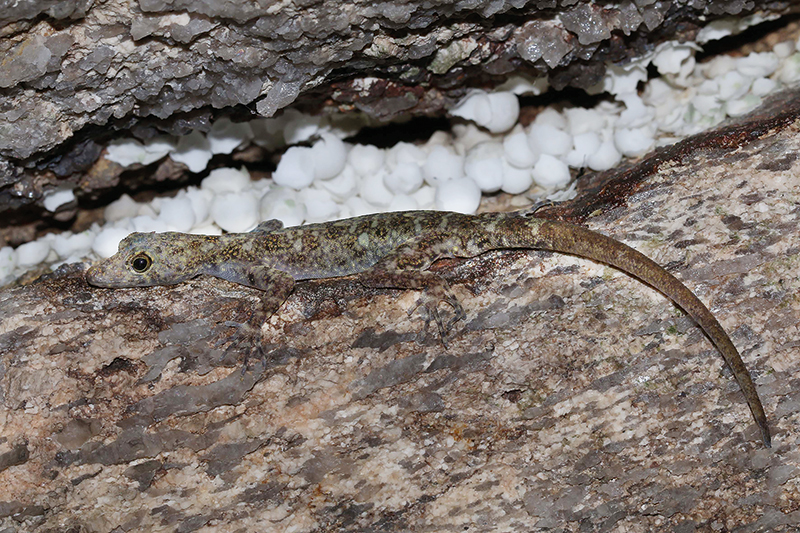
Cnemaspis rajakarunai (Adult Male), Salgala, Kegalle District (In a communal egg laying site)
According to research by Buddhi Dayananda, Thilina Surasinghe and Suranjan Karunarathna, Sri Lanka’s narrowly distributed lizards are among the most vulnerable vertebrates in the country, with climate stress intensifying the impacts of habitat loss, fragmentation and naturally small population sizes.
Isolation Turns Warming into an Extinction Trap
Sri Lanka’s rugged topography and long geological isolation have produced extraordinary levels of reptile endemism. Many lizard species are confined to single mountains, forest patches or rock outcrops, existing nowhere else on Earth. While this isolation has driven evolution, it has also created conditions where climate change can rapidly trigger extinction.
“Lizards are especially sensitive to environmental temperature because their metabolism, activity patterns and reproduction depend directly on external conditions,” explains Suranjan Karunarathna, a leading herpetologist and co-author of the study. “When climatic thresholds are exceeded, geographically isolated species cannot shift their ranges. They are effectively trapped.”
The study highlights global projections indicating that nearly 40 percent of local lizard populations could disappear in coming decades, while up to one-fifth of all lizard species worldwide may face extinction by 2080 if current warming trends persist.
-
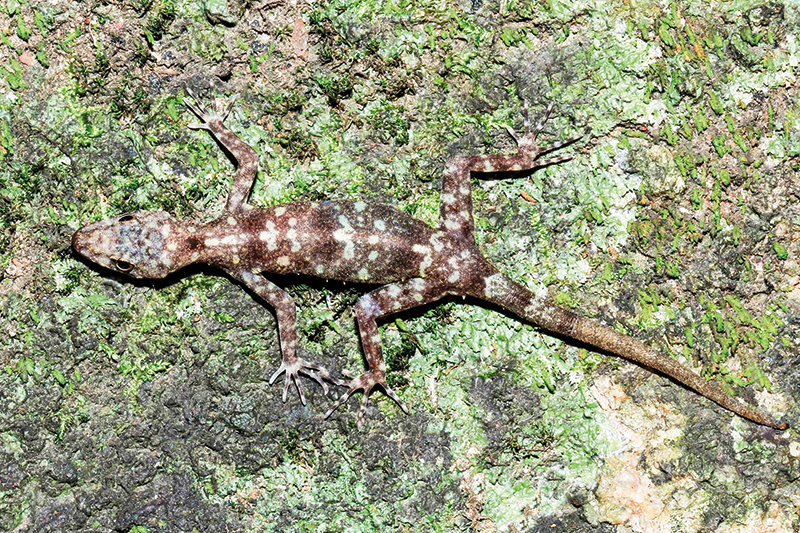
- Cnemaspis_gunawardanai (Adult Female), Pilikuttuwa, Gampaha District
-
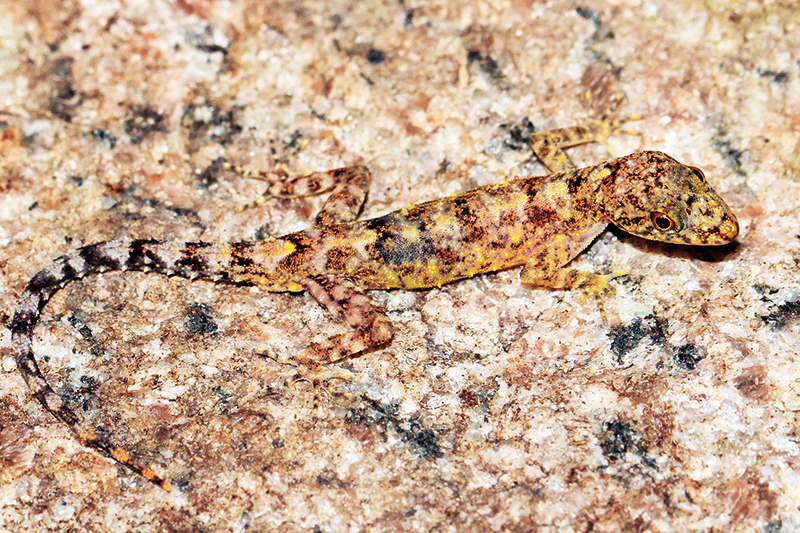
- Cnemaspis_ingerorum (Adult Male), Sithulpauwa, Hambantota District
-
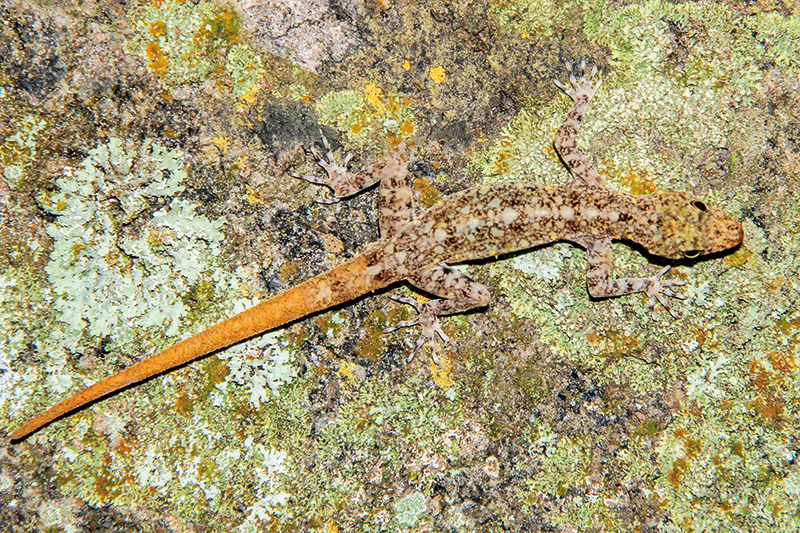
- Cnemaspis_hitihamii (Adult Female), Maragala, Monaragala District
-

- Cnemaspis_gunasekarai (Adult Male), Ritigala, Anuradapura District
-

- Cnemaspis_dissanayakai (Adult Male), Dimbulagala, Polonnaruwa District
-

- Cnemaspis_kandambyi (Adult Male), Meemure, Matale District
Heat Stress, Energy Loss and Reproductive Failure
Rising temperatures force lizards to spend more time in shelters to avoid lethal heat, reducing their foraging time and energy intake. Over time, this leads to chronic energy deficits that undermine growth and reproduction.
“When lizards forage less, they have less energy for breeding,” Karunarathna says. “This doesn’t always cause immediate mortality, but it slowly erodes populations.”
Repeated exposure to sub-lethal warming has been shown to increase embryonic mortality, reduce hatchling size, slow post-hatch growth and compromise body condition. In species with temperature-dependent sex determination, warming can skew sex ratios, threatening long-term population viability.
“These impacts often remain invisible until populations suddenly collapse,” Karunarathna warns.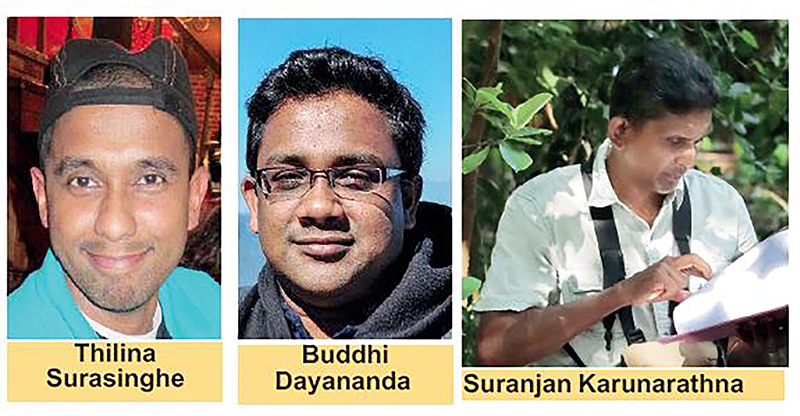
Tropical Species with No Thermal Buffer
The research highlights that tropical lizards such as those in Sri Lanka are particularly vulnerable because they already live close to their physiological thermal limits. Unlike temperate species, they experience little seasonal temperature variation and therefore possess limited behavioural or evolutionary flexibility to cope with rapid warming.
“Even modest temperature increases can have severe consequences in tropical systems,” Karunarathna explains. “There is very little room for error.”
Climate change also alters habitat structure. Canopy thinning, tree mortality and changes in vegetation density increase ground-level temperatures and reduce the availability of shaded refuges, further exposing lizards to heat stress.
Narrow Ranges, Small Populations
Many Sri Lankan lizards exist as small, isolated populations restricted to narrow altitudinal bands or specific microhabitats. Once these habitats are degraded — through land-use change, quarrying, infrastructure development or climate-driven vegetation loss — entire global populations can vanish.
“Species confined to isolated hills and rock outcrops are especially at risk,” Karunarathna says. “Surrounding human-modified landscapes prevent movement to cooler or more suitable areas.”
Even protected areas offer no guarantee of survival if species occupy only small pockets within reserves. Localised disturbances or microclimatic changes can still result in extinction.
Climate Change Amplifies Human Pressures
The study emphasises that climate change will intensify existing human-driven threats, including habitat fragmentation, land-use change and environmental degradation. Together, these pressures create extinction cascades that disproportionately affect narrowly distributed species.
“Climate change acts as a force multiplier,” Karunarathna explains. “It worsens the impacts of every other threat lizards already face.”
Without targeted conservation action, many species may disappear before they are formally assessed or fully understood.
Science Must Shape Conservation Policy
Researchers stress the urgent need for conservation strategies that recognise micro-endemism and climate vulnerability. They call for stronger environmental impact assessments, climate-informed land-use planning and long-term monitoring of isolated populations.
“We cannot rely on broad conservation measures alone,” Karunarathna says. “Species that exist in a single location require site-specific protection.”
The researchers also highlight the importance of continued taxonomic and ecological research, warning that extinction may outpace scientific discovery.
A Vanishing Evolutionary Legacy
Sri Lanka’s lizards are not merely small reptiles hidden from view; they represent millions of years of unique evolutionary history. Their loss would be irreversible.
“Once these species disappear, they are gone forever,” Karunarathna says. “Climate change is moving faster than our conservation response, and isolation means there are no second chances.”
By Ifham Nizam ✍️

Enabling Education-to-Income Pathways through Dual-Use Devices
The deployment of tablets and Chromebook-based devices for emergency education following Cyclone Ditwah presents an opportunity that extends beyond short-term academic continuity. International experience demonstrates that the same category of devices—when properly governed and configured—can support safe, ethical, and productive online work, particularly for youth and displaced populations. This annex outlines the types of online jobs compatible with such devices, their technical limitations, and their strategic national value within Sri Lanka’s recovery and human capital development agenda.
Compatible Categories of Online Work
At the foundational level, entry-level digital jobs are widely accessible through Android tablets and Chromebook devices. These roles typically require basic digital literacy, language comprehension, and sustained attention rather than advanced computing power. Common examples include data tagging and data validation tasks, AI training activities such as text, image, or voice labelling, online surveys and structured research tasks, digital form filling, and basic transcription work. These activities are routinely hosted on Google task-based platforms, global AI crowdsourcing systems, and micro-task portals operated by international NGOs and UN agencies. Such models have been extensively utilised in countries including India, the Philippines, Kenya, and Nepal, particularly in post-disaster and low-income contexts.
At an intermediate level, freelance and gig-based work becomes viable, especially when Chromebook tablets such as the Lenovo Chromebook Duet or Acer Chromebook Tab are used with detachable keyboards. These devices are well suited for content writing and editing, Sinhala–Tamil–English translation work, social media management, Canva-based design assignments, and virtual assistant roles. Chromebooks excel in this domain because they provide full browser functionality, seamless integration with Google Docs and Sheets (including offline drafting and later (synchronization), reliable file upload capabilities, and stable video conferencing through platforms such as Google Meet or Zoom. Freelancers across Southeast Asia and Africa already rely heavily on Chromebook-class devices for such work, demonstrating their suitability in bandwidth- and power-constrained environments.
A third category involves remote employment and structured part-time work, which is also feasible on Chromebook tablets when paired with a keyboard and headset. These roles include online tutoring support, customer service through chat or email, research assistance, and entry-level digital bookkeeping. While such work requires a more consistent internet connection—often achievable through mobile hotspots—it does not demand high-end hardware. The combination of portability, long battery life, and browser-based platforms makes these devices adequate for such employment models.
Functional Capabilities and Limitations
It is important to clearly distinguish what these devices can and cannot reasonably support. Tablets and Chromebooks are highly effective for web-based jobs, Google Workspace-driven tasks, cloud platforms, online interviews conducted via Zoom or Google Meet, and the use of digital wallets and electronic payment systems. However, they are not designed for heavy video editing, advanced software development environments, or professional engineering and design tools such as AutoCAD. This limitation does not materially reduce their relevance, as global labour market data indicate that approximately 70–75 per cent of online work worldwide is browser-based and fully compatible with tablet-class devices.
Device Suitability for Dual Use
Among commonly deployed devices, the Chromebook Duet and Acer Chromebook Tab offer the strongest balance between learning and online work, making them the most effective all-round options. Android tablets such as the Samsung Galaxy Tab A8 or A9 and the Nokia T20 also perform reliably when supplemented with keyboards, with the latter offering particularly strong battery endurance. Budget-oriented devices such as the Xiaomi Redmi Pad remain suitable for learning and basic work tasks, though with some limitations in sustained productivity. Across all device types, battery efficiency remains a decisive advantage.
Power and Energy Considerations
In disaster-affected and power-scarce environments, tablets outperform conventional laptops. A battery life of 10–12 hours effectively supports a full day of online work or study. Offline drafting of documents with later synchronisation further reduces dependence on continuous connectivity. The use of solar chargers and power banks can extend operational capacity significantly, making these devices particularly suitable for temporary shelters and community learning hubs.
Payment and Income Feasibility in the Sri Lankan Context
From a financial inclusion perspective, these devices are fully compatible with commonly used payment systems. Platforms such as PayPal (within existing national constraints), Payoneer, Wise, LankaQR, local banking applications, and NGO stipend mechanisms are all accessible through Android and ChromeOS environments. Notably, many Sri Lankan freelancers already conduct income-generating activities entirely via mobile devices, confirming the practical feasibility of tablet-based earning.
Strategic National Value
The dual use of tablets for both education and income generation carries significant strategic value for Sri Lanka. It helps prevent long-term dependency by enabling families to rebuild livelihoods, creates structured earning pathways for youth, and transforms disaster relief interventions into resilience-building investments. This approach supports a human resource management–driven recovery model rather than a welfare-dependent one. It aligns directly with the outcomes sought by the Ministry of Education, the Ministry of Labour and HRM reform initiatives, and broader national productivity and competitiveness goals.
Policy Positioning under the Vivonta / PPA Framework
Within the Vivonta/Proprietary Planters Alliance national response framework, it is recommended that these devices be formally positioned as “Learning + Livelihood Tablets.” This designation reflects their dual public value and supports a structured governance approach. Devices should be configured with dual profiles—Student and Worker—supplemented by basic digital job readiness modules, clear ethical guidance on online work, and safeguards against exploitation, particularly for vulnerable populations.
Performance Indicators
From a monitoring perspective, the expected reach of such an intervention is high, encompassing students, youth, and displaced adults. The anticipated impact is very high, as it directly enables the transition from education to income generation. Confidence in the approach is high due to extensive global precedent, while the required effort remains moderate, centering primarily on training, coordination, and platform curation rather than capital-intensive investment.
We respectfully invite the Open University of Sri Lanka, Derana, Sirasa, Rupavahini, DP Education, and Janith Wickramasinghe, National Online Job Coach, to join hands under a single national banner—
“Lighting the Dreams of Sri Lanka’s Emerging Leaders.”
by Lalin I De Silva, FIPM (SL) ✍️

National ThaiPongal Celebration held at Temple Trees.

U19 World Cup: Zimbabwe U-19 vs Scotland U-19: Match abandoned

U-19 World Cup: Francis, Bell, Andrew help West Indies thump Tanzania

U-19 World Cup: Henil, Kundu secure India’s first win

Deol, Tryon power Warriorz to first win of season

Fair weather will prevail in most parts of the island.

‘Dates have the highest sugar content to fight Coronavirus’

Sunday Island 27 December – Headlines

#SundayIsland 17th December – Headlines

Sunday Island – 28th March

Sunday Island Headlines – 21 March

Sunday Island – 21st February – Headlines
-

 Business1 day ago
Koaloo.Fi and Stredge forge strategic partnership to offer businesses sustainable supply chain solutions
-

 Business5 days ago
Dialog and UnionPay International Join Forces to Elevate Sri Lanka’s Digital Payment Landscape
-
 News5 days ago
Sajith: Ashoka Chakra replaces Dharmachakra in Buddhism textbook
-

 Features5 days ago
The Paradox of Trump Power: Contested Authoritarian at Home, Uncontested Bully Abroad
-

 Features5 days ago
Subject:Whatever happened to (my) three million dollars?
-
 Business1 day ago
SLT MOBITEL and Fintelex empower farmers with the launch of Yaya Agro App
-

 Business1 day ago
Hayleys Mobility unveils Premium Delivery Centre
-

 News5 days ago
Level I landslide early warnings issued to the Districts of Badulla, Kandy, Matale and Nuwara-Eliya extended