
News
ITC RATNADIPA launched in Colombo


ITC Limited’s wholly owned subsidiary WelcomHotels Lanka (Private) Limited has launched ITC Ratnadipa, a jewel in Colombo’s skyline that promises to enrich the tourism and hospitality landscape of Sri Lanka. This flagship hospitality icon of ITC Hotels was inaugurated on Thursday by President Ranil Wickremesinghe in the presence of Prime Minister Dinesh Gunewardena, Indian High Commissioner Santosh Jha and Chairman and Managing Director, ITC Ltd, India Sanjiv Puri.
ITC Ratnadipa or “Island of Gems” offers 352 guest rooms, suites and service apartments, each adorned with private balconies with breath taking waterfront views. This landmark complex situated along the shores of the Indian Ocean on one side and Beira Lake on the other, comprises two stellar towers that stand gracefully together presenting impeccable hospitality at both ITC Ratnadipa Hotel and the luxurious Sapphire Residences. Connecting the two towers at a height of 100 meters, is the first of its kind, state of the art ‘Ahasa’ sky bridge, an architectural marvel.
Chairman and Manging Director of ITC Ltd Sanjiv Puri said: “ITC is one of India’s foremost multi-business conglomerates with businesses in Consumer Goods, Hotels, Paperboards & Packaging, Agri Business and Information Technology. The Company has over the years, built iconic properties across India that are inspired by the
ITC Hotels’ philosophy of being rooted to the soil and reflect the unique architecture, vibrant culture and grandeur of the region. These world-class hotels offer globally renowned signature cuisines, best-in-class services and have pioneered an ethos of Responsible Luxury.
ITC Ratnadipa is meticulously designed to showcase the beauty and rich culture of Sri Lanka, seamlessly blending contemporary elegance with timeless charm. The sprawling property symbolises the traditions of the island nation through its architectural design, culinary marvels and artistic expression. Work of Sri Lankan art maestros, including that of Sanjaya Seneviratne, Prasad Hettiarachchi to Laki Senanayake, Dominic Sansoni and more, adorns ITC Ratnadipa’s public areas.

Latest News
Heat Index at Caution level’ in the Northern, North-central, North-western, Western and Southern provinces and in Trincomalee district.


Warm Weather Advisory
Issued by the Natural Hazards Early Warning Centre
Issued at 3.30 p.m. on 12 April 2026, valid for 13 April 2026.
Heat index, the temperature felt on human body is likely to increase up to ‘Caution level’ at some places in the Northern, North-central, North-western, Western and Southern provinces and in Trincomalee district.
The Heat Index Forecast is calculated by using relative humidity and maximum temperature and this is the condition that is felt on your body. This is not the forecast of maximum temperature. It is generated by the Department of Meteorology for the next day period and prepared by using global numerical weather prediction model data.

Effect of the heat index on human body is mentioned in the above table and it is prepared on the advice of the Ministry of Health and Indigenous Medical Services.
ACTION REQUIRED
Job sites: Stay hydrated and takes breaks in the shade as often as possible.
Indoors: Check up on the elderly and the sick.
Vehicles: Never leave children unattended.
Outdoors: Limit strenuous outdoor activities, find shade and stay hydrated.
Dress: Wear lightweight and white or light-colored clothing.
Note:
In addition, please refer to advisories issued by the Disaster Preparedness & Response Division, Ministry of Health in this regard as well. For further clarifications please contact 011-7446491.

On the apparent northward relative motion of the sun, it is going to be directly over the latitudes of Sri Lanka from 05th to 15th of April in this year.
The nearest areas of Sri Lanka over which the sun is overhead today (13th) are Pesalai, Mankulam and Nedunkerny about 12:11 noon.
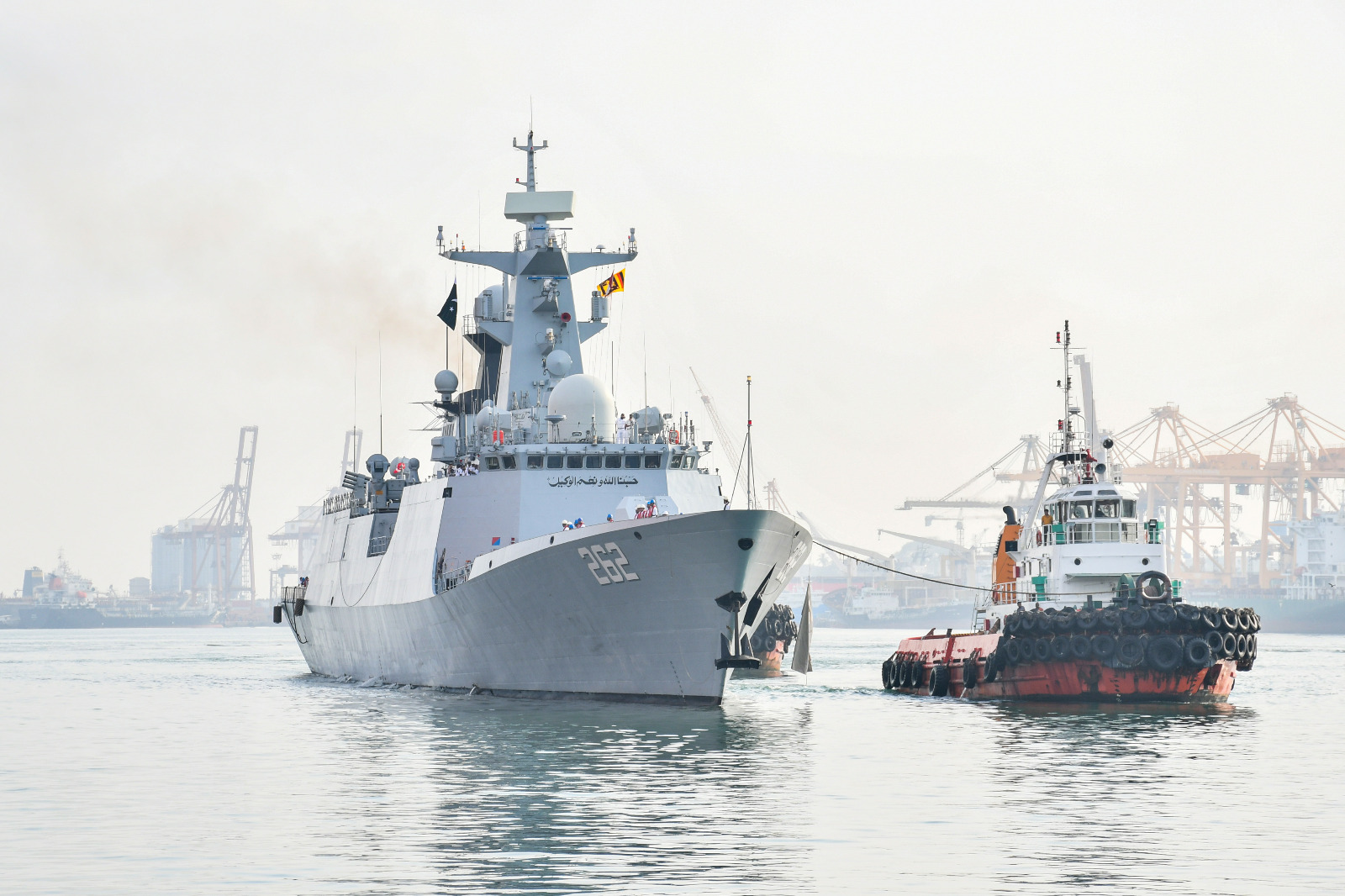
The Pakistan Navy Ship (PNS) TAIMUR and ASLAT arrived at the Port of Colombo on a goodwill visit on 12 Apr 26.
The visiting ships were welcomed by the Sri Lanka Navy in
compliance with naval traditions.
The duo of ships is commanded by Captain NIAMAT SAEED KHAN (PNS TAIMUR) and Captain NADIR MATEEN AFRIDI (PNS ASLAT).
Meanwhile, the ships are expected to conduct a Bilateral Naval Exercise LION STAR V with the Sri Lanka Navy in Colombo seas.

Prasidh, Buttler set up comfortable win for Gujarat Titans

Heat Index at Caution level’ in the Northern, North-central, North-western, Western and Southern provinces and in Trincomalee district.

Showers above 75 mm are likely at some places in the Western, Sabaragamuwa, Central, Southern and North-western provinces.

Sun directly overhead Pesalai, Mankulam and Nedunkerny about 12:11 noon

PNS TAIMUR & ASLAT arrive in Colombo

Sanju Samson and Jamie Overton deliver first points for Chennai Super Kings

‘Dates have the highest sugar content to fight Coronavirus’

Sunday Island 27 December – Headlines

#SundayIsland 17th December – Headlines

Sunday Island – 28th March

Sunday Island Headlines – 21 March

Sunday Island – 21st February – Headlines
-

 News6 days ago
Lankan-origin actress Subashini found dead in India
-

 News4 days ago
AG: Coal procurement full of irregularities
-

 News1 day ago
CEB orders temporary shutdown of large rooftop solar systems
-

 Business3 days ago
Israeli attack on Lebanon triggers local stock market volatility
-

 Business4 days ago
Hayleys Mobility introduces Premium OMODA C9 PHEV
-

 Business3 days ago
HNB Assurance marks 25 years with strategic transformation to ‘HNB Life’
-

 News6 days ago
UN Regional Director launches SL’s first Country Gender Equality Profile during official visit
-

 Sports4 days ago
DS to face St. Anthony’s in ‘Bridges of Brotherhood’ cricket encounter