
News
‘It will take four years to ensure quality of drinking water from small projects’

By Saman Indrajith
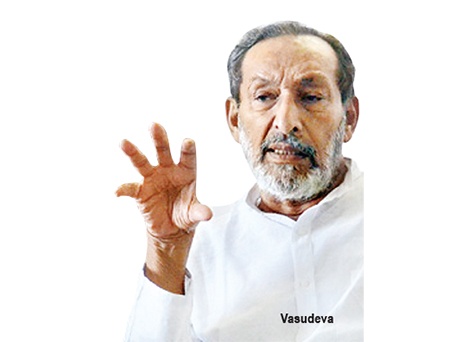
The safety of drinking water from small scale community drinking water projects could guaranteed only after the implementation of a project to check the quality of water and that would take four years, Water Supply Minister Vasudeva Nanayakkara told Parliament yesterday.
The Minister said so, when Matara District SJB MP Buddhika Pathirana pointed out that although the safety of drinking water from the National Water Supply and Drainage Board was guaranteed the same could not be said of water from small scale projects.
“There are many harmful elements in water such as lead, cadmium and mercury. We know that Water Board supplied water is purified, but water from small scale project could be contaminated with them. It is said that mercury in a CFL bulb has the potential to pollute around 6,000 litres of ground water and causing kidney diseases. This is a dangerous situation. One trillion rupees have been allocated for the Water Supply ministry. Apart from the COVID-19 threat, the biggest threat to the lives of people in this country is from non-communicable diseases. Can the ministry introduce a mechanism to provide each district with at least a single testing unit to ensure the safety of drinking water supplied by the small scale community drinking water projects.”
Water Supply Minister Vasudeva Nanayakkara said that safety of water from the Water Board was guaranteed owing to sophisticated purification methods employed by treatment plants. He said that it would take at least four years to provide testing units to ensure drinking water from the small scale community drinking water projects countrywide too is safe from harmful elements.

News
Officials of NMRA, SPC, and Health Minister under pressure to resign as drug safety concerns mount

Mounting concerns over drug safety and regulatory oversight have triggered strong calls from medical professionals and trade unions for the resignation of senior officials at the National Medicines Regulatory Authority (NMRA) and the State Pharmaceutical Corporation (SPC), following patient deaths, allegedly linked to the administration of Ondansetron injections.
Medical and civil rights groups say the incident has exposed deep systemic failures in Sri Lanka’s drug regulatory framework, with critics warning that the collapse of quality assurance mechanisms is placing patients’ lives at risk.
The Medical and Civil Rights Professional Association of Doctors (MCRPA), and allied trade unions have accused health authorities of gross negligence and demanded the immediate resignation of senior NMRA and SPC officials.
MCRPA President Dr Chamal Sanjeewa said the Health Ministry, NMRA and SPC had collectively failed to ensure patient safety, citing, what he described as, a failed drug regulatory system.
“These are not isolated incidents. Over the past two years, more than 100 batches of medicines, imported from India, have been either temporarily, or permanently, withdrawn due to quality concerns,” he said.
The controversy intensified after the NMRA announced the temporary withdrawal of several batches of Ondansetron Injection USP 8 mg/4 ml (Ondanman 8), manufactured by Maan Pharmaceuticals Ltd., India, following reports of serious adverse reactions and at least one confirmed death at the Infectious Diseases Hospital (IDH). Social media reports have also claimed two deaths at the National Hospital, Kandy, though these have not been officially confirmed.
The NMRA subsequently ordered hospitals nationwide to suspend the use of 10 injectable medicinal products until their manufacturing processes are verified to meet required safety and quality standards.
NMRA Chairman Dr Ananda Wijewickrema said the decision followed recommendations made by the authority’s Safety and Risk Evaluation Subcommittee on 16 December, 2025, in response to continuing reports of adverse drug reactions, including fatal cases.
An urgent circular was issued to PTC Medical (Pvt.) Ltd.,
instructing the company to immediately withhold all parenteral products manufactured by MAAN Pharmaceuticals Ltd of India, pending further investigations. PTC Medical is the market authorisation holder for the products in question.
Dr Wijewickrema clarified that while the reported death at IDH occurred after the administration of Ondansetron, a direct causal link to the drug has not yet been conclusively established. However, he said the precautionary withdrawal was necessary in the interest of patient safety.
Further laboratory testing is currently underway at the National Medicines Quality Assurance Laboratory (NMQAL) to assess the quality, safety and efficacy of the affected products.
Dr Sanjeewa added that the drugs currently under suspension included essential medicines such as antibiotics, Ondansetron for vomiting, Haloperidol for psychiatric and seizure-related conditions, and Iron Sucrose for iron deficiency. Most of the affected products, he said, were imported between 2024 and 2025.
He also criticised the continued use of senior officials allegedly responsible for regulatory lapses, arguing that accountability must extend to the political leadership.
“The Minister says these medicines were imported under previous governments. But the same officials responsible for this criminal mishap are still in office. If he continues to be served by errant officials, the Minister, too, must bear responsibility,” Dr Sanjeewa said, calling for the resignation of Health and Mass Media Minister Dr Nalinda Jayatissa.
The MCRPA announced that it would lodge a formal complaint with the Criminal Investigation Department (CID) today (18), seeking a criminal probe into the matter.
Medical associations have also raised alarm over regulatory changes that allow medicines approved under Indian Pharmacopoeia (IP) standards to be used in Sri Lanka without mandatory local retesting.
Dr Sanjeewa said that after the current government assumed office, provisions were introduced permitting the direct use of IP-approved medicines in the state hospital system, bypassing additional local quality testing.
“This has created a dangerous loophole. Imported medicines must be retested locally before they are administered to patients,” he said, urging authorities to urgently reinstate local verification procedures.
Deputy Minister of Health Hansaka Wijemuni told the media that investigations were ongoing into the specific batch of Ondansetron under scrutiny, following reports of two deaths that raised safety concerns.
Suspicion intensified after a patient died on 12 November. A medical specialist at the National Hospital, Kandy, conducted laboratory tests and shared findings that prompted the NMRA to immediately suspend the relevant batch nationwide.
The Government Medical Officers’ Association (GMOA) confirmed that the use of the affected Ondansetron batch had been suspended across the country.
GMOA Spokesman Dr Chamil Wijesinghe said investigations at the National Hospital, Kandy, identified the drug as a quality failure after several patients developed adverse reactions.
Sri Lanka records between 80 and 100 cases of substandard or low-quality medicines annually, he said, stressing the need to determine whether such failures arise from manufacturing defects, poor storage and transportation, or inadequate regulatory screening at entry points.
“When medicines enter the country, NMRA laboratories are responsible for testing them. If quality failures are detected later, serious questions arise about whether proper checks were conducted in the first place,” Dr Wijesinghe said.
by Sujeewa Thathsara and Chaminda Silva
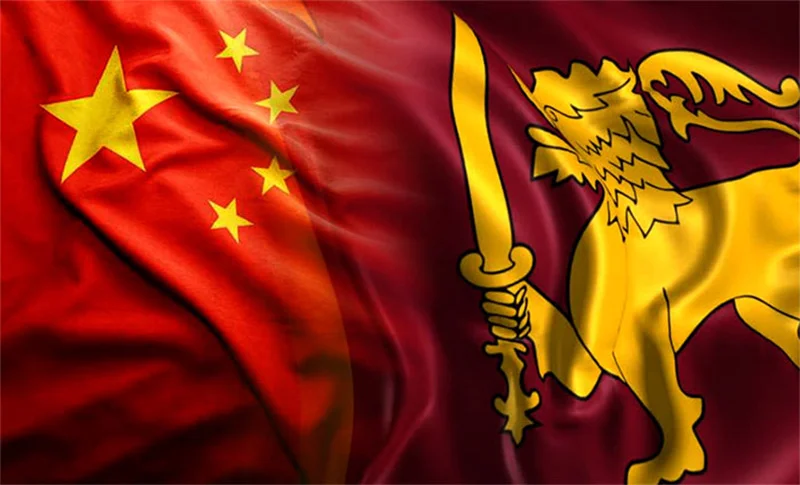
China has pledged its full support to Sri Lanka’s economic and social recovery efforts in the wake of Cyclone Ditwah, expressing confidence in the country’s rapid recovery under President Anura Kumara Dissanayake’s leadership.
Wang Dongming, Vice Chairman of the Standing Committee of the National People’s Congress of China, conveyed this assurance during a meeting with President Dissanayake at the Presidential Secretariat.
The meeting took place as part of Wang’s official visit to Sri Lanka, the President’s Media Division said.
“The Chinese Government and people are deeply saddened by the disaster and acted swiftly to provide relief assistance,” Wang said.
He said that the purpose of the visit was to strengthen longstanding economic, cultural, and diplomatic ties between the two countries.
President Dissanayake thanked China for its immediate response and support, including material and financial assistance for communities affected by the cyclone. He also requested technical assistance from the Chinese Government, specifically for the restoration and reconstruction of Sri Lanka’s damaged railway network.
Briefing the Chinese delegation on the disaster situation and recovery efforts, the President said the government’s immediate priorities include rescue operations, relocation of affected individuals, and provision of essential services such as food and healthcare. He added that a structured programme is now underway to restore livelihoods and return life to normalcy in impacted areas.
The Chinese delegation included senior officials such as Lu Xinshe, Chairman of the Environmental Protection and Resources Conservation Committee, and Wang Ke, Vice Chairman of the Foreign Affairs Committee and Deputy Head of the China–Sri Lanka Friendship Group. Also in attendance were Tan TianXing, Tang Jian, Yang Yin, Sha Long, and Chinese Ambassador Qi Zhenhong.
Minister of Labour and Deputy Minister of Finance and Planning Dr. Anil Jayantha Fernando, Secretary to the President Dr. Nandika Sanath Kumanayake, and Senior Additional Secretary Roshan Gamage were also present.
News
Pope fires broadside: ‘The Holy See won’t be a silent bystander to the grave disparities, injustices, and fundamental human rights violations’

SL Ambassador among those who presented their credentials
Sri Lanka’s Permanent Representative to the UN in Geneva, Himalee Arunatilaka, who is concurrently accredited to the Holy See, presented credentials to Pope Leo XIV, at a ceremony held at the Apostolic Palace, in the Vatican, on 06 December, 2025. The ceremony was attended by high officials of the Vatican where non-resident Ambassadors of Uzbekistan, Moldova, Bahrain, Sri Lanka, Pakistan, Liberia, Thailand, Lesotho, South Africa, Fiji, Micronesia, Latvia and Finland presented credentials.
The text of the press release issued by the Embassy of Sri Lanka to the Holy See Geneva: “Welcoming the newly accredited Ambassadors to the Holy See during the Jubilee Year of Hope, Pope Leo XIV highlighted that ” peace is not merely the absence of conflict, but an active and demanding gift”, which is all the more urgent “as geopolitical tension and fragmentation continued to deepen”. The Holy Father further affirmed that “the Holy See will not be a silent bystander to the grave disparities, injustices, and fundamental human rights violations”. He emphasised the need to be attentive to those in poor and vulnerable situations or are “pushed to the margins of society”.
The Pope underlined that constructive relations between the Holy See and the respective nations of the newly appointed Ambassadors, can help in addressing these concerns, and expressed the hope that such cooperation will contribute to “a renewed spirit of multilateral engagement at a moment when it is sorely needed, revitalising those international bodies established to resolve disputes among nations.”
Ambassador Arunatilaka conveyed the warm greetings and best wishes of President Anura Kumara Dissanayake and sought that the Holy Father keeps Sri Lanka in his prayers as the country recovers from the disaster situation following Cyclone Ditwah.
On the sidelines of the credentials ceremony, separate meetings were held with Secretary of State, Cardinal Pietro Paroline, and Secretary for Relations with States and International Organisations, Archbishop Paul Gallager. During these meetings Ambassador Arunatilaka briefed on the scale of the destruction caused by the cyclone, while also acknowledging the humanitarian assistance provided by the Catholic Church, through Caritas Sri Lanka.
Migration, disarmament and inter-religious dialogue were highlighted as issues of common interest and concern in the bilateral relations.
Archbishop Gallager recalled with appreciation the high-level engagements in Sri Lanka and the warm hospitality accorded, during his visit to Sri Lanka in November 2025 to commemorate the 50th anniversary of diplomatic relations between Sri Lanka and the Holy See.

Officials of NMRA, SPC, and Health Minister under pressure to resign as drug safety concerns mount

China pledges full support for Lanka’s recovery

Pope fires broadside: ‘The Holy See won’t be a silent bystander to the grave disparities, injustices, and fundamental human rights violations’

Pakistan hands over 200 tonnes of humanitarian aid to Lanka

Ramakrishnan Sridhar appointed Sri Lanka’s fielding coach until T20 World Cup

Expert: Lanka destroying its own food security by depending on imported seeds, chemical-intensive agriculture

‘Dates have the highest sugar content to fight Coronavirus’

Sunday Island 27 December – Headlines

#SundayIsland 17th December – Headlines

Sunday Island – 28th March

Sunday Island Headlines – 21 March

Sunday Island – 21st February – Headlines
-
 Business7 days ago
Cabinet approves establishment of two 50 MW wind power stations in Mullikulum, Mannar region
-

 Features4 days ago
Why Sri Lanka Still Has No Doppler Radar – and Who Should Be Held Accountable
-

 Features6 days ago
Ditwah: A Country Tested, A People United
-

 News6 days ago
Rs 1. 3 bn yahapalana building deal under investigation
-
 News7 days ago
Cabinet approves the transfer of the constructions and land reserved for the Kiinniya University to the Ministry of Foreign Affairs, Foreign Employment, and Tourism
-
 News6 days ago
Former SAARC SG Esala Weerakoon calls for ‘South Asian Climate Compact’
-

 Opinion6 days ago
Comfort for some, death for others: The reality of climate change
-

 Business6 days ago
Fluctuating fortunes for bourse in the wake of selling pressure