
Latest News
Israel ready for ‘all-out war’ in Lebanon

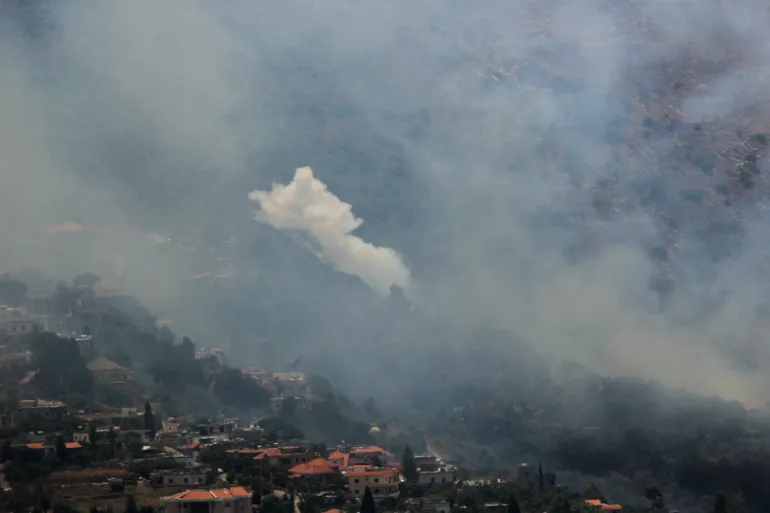
Israel is ready for an “all-out war” in Lebanon and has plans approved for an offensive targeting Hezbollah, officials have said.
The claims from Israel’s foreign minister and military late on Tuesday followed Hezbollah’s release of threatening drone footage. The climbing tension conflicts with United States efforts to avert an escalation amid months of low-level hostilities across the Israel-Lebanon border.
The nine-minute drone footage of the Israeli port city of Haifa filmed in daytime, showed civilian and military areas, including malls and residential quarters, in addition to a weapons manufacturing complex and missile defence batteries.
Israel’s Foreign Minister Israel Katz responded vehemently in a post on X, calling out Hezbollah chief Hassan Nasrallah for boasting about filming the ports of Haifa, which are operated by foreign companies from China and India.
“We are very close to the moment of decision to change the rules against Hezbollah and Lebanon. In an all-out war, Hezbollah will be destroyed and Lebanon will be severely hit,” he wrote.
Later, the Israeli military said in a statement that Ori Gordin, head of its Northern Command, which includes the front line with Hezbollah, has approved plans to mount a ground assault across Israel’s northern border.
“As part of the situational assessment, operational plans for an offensive in Lebanon were approved and validated, and decisions were taken on the continuation of increasing the readiness of troops in the field,” it said.
Israel and Hezbollah have been engaged in border fighting since shortly after the start of the war on Gaza, following the October 7 attacks on Israel. The confrontation is increasingly expanding, with both sides saying they are ready to go to war.
Nasrallah is scheduled to deliver a speech on Wednesday afternoon. He has said in the past that Hezbollah will only stop its attacks if Israel halts its invasion of Gaza, which has killed at least 37,000 Palestinians.
The Israeli military has been regularly launching air strikes on Lebanon since the start of the war. On Tuesday, it claimed to have hit military infrastructure across multiple areas in the south of the country.
On Monday it said that it killed a “central operative” in Hezbollah’s rocket division in a drone strike. A week previously, it assassinated Taleb Abdullah, reportedly the commander of a Hezbollah division covering the western sector of the front line between the border with Israel and the Litani river.
Hezbollah recently said that it has carried out more than 2,100 military operations against Israel since October 8 in what it says is an effort to support Palestinians.
More than 400 people have been killed in Lebanon, including journalists and paramedics, over the past eight months, with 25 deaths in Israel. At least 90,000 people have been displaced in Lebanon, and more than 60,000 have been forced from their homes in northern Israel.
The US is pushing diplomatically to prevent an escalation, White House envoy Amos Hochstein said on Tuesday during a trip to Lebanon.
“We have seen an escalation over the last few weeks. And what President Biden wants to do is avoid a further escalation to a greater war,” Hochstein told reporters in Beirut after meetings in Israel a day earlier.
[Aljazeera]

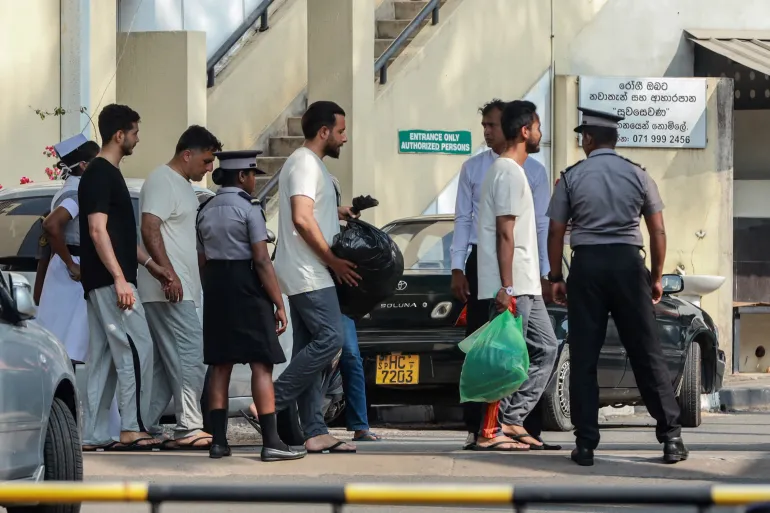
Sri Lanka has evacuated more than 200 crew members from a second Iranian naval vessel off its coast, a day after a US submarine sank an Iranian frigate in the same waters, leaving 87 sailors dead.
President Anura Kumara Dissanayake announced on Thursday that his navy would take custody of the second ship and move it to the northeastern port of Trincomalee for safekeeping, amid fears it could be targeted. He said his government held discussions with Iranian officials and the captain of the ship.
Sri Lankan officials say 87 bodies were recovered and 32 people rescued from the roughly 180 people believed to have been on board IRIS Dena sunk on Wednesday.
US Defense Secretary Pete Hegseth on Wednesday confirmed that a US submarine sank the vessel amid US-Israeli attacks on Iran.
Cabinet spokesperson Nalinda Jayatissa told parliament the vessel was positioned near Colombo, inside Sri Lanka’s exclusive economic zone but beyond its territorial waters, adding that authorities were doing “their utmost to safeguard lives”.
The developments came as Washington confirmed it had torpedoed the IRIS Dena, an Iranian frigate returning from a peacetime naval exercise hosted by India, marking the first time a US submarine has sunk an enemy warship by torpedo since the second world war.
Sri Lankan coastguards received a distress call from the IRIS Dena at 5:08am on Wednesday (23:28 GMT on Tuesday), with surviving crew describing an explosion. Rescue vessels arrived to find the frigate already gone, navy spokesperson Buddhika Sampath said, with only an oil slick and floating life rafts remaining at the scene.
Thirty-two survivors, all seriously injured, were taken to Galle National Hospital. Eighty-seven bodies were recovered from the sea, Sri Lanka’s Foreign Minister Vijitha Herath said. More than 10 sailors remain missing.
The frigate, which was carrying about 180 crew, had been sailing home after participating in a major multinational naval exercise in the Bay of Bengal involving ships from 74 countries when it was struck roughly 44 nautical miles (81km) off Sri Lanka’s southern coast.
US Defense Secretary Pete Hegseth confirmed the strike at a Pentagon briefing, releasing black-and-white footage of a Mark 48 torpedo hitting the frigate’s stern. “An American submarine sank an Iranian warship that thought it was safe in international waters,” he said. “Quiet death.”
Iranian Foreign Minister Abbas Araghchi called it “an atrocity at sea, 2,000 miles [3,219km] from Iran’s shores,” noting the ship had been a guest of India’s navy when struck without warning.
“The US will come to bitterly regret the precedent it has set,” he wrote on social media. He later fired back at Trump’s claim that the operation was running ahead of schedule, “Plan A for a clean rapid military victory failed, Mr President.”
The IRIS Dena was one of more than 20 Iranian navy vessels destroyed since the United States and Israel launched coordinated strikes on Iran on February 28, targeting the country’s leadership, missile arsenals and nuclear infrastructure in an operation aimed at dislodging the current government.
Iranian Supreme Leader Ayatollah Ali Khamenei was killed on the second day of the attacks, triggering protests in the country and beyond.
As of Tuesday, not a single Iranian warship remained under way in the the Gulf, the Strait of Hormuz or the Gulf of Oman, US Central Command chief Admiral Brad Cooper said.
Questions have also been raised about the legality of the attack in international waters.
The Israeli-US attacks have killed more than 1,000 people in Iran and displaced more than 100,000 from Tehran, according to the UN.
In a striking illustration of how far Washington’s war aims have stretched, Trump told Reuters on Thursday that the US intended to play a role in choosing Iran’s next supreme leader.
“We want to be involved in the process of choosing the person who is going to lead Iran into the future,” he said.
Sri Lanka, which has declared neutrality and called for “restraint and immediate de-escalation,” now finds itself hosting the human wreckage from a war being fought on its doorstep.

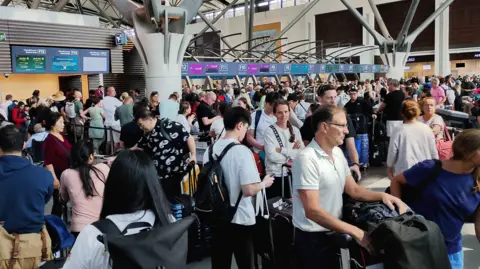
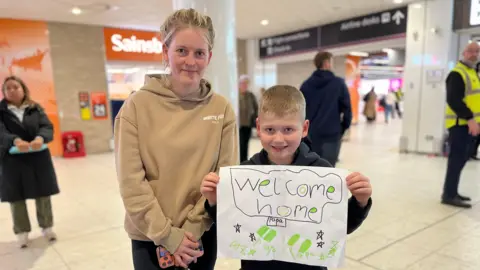
A flight chartered by the UK government to bring back some Britons stranded in the Middle East has departed after being delayed.
Problems with getting passengers on board meant the plane, due to leave Oman’s capital Muscat on Wednesday, had remained grounded.
Thousands of British nationals are stuck in the Middle East, after US-Israeli strikes on Iran prompted retaliatory strikes by Iran across the region.
Giving an update on the situation on Thursday afternoon, Prime Minister Sir Keir Starmer confirmed the chartered flight had departed Oman.
Shadow Foreign Secretary Priti Patel said returning UK nationals was “an enormous exercise and ministers must be honest about all their actions”.
She asked what was being done to get British nationals home and questioned why “Britain was so woefully unprepared” for the war.
More than 130,000 Britons in the region have registered for updates from the UK government.
Sir Keir said more than 4,000 people have arrived back in the UK on commercial flights from the UAE, including “vulnerable Brits”.
A further seven flights are due to leave the UAE for the UK on Thursday, he said, adding that the government will lay on additional charter flights in the coming days.
He said British Airways is putting on daily flights from Oman, and the government will keep working with partners to “increase the speed and capacity of this airlift”.
Foreign Office minister Hamish Falconer described the situation as “a consular challenge on a scale not seen since Covid” and said there were “no instant solutions”.
Britons in Oman will be contacted as soon as the additional government-organised flights from Muscat become available, Falconer said.
However, he said commercial flights becoming available were “by far the most likely and the most rapid routes back to the UK”.
In response, the shadow foreign secretary criticised the government’s position on the conflict, calling Foreign Secretary Yvette Cooper “weak and feeble”.
Patel said the US, Cyprus, the UAE and Bahrain felt let down by the UK’s lack of involvement.
Cooper had “failed in her duty to stand up for Britain’s place in the world” and had not provided the leadership needed to protect military personnel, British bases and British nationals, she added.
Regarding the delayed flight, Home Office minister Alex Norris earlier told LBC: “It didn’t take off because there are operational reasons… about getting passengers on board, and it wasn’t able to happen in the time that it had to happen.”
On Thursday evening, a plane sent by France to Dubai to repatriate its citizens reportedly had to turn back because of missile fire.
French Transport Minister Philippe Tabarot said the turning round of the French plane underscored the instability in the region and the complexity of safely carrying out repatriation operations.
Those eligible for government flights are being asked to pay for seats. When announcing the initial flight, the Foreign Office said it would prioritise the most vulnerable people, and that only British nationals, their spouse or partner, and children under 18 would be offered a seat.



On a night of pulsating drama, studded with 499 runs in 40 overs, including 34 sixes, India sealed their progression to Sunday’s T20 World Cup final, thanks to Sanju Samson’s second defining knock in as many matches, and a display of targeted magnificence from the inevitable Jasprit Bumrah. But to do so, they had to withstand an innings from the ages from the precocious Jacob Bethell, whose 105 from 48 balls kept England swinging for the fences in a heroically thwarted chase in Mumbai.
Set an unearthly 254 to win, after Samson had backed up his crucial 97 not out against West Indies with another mighty innings of 89 from 42, England lost three wickets in the powerplay, and eventually drifted out of contention as India’s seamers held their nerves in the death overs to leave an improbable requirement of 30 from the final over.
In the final analysis, however, it was the fine margin of fielding that made the key difference. Where Harry Brook dropped an utter clanger in the third over of the match, to reprieve Samson on 15 and leave his hapless bowler, Jofra Archer, winded and mojo-less, India’s defence turned on two stunning pieces of work from Axar Patel in the deep.
The first, at deep cover, showed Brook how it’s done, as England’s likeliest matchwinner was extracted for just 7 from 6; the second, at deep backward point, was an incredible running relay effort to intercept an uppercut from England’s player of the tournament, Will Jacks, whose 77-run stand for the fifth wicket with Bethell had given England a strong chance as they approached the final six overs.
Suryakumar Yadav said he would have batted first had he won the toss, which sounded like a bluff, given how compellingly the stats warned against it. No team had batted first and won a floodlight knockout at the T20 World Cup for 13 consecutive matches, since Sri Lanka’s victory over West Indies in their 2014 semi-final.
By the end of a 67-run powerplay, however, the inevitable was already charging into view. Sanju Samson had come into the contest with an unfavourable match-up against Archer – three dismissals for 23 in 25 previous deliveries in T20Is – but he also had the momentum of his match-winning knock at the weekend. He scarcely needed a helping hand to send his innings into overdrive.
Brook offered it nonetheless. It is hard to conceive of a more costly drop than the one England’s captain put down at mid-on in Archer’s second over. Samson had already cashed in on his shorter length, with two fours and a six in his first six balls, when Archer aimed a yard fuller and induced a scuffed drive at throat height. It was a dolly by any measure, and Brook’s face was a picture of guilt – first as the ball burst through his fingers, and then when Samson bludgeoned Archer high over the leg side two balls later.
At least Abhishek Sharma’s fallow campaign had been extended by that point – with Will Jacks trading two thumped fours for a miscue to deep midwicket in his opening over. It meant that England were spared a direct re-run of their previous bowl-first ordeal at the Wankhede, 13 months earlier, though the lessons of that night scarcely seemed to have been heeded.
Archer retreated with figures of 0 for 26 in two overs, to be replaced by Jamie Overton, who strayed far too full throughout his night’s work, and then by Sam Curran, whose change-ups could not stem the tide either. Samson was too well set to be suckered by the moon-ball, which he duly plonked over the head of mid-off.
The second most culpable moment of England’s fielding effort, however, was still to come. With two run-hungry batters itching to hit the spin, Liam Dawson’s introduction for the eighth over felt like a plan with too many drawbacks. Ishan Kishan and Samson duly traded a six apiece in a 19-run demolition, and for the first time in his T20I career, Dawson was effectively rendered unusable.
The gloves were off from that point on. Curran returned for a change of ends but was subjected to a 20-run tag-teaming, and at 112 for 1 after nine overs, jeopardy had left the building for India’s batters. Kishan flogged one last boundary before miscuing Rashid to long-off for 39 from 18, but out strode Shivam Dube to exact revenge with two huge strikes over long-on in the legspinner’s third over.
Archer’s return for a rare mid-innings foray telegraphed England’s desperation. But Samson, similarly, had eyes only for the boundary, and none on impending milestones. He continued to accelerate into his night, marching into the 80s with two more sixes to take his personal haul to seven, before that man Jacks lobbed a wide length ball across his bows to induce a miscue to deep cover. Since the start of India’s must-win in Kolkata on Sunday night, Samson had battered the small matter of 186 runs from 92 balls.
The only moment of genuine traction for England came in the 18th over, as Curran closed out his tough night with an excellent array of yorkers. And yet, he still went for 12, as Dube clubbed his fourth six before being sold a dummy by Hardik Pandya… who then lost control of his bat in a slog through the line, only for Tom Banton to spill the resultant chance at long-on.
Archer’s final over wasn’t anything like the same quality. He retreated with gruesome figures of 1 for 61, as Tilak Varma slotted three sixes in four balls before inside-edging onto his stumps for the most pyrrhic wicket of the night. Thereafter, Hardik was able to farm the strike for his favourable match-up with Jacks, belting two last sixes over the leg side to romp India past 250.
The good news for England was that Phil Salt flicked their first ball of the chase through fine leg for four, and that Jos Buttler also found the boundary for the first time in six innings, with an emphatic thump over the covers two balls later.
The bad news for England was that the bowler on the receiving end was not Jasprit Bumrah, but Arshdeep Singh. India had given themselves license to keep their most deadly weapon in reserve, and see what lumps they could extract before his deployment. Pandya duly obliged with a first-ball outswinger that Salt could only skew to cover, to end his fallow campaign with 5 from three balls.
Bumrah’s eventual entry, for the fifth over, produced a moment of poetry. A first-ball cutter suckered Brook straight out of the hand as he skied the ball high out to extra cover, but if that was good, then the snapping of the trap was even better, as Axar tracked back from the edge of the ring and clung on with a full-length dive, looking over his shoulder.
Back he went, up Suryakumar’s sleeve, not to be seen again until the 11th over, and then hidden again until the 16th, by which point an eight-run over was gold-dust. His pinpoint dot-ball yorker to Sam Curran was greeted with one of the loudest cheers of an already raucous night.
Such was England’s refusal to buckle, however, that with 45 still needed from 18, Bumrah had to go again immediately. A barrage of perfect yorkers offered up just four singles and a two, to leave England needing back-to-back 20-run overs. That was the game, there and then.
Bumrah’s extraction of Brook for 7 from six had been a perfectly targeted strike, but Bethell strode out with a refusal to be overawed. He silenced the Wankhede’s “Boom Boom” chants with a second-ball swivel-pull for six over fine leg, then greeted Varun Chakravarthy with three more in a row, over long-on, long-off and deep third, as if to plant his 360-degree versatility like a flag.
In the same over, however, England lost their third powerplay wicket, and another of their kingpins. Buttler’s ugly campaign had flirted with resuscitation even as he kept losing his shape on a succession of heaves across the line. However, for the third Wankhede innings in a row, he reached the 20s at a 150 strike rate and then immediately gave it away, this time to a flat-footed waft across Varun’s googly.
Astonishingly, England still emerged from the powerplay one run to the good – 68 to 67 – but at three wickets down, it was already a clear race between runs required and wickets standing. Banton got the memo by drilling Axar’s first two deliveries down the ground for six before ruining the moment by slogging over the top of a more flighted follow-up, but Bethell took further lumps out of Varun’s figures with back-to-back fours to bring up England’s hundred in the ninth over.
His maiden Test century in Sydney had been an astonishing display of precocity and shot selection; this awesome effort was everything that he had forsaken to produce that innings and more. The self-sacrifice he had shown in his judgement outside off in January was translated into a full repertoire of 360-degree strokeplay. Until his ODI hundred against South Africa last summer, he had never previously made a professional century. Now, he has joined an exclusive club with three figures in all three formats. One thing is for sure, this won’t be the last the Wankhede crowd will see of him.
Brief scores:
India 253 for 7 in 20 overs (Sanju Samson 89, Ishan Kishan 39, Shivam Dube 43, Suryakumar Yadav 11, Hardik Pandya 27, Tilak Varma 21; Jofra Archer 1-61, Will Jacks 2-40, Adil Rashid 2-41) beat England 246 for 7 in 20 overs (Jos Buttler 25, Jacob Bethell 105, Tom Benton 17, Will Jacks 35, Sam Curran 18, Jofra Archer 19*; Arshdeep Singh 1-51, Hardik Pandya 2-38, Jasprit Bumrah 1-33, Varun Chakravarthy 1-64, Axar Patel 1-35) by seven runs
[Cricinfo]

Showers or thundershowers are likely at a few places in the Southern province and in Rathnapura, and Kaluthara districts during evening or night.

‘IRIS Dena was Indian Navy guest, hit without warning’, Iran warns US of bitter regret

Risk of power cuts due to use of low-quality coal,PUCSL warns

Sajith demands clear statement from govt. about Iranian vessel sunk close to Galle and another located near Colombo port

Sri Lanka evacuates crew of second Iranian vessel after US sunk IRIS Dena

University of Wolverhampton confirms Ranil was officially invited

‘Dates have the highest sugar content to fight Coronavirus’

Sunday Island 27 December – Headlines

#SundayIsland 17th December – Headlines

Sunday Island – 28th March

Sunday Island Headlines – 21 March

Sunday Island – 21st February – Headlines
-

 Features4 days ago
Brilliant Navy officer no more
-

 Opinion4 days ago
Sri Lanka – world’s worst facilities for cricket fans
-

 Business2 days ago
Cabinet nod for the removal of Cess tax imposed on imported good
-

 Features4 days ago
A life in colour and song: Rajika Gamage’s new bird guide captures Sri Lanka’s avian soul
-

 Features5 days ago
Overseas visits to drum up foreign assistance for Sri Lanka
-
 Features5 days ago
Sri Lanka to Host First-Ever World Congress on Snakes in Landmark Scientific Milestone
-
 Latest News2 days ago
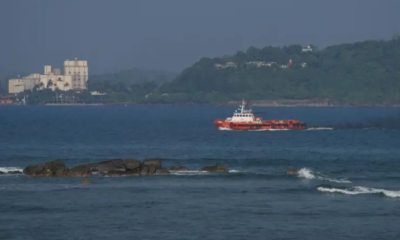
Around 140 people missing after Iranian navy ship sinks off coast of Sri Lanka
-

 Business2 days ago
War in Middle East sends shockwaves through Sri Lanka’s export sector