
Features
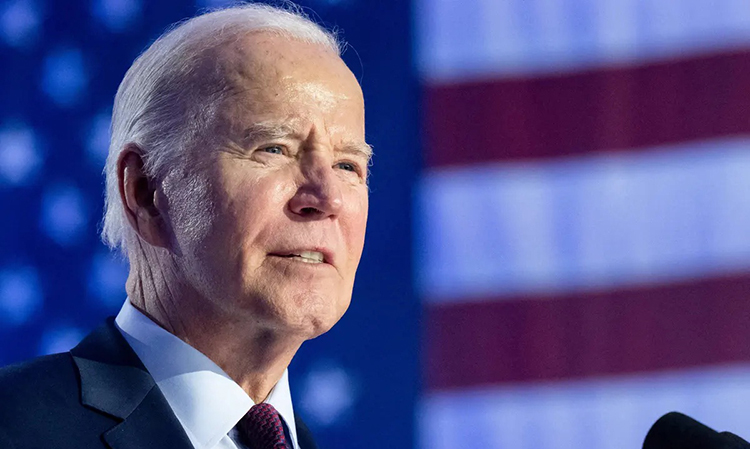
Is Biden dishonest about his health problems?

By Dr Upul Wijayawardhana
It certainly would be exceptional, if anyone who is lucky enough to live past seven decades, has no medical problems at all. It may happen with holy men practising meditation in the Himalayas or those living in isolated communities shielded from the stresses of the modern world but among only around two percent who survive to be 80, the vast majority would have physical or mental disabilities or both.
Compromised memory was once considered to be an invariable effect of ageing, due to brain cells lost over time being not replaced. But fortunately for us, the old fogeys, scientists have had a rethink. The relatively new concept of neuroplasticity gives us hope and human brain seems to be smarter than scientists thought. It compensates for loss of cells by making new connections. However, minor degrees of cognitive impairment are bound to occur with age, even if there are no physical problems but these could be compensated with minor adjustments and live a normal life.
Problems arise when you do not want to accept the reality, as seems to be the case with the most powerful man in the world! Having painfully watched the US Presidential Debate on June 28, I wrote “God save America” (The island, July 1), whiere I concluded: “There is no mechanism to replace Biden, the only avenue open being him opting to withdraw. That does not seem to be happening. If he does not and wins the race in November, the only choice is to say: God save America”.
I am very thankful to Mr Vijaya Chandrasoma for his very complimentary remarks, referring to my analysis, in his piece titled “Biden celebrates July 4 amid doubts about his political future” (Sunday Island, July 7) wherein he charts President Biden’s admirable journey and ends his piece with following:
“May I respectfully point out to Dr Wijayawardhana that if President Biden does not withdraw and wins the race in November, then God would indeed have saved America. The real problem would arise if Biden does not withdraw and loses the election to the Orange Jesus. In that event, there will be no God in all the heavens who will be able to save America from becoming a satellite kleptocracy of Putin’s Russia.”
Till I read this, I did not realize the enormity of the problems faced by USA too, in addition to the president. Even though he has identifies himself as an “ardent supporter of the Democratic cause and a virulent Never Trumper” still, I do not find any justification for the comment; “Whatever doom and gloom polls project, I am confident that Trump, the most evil and ignorant human being in history, will be defeated in November, even by a reasonably rational cockroach.”
Is Trump the most evil and ignorant human being in history? I greatly doubt that! I can name quite a few far worse than Trump in human history. What about our 225 in Diyawannawa who refused to unite to save the Motherland at its darkest hour?
Is Biden a paragon of virtue? Was he honest about his health? If he is hiding his health problems just to get re-elected as president, is that not evil? Anyway, disabilities should not prevent anyone being elected president, if that disability does not hinder the performance of the functions of state. After all, Franklin D Roosevelt, who served an unprecedented four terms, had residual paralysis from polio which did not prevent his election.
In our finals in Medicine, we had spot diagnosis and with that training my spot diagnosis, the way Biden walked to the podium with a shuffling gait and a vacant expression, was Parkinsonism. Therefore, I found it very interesting the front-page news item in The Daily Telegraph of July 8 titled “Biden’s doctor met Parkinson’s expert” wherein it stated “Joe Biden’s doctor met a leading Parkinson’s disease specialist in the White House earlier this year, it has emerged amid ongoing questions about the US president’s health. Dr Kevin Cannard, a neurologist met Dr Kevin O’Connor, Mr Biden’s physician, on Jan 17 and visited the White House a further seven times in the past year. Mr Biden has refused to take a cognitive test amid speculations about his health following last month’s television debate with Donald Trump”. This was denied by the White House, as expected.
Biden’s ABC interview with George Stephanopoulos, from Maison, Wisconsin, done on July 6 to allay anxieties, added to concerns. (https://www.youtube.com/watch?v=0kpibhlagG0)
During the debate, Biden’s staff attributed his bad performance to a cold but at a subsequent fundraiser Biden claimed that he had jet-lag. As this is not a feasible explanation, as jet-lag does not last 12 days, he reverted to the virus story in this interview and made another blunder. Having said that he was tested for Covid, he said “I thought I had a virus. I didn’t. I had a cold.” Perhaps, he is not aware that colds are also due to viruses!
When he was asked whether he watched the debate his reply was “I don’t think I watched the debate!” Did he not remember that? Should he have not have watched, had he wanted to improve in the next debate?
Another reason he attributed for his bad performance was that he was distracted by Trump shouting at him even when his microphone was off. I watched the debate and Trump did not scream at him when the microphone was off, or anytime. In fact, it was an unexpectedly restrained performance by Trump but he used the tactic of answering the previous question, not the current, when it suited him.
Even if Biden has Parkinsonism, it may slow him down but not impair mental function unless he has the rare type associated with dementia. In the debate, Trump stated that he had cognitive testing done and challenged Biden to do the same but he evaded. During the interview he was asked the same and his reply was astonishing. He said he has neurological tests done daily, as he sits in his desk and runs the world. He seems clueless what a neurological test is.
He said that he spoke to the Prime Minister but could not remember who, mumbling Netanyahu after a time. Though he claims he runs the world, does Netanyahu listen to him? Netanyahu does exactly what he wants and Biden is left to find excuses to defend him.
Biden could have silenced all his critics by just doing one simple thing; by taking a cognitive test. But he seems to be avoiding it at all cost which leaves only one conclusion.
Biden is definitely dishonest about his health and more. His comment that he runs the world raises serious concerns. Is this the megalomanic belief of his electorate or delusions of grandeur of a dementing octogenarian?

Features
Ranking public services with AI — A roadmap to reviving institutions like SriLankan Airlines

Efficacy measures an organisation’s capacity to achieve its mission and intended outcomes under planned or optimal conditions. It differs from efficiency, which focuses on achieving objectives with minimal resources, and effectiveness, which evaluates results in real-world conditions. Today, modern AI tools, using publicly available data, enable objective assessment of the efficacy of Sri Lanka’s government institutions.
Among key public bodies, the Supreme Court of Sri Lanka emerges as the most efficacious, outperforming the Department of Inland Revenue, Sri Lanka Customs, the Election Commission, and Parliament. In the financial and regulatory sector, the Central Bank of Sri Lanka (CBSL) ranks highest, ahead of the Securities and Exchange Commission, the Public Utilities Commission, the Telecommunications Regulatory Commission, the Insurance Regulatory Commission, and the Sri Lanka Standards Institution.
Among state-owned enterprises, the Sri Lanka Ports Authority (SLPA) leads in efficacy, followed by Bank of Ceylon and People’s Bank. Other institutions assessed included the State Pharmaceuticals Corporation, the National Water Supply and Drainage Board, the Ceylon Electricity Board, the Ceylon Petroleum Corporation, and the Sri Lanka Transport Board. At the lower end of the spectrum were Lanka Sathosa and Sri Lankan Airlines, highlighting a critical challenge for the national economy.
Sri Lankan Airlines, consistently ranked at the bottom, has long been a financial drain. Despite successive governments’ reform attempts, sustainable solutions remain elusive.
Globally, the most profitable airlines operate as highly integrated, technology-enabled ecosystems rather than as fragmented departments. Operations, finance, fleet management, route planning, engineering, marketing, and customer service are closely coordinated, sharing real-time data to maximise efficiency, safety, and profitability.
The challenge for Sri Lankan Airlines is structural. Its operations are fragmented, overly hierarchical, and poorly aligned. Simply replacing the CEO or senior leadership will not address these deep-seated weaknesses. What the airline needs is a cohesive, integrated organisational ecosystem that leverages technology for cross-functional planning and real-time decision-making.
The government must urgently consider restructuring Sri Lankan Airlines to encourage:
=Joint planning across operational divisions
=Data-driven, evidence-based decision-making
=Continuous cross-functional consultation
=Collaborative strategic decisions on route rationalisation, fleet renewal, partnerships, and cost management, rather than exclusive top-down mandates
Sustainable reform requires systemic change. Without modernised organisational structures, stronger accountability, and aligned incentives across divisions, financial recovery will remain out of reach. An integrated, performance-oriented model offers the most realistic path to operational efficiency and long-term viability.
Reforming loss-making institutions like Sri Lankan Airlines is not merely a matter of leadership change — it is a structural overhaul essential to ensuring these entities contribute productively to the national economy rather than remain perpetual burdens.
By Chula Goonasekera – Citizen Analyst

International Day of Mathematics falls tomorrow
The approximate value of Pi (π) is 3.14 in mathematics. Therefore, the day 14 March is celebrated as the Pi Day. In 2019, UNESCO proclaimed 14 March as the International Day of Mathematics.
Ancient Babylonians and Egyptians figured out that the circumference of a circle is slightly more than three times its diameter. But they could not come up with an exact value for this ratio although they knew that it is a constant. This constant was later named as π which is a letter in the Greek alphabet.

Archimedes
It was the Greek mathematician Archimedes (250 BC) who was able to find an upper bound and a lower bound for this constant. He drew a circle of diameter one unit and drew hexagons inside and outside the circle such that the sides of each hexagon touch the sides of the circle. In mathematics the circle passing through all vertices of a polygon is called a ‘circumcircle’ and the largest circle that fits inside a polygon tangent to all its sides is called an ‘incircle’. The total length of the smaller hexagon then becomes the lower bound of π and the length of the hexagon outside the circle is the upper bound. He realised that by increasing the number of sides of the polygon can make the bounds get closer to the value of Pi and increased the number of sides to 12,24,48 and 60. He argued that by increasing the number of sides will ultimately result in obtaining the original circle, thereby laying the foundation for the theory of limits. He ended up with the lower bound as 22/7 and the upper bound 223/71. He could not continue his research as his hometown Syracuse was invaded by Romans and was killed by one of the soldiers. His last words were ‘do not disturb my circles’, perhaps a reference to his continuing efforts to find the value of π to a greater accuracy.
Archimedes can be considered as the father of geometry. His contributions revolutionised geometry and his methods anticipated integral calculus. He invented the pulley and the hydraulic screw for drawing water from a well. He also discovered the law of hydrostatics. He formulated the law of levers which states that a smaller weight placed farther from a pivot can balance a much heavier weight closer to it. He famously said “Give me a lever long enough and a place to stand and I will move the earth”.
Mathematicians have found many expressions for π as a sum of infinite series that converge to its value. One such famous series is the Leibniz Series found in 1674 by the German mathematician Gottfried Leibniz, which is given below.
π = 4 ( 1 – 1/3 + 1/5 – 1/7 + 1/9 – ………….)
The Indian mathematical genius Ramanujan came up with a magnificent formula in 1910. The short form of the formula is as follows.
π = 9801/(1103 √8)
For practical applications an approximation is sufficient. Even NASA uses only the approximation 3.141592653589793 for its interplanetary navigation calculations.
It is not just an interesting and curious number. It is used for calculations in navigation, encryption, space exploration, video game development and even in medicine. As π is fundamental to spherical geometry, it is at the heart of positioning systems in GPS navigations. It also contributes significantly to cybersecurity. As it is an irrational number it is an excellent foundation for generating randomness required in encryption and securing communications. In the medical field, it helps to calculate blood flow rates and pressure differentials. In diagnostic tools such as CT scans and MRI, pi is an important component in mathematical algorithms and signal processing techniques.
This elegant, never-ending number demonstrates how mathematics transforms into practical applications that shape our world. The possibilities of what it can do are infinite as the number itself. It has become a symbol of beauty and complexity in mathematics. “It matters little who first arrives at an idea, rather what is significant is how far that idea can go.” said Sophie Germain.
Mathematics fans are intrigued by this irrational number and attempt to calculate it as far as they can. In March 2022, Emma Haruka Iwao of Japan calculated it to 100 trillion decimal places in Google Cloud. It had taken 157 days. The Guinness World Record for reciting the number from memory is held by Rajveer Meena of India for 70000 decimal places over 10 hours.
Happy Pi Day!
The author is a senior examiner of the International Baccalaureate in the UK and an educational consultant at the Overseas School of Colombo.
by R N A de Silva

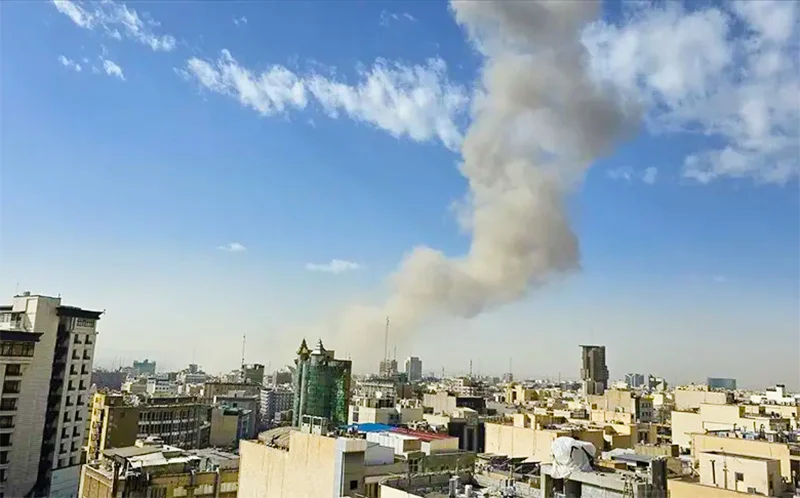
 The recent humanly costly torpedoing of an Iranian naval vessel in Sri Lanka’s Exclusive Economic Zone by a US submarine has raised a number of issues of great importance to international political discourse and law that call for elucidation. It is best that enlightened commentary is brought to bear in such discussions because at present misleading and uninformed speculation on questions arising from the incident are being aired by particularly jingoistic politicians of Sri Lanka’s South which could prove deleterious.
As matters stand, there seems to be no credible evidence that the Indian state was aware of the impending torpedoing of the Iranian vessel but these acerbic-tongued politicians of Sri Lanka’s South would have the local public believe that the tragedy was triggered with India’s connivance. Likewise, India is accused of ‘embroiling’ Sri Lanka in the incident on account of seemingly having prior knowledge of it and not warning Sri Lanka about the impending disaster.
It is plain that a process is once again afoot to raise anti-India hysteria in Sri Lanka. An obligation is cast on the Sri Lankan government to ensure that incendiary speculation of the above kind is defeated and India-Sri Lanka relations are prevented from being in any way harmed. Proactive measures are needed by the Sri Lankan government and well meaning quarters to ensure that public discourse in such matters have a factual and rational basis. ‘Knowledge gaps’ could prove hazardous.
Meanwhile, there could be no doubt that Sri Lanka’s sovereignty was violated by the US because the sinking of the Iranian vessel took place in Sri Lanka’s Exclusive Economic Zone. While there is no international decrying of the incident, and this is to be regretted, Sri Lanka’s helplessness and small player status would enable the US to ‘get away with it’.
Could anything be done by the international community to hold the US to account over the act of lawlessness in question? None is the answer at present. This is because in the current ‘Global Disorder’ major powers could commit the gravest international irregularities with impunity. As the threadbare cliché declares, ‘Might is Right’….. or so it seems.
Unfortunately, the UN could only merely verbally denounce any violations of International Law by the world’s foremost powers. It cannot use countervailing force against violators of the law, for example, on account of the divided nature of the UN Security Council, whose permanent members have shown incapability of seeing eye-to-eye on grave matters relating to International Law and order over the decades.
The foregoing considerations could force the conclusion on uncritical sections that Political Realism or Realpolitik has won out in the end. A basic premise of the school of thought known as Political Realism is that power or force wielded by states and international actors determine the shape, direction and substance of international relations. This school stands in marked contrast to political idealists who essentially proclaim that moral norms and values determine the nature of local and international politics.
While, British political scientist Thomas Hobbes, for instance, was a proponent of Political Realism, political idealism has its roots in the teachings of Socrates, Plato and latterly Friedrich Hegel of Germany, to name just few such notables.
On the face of it, therefore, there is no getting way from the conclusion that coercive force is the deciding factor in international politics. If this were not so, US President Donald Trump in collaboration with Israeli Rightist Premier Benjamin Natanyahu could not have wielded the ‘big stick’, so to speak, on Iran, killed its Supreme Head of State, terrorized the Iranian public and gone ‘scot-free’. That is, currently, the US’ impunity seems to be limitless.
Moreover, the evidence is that the Western bloc is reuniting in the face of Iran’s threats to stymie the flow of oil from West Asia to the rest of the world. The recent G7 summit witnessed a coming together of the foremost powers of the global North to ensure that the West does not suffer grave negative consequences from any future blocking of western oil supplies.
Meanwhile, Israel is having a ‘free run’ of the Middle East, so to speak, picking out perceived adversarial powers, such as Lebanon, and militarily neutralizing them; once again with impunity. On the other hand, Iran has been bringing under assault, with no questions asked, Gulf states that are seen as allying with the US and Israel. West Asia is facing a compounded crisis and International Law seems to be helplessly silent.
Wittingly or unwittingly, matters at the heart of International Law and peace are being obfuscated by some pro-Trump administration commentators meanwhile. For example, retired US Navy Captain Brent Sadler has cited Article 51 of the UN Charter, which provides for the right to self or collective self-defence of UN member states in the face of armed attacks, as justifying the US sinking of the Iranian vessel (See page 2 of The Island of March 10, 2026). But the Article makes it clear that such measures could be resorted to by UN members only ‘ if an armed attack occurs’ against them and under no other circumstances. But no such thing happened in the incident in question and the US acted under a sheer threat perception.
Clearly, the US has violated the Article through its action and has once again demonstrated its tendency to arbitrarily use military might. The general drift of Sadler’s thinking is that in the face of pressing national priorities, obligations of a state under International Law could be side-stepped. This is a sure recipe for international anarchy because in such a policy environment states could pursue their national interests, irrespective of their merits, disregarding in the process their obligations towards the international community.
Moreover, Article 51 repeatedly reiterates the authority of the UN Security Council and the obligation of those states that act in self-defence to report to the Council and be guided by it. Sadler, therefore, could be said to have cited the Article very selectively, whereas, right along member states’ commitments to the UNSC are stressed.
However, it is beyond doubt that international anarchy has strengthened its grip over the world. While the US set destabilizing precedents after the crumbling of the Cold War that paved the way for the current anarchic situation, Russia further aggravated these degenerative trends through its invasion of Ukraine. Stepping back from anarchy has thus emerged as the prime challenge for the world community.

Bodies of 84 Iranian sailors killed in US torpedo strike to be repatriated

Four crew members killed after US refuelling plane crashes in Iraq

Safeguarding linguistic heritage is not only a cultural responsibility, but also a shared commitment to preserving the diversity of our world – PM

This is not an ordinary scholarship programme. It defines the future vision of our country – PM

West Indies name unchanged squad for home T20Is against Australia

Duplantis breaks world pole vault record in Uppsala

‘Dates have the highest sugar content to fight Coronavirus’

Sunday Island 27 December – Headlines

#SundayIsland 17th December – Headlines

Sunday Island – 28th March

Sunday Island Headlines – 21 March

Sunday Island – 21st February – Headlines
-

 News6 days ago
Peradeniya Uni issues alert over leopards in its premises
-

 News4 days ago
Repatriation of Iranian naval personnel Sri Lanka’s call: Washington
-

 News6 days ago
Wife raises alarm over Sallay’s detention under PTA
-
 Features5 days ago
Winds of Change:Geopolitics at the crossroads of South and Southeast Asia
-

 News3 days ago
Prof. Dunusinghe warns Lanka at serious risk due to ME war
-

 Latest News6 days ago
Heat Index at ‘Caution Level’ in the Sabaragamuwa province and, Colombo, Gampaha, Kurunegala, Anuradhapura, Vavuniya, Hambanthota and Monaragala districts
-

 Sports2 days ago
Royal start favourites in historic Battle of the Blues
-

 Features6 days ago
The final voyage of the Iranian warship sunk by the US