
Business
IPS’ Sri Lanka: State of the Economy 2021 Report launched virtually


The Institute of Policy Studies of Sri Lanka (IPS) hosted the first of a three-part webinar series to launch its annual flagship report ‘Sri Lanka: State of the Economy 2021’ on Monday, 11 October 2021. The first webinar was on ‘COVID-19 and the Sri Lankan Economy: Policy Choices and Trade-offs’. It featured presentations by Dr Dushni Weerakoon and Dr Asanka Wijesinghe from the IPS with expert insights from Dr Missaka Warusawitharana, Financial Economist, Johns Hopkins University, USA. Tharindu Udayanga from IPS moderated the discussion.
Dr Weerakoon stated that a V-shaped recovery is likely as predicted in last year’s State of the Economy report. She noted that a growth rate of 4% this year will take the economy back to the pre-pandemic output level, but the challenge is to lift the growth rate to 5-6% and maintain that in the medium term. Debt monetisation is not the answer beyond its use as a temporary measure; rather building policy credibility to firm up access to capital markets is critical. The government must commit to strengthen revenue mobilisation, reduce leakages, and improve the efficiency of existing expenditure, she said.
Dr Asanka Wijesinghe opined that Sri Lanka should capitalise on trade diversion resulting from the China-US trade war and increase both forward and back global value chain (GVC) participation. He explained that producing goods with a low comparative advantage is costly, and as such, import substitution is not an appropriate long-term policy for Sri Lanka as a small country that does not have all the raw materials. The way forward is to step away from the ‘anti-trade bias’, secure GSP+, integrate with GVCs and restructure existing regional trade agreements, Dr Wijesinghe outlined.



11 March 2026; Colombo – SriLankan Airlines is set to increase its weekly service between Colombo and Melbourne to 10 flights, effective from 2 August 2026, with the addition of three more scheduled flights in response to growing demand and evolving market dynamics. The expansion reinforces the airline’s commitment to strengthening its footprint in Australia, recently identified as one of the fastest-growing inbound tourism markets to Sri Lanka, driven by leisure travel and a rising volume of visits by family and friends.
The newly added flights will operate every Tuesday, Thursday and Sunday, departing Colombo as UL608 at 14:10 hrs and arriving in Melbourne at 04:30 hrs the following day. The return service, UL609, will depart Melbourne every Wednesday, Friday and Monday at 06:00 hrs, arriving in Colombo at 12:15 hrs the same day, offering convenient onward connections across the airline’s network. The schedule is designed to maximise time spent in Sri Lanka for leisure travellers while enhancing connectivity for passengers travelling onwards to India via Colombo.
In addition to the new frequencies, the airline will continue operating its daily service, UL604, departing Colombo at 00:20 hrs and arriving in Melbourne at 14:40 hrs, with the return service UL605 departing Melbourne at 16:10 hrs and arriving in Colombo at 22:25 hrs. These services provide seamless connectivity to key destinations across India and beyond.
This addition of flights will provide Sri Lankans with better options when choosing flights between the two countries and enable them to plan their travel more conveniently. The increased frequency will be especially beneficial for the Sri Lankan diaspora living in Australia, providing greater flexibility to visit family and friends while maintaining strong connections with their homeland.
Additionally, Sri Lankan students studying in Australia will find these enhanced services advantageous, as the expanded schedule accommodates academic calendars and holiday breaks, making it easier to travel home and return to their studies. Overall, improved connectivity supports both the expatriate community and students by offering more convenient and accessible travel options tailored to their needs.
The increased frequencies will further strengthen Colombo’s role as a regional hub, enabling Indian travellers to seamlessly connect via Sri Lanka to Melbourne, with convenient schedules and efficient onward connections. For more information and bookings, visit www.srilankan.com or follow us on our social media.
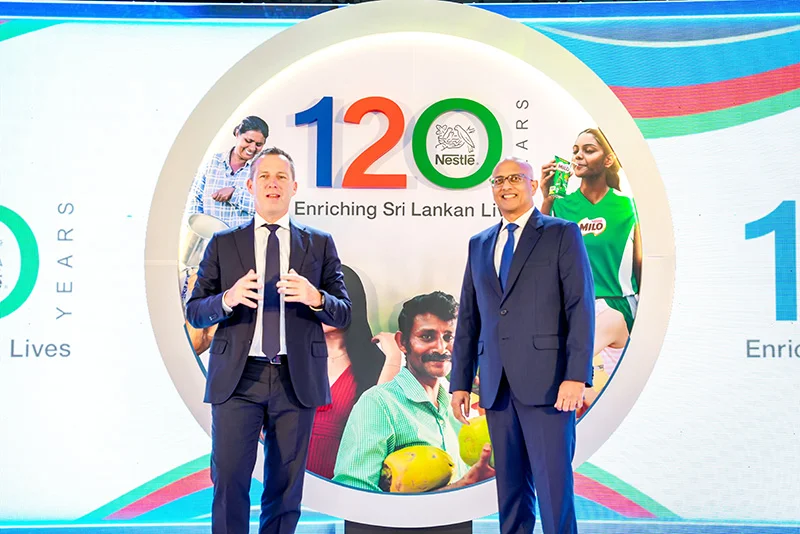
Nestlé Lanka Limited this year marks 120 years of operations in Sri Lanka, highlighting a century-long presence that has extended beyond food manufacturing to supporting farmers, communities, youth employment and environmental sustainability.
Established in 1906, the company has grown into one of Sri Lanka’s leading food and beverage manufacturers, today producing more than 90% of the products it sells locally. Over the decades, Nestlé Lanka has built a strong domestic footprint through local sourcing, long-term farmer partnerships and continued investment in manufacturing.
Through widely recognised brands such as Nestomalt, Milo and Maggi, the company has become a familiar presence in Sri Lankan households, offering products designed to meet local nutritional needs. Many of its products are fortified with micronutrients aimed at improving dietary intake, while brands such as Milo and Nestomalt have also supported youth sports and active lifestyles in the country.
Nestlé Lanka’s engagement with local agriculture has also played a role in strengthening rural livelihoods. The company works closely with dairy and coconut farmers, providing technical assistance, skills development and reliable market access as part of its responsible sourcing efforts.
The company has also expanded programmes aimed at improving youth employability. Through the “Nestlé Needs YOUth” initiative, young Sri Lankans are provided with access to training, learning and career opportunities. Partnerships with organisations such as BConnected have also helped promote inclusive employment opportunities for people with disabilities.
Sustainability has become an increasingly central focus of the company’s operations. Nestlé Lanka’s manufacturing facility in Kurunegala operates on 100% renewable electricity, while a biomass boiler commissioned in 2024 has helped reduce carbon emissions from manufacturing. The company aims to achieve net-zero carbon emissions by 2050.
Efforts to reduce environmental impact have also extended to packaging. Nestlé Lanka pioneered the shift from plastic to paper straws in aseptic beverage cartons in 2019 and supported the establishment of Sri Lanka’s first recycling plant for such cartons. The company aims to become fully plastic neutral by 2026.
Chairman and Managing Director Bernie Stefan said the milestone reflects the long-standing trust Sri Lankan consumers have placed in the company and the partnerships it has built across the country over generations.
By Sanath Nanayakkare
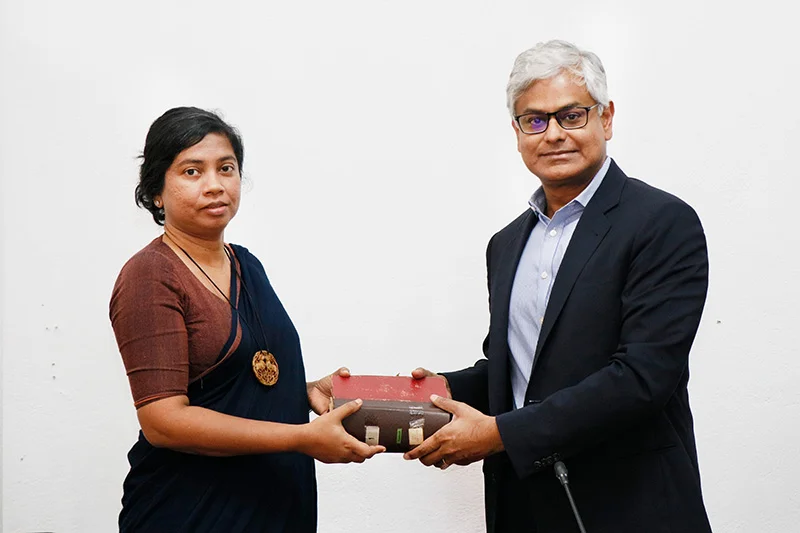
The Ceylon Chamber of Commerce has formally handed over its historical records to the National Archives Department of Sri Lanka, placing over a century of the nation’s commercial history into the care of the country’s official custodians of heritage.
The historical archive being handed over spans from the Chamber’s founding in 1839 to 1973, and includes correspondence, meeting minutes, reports, ledgers, and publications that chronicle the development of trade, enterprise, and industry in Sri Lanka. Together, these records provide a rare and detailed account of how the island’s economy evolved and how its business community helped shape national progress.
The Ceylon Chamber of Commerce was established on 25 March 1839 on the principle that the interests of commerce and trade are best advanced when merchants unite and cooperate in matters affecting the common good. At the time, Ceylon was among the earliest regions in Asia to establish a chamber of commerce, alongside counterparts in Bengal, Bombay, Madras, Canton, Penang, and Singapore.
From its earliest years, the Chamber played a central role in organising and guiding trade. It played a central role in establishing and growing the export economy built on commodities such as coffee, cinnamon, coconut oil, tea, and rubber, and hosted the island’s renowned tea and rubber auctions. It also developed rules and standards for trading practices, helping create an environment of trust and reliability that enabled Sri Lanka’s commerce to thrive.

Advisory for Severe Lightning issued to the Western and Sabaragamuwa provinces and Galle and Matara districts

Jemimah Rodrigues, Harmanpreet Kaur, Mitchell Starc and Kuldeep Yadav among ESPNcricinfo award winners for 2025

China approves ‘ethnic unity’ law requiring minorities to learn Mandarin

Nasa spacecraft weighing 1,300lb due to re-enter Earth’s atmosphere

Chinese national arrested over attempt to smuggle 2,000 queen ants from Kenya

Attacks reported on three more cargo ships in Gulf, with oil price back near $100

‘Dates have the highest sugar content to fight Coronavirus’

Sunday Island 27 December – Headlines

#SundayIsland 17th December – Headlines

Sunday Island – 28th March

Sunday Island Headlines – 21 March

Sunday Island – 21st February – Headlines
-
 News7 days ago
University of Wolverhampton confirms Ranil was officially invited
-

 News6 days ago
Peradeniya Uni issues alert over leopards in its premises
-

 News7 days ago
Female lawyer given 12 years RI for preparing forged deeds for Borella land
-
 News4 days ago
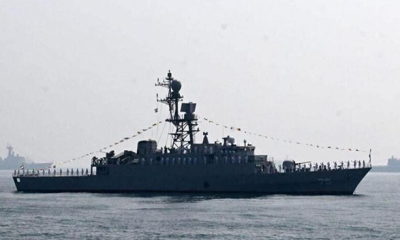
Repatriation of Iranian naval personnel Sri Lanka’s call: Washington
-
 News7 days ago
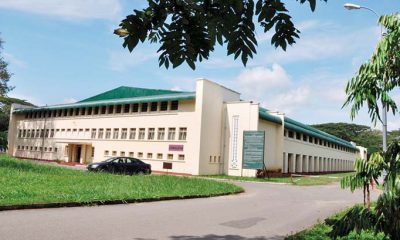
Library crisis hits Pera university
-

 News6 days ago
Wife raises alarm over Sallay’s detention under PTA
-

 News7 days ago
‘IRIS Dena was Indian Navy guest, hit without warning’, Iran warns US of bitter regret
-
 Latest News7 days ago
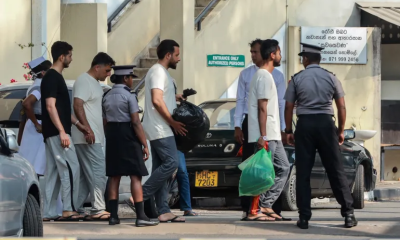
Sri Lanka evacuates crew of second Iranian vessel after US sunk IRIS Dena