
Latest News
India’s navy deploys warships to Arabian Sea after tanker attack

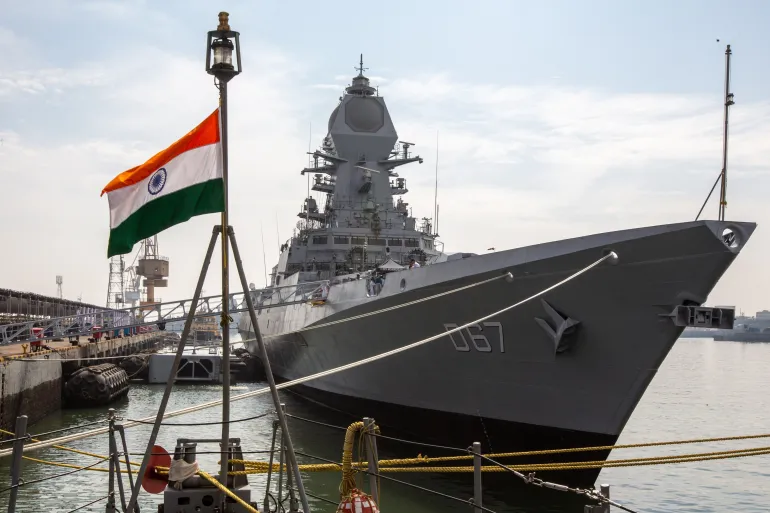
The Indian Navy has dispatched guided missile destroyers to the Arabian Sea after an attack on an Israel-linked chemical tanker off its coast, the Ministry of Defence said.
Three stealth-guided destroyers were deployed “in various areas of the sea” to “maintain a deterrent presence” considering the “recent spate of attacks in the Arabian Sea”, the ministry said in a statement late on Monday. It was also using long-range maritime patrol aircraft for “domain awareness”, it said.
The United States claimed that the December 23 strike on MV Chem Pluto in the Indian Ocean was “fired from Iran”, an accusation that Tehran has dismissed as baseless.
The attack came as a US-led task force sought to counter similar threats to maritime shipping in the Red Sea posed by Yemen’s Iran-aligned Houthi rebels.
Amid the uptick in maritime strikes, this was the first that the US has sought to directly pin on Iran. It was also the first on a vessel outside the Red Sea.
“We can see that militarisation is increasing, not only in the Red Sea, but also in the Arabian Peninsula,” said Al Jazeera’s Resul Sardar, reporting from Djibouti.
“These are the regional ramifications of the war on Gaza,” he reported on Tuesday.
The Indian Navy said it was investigating the nature of the attack on MV Chem Puto, which “anchored safely” in the financial capital, Mumbai, on Monday.
An initial assessment “pointed to a drone attack”, the ministry said. But “further forensic and technical analysis will be required to establish the vector of attack, including type and amount of explosive used”.
The vessel had been “cleared for further operation” by its company, according to the ministry.
(Aljazeera)











Latest News
Public will not be served as Computer system failure at Department of Registration of Persons

The Acting Commissioner General of Registration of Persons has announced that due to an unexpected failure of the computer system of the Department of Registration of Persons, all services, including the one day service will not be held on Tuesday (24th March) at the Head Office and all Provincial offices.

Latest News
Trump says he is postponing strikes on Iran power plants after ‘productive’ talks on ending war
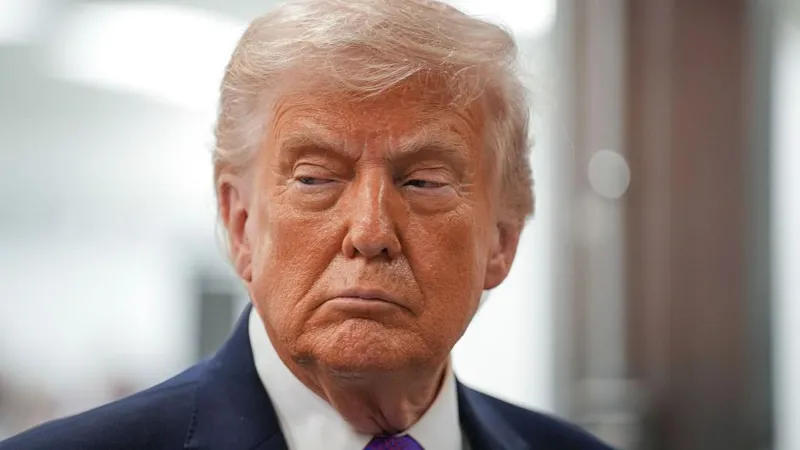
Donald Trump says the US and Iran have held talks on the “complete and total resolution of hostilities” in the Middle East
He says that, as a result of the talks, he has postponed threatened strikes on Iranian power plants and oil and gas fall immediately after.
On Saturday night, Trump had given Iran a 48 hour deadline to reopen the Strait of Hormuz. – or, he said, the US would “obliterate” Iranian power plants
An Iranian news agency quotes an unnamed source saying there have been no talks between Teheran and Trump.
Earlier, the UK’s Keir Starmer and Trump agreed that reopening the Strait of Hormuz is “essential to resume global shipping” during a call late on Sunday according to Downing Street
Meanwhile, the Israel Defense Forces (IDF) says it expects to face ‘several more weeks of fighting against Iran and Hezbollah in Lebanon
(BBC)
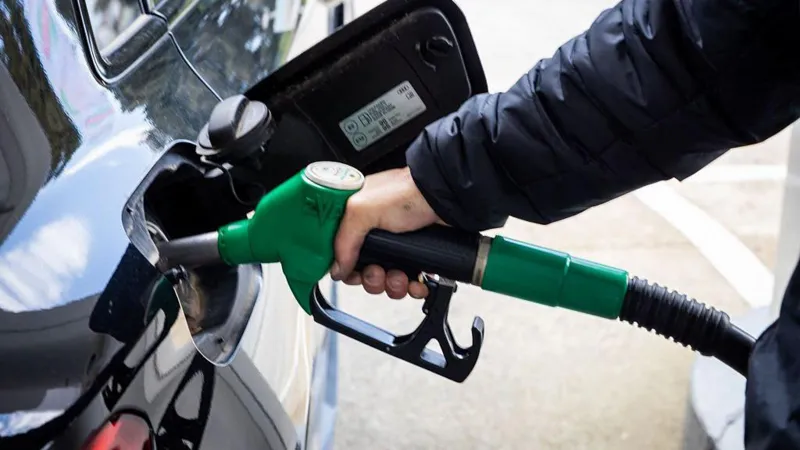
Major stock markets in Asia slumped on Monday after Washington and Tehran threatened to escalate hostilities, as the Iran war enters its fourth week.
Japan’s benchmark Nikkei 225 index was almost 3.6% lower, while South Korea’s Kospi fell by almost 6%.
US President Donald Trump warned on Saturday that he would “obliterate” Iranian power plants if Iran did not open the key Strait of Hormuz shipping route. Iran said it would respond to any such strikes by targeting key infrastructure in the region, including energy facilities.
Japan and South Korea have been particularly impacted by the conflict, as they are heavily dependent on oil and gas that would normally pass through the strait.
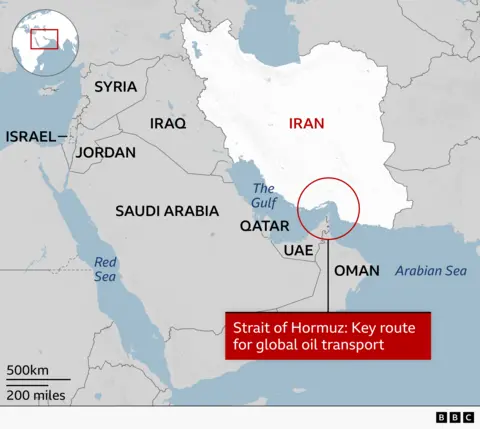
Iran has effectively blocked the Strait of Hormuz, one of the world’s busiest shipping channels, since the US and Israel attacked the country on 28 February.
About 20% of the world’s oil and liquefied natural gas (LNG) usually passes through the waterway – and the war has sent global fuel prices soaring.
On Monday, International Energy Agency chief Fatih Birol said that the war could see the world facing its worst energy crisis in decades.
Speaking at the National Press Club in Australia’s capital, Birol compared the current energy crisis to those of the 1970s and the impact of Russia’s 2022 invasion of Ukraine.
“This crisis as things stand is now two oil crises and one gas crash put all together,” he said.
“If Iran doesn’t FULLY OPEN, WITHOUT THREAT, the Strait of Hormuz, within 48 HOURS from this exact point in time, the United States of America will hit and obliterate their various POWER PLANTS, STARTING WITH THE BIGGEST ONE FIRST!,” Trump said in a social media post published at 23:44 GMT Saturday.
That threat came after Iranian missiles hit the Israeli city of Dimona, and shortly before a second attack on the town of Arad nearby.
Mohammad Bagher Ghalibaf, the speaker of the Iranian parliament, said on Sunday that energy and desalination infrastructure in the region would be “irreversibly destroyed” if his country’s power plants were attacked.
Such action would significantly escalate the conflict, which has already disrupted global energy supplies, pushing up prices and causing fuel shortages.
Other markets in the Asia-Pacific region were also lower on Monday.
Hong Kong’s Hang was down by almost 3.5% and the Shanghai Stock Exchange Composite index 2.5% lower.
Global oil prices were broadly steady, with Brent crude 0.45% higher at $112.69 (£84.56) a barrel and US-traded oil was up by 0.7% at $98.93.
[BBC]

Public will not be served as Computer system failure at Department of Registration of Persons

Trump says he is postponing strikes on Iran power plants after ‘productive’ talks on ending war

Asia stocks slide as US and Iran threaten to escalate war

Heat Index at Caution Level in the Western, Sabaragamuwa, Southern and North-western provinces and in Anuradhapura, Mannar and Vavuniya districts

Showers may occur at several places in the Western and Sabaragamuwa provinces and in Galle, Matara and Nuwara-Eliya districts after 2.00 pm.

Fuel price hikes trigger transport disruptions and calls for fare increases

‘Dates have the highest sugar content to fight Coronavirus’

Sunday Island 27 December – Headlines

#SundayIsland 17th December – Headlines

Sunday Island – 28th March

Sunday Island Headlines – 21 March

Sunday Island – 21st February – Headlines
-

 News6 days ago
CIABOC questions Ex-President GR on house for CJ’s maid
-

 News7 days ago
Sri Lankan marine scientist Asha de Vos honoured at UNGA opening
-

 News7 days ago
Australian HC debunks misleading travel risk claims for Sri Lanka
-

 News5 days ago
Bailey Bridge inaugurated at Chilaw
-
 Latest News7 days ago
Wednesdays declared a government holiday with effect from 18th March
-

 News5 days ago
Pay hike demand: CEB workers climb down from 40 % to 15–20%
-

 News4 days ago
CIABOC tells court Kapila gave Rs 60 mn to MR and Rs. 20 mn to Priyankara
-

 Editorial6 days ago
Couple QR-based quota with odd-even rationing