
Latest News
India’s breakneck pace keeps result alive after two lost days


After two rainy, non-cricket days at Green Park, Kanpur sprung to life on sunny Monday with a speedy India breaking a few Test records. Rohit Sharma extended his white-ball cricket template that has given him immense success in the last couple of years to red-ball cricket, as he cracked 23 off 11 balls, with rest of the India line-up following suit. That approach saw them register the fastest team 50, 100, 150, 200 and 250 in men’s Tests, and declare their first innings on 285 for 9 in just 34.4 overs after Bangladesh were bowled out for 233.
By stumps, Ravichandran Ashwin managed to trap Zakir Hasan lbw and bowled nightwatcher Hasan Mahmud, while Shadman Islam survived a dropped chance on 3, as Bangladesh ended the day at 26 for 2 in the second innings, trailing India by a further 26.
This was after Yashasvi Jaiswal and KL Rahul scored quickfire fifties for India, striking at 141.17 and 158.13, respectively, to give Indian bowlers another shot at Bangladesh’s batters in the dying hours of the penultimate day of the Test. Mehidy Hasan Miraz and Shakib Al Hasan picked up four wickets apiece on a surface that showed enough signs of spin.
With the sun finally beating down after successive days of overcast conditions and rain, the pitch showed signs of better carry in the first session. But the inherent nature of the black-soil surface meant a few deliveries did keep a tad low.
None of that mattered for Jaiswal, who kickstarted India’s response with a hat-trick of fours off Mahmud, who had picked up a five-for in Chennai. At the other end, Rohit thumped the first two balls he faced for sixes, first jumping down the track to fast bowler Khaled Ahmed to deposit him over long-on, before pulling one into the deep-square leg stands. The pair hit two fours and two sixes more to bring up India’s fifty in just three overs.
In a bid to slow India down, Bangladesh brought Mehidy on, and though he was greeted with a four clubbed through midwicket, he almost struck fourth ball when Rohit was ruled out lbw. But Rohit reviewed and survived, with the ball hitting him outside the line of leg. On the next ball, though, Mehidy had the last laugh, getting one flighted delivery to keep low and spin back in sharply through Rohit’s defence.
That did not deter Jaiswal, who went on a rampage against spin. India managed to hit at least one four in each of overs six to 12. In the process, Jaiswal brought up a 31-ball fifty and India got to 100 in just 10.1 overs. He used his reach well to put the spinners off their lengths, the highlight being a biggie he smoked over long-on off Mehidy, who also got the ball to dip in on a fullish length. However, the low bounce of the surface came into play when Mahmud’s length ball stayed a bit low to clatter into Jaiswal’s stumps.
Shubman Gill and Rishabh Pant also attacked from the get-go, with the former plonking Mehidy over deep midwicket after dancing down the track. But they perished off Shakib after tea, with India in ultra-attack mode. Yet, there was no slowing India down. Their attacking game had pushed Bangladesh back, and for most part, they had at least five fielders at the boundary.
Kohli and Rahul used this to rotate strike and bat freely. Kohli was unafraid to use his feet, and switched his ODI mode on. This was after a mix-up with Pant should have sent Kohli back, but Khaled underarmed the throw at the striker’s end and missed despite getting to the stumps. Kohli was stranded out of the crease and had given up.
He rubbed salt into Khaled and Bangladesh’s wounds by hitting him for back-to-back fours, the second off which was a loft over extra cover. He also used his feet against spin, thumping Taijul Islam straight over long-off. In a bid to slog Shakib over midwicket, though, he was bowled after one skidded through.
Rahul, however, used the sweep and reverse sweep aplenty, and never for once stalled. He looked at ease against the lowish pace on the surface and managed to encash on any width. He put on a masterclass of playing against spin, and scored his fastest Test fifty, off 33 balls. But India went from 269 for 5 to 284 for 9 just before the declaration.
The day began with Akash Deep and Jasprit Bumrah bowling four maidens in the first five overs of Bangladesh’s first innings. The only run in that phase came via Mushfiqur Rahim’s inside edge, with both bowlers hitting the area around good length for varying degrees of lift-off. Bumrah then got an in-ducker to bounce more and take Mushfiqur’s inside edge for four, but knocked him over next ball after he shouldered arms. The boundary ball had landed on a good length outside off and deviated 2cms into the batter, as per broadcast; the wicket ball deviated about 6cms from the same landing spot, and led to Mushfiqur’s misjudgment.
Rohit was unafraid to set attacking fields, and the sight of three slips and two gullies was a familiar one for a better part of the first session. That allowed enough gaps for the Bangladesh batters to hit fours, as Litton Das did three times in an over off Bumrah. But India’s disciplined bowling created enough pressure, and Litton fell in a bid to break the shackles, aided by a brilliant piece of fielding. He charged at a length ball from Mohammed Siraj, and slapped it aerially towards wide mid-off, where Rohit timed his jump perfectly to pluck a one-hander.
Shakib’s stay in the middle then lasted only 17 balls, his attempt to use his feet against Ashwin proving to be his undoing. He could have got away with it, if not for Siraj backtracking from mid-off and holding on to a one-handed catch while falling backwards.
Monimul Haque was the only Bangladesh batter who showed resistance, scoring his 13th Test century, and only his second away from home. He used the sweep to good effect against spin, and did not allow Ravindra Jadeja to settle. He also used his feet well, and got into the 90s by lofting him straight over. Mominul got a couple of lives when Pant failed to hold on to an under-edge feather on 93, and then on 95 when Kohli grassed him after diving to his left from wide first slip.
After lunch, Mehidy hit Bumrah for three fours in seven balls, but the latter extracted revenge by getting him to edge a back-of-a-length ball that angled in and seamed away. Jadeja then caught and bowled Khaled to pick up his 300th Test wicket as Bangladesh lost their last seven wickets for 121 runs.
Brief scores:
Bangladesh 26 for 2 (Zakir Hasan 10, Shadman Islam 7*, Ravichandran Ashwin 2-14) and 233 (Mominul Haque 107*, Shadnan Islam 24, Najmul Hossain Shanto 31, Mehidy Hasan Miraz 20; Jasprit Bumrah 3-50, Akash Deep 2-43, Mohammed Siraj 2-57, Ravichandran Ashwin 2-45) trail India 285 for 9 dec (Yashaswi Jaiswal 72, Rohit Sharma 23, KL Rahul 68, Shubman Gill 39, Virat Kholi 47, Mehidy Hasan Miraz 4-41, Shakib Al Hasan 4-78) by 26 runs
[Cricinfo]

| Date | Match |
|---|---|
| May 3 | 1st ODI |
| May 6 | 2nd ODI |
| May 9 | 3rd ODI |
| May 12 | 1st T20I |
| May 14 | 2nd T20I |
| May 15 | 3rd T20I |
[Cricbuzz]

Israeli Prime Minister Benjamin Netanyahu has ordered his government to begin direct talks with Lebanon, he said in a statement on Thursday.
Netanyahu said the talks would focus on the disarmament of Hezbollah, the Iran-backed Lebanese political and militant group, and establishing peaceful relations.
A US State Department official confirmed it would host a meeting next week “to discuss ongoing ceasefire negotiations with Israel and Lebanon”.
Lebanese officials called for a ceasefire before the talks begin, but Netanyahu in a subsequent address to residents of northern Israel said: “There is no ceasefire in Lebanon.”
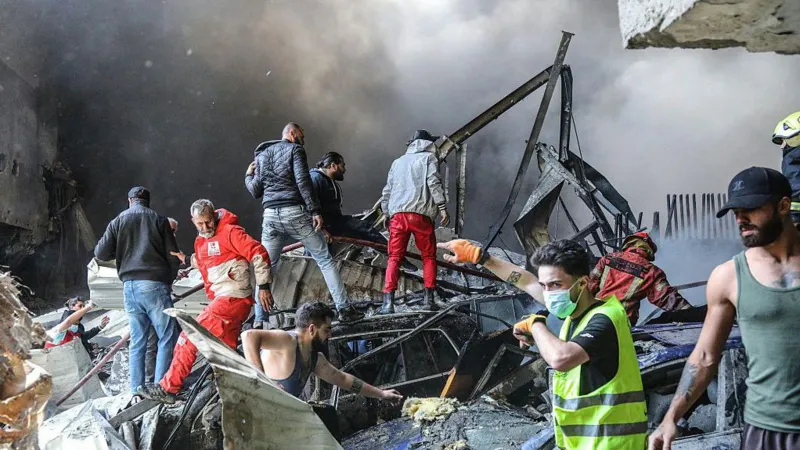
The Israeli military continued to strike Lebanon on Thursday – targeting what it described as Hezbollah rocket launch sites in the south. It also issued a new evacuation warning for residents in the southern suburbs of the capital, Beirut.
The head of the World Health Organization (WHO), Tedros Adhanom Ghebreyesus, said on X that this included the Jnah area, which includes two major hospitals.
“At this time, no alternative medical facilities are available to receive approximately 450 patients from the two hospitals (including 40 patients in the ICU), rendering their evacuation operationally unfeasible,” he said.
Among those being treated at the hospitals, Tedros added, were some of the 1,150 people that Lebanon’s health ministry said were wounded in Wednesday’s massive wave of Israeli strikes. At least 303 people were killed.
Tedros also said that the headquarters of the Ministry of Public Health, which “hosts five shelters accommodating more than 5,000 people”, is in the evacuation area.
That ceasefire began with confusion over whether Lebanon, Israel’s second front, was to be included. Iranian officials and mediators from Pakistan said it was, US and Israeli officials said clearly that it was not.
Amid the confusion, the wave of Israeli strikes on Lebanon – the heaviest since the conflict began six weeks ago – prompted Iran to declare that Israel was break8ng the terms of the ceasefire, once again halt passage of shipping through the Strait of Hormuz, and to threaten retaliatory strikes.
Israel’s military continues to occupy a large part of the south of Lebanon, where it has destroyed villages in recent days. Without a commitment to a temporary ceasefire at least, it is not clear how productive talks could proceed between the two sides.
(BBC)

Brazil bowler Laura Cardoso takes 9 Lesotho wickets in record-breaking T20 win

Zimbabwe Women set for maiden tour of Pakistan

Bangladesh advance match timings to save energy

PM on inspection tour of newly renovated Colombo Central Bus Stand

Israel to hold direct talks with Lebanon but no ceasefire, Netanyahu says

Sun directly overhead Nagawilluwa, Galgamuwa, Sigiriya, Palugasdamana and Mankerni about 12:11 noon today (10)

‘Dates have the highest sugar content to fight Coronavirus’

Sunday Island 27 December – Headlines

#SundayIsland 17th December – Headlines

Sunday Island – 28th March

Sunday Island Headlines – 21 March

Sunday Island – 21st February – Headlines
-

 Features6 days ago
Ranjith Siyambalapitiya turns custodian of a rare living collection
-

 News6 days ago
Global ‘Walk for Peace’ to be held in Lanka
-

 News4 days ago
Lankan-origin actress Subashini found dead in India
-

 Features6 days ago
Beyond the Blue Skies: A Tribute to Captain Elmo Jayawardena
-

 News2 days ago
AG: Coal procurement full of irregularities
-

 Features6 days ago
Aspects of Ceylon/Sri Lanka Foreign Relations – 1948 to 1976
-

 Business2 days ago
Hayleys Mobility introduces Premium OMODA C9 PHEV
-

 Sports2 days ago
DS to face St. Anthony’s in ‘Bridges of Brotherhood’ cricket encounter