
News
India’s accountability in Sri Lanka conflict: Govt. can ask India to prosecute those responsible coming under its purview -HRW


By Shamindra Ferdinando
Deputy Asia director at Human Rights Watch (HRW) Meenakshi Ganguly says Sri Lanka could request foreign governments to prosecute those responsible for human rights violations coming under the purview of relevant jurisdictions.
Stressing the responsibility on the part of Sri Lanka to indict the accused, Ganguly said Sri Lanka could ask foreign governments to take appropriate action in relevant jurisdictions. Other countries could also indict people as a matter of universal jurisdiction, but most crucially, it is the obligation of the Sri Lanka government to prosecute, the top HRW spokesperson said.
Ganguly, who has been with the HRW since 2004, said so in response to The Island queries regarding the accountability on the part of India for atrocities perpetrated by the Indian military during its deployment in Sri Lanka.
The former correspondent for Time Magazine and Press Trust of India sent us the following response to several specific questions pertaining to accountability issues: The Sri Lankan government has obligations under international law to investigate and appropriately prosecute all individuals responsible for violations of international human rights law and international humanitarian laws that are committed within the country.
For various reasons, such as being outside of the government’s jurisdiction, not everyone who is responsible for such crimes will be able to receive justice in Sri Lanka. But the fact that everyone cannot be prosecuted does not remove the obligation of Sri Lanka to prosecute those who are within the jurisdiction of the country.
The UN declaration of human rights provides that ‘everyone has the right to an effective remedy.’ The human rights committee has further detailed state obligations on the right to a remedy under international law.
The inability to prosecute everyone who should face justice is no reason for the Sri Lanka government to do nothing.The Sri Lankan authorities can also request states to provide these remedies in relevant jurisdictions. Other countries can also prosecute people as a matter of universal jurisdiction, but most crucially, it is the obligation of the Sri Lanka government to prosecute.”
The Island submitted the following questions: (1) How do you (HRW) propose to deal with human rights violations perpetrated by the Indian Army during its deployment in Northern and Eastern Provinces of Sri Lanka (July 1987-March 1990)?
(2) Do you believe a separate inquiry with the assistance/involvement of India is required to identify those who suffered in the hands of the Indian Army in Sri Lanka and the loved ones of LTTE cadres killed/disappeared during July 1987-March 1990?
(3) [A]Quite a number of ex-LTTE cadres as well as other members of Tamil groups sponsored by India are now living in Europe, America, Canada, Australia, Middle East and India. How do you propose to investigate them as some countries have granted them citizenship?
[B] Do you believe special inquiry is needed to deal with those who are living in India?
(4) Some members of those groups now serve as MPs. How do you expect the government to deal with parliamentarians? (One of them was recently accused of conspiring with Sri Lankan military intelligence to facilitate Gotabaya Rajapaksa’s victory at 2019 presidential poll)
(5) And finally, [A] Do you believe the TNA should be investigated for its links with the LTTE as the former (TNA) recognized internationally proscribed group as the sole representative of the Tamil speaking people? [B] Have you received representations from human rights defenders as regards the need for a no holds barred investigation to identify all perpetrators, including the Indian military, Indian intelligence services and those Sri Lankans living overseas under different names?
The above issues were raised in the wake of HRW slamming the government here over claims of continuing abuses. In a new report released in Geneva on Sept. 18, 2023, New York headquartered HRW alleged that such actions undermined the purported goals of its newly proposed truth and reconciliation commission. Victims of past violations, their families, and human rights defenders have rejected the government’s initiative because the government has not consulted them, ignored evidence gathered by past commissions, and exposed them to fresh security force abuses.
The 39-page report, “‘If We Raise Our Voice They Arrest Us’: Sri Lanka’s Proposed Truth and Reconciliation Commission,” documented what HRW called abusive security force surveillance and intimidation of activists and campaigners from minority Tamil families of those who “disappeared” during the conflict. The HRW alleged the government used draconian counterterrorism laws to silence dissenting voices, including those calling for truth and accountability, while government-backed land grabs target Tamil and Muslim communities and their places of worship, the report claimed.











Approval of the Cabinet of Ministers has been granted at their meeting held on 19.05.2025 in order to introduce amendments to the Inland Revenue Act No. 24 of 2017 including the proposed tax revisions to enhance the tax structure paving way for state financial integrity based on revenue.
Accordingly, the revised draft bill has been prepared by the legal draftsman and clearance of the Attorney General has been received.
Therefore, the Cabinet of Ministers has granted approval for
the resolution furnished by the President in his capacity as the Minister of Finance, Policy Planning and Economic Development to publish the aforementioned draft bill in the government gazette notification and subsequently, forward the same to the Parliament for its concurrence.
The National Mineral Policy was prepared for the first time in the year 1999, and the aforementioned policy has been amended in 2023 to cover matters such as preparing an updated data system related to mineral resources, adding value to the export of minerals, encouraging mineral-related industrialists, extracting mineral resources and managing the environment sustainably, and resolving the issues related to the ownership of the land arising in extracting mineral resources.
The revised National Mineral Policy has been reupdated in line with the manifesto “A Sustainable Resource Utilization – Generation of the Highest Benefit” under the policy statement of the current government” A Thriving Nation – A Beautiful Life.”
Accordingly, the Cabinet of Ministers has approved the resolution presented by the Minister of Industries and
Entrepreneurship to implement the so-formulated “National Mineral Policy—2026.”

The Gampaha High Court has sentenced Twelve (12) individuals to death over the 2022 murder of former Polonnaruwa District Member of Parliament Amarakeerthi Athukorala and his security officer.

Heartbreak for Gurbaz and Afghanistan as South Africa win after double Super Over

Amendment of the Inland Revenue Act No. 24 of 2017

Cabinet nod for “National Mineral Policy” – 2026

Twelve sentenced to death by Gampaha High Court
Ten new buses with facilities for people with special needs

Ghosts of 2016 writ large as England, West Indies meet again

‘Dates have the highest sugar content to fight Coronavirus’

Sunday Island 27 December – Headlines

#SundayIsland 17th December – Headlines

Sunday Island – 28th March

Sunday Island Headlines – 21 March

Sunday Island – 21st February – Headlines
-

 Features4 days ago
My experience in turning around the Merchant Bank of Sri Lanka (MBSL) – Episode 3
-

 Business5 days ago
Zone24x7 enters 2026 with strong momentum, reinforcing its role as an enterprise AI and automation partner
-

 Business4 days ago
Remotely conducted Business Forum in Paris attracts reputed French companies
-
 Business4 days ago
Four runs, a thousand dreams: How a small-town school bowled its way into the record books
-

 Business4 days ago
ComBank and Hayleys Mobility redefine sustainable mobility with flexible leasing solutions
-
 Business17 hours ago
Autodoc 360 relocates to reinforce commitment to premium auto care
-
 Business5 days ago
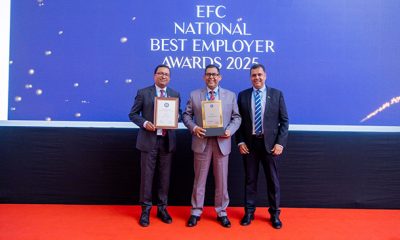
HNB recognized among Top 10 Best Employers of 2025 at the EFC National Best Employer Awards
-

 Editorial7 days ago
All’s not well that ends well?