
News
Indian PM Narendra Modi’s mother dies aged 99


Indian Prime Minister Narendra Modi’s mother Heeraben Modi has died at the age of 99.She had been admitted to hospital in the western state of Gujarat, where she lived, after her health deteriorated.
“A glorious century rests at the feet of God,” Mr Modi tweeted. He had flown from Delhi to visit her at the hospital on Wednesday evening.
The Indian prime minister often visited his mother to seek her blessings on important occasions and festivals.Her life and sacrifices had “shaped” his mind, personality and self-confidence, Mr Modi wrote on 18 June when Heeraben turned 99.
“My Mother is as simple as she is extraordinary. Just like all mothers,” he wrote.
They were last seen together in public on 4 December when Mr Modi visited her house during the assembly election in Gujarat, his home state.Heeraben lived with Mr Modi’s younger brother and his family.She was born in Visnagar in Gujarat’s Mehsana district in 1923.
“Her childhood was one of poverty and deprivation,” Mr Modi wrote.As a teen, she was married to Damodardas Mulchand Modi and moved to the town of Vadnagar a few kilometres away.
“In Vadnagar, our family used to stay in a tiny house which did not even have a window, let alone a luxury like a toilet or a bathroom,” Mr Modi wrote in his blog.
He described his mother as punctual, neat and a hard worker. “While working, she would hum her favourite bhajans and hymns,” he wrote.Heeraben never attended public programmes, Mr Modi wrote, adding that she had only accompanied him to two events – the second one was in 2001, when he first took oath as the chief minister of Gujarat.
“Since then, she has never accompanied me to a single public event,” he wrote.
Though he became India’s prime minister in 2014, Heeraben visited him in Delhi only two years later. Mr Modi had tweeted photos of himself showing her around his official residence.Months later, when Mr Modi’s government controversially banned 500 and 1,000 rupee notes in a bid to crack down on undeclared wealth, Heeraben was photographed visiting a bank, like millions of Indians, to exchange old notes.
(BBC)


A day after a US submarine sunk an Iranian Navy warship off the coast of Sri Lanka, the Foreign Minister of Iran, Sayed Abbas Araghchi, has warned that the US would “pay bitterly” for targeting a ship in international waters, The Tribune has reported.
Araghchi posted on social media platform X on Thursday saying, “The US has perpetrated an atrocity at sea, 2,000 miles away from Iran’s shores.”
The frigate IRIS Dena, a guest of India’s Navy carrying almost 130 sailors, was struck in international waters without warning, said the Iran Foreign Minister, adding, “Mark my words: The US will come to bitterly regret the precedent it has set.”
US Secretary of War, Pete Hegseth, on Wednesday confirmed that a US submarine fired a torpedo and sank the Iranian Navy vessel IRIS Dena west of Sri Lanka.
In a way, the Iran and US-Israel conflict has reached close to the Indian coast. The strike today at sea was almost 4,000 kms away from Iran, significantly expanding the radius of war. Already, fearing Iranian missile strikes, several US warships have moved eastward towards India.
These ships are in international waters. India has denied that any US Navy assets were using Indian ports. The Iranian ship, hit on Wednesday, was returning after participating in the international fleet review and exercise Milan hosted by India at Visakhapatnam.
The Iranian ship went down with almost 130 sailors on board missing. The Sri Lankan Navy, acting on a distress call, rescued 32 of the Iranian sailors. Hegseth confirmed the act by the US forces, saying the ship was hit in the Indian Ocean, stating, “an Iranian warship that thought it was safe in international waters. .. Instead, it was sunk by a torpedo”.
Hegseth did not name the Iranian ship that was attacked. But earlier, the Sri Lankan Navy reported the distress call from IRIS Dena when it was some 40 kms west of Galle, located on the south-western part of the island country. On February 16, the Iranian ship had sailed into the port of Visakhapatnam, where seventy-four nations participated.
Warships from Australia, Japan, South Korea, Russia, and dozens of others were anchored alongside the now-sunk Iranian vessel. Iran’s Navy Commander, Rear Admiral Shahram Irani, held talks with India’s Chief of Naval Staff on strengthening maritime security cooperation.
The theme was “United through Oceans.” Notably, the US Navy was supposed to send the guided-missile destroyer USS Pinckney to the exercise Milan; however, the ship was diverted to Singapore on February 15. The US did not field its warship in Milan, which had ships from Russia and Iran.
The exercise ended on February 25. Three days later, on February 28, the United States and Israel launched Operation Epic Fury. The IRIS Dena was transiting home. This morning at 5:08 a.m. local time, the IRIS Dena issued a distress call. Sri Lanka’s Foreign Minister, Vijitha Herath, informed parliament that two navy vessels and an aircraft were deployed. Thirty crew members were rescued and admitted to Karapitiya Hospital in Galle.
The Straits Times reported 32 critically wounded survivors. Reuters reported 101 missing and 78 wounded. The Sri Lankan Navy spokesman said the operation was conducted in line with the International Convention on Maritime Search and Rescue.

The Public Utilities Commission of Sri Lanka (PUCSL) has warned of a possible risk of power cuts due to the use of inferior quality coal affecting generation capacity at the Lakvijaya Power Plant, according to a recent commission report.
The commission said the risk to the continuous electricity supply was assessed based on the peak demand forecast submitted by the Ceylon Electricity Board (CEB) for 2026.
According to the report, the analysis assumed that hydropower plants could contribute up to 1,300 MW to meet the night peak demand, while the Lakvijaya Power Plant (LVPS) would be able to contribute only up to 690 MW due to a capacity shortfall, assuming a 40 MW generation capacity reduction from each unit.
The PUCSL said the assessment was carried out taking into account the planned maintenance schedule submitted by the CEB. Under the schedule, Unit 1 of the Lakvijaya plant is due to undergo maintenance checks and repairs in June for a period of 25 days, while Unit 2 is scheduled for maintenance in July for another 25 days.
The report also noted that the 270 MW West Coast Power Plant is scheduled to undergo maintenance in April for 10 days, while the 150 MW Kelanitissa Combined Cycle Power Plant (KCCP 2) is expected to undergo maintenance during May, June and July.
Under normal conditions, the report said, there is a potential risk of a generation capacity shortage if electricity demand reaches 3,030 MW in April, 3,070 MW in June and 3,000 MW in July.
The highest recorded night peak demand so far in 2026 was 2,949 MW on February 25.
The PUCSL further warned that if one coal unit or any major power plant becomes unavailable from the existing generation mix, there would be a significant risk of a generation capacity shortage to meet the night peak demand, particularly during April, June and July.
Energy sector analysts said the use of substandard coal could further aggravate operational challenges at the Norochcholai plant, potentially affecting generation efficiency and reliability if corrective measures are not taken promptly.
By Ifham Nizam
News
Sajith demands clear statement from govt. about Iranian vessel sunk close to Galle and another located near Colombo port
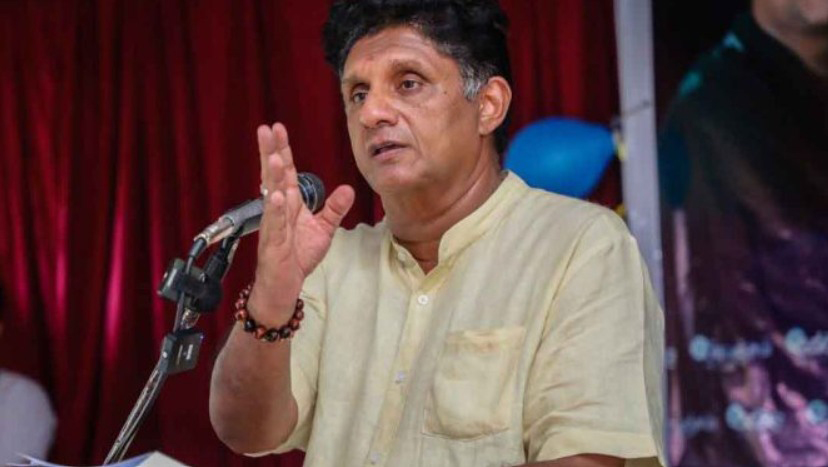
Opposition and SJB Leader Sajith Premadasa yesterday demanded a “clear statement from the government regarding this, as well as on the Iranian ship that was attacked near Galle, the number of personnel involved, and other related details,” following the sinking of an Iranian naval vessel in waters off Sri Lanka.
Making a special statement in Parliament, Premadasa said that information had been received about another Iranian vessel in Sri Lanka’s maritime boundary near the Port of Colombo and urged the government to immediately clarify the situation.
Premadasa said the government should also issue a special statement regarding international media reports that the Iranian Navy ship IRIS Dena had been sunk in the Indian Ocean with a torpedo attack by a US submarine.
He said the Sri Lanka Navy had carried out a search and rescue mission following the incident, a move that the Opposition appreciated.
However, the government had not yet informed Parliament of the exact location of the attack, whether the incident occurred in Sri Lankan waters or what diplomatic measures had been taken in response, Premadasa said.
“It has been revealed via international media that the Iranian Navy ship ‘IRIS Dena’ was sunk following an attack by a US submarine in the Indian Ocean,” he said.
The Opposition Leader added that the failure of the government to brief Parliament on an incident of such magnitude was preventing Members of Parliament from properly carrying out their duties.
Premadasa said several international media outlets as well as US Secretary of War Pete Hegseth had confirmed that a torpedo had been launched from a US submarine targeting the Iranian naval vessel, although the government and the Defence Ministry had denied those reports.
“The government must make an official announcement in this regard,” he said.
Premadasa further told Parliament that information had also come to light about another Iranian ship currently within Sri Lankan territorial waters off the Colombo Port, stressing that the government must immediately clarify the matter.
by Saman Indrajith

Showers or thundershowers are likely at a few places in the Southern province and in Rathnapura, and Kaluthara districts during evening or night.

‘IRIS Dena was Indian Navy guest, hit without warning’, Iran warns US of bitter regret

Risk of power cuts due to use of low-quality coal,PUCSL warns

Sajith demands clear statement from govt. about Iranian vessel sunk close to Galle and another located near Colombo port

Sri Lanka evacuates crew of second Iranian vessel after US sunk IRIS Dena

University of Wolverhampton confirms Ranil was officially invited

‘Dates have the highest sugar content to fight Coronavirus’

Sunday Island 27 December – Headlines

#SundayIsland 17th December – Headlines

Sunday Island – 28th March

Sunday Island Headlines – 21 March

Sunday Island – 21st February – Headlines
-
 Features4 days ago
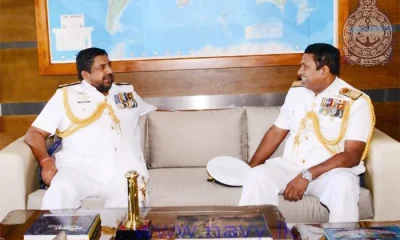
Brilliant Navy officer no more
-
 Opinion4 days ago
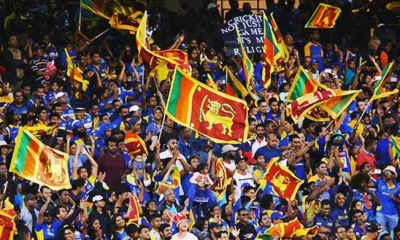
Sri Lanka – world’s worst facilities for cricket fans
-

 Features4 days ago
A life in colour and song: Rajika Gamage’s new bird guide captures Sri Lanka’s avian soul
-

 Business2 days ago
Cabinet nod for the removal of Cess tax imposed on imported good
-

 Features5 days ago
Overseas visits to drum up foreign assistance for Sri Lanka
-
 Features5 days ago
Sri Lanka to Host First-Ever World Congress on Snakes in Landmark Scientific Milestone
-
 Latest News2 days ago
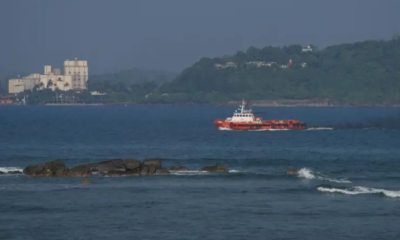
Around 140 people missing after Iranian navy ship sinks off coast of Sri Lanka
-

 News1 day ago
Legal experts decry move to demolish STC dining hall