
Business
Indian HC brings up hot topics to the attention of SL authorities


Connectivity corridor between India and Sri Lanka, cheaper energy production and grid interconnection
By Sanath Nanayakkare
Santosh Jha, the High Commissioner of India while delivering the keynote at the 45th National Conference of CA Sri Lanka on 14 October 2024, brought up a topic that the previous government was keen to implement amid protests from various quarters including the Buddhist prelates.
The 23-kilometer Palk Strait Bridge and Tunnel first proposed between 2002-2004 by then prime minister Ranil Wickremasinghe was renewed while he was president between 2022-2024, and it resurfaced last week when the Indian High Commissioner put his finger on the proposal before the new government of Sri Lanka has completed its first month in office.
In addition to that the Indian HC mentioned many other collaborative efforts that Sri Lanka could pursue to benefit from India’s accelerated growth story including cheaper energy production and grid interconnection.
The following are a few excerpts from his speech.
I am truly delighted to have this opportunity to address the 45th National Conference of the Institute of Chartered Accountants of Sri Lanka. I am truly honored and privileged to have received this invitation.My guess is that it is perhaps also a reflection of a growing desire in Sri Lanka to look at India afresh – and to seek advantages from the Indian growth story. If so, this is a legitimate aspiration. We must work hand-in-hand and grow and prosper together. Like it or not, we are naturally intertwined and interlinked – by geography, history, tradition and by our future. We are irreplaceable, indispensable and inextricable as partners. Any attempt to drive a wedge can only be detrimental to our shared future and for our shared aspirations. It will be a negative not just for one side alone but to the other as well – and that too in equal measure. We must, therefore, transcend old mindsets and overcome past hesitations. We must actively work together for our shared goals, objectives and aspirations.
Within the G20, the Indian economy has been a star performer. It is the world’s fastest growing major economy. Its solid fundamentals will ensure that India’s high growth is likely to continue for decades to come. Just to elaborate, ten years ago, India was the 10th largest economy in the world; we are now the fifth largest; and we will soon be the third largest before the end of this decade. Many global experts predict that India could emerge as the second largest economy by 2050.
So, India is clearly emerging as a key player in this ongoing rebalancing. Our share of the global GDP growth, too, is rising exponentially. Sri Lanka, as our closest maritime neighbor, has an obvious opportunity in this context. To plug in to the regional growth engine that is India and to leverage it to rebuild its own growth and prosperity.
The ongoing shifts in global power also implies that the traditional institutions that had managed the global order are increasingly inadequate to deal with them. This includes the UN, the WTO, the WHO and others. They are today completely out of sync with contemporary realities, unrepresentative in terms of emerging global power configurations, and unable to address global challenges. This was most ominously evident during the Covid pandemic, when the UN was mostly a bystander. Metaphorically speaking, their software is not only outdated but also in need of an urgent update.
Ineffectual global institutions have given rise in turn to the phenomenon of plurilateralism. This refers to a group of countries taking recourse to mechanisms that serve their limited agenda and shared interests in an agreed theater. The QUAD, BRICS, BIMSTEC or IORA or the more recent Colombo Security Conclave are best examples. Sri Lanka is already a part of the BIMSTEC, IORA and Colombo Security Conclave. Recently, it has also announced its intention to seek membership of the BRICS. These enable Sri Lanka a role in designing and shaping regional structures and to leverage them to benefit from security and economic structures that are set up within these groupings. Obviously, India as a member of these groupings provide Sri Lanka with another vector for engagement with India. Another example of such plurilateral mechanisms, which is interesting from Sri Lanka’s perspective, is the IMEC – or the India-Middle East-Europe Economic Corridor. This initiative aims to connect India, Middle East, and Europe.
A connectivity corridor between India and Sri Lanka, therefore, can open doors to Sri Lanka to connect with the rest of the world and to access markets and opportunities beyond India that are presently not leveraged.
As India attracts more foreign investors, there is a potential for Sri Lanka to attract business from those who are seeking to enter India. Sri Lanka can position itself as India plus one, in several areas – from services to manufacturing. It can leverage its location, and of course, its strong bilateral business and commercial links with India.
After the Presidential Elections in Sri Lanka, External Affairs Minister Dr. S. Jaishankar became the first foreign dignitary to visit Sri Lanka. This is indicative of the priority we accord to the bilateral partnership with Sri Lanka. In his meetings with the Sri Lankan leadership, EAM discussed ongoing initiatives in the field of cheaper energy production and grid interconnection, low-cost fuel and LNG supply, solar electrification of religious places, connectivity, DPI, health and dairy development. Our approach is closely linked to Sri Lanka’s priorities and seeks to strengthen the effort of the Sri Lanka Government to fulfill the growing aspirations of its people. Like in the domestic domain, our foreign policy towards Sri Lanka, too, is people-centric – the benefits to them are the only benchmark of our efforts.
For this reason, India is looking at assisting development of Sri Lanka through investments and grants, and relatively less through debt instruments. This, we believe, serves Sri Lanka better given its recent experiences with debt burdens. For this reason, EAM Jaishankar announced that payments for 07 completed Lines of Credit projects to the tune of 20 million US dollars would be converted into Grant assistance.

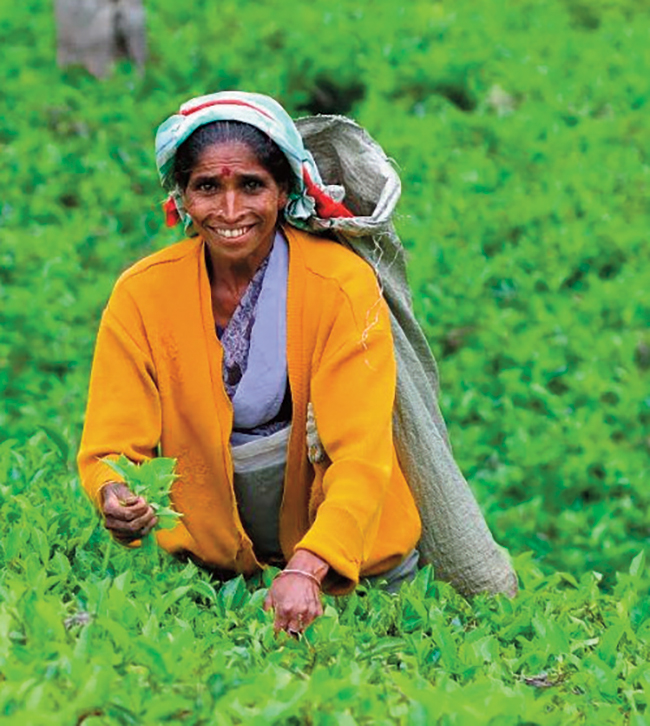
Amid softening diplomatic rhetoric between the United States and Iran, a senior economist told The Island Financial Review yesterday that the stability of Sri Lanka’s tea exports to the Middle East, particularly Iran, would be maintained.
The economist, who closely follows regional developments, pointed to recent statements by Iranian Foreign Minister Abbas Araghchi and U.S. President Donald Trump as signs of de-escalation. Araghchi denied plans to execute anti-government protesters, while Trump indicated he had received assurances that killings had stopped and that the U.S. was “watching the process.”
“When geopolitical tensions ease, trade channels stabilise,” the economist said. “Iran and the Middle East are important markets for Sri Lankan tea. Any reduction in political risk is likely to support demand and reduce vulnerability in our export earnings,” he added.
The comments come against the backdrop of this week’s Colombo tea auction, where offerings totalled 6.0 million kilograms. The auction report noted “less activity from Iran and the Middle Eastern markets following recent restrictions in trading conditions,” reflecting the sensitivity of tea exports to regional instability.
Western Slopes and Nuwara Eliya teas showed mixed trends, with some grades firm and others declining. High and Medium Grown CTC teas sold around previous levels, while Low Grown varieties were easier by up to Rs. 20 per kg. Ex-Estate offerings remained steady at 0.74 million kilograms, with no significant change in quality, according to Forbes and Walker Research.
Low Growns, which accounted for approximately 2.4 million kilograms, saw varied demand: the Leafy category was quieter, while Semi-Leafy met with fair interest. Tippy teas faced pressure, especially in the Premium catalogue, where a lack of suitable bids left many unsold.
Selective demand was noted from shippers to the UK, Europe, and South Africa, while markets in Japan, China, the Middle East, and the CIS were reasonably active mostly at lower levels, Forbes and Walker said.
The economist added that while global tea markets remain volatile, any sustained calm in the Middle East could help restore buyer confidence from Iran – a key destination for Sri Lankan Orthodox teas.
“We are not out of the woods yet, but the signs are encouraging,” he said. “If the diplomatic tone continues to improve, we could see firmer demand from the region in the coming weeks,” he said.
By Sanath Nanayakkare
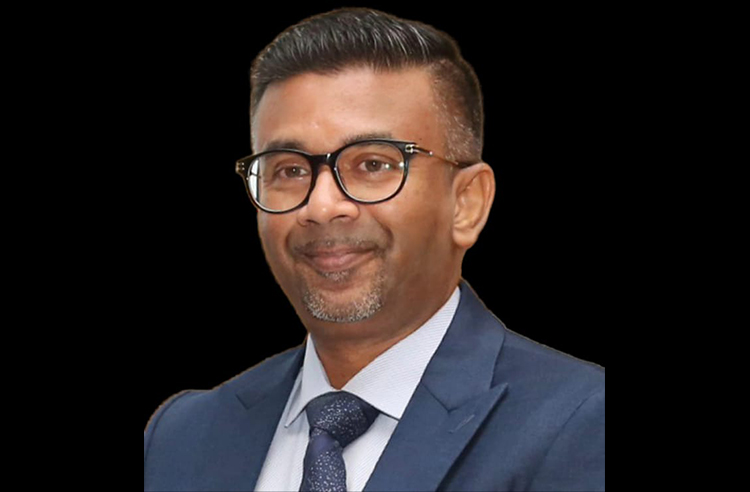
Sri Lanka is looking to significantly expand its commercial engagement with the Maldives, with business leaders calling for a more focused strategy to capitalise on growing opportunities in trade, services and tourism-linked investments.
Immediate Past President of the Sri Lanka-Maldives Business Council Sudesh Mendis said that the Maldives remains a high-potential market for Sri Lankan exporters and service providers, particularly in construction materials, food and beverage supplies, logistics and professional services aligned with the island nation’s expanding tourism and infrastructure sectors.
“The Maldives offers a demand-driven market where Sri Lankan products and services already enjoy strong acceptance, Mendis said, noting that geographical proximity and long-standing business ties give Sri Lanka a natural competitive advantage.
He said continued resort development, urban housing projects and public infrastructure investments in the Maldives have sustained demand for Sri Lankan goods, while services such as engineering, consultancy and skilled manpower also present room for growth.
However, Mendis stressed that logistical inefficiencies and administrative bottlenecks continue to limit expansion. “Improving shipping connectivity, reducing customs delays and ensuring smoother payment mechanisms are essential if Sri Lankan businesses are to scale up operations, he said.
Tourism collaboration was identified as another underdeveloped area, with Sri Lanka and the Maldives increasingly viewed as complementary destinations rather than rivals. Joint marketing initiatives and multi-destination travel packages could help increase visitor arrivals to both countries, Mendis added.
He also called for stronger private-sector leadership through regular trade missions, sector-focused business forums and targeted policy support to sustain momentum.
“With a coordinated and commercially driven approach, Sri Lanka can substantially deepen its economic presence in the Maldivian market, Mendis said.
Sri Lanka and the Maldives have maintained close economic relations, with bilateral trade expected to gain further traction as regional connectivity improves.
By Ifham Nizam
The CSE commenced trading yesterday on a negative note due to profit-takings but later turned positive, when sections of the media reported that an IMF delegation is to visit Sri Lanka next week to facilitate the fifth review of the extended fund facility to Sri Lanka.
Amid those developments both indices moved upwards. The All Share Price Index went up by 41.42 points, while the S and P SL20 rose by 25.28 points.
Turnover stood at Rs 4.73 billion with ten crossings. Top seven crossings were reported in DFCC, which crossed 4.4 million shares to the tune of Rs 701 million and its shares traded at Rs 159, HNB 250,000 shares crossed for Rs 105 million; its shares traded at Rs 420, Sierra Cables 2 million shares crossed for Rs 75 million; its shares traded at Rs 37.57, Seylan Bank 666,000 shares crossed for Rs 73.4 million; its shares traded at Rs 110.50.
Commercial Bank 300,000 shares crossed for Rs 57.2 million; its shares traded at Rs 225, Sampath Bank 300,000 shares crossed to the tune of Rs 46.6 million; its shares traded at Rs 155 and Ambeon Capital 1 million shares crossed for Rs 42 million; its shares traded at Rs 43.
In the retail market top seven companies that have mainly contributed to the turnover were; ACL Cables Rs 171 million (1.7 million shares traded), Commercial Bank Rs 153 million (686,000 shares traded), Sierra Cables Rs 130 million (3.5 million shares traded), Sampath Bank Rs 109 million (703,000 shares traded) , HNB Rs 109 million (250,000 shares traded), Lanka Credit and Business Finance Rs 76 million (8.2 million shares traded) and HNB (Non-Voting) Rs 76 million (213,000 shares traded). During the day 132 million share volumes changed hands in 37857 transactions.
It is said that the banking and finance sector led the market, especially HNB and Commercial Bank, while construction related companies, especially Sierra Cables, also performed well at the floor.
The manufacturing and travel and tourism sectors also performed well.
Yesterday the rupee was quoted at Rs 309.50/60 to the US dollar in the spot market weaker from Rs 309.35/50 Wednesday, having depreciated in recent weeks, dealers said, while bond yields were broadly steady.
The telegraphic transfer rates for the American dollar were 305.9000 buying, 312.9000 selling; the British pound was 408.2980 buying, and 419.6162 selling, and the euro was 352.7488 buying, 364.1370 selling.
By Hiran H Senewiratne

Floods kill more than 100 across southern Africa as rains intensify

Lanning, Litchfield and Pandey help UP Warriorz do the double over Mumbai Indians

Ugandan leader to extend 40-year rule after being declared winner of contested poll

Iran supreme leader blames US for deadly protests

Trump names Tony Blair, Jared Kushner to Gaza ‘Board of Peace’

The Government is taking steps to regulate early childhood education to ensure quality education while enhancing the professionalism of preschool teachers. — PM

‘Dates have the highest sugar content to fight Coronavirus’

Sunday Island 27 December – Headlines

#SundayIsland 17th December – Headlines

Sunday Island – 28th March

Sunday Island Headlines – 21 March

Sunday Island – 21st February – Headlines
-
 News21 hours ago
UNDP’s assessment confirms widespread economic fallout from Cyclone Ditwah
-

 Business3 days ago
Koaloo.Fi and Stredge forge strategic partnership to offer businesses sustainable supply chain solutions
-

 Business7 days ago
Dialog and UnionPay International Join Forces to Elevate Sri Lanka’s Digital Payment Landscape
-
 Editorial21 hours ago
Crime and cops
-

 Editorial2 days ago
The Chakka Clash
-
 News7 days ago
Sajith: Ashoka Chakra replaces Dharmachakra in Buddhism textbook
-

 Features7 days ago
The Paradox of Trump Power: Contested Authoritarian at Home, Uncontested Bully Abroad
-

 Features7 days ago
Subject:Whatever happened to (my) three million dollars?