
Business
Indian Banks turn cautious on Sri Lanka exposures


Mumbai: As Sri Lanka grapples with a severe foreign exchange crunch, high street banks in India have turned cautious and selective about their exposures to the island nation.
Several institutions have reduced discounting letters of credit (LC) – the basic instrument for financing trade – issued by many Lanka lenders while others are giving credit to exporters based on the standing of the party, amount, the tenor of the credit, and standing of the bank issuing LCs.
Given the long trade relations, Sri Lanka’s dependence on imports and expectations of credit lines (from India and other countries), and possible currency arrangements, bankers hope that the country would be able to tide over the crisis in the medium term.
At the beginning of December, Sri Lanka’s forex reserves were just enough for a month of imports.
“We have not put a complete embargo on discounting export bills to Sri Lanka. It’s done on the basis of limits available with LC issuing banks,” said a senior official of the State Bank of India, the country’s largest lender.
Among other large banks, HDFC Bank was going slow on handling LCs for exports to Sri Lanka, Axis that has financed many Indian companies with exports to Sri Lanka is being selective, while ICICI Bank has cut limits for Sri Lanka along with some of the other smaller countries for quite some time now. IndusInd, said an official of the bank, is closely monitoring the developments and has been selective in the transactions undertaken.
“There is nothing wrong with banks in Sri Lanka. But when the payment falls due, there may not be enough dollars available in the forex market there,” said a banker.
India’s total exports to Sri Lanka was $3.2 billion in 2020. Oil, ships, boats, pharmaceutical products, sugar, iron and steel, cotton and machinery are among the top export items.
Under the normal trade finance arrangement, an exporter is paid by its bank which discounts the bill after documents like shipping bills, commercial invoices, and bills of lading are submitted to the bank. The bank is paid after a certain time – the credit period which could be up to six months (or a year or more for capital goods) – by the importer’s (here, the Sri Lankan buyer’s) bank.
Banks discounting bills have turned edgy as Sri Lanka is starved of dollars and the Sri Lankan central bank may not be in a position to supply dollars when importers’ banks have to make payments to exporters’ banks in India.
Payments against sight bills, where (under normal circumstances) funds are transferred within five working days, are taking more than a month, said an official with a leading export promotion organisation. Some exporters, said an official of a consumer goods company, are giving 6 to 7-month lines of credit to distributors who undertake exports to Sri Lanka.
Though large MNC banks like HSBC, Citi, and Standard Chartered, which have a long presence in Sri Lanka, continue to extend trade finance with certain precautions, they have the comfort of dealing with their respective Lanka office as the counterparty.
“Some banks are simply not giving any credit, but are simply operating on a collection basis. They are releasing money only after receiving it from the bank in Sri Lanka,” said a mid-sized exporter.
-Economic Times

Business
JAT Holdings celebrates the 6th Pintharu Abhiman Convocation, uplifting over 800 painters through NVQ certification

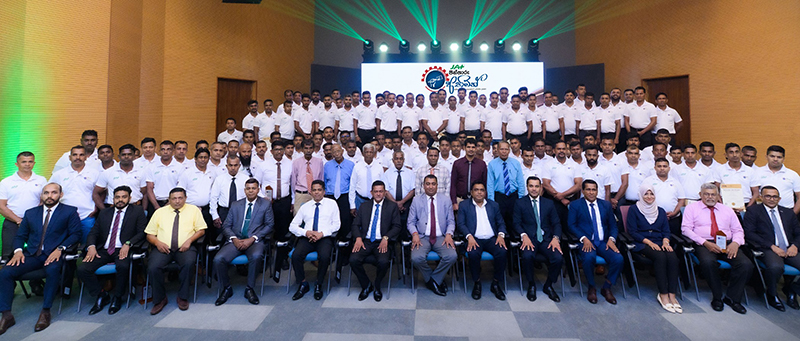
JAT Holdings PLC marked a significant milestone with the successful conclusion of the 6th JAT Pintharu Abhiman Convocation, recognising more than 800 painters who have earned their NVQ Level 3 qualification, an internationally recognised professional certification delivered in partnership with the National Apprentice and Industrial Training Authority (NAITA).
JAT Pintharu Abhiman was established to uplift Sri Lanka’s painter community through structured skills development, professional recognition and stronger earning potential. This year’s graduating cohort reflects the programme’s expanding reach and the tangible changes it continues to deliver for individuals, families and communities.JAT in collaboration with NAITA has streamlined the certification process such that what would traditionally take up to six months has been refined into an efficient and high-impact three-day assessment model. This approach ensures painters can obtain their qualification without sacrificing extended periods of work, while JAT fully absorbs the certification cost, removing financial barriers and enabling wider access to formal recognition.
Research conducted amongst NVQ qualified participants shows meaningful improvements in livelihoods, with 90 percent reporting increased personal confidence and 76 percent noting an improvement in their overall standard of living. This uplift demonstrates the long-term value of industry-aligned professional training.
A noteworthy moment at this year’s convocation was the recognition of four female painters who received their NVQ certifications. Their achievement marks an important step in broadening female participation in a field that has historically been male dominated, reinforcing JAT Holdings’ commitment to creating inclusive pathways for technical development and sustainable employment.
Speaking at the ceremony, Mr. Wasantha Gunaratne, Director Sales and Technical (South Asia) of JAT Holdings PLC, said:
“Pintharu Abhiman is fundamentally about development, giving painters the knowledge, structure and recognition they need to progress in their careers. By equipping over 800 painters with an internationally recognised NVQ qualification, we are not only strengthening the technical standards of the industry but also creating real pathways for entrepreneurship and financial independence. It is especially encouraging to see that one in five certified painters have already begun building their own businesses. These are the outcomes that matter because they show that when we invest in skills, we unlock opportunity. JAT remains committed to expanding these avenues so every painter has the chance to grow, lead and build a sustainable future.”
The 6th JAT Pintharu Abhiman Convocation underscores JAT’s continued dedication to uplifting the painter community, enhancing industry standards and supporting national skills development through accessible, professionally recognised qualifications.

The Ceylon Chamber of Commerce, together with the American Chamber of Commerce, Exporters Association of Sri Lanka, Federation of Renewable Energy Developers, Joint Apparel Association Forum, National Chamber of Commerce of Sri Lanka and Sri Lanka Association for Software and Services Companies, has submitted joint observations on the Draft National Electricity Policy, highlighting that several key issues have not been adequately addressed.
Whilst recognizing the need for reform in the electricity sector, the submission flags several gaps in the draft policy that require closer attention. Key areas such as affordability, decarbonisation commitments, incentives for renewable energy, competition, and the long-term financial health of the sector are either missing or not addressed in sufficient depth.
The proposed tariff revisions outlined in the draft energy policy raise concerns, particularly regarding the removal of cross-subsidies and the proposal to restrict subsidies exclusively to households consuming less than 30 kWh per month. Without detailed analysis, these measures could weaken access to sustainable and affordable energy and potentially lead to fiscal risks.
The provisions allowing uncompensated curtailment, removing feed-in tariffs, and imposing mandatory time-of-use tariffs on rooftop solar users could make renewable energy projects un-bankable for international lenders, thereby increasing the cost of capital for Sri Lanka.
Calling for a more future-focused approach, the submission stresses the need for a policy that reflects modern electricity systems, including planning for the energy transition, energy storage, market competition, cross-border electricity trading, and emerging technologies.
The Chambers and Associations request a comprehensive revision of the Draft National Electricity Policy, alignment with the Electricity Act, and resubmission following substantive consultation, and reiterate support to engage constructively with policymakers to shape a policy that supports affordability, investment confidence, and Sri Lanka’s long-term energy security.
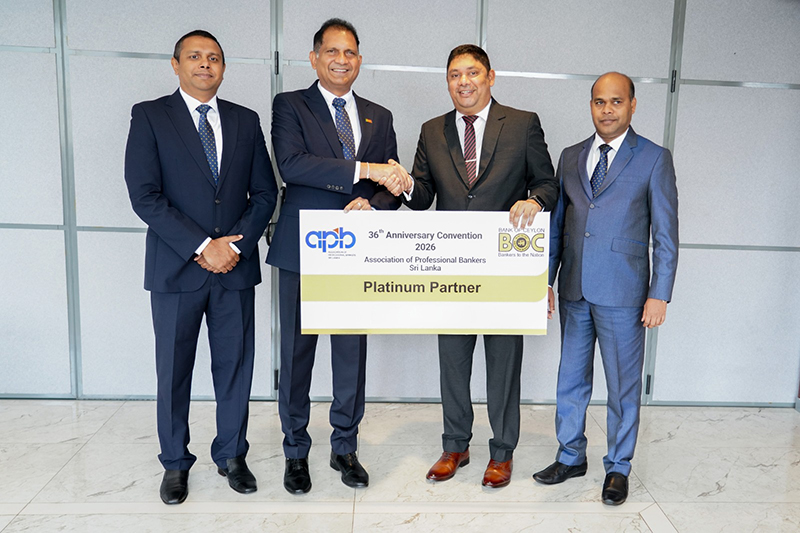
Bank of Ceylon (BOC) partnered with the 36th Annual Convention of the Association of Professional Bankers (APB) Sri Lanka, reaffirming its commitment to promoting professional excellence and knowledge sharing within the banking sector. The partnership was officially handed over by Sameera D. Liyanage, Chief Marketing Officer of Bank of Ceylon and M. R. N. Rohana Kumara, Deputy General Manager Business Revival Unit of Bank of Ceylon, reflecting BOC’s focus on empowering banking professionals and supporting the sustainable growth of Sri Lanka’s financial services industry.

U-19 World Cup: Henil, Kundu secure India’s first win

Deol, Tryon power Warriorz to first win of season

Fair weather will prevail in most parts of the island.

Probe into Chinese exit from Cable Car Project

Buddha statue issue: monk refuses meals in remand prison

‘Lanka faces food crisis’ :FAO calls for $16.5m aid

‘Dates have the highest sugar content to fight Coronavirus’

Sunday Island 27 December – Headlines

#SundayIsland 17th December – Headlines

Sunday Island – 28th March

Sunday Island Headlines – 21 March

Sunday Island – 21st February – Headlines
-

 Business1 day ago
Koaloo.Fi and Stredge forge strategic partnership to offer businesses sustainable supply chain solutions
-

 Business5 days ago
Dialog and UnionPay International Join Forces to Elevate Sri Lanka’s Digital Payment Landscape
-

 News5 days ago
Sajith: Ashoka Chakra replaces Dharmachakra in Buddhism textbook
-

 Features5 days ago
The Paradox of Trump Power: Contested Authoritarian at Home, Uncontested Bully Abroad
-

 Features5 days ago
Subject:Whatever happened to (my) three million dollars?
-
 Business1 day ago
SLT MOBITEL and Fintelex empower farmers with the launch of Yaya Agro App
-

 News5 days ago
Level I landslide early warnings issued to the Districts of Badulla, Kandy, Matale and Nuwara-Eliya extended
-
 Business1 day ago
Hayleys Mobility unveils Premium Delivery Centre