
News
India bans Muslim PFI and its eight front outfits for five years


BY S VENKAT NARAYAN Our Special Correspondent
NEW DELHI: India’s Ministry of Home Affairs (MHA) on Wednesday declared the Popular Front of India (PFI), a Muslim organisation, as an “unlawful association” under the Unlawful Activities (Prevention) Act (UAPA) and banned it for five years. The ban applies to its eight front organisations, including the Campus Front of India (CFI), its student wing.
The MHA has also issued another order empowering States to notify places associated with PFI and its front organisations where unlawful activity is taking place. According to the order, the District Magistrate will make a list of immovable properties of the organisation and make an order that no person who at the date of the notification was not a resident in the notified place shall, without the permission of the District Magistrate, enter, or be on or in, the notified place.
The State Governments of Uttar Pradesh, Karnataka and Gujarat have recommended a ban on PFI, MHA said. It added that if there is no immediate ban, the group will continue its subversive activities, disturbing public order and undermining the constitutional set-up of the country; encourage and enforce a terror-based regressive regime; continue to propagate anti-national sentiments and radicalise a particular section of society with the intention to create disaffection against the country and aggravate activities which are detrimental to the integrity, security and sovereignty of the country.
The ban comes close on the heels of a countrywide raid on September 22 when 109 members of the groups were arrested by the National Investigation Agency (NIA) and other agencies. MHA will now set up a tribunal under the Unlawful Activities (Prevention) Act (UAPA) to try the case where PFI could defend its case against the ban.
In a notification, MHA said some of the PFI’s founding members are the leaders of the Students Islamic Movement of India (SIMI) and have linkages with Jamat-ul-Mujahideen Bangladesh (JMB), both of which are proscribed organisations. It said that the group also has linkages to global terrorist organisations such as the Islamic State in Iraq and Syria (ISIS) and participated in terror activities in Iraq, Syria and Afghanistan. It said the PFI cadres linked to ISIS have been killed in these conflict theatres and some have been arrested by State Police and Central Agencies.
PFI and its associates “operate openly as a socio-economic, educational and political organisation, but they have been pursuing a secret agenda to radicalise a particular section of the society working towards undermining the concept of democracy and show sheer disrespect towards the constitutional authority and constitutional set up of the country.”
The Ministry said the PFI cadres have been involved in several terrorist acts and the murder of several persons, including Sanjith (Kerala, November 2021), V. Ramalingam, (Tamil Nadu, 2019), Nandu, (Kerala, 2021), Abhimanyu (Kerala, 2018), Bibin (Kerala, 2017), Sharath (Karnataka, 2017), R. Rudresh (Karnataka, 2016), Praveen Poojary (Karnataka, 2016), Sasi Kumar (Tamil Nadu, 2016) and Praveen Nettaru (Karnataka, 2022).
Most murder victims as cited in the notification were members of Rashtriya Swayamsevak Sangh (RSS), Bharatiya Janta Party (BJP) or other Hindu organisations.
MHA said the “criminal activities and brutal murders have been carried out by PFI cadres for the sole objective of disturbing public peace and tranquillity and creating reign of terror in public mind.”
The office bearers and cadres of the PFI along with others are conspiring and raising funds from within India and abroad through the banking channels, and the hawala, donations, etc as part of a well-crafted criminal conspiracy, and then transferring, layering and integrating these funds through multiple accounts to project them as legitimate and eventually using these funds to carry out various criminal, unlawful and terrorist activities in India, MHA said.
It said the sources of deposits on behalf of PFI with respect to its several bank accounts were not supported by the financial profiles of the account holders and the activities of PFI were not being carried out as per their declared objectives. Therefore, the Income Tax Department cancelled the registration granted to PFI and Rehab India Foundation under section 12A or 12AA of the Income Tax Act, 1961 (43 of 1961).
The Ministry said the PFI is involved in several criminal and terror cases and shows sheer disrespect towards the constitutional authority of the country. With funds and ideological support from outside, it has become a major threat to the internal security of the country and investigations in various cases have revealed that the PFI and its cadres have been repeatedly engaging in violent and subversive acts.
“Criminal violent acts carried out by PFI include chopping off a limb of a college professor, cold-blooded killings of persons associated with organisations espousing other faiths, obtaining explosives to target prominent people and places and destruction of public property,” it said.MHA said investigations have established clear linkages between PFI and its associates or affiliates or fronts.
“Rehab India Foundation collects funds through PFI members and some of the members of the PFI are also members of Campus Front of India, Empower India Foundation, Rehab Foundation, Kerala, and the activities of Junior Front, All India Imams Council, National Confederation of Human Rights Organization (NCHRO) and National Women’s Front are monitored/coordinated by the PFI leaders,” it said.
The Ministry said the PFI has created the front organisations with the objective of enhancing its reach among different sections of the society such as youth, students, women, Imams, lawyers or weaker sections of the society with the sole objective of expanding its membership, influence and fundraising capacity.It added that the front groups have a ‘Hub and Spoke’ relationship with the PFI acting as the Hub and utilizing the mass outreach and fundraising capacity of the affiliate groups for strengthening its capability for unlawful activities and they function as ‘roots and capillaries’ through which the PFI is fed and strengthened.



The Landslide Early Warning Center of the National Building Research Organisation [NBRO] has issued landslide early warnings to the districts of Kandy and Nuwara Eliya valid from 06:00 hrs on 13.02.2026 to 06:00 hrs on 14.02.2026
Accordingly,
Level II [AMBER] landslide early warnings have been issued to the Divisional Secretaries Divisions and surrounding areas of Walapane and Nildandahinna in the Nuwara Eliya district.
Level I [YELLOW] landslide early warnings have been issued to the Divisional Secretaries Divisions and surrounding areas of Pathahewheta in the Kandy district.
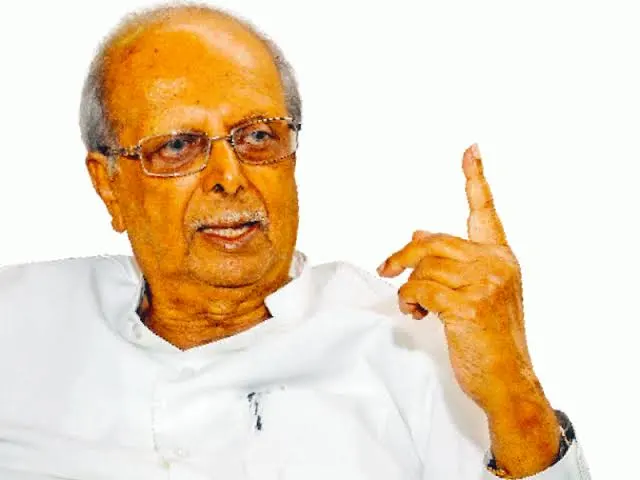
Former Minister Professor Tissa Vitharana has passed away at the age of 91, according to family sources

‘Media freedom will be in jeopardy’
Former Minister of Justice, Constitutional Affairs, National Integration and Foreign Affairs Prof. G. L. Peiris has warned that the proposed Protection of the State from Terrorism Act (PSTA) will deal a severe blow to civil liberties and democratic rights, particularly media freedom and the overall freedom of expression.
Addressing a press conference organised by the joint opposition alliance “Maha Jana Handa” (Voice of the People) in Colombo, Prof. Peiris said the proposed legislation at issue had been designed “not to protect people from terrorism but to protect the State.”
Prof. Peiris said that the proposed law would sound the death knell for the rights long enjoyed by citizens, with journalists and media institutions likely to be among those worst affected.
Prof. Peiris took exception to what he described as the generous use of the concept of “recklessness” in the draft, particularly in relation to the publication of statements and dissemination of material. He argued that recklessness was recognised in criminal jurisprudence as a state of mind distinct from intention and its scope was traditionally limited.
“In this draft, it becomes yet another lever for the expansion of liability well beyond the properly designated category of terrorist offences,” Prof. Peiris said, warning that the elasticity of the term could expose individuals to prosecution on tenuous grounds.
Prof. Peiris was particularly critical of a provision enabling a suspect already in judicial custody to be transferred to police custody on the basis of a detention order issued by the Defence Secretary.
According to the proposed laws such a transfer could be justified on the claim that the suspect had committed an offence prior to arrest of which police were previously unaware, he said.
“The desirable direction of movement is from police to judicial custody. Here, the movement is in the opposite direction,” Prof. Peiris said, cautioning that although the authority of a High Court Judge was envisaged, the pressures of an asserted security situation could render judicial oversight ineffective in practice.
Describing the draft as “a travesty rather than a palliative,” Prof. Peiris said the government had reneged on assurances that reform would address longstanding concerns about existing counter-terrorism legislation. Instead of removing objectionable features, he argued, the new bill introduced additional provisions not found in the current Prevention of Terrorism Act (PTA).
Among them is a clause empowering the Defence Secretary to designate “prohibited places”. That was a power not contained in the PTA but previously exercised, if at all, under separate legislation such as the Official Secrets Act of 1955. Entry into such designated places, as well as photographing, video recording, sketching or drawing them, would constitute an offence punishable by up to three years’ imprisonment or a fine of up to Rs. 3 million. Prof. Peiris said. Such provision would have a “particularly chilling effect” on journalists and media personnel, he noted.
The former minister and law professor also criticised the breadth of offences defined under the draft, noting that it sought to create 13 categories of acts carrying the label of terrorism. This, he said, blurred the critical distinction between ordinary criminal offences and acts of terrorism, which require “clear and unambiguous definition with no scope for elasticity of interpretation.”
He cited as examples offences such as serious damage to public property, robbery, extortion, theft, and interference with electronic or computerised systems—acts which, he argued, were already adequately covered under existing penal laws and did not necessarily amount to terrorism.
Ancillary offences, too, had been framed in sweeping terms, Prof. Peiris said. The draft legislation, dealing with acts ‘associated with terrorism,’ imposed liability on persons “concerned in” the commission of a terrorist offence. “This is a vague phrase and catch-all in nature.” he noted.
Similarly, under the subheading ‘Encouragement of Terrorism,’ with its reference to “indirect encouragement,” could potentially encompass a broad spectrum of protest activity, Prof. Peiris maintained, warning that the provision on “Dissemination of Terrorist Publications” could render liable any person who provides a service enabling others to access such material. “The whole range of mainstream and social media is indisputably in jeopardy,” Prof. Peiris said.
Former Minister Anura Priyadarshana Yapa and SLFP Chairman Nimal Siripala de Silva also addressed the media at the briefing.
by Saman Indrajith ✍️

Landslide Early Warnings issued to the Districts of Kandy and Nuwara Eliya

Former Minister Professor Tissa Vitharana has passed away at the age of 91

Buoyant Zimbabwe plot massive upset against depleted Australia

Mexican ships arrive in Cuba with humanitarian cargo amid US oil blockade

Tarique Rahman’s BNP claims majority in Bangladesh election

Kishan, Hardik, spinners hand India record win

‘Dates have the highest sugar content to fight Coronavirus’

Sunday Island 27 December – Headlines

#SundayIsland 17th December – Headlines

Sunday Island – 28th March

Sunday Island Headlines – 21 March

Sunday Island – 21st February – Headlines
-

 Features5 days ago
My experience in turning around the Merchant Bank of Sri Lanka (MBSL) – Episode 3
-

 Business6 days ago
Zone24x7 enters 2026 with strong momentum, reinforcing its role as an enterprise AI and automation partner
-

 Business5 days ago
Remotely conducted Business Forum in Paris attracts reputed French companies
-

 Business5 days ago
Four runs, a thousand dreams: How a small-town school bowled its way into the record books
-

 Business5 days ago
ComBank and Hayleys Mobility redefine sustainable mobility with flexible leasing solutions
-

 Business2 days ago
Autodoc 360 relocates to reinforce commitment to premium auto care
-

 Business6 days ago
HNB recognized among Top 10 Best Employers of 2025 at the EFC National Best Employer Awards
-

 Midweek Review2 days ago
A question of national pride