
Latest News
Incoming Bangladesh PM Tarique Rahman, lawmakers sworn into parliament


Newly elected Bangladesh lawmakers have been sworn into parliament, days after the Bangladesh Nationalist Party (BNP) swept the first vote since the 2024 student-led uprising that expelled former Prime Minister Sheikh Hasina.
Tarique Rahman will take the oath as prime minister later on Tuesday, as the BNP is expected to form a new government after securing more than a two-thirds majority in the elections last week.
Inside the parliament’s oath room, lawmakers pledged loyalty to Bangladesh as they were sworn in by the Chief Election Commissioner AMM Nasir Uddin. Foreign dignitaries, including the Pakistani foreign minister and the speaker of India’s parliament, were in attendance.
Cabinet members were slated to follow suit with another ceremony hosted in front of the parliament building at 4pm (10:00 GMT).
Despite tight security, hundreds of people pooled outside the grounds throughout Tuesday to await the proceedings.
“People really want changes. They want to see new faces in parliament: People with good qualifications, even people who are younger,” said Al Jazeera’s Tanvir Chowdhury, reporting from the capital, Dhaka.
“You’ll see a lot of new faces, and that’s what’s expected: They want new dynamics in parliament.”
The BNP won at least 212 seats in the 300-seat parliament, giving it a strong majority, while the Jamaat-e-Islami party won 77 seats. Hasina’s Awami League was banned from participating in the polls.
Rahman will take over from an interim government that led the country for 18 months after Hasina’s ousting.
He will also be tasked with implementing the July National Charter, which contains 80-plus prospective reforms of Bangladesh’s governance system.
More than 60 percent of the electorate voted to pass the charter in a referendum held at the same time as the election.
The sweeping document introduces term limits, a two-chamber parliament and limits the governing party’s ability to make unilateral amendments, among other changes.
“Lots of fundamental and primary change is expected by the population, particularly the younger population who were behind the July uprising,” Al Jazeera’s Chowdhury said. “They want to be represented in this parliament, and their voices must be heard.”
[Aljazeera]

Latest News
Advisory for Severe Lightning issued to the Western and Sabaragamuwa provinces and Galle and Matara districts
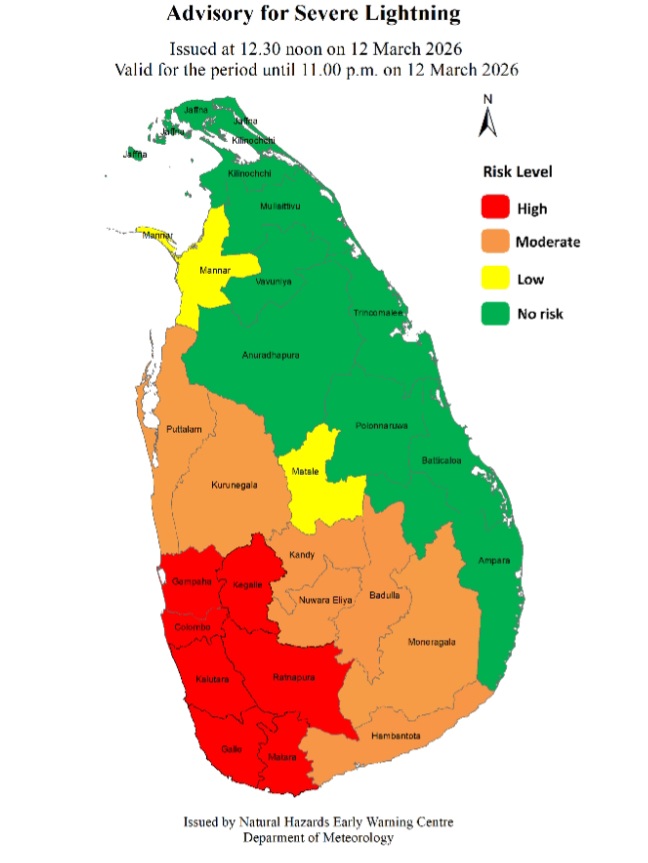
Advisory for Severe Lightning Issued by the Natural Hazards Early Warning Centre at 12.30 noon 12 March 2026 valid for the period until 11.00 p.m. 12 March 2026
Thundershowers accompanied with severe lightning are likely to occur at some places in the Western and Sabaragamuwa provinces and in Galle and Matara districts after 2.00 p.m.
There may be temporary localized strong winds during thundershowers. General public is kindly requested to take adequate precautions to minimize damages caused by lightning activity.
ACTION REQUIRED:
The Department of Meteorology advises that people should:
Seek shelter, preferably indoors and never under trees.
Avoid open areas such as paddy fields, tea plantations and open water bodies during thunderstorms.
Avoid using wired telephones and connected electric appliances during thunderstorms.
Avoid using open vehicles, such as bicycles, tractors and boats etc.
Beware of fallen trees and power lines.
For emergency assistance contact the local disaster management authorities.
Latest News
Jemimah Rodrigues, Harmanpreet Kaur, Mitchell Starc and Kuldeep Yadav among ESPNcricinfo award winners for 2025

India’s players swept all the women’s categories in ESPNcricinfo’s annual awards for individual performances in 2025, reflecting a year in which the team won their first World Cup title.
While Jemimah Rodrigues won the women’s ODI batting honours for her awe-inspiring, cramp-battling century that knocked Australia out of the World Cup. Deepti Sharma grabbed the ODI bowling award for her match turning five for in the final against South Africa. And Harmanpreet Kaur took the captain’s award for winning the world title and for sealing white-ball series (ODIs and T20Is) in England and winning her second WPL title with Mumbai Indians. Her title clinching 66in the WPL final against Delhi Capitals took the women’s T20 leagues batting award.
South Africa Women had to deal with the bitter heartbreak of losing yet another World Cup final, but the men, who for long fell agonizingly short of the big prizes, took home the World Test Championship, eating Australia by five wickets in the final at Lord’s. They were rewarded by our jurors too:Aiden Markram won the Test batting award for his epic fourth-innings hundred in that final, while Temba Bavuma, who made a vital 66 while nursing a hamstring injury during that chase, was picked as the men’s captain of the year for leading his side to the WTC mace, to a sweep of India in Tests in India, and for ODI series wins in Australia and England.
Fast bowler Marco Jansen, one of the bowling architects of South Africa’s 2-0 win in India, narrowly lost the Test bowling award to the incandescent Mitchell Starc, who decimated England with 7 for 58 in Perth on the opening day of the Ashes.
Another seven-for took the men’s T20 leagues bowling award: Taskin Ahmed’s 7 for 19 fro Durbar Rajshahi against Dhakar Capital in the BPL. The batting prize in that category went to Hobart Hurricanes opener Mitchell Owen, whose 39 ball century against Sydney Thunder – which equalled the tournament record for the fastest hundred – took his side to their maiden BBL title.
The women’s T20 leagues bowling award, like the one for batting, also came against Delhi Capitals in the WPL: 21-year-old UP Warriorz fast bowler Kranti Gaud, in her first season, took 4 for 25, including the wickets of Rodrigues, Meg Lanning and Shafali Verma.
The Champions Trophy was the headline event in men’s cricket in 2025 and the winning ODI performances came from that tournament: in Lahore, Ibrahim Zadran broke records for the highest individual score for Afghanistan in ODIs and for the highest score in the Champions Trophy overall with his majestic 177, which knocked England out of the tournament. The ODI bowling award was picked up by India legspinner Varun Chakravarthy who took 5 for 42 against New Zealand in Dubai, where a week later India won the Champions Trophy.
Six months later, at the same ground, India also won the T20 Asia Cup. In the final against Pakistan, the dismantler-in-chief was our men’s T20I bowling award winner, another legspinner, Kuldeep Yadav, who took 4 for 30, including three wickets in his final over.
The men’s T20I batting award went to England’s Phil Salt, whose 141 not out off 60 balls against South Africa at Old Trafford was not only England’s fastest T20I hundred, but also their highest individual score in the format; and it took them to their highest team total – 304.
Australian allrounder Beau Webster, who scored four half-centuries, including a series-sealing one in his first Test, in Sydney against India, and took eight wickets in seven Tests, was named the men’s debutant of the year. The women’s debutant award went to India fast bowler N Shree Charani who showed remarkable temperament at the age of 20 to pick up a four for on T20I debut in England. She went on to take 14 wickets in the ODI World Cup, second highest for India after Deepti.
Charani, like Harmanpreet, won two awards. Her other one, for women’s T20I bowling, came for her four wickets against England at Trent Bridge, in a match where opener Smriti Mandhana’s maiden T20I hundred played a vital role in setting up India’s win. Mandhana won the women’s T20I batting award for that performance.
The men’s Associate batting award went to Max O’Dowd for masterminding Netherlands’ 370-run chase – the third-highest successful one in all ODIs -against Scotland in Dundee. His 158 not out came off only 130 balls and trumped George Munsey’s 191 in the same match. The men’s Associate bowling award was picked up by seamer Harry Manenti, whose 5 for 31 against Scotland in the qualifier in The Hague, played a big role in Italy qualifying for the 2026 T20 World Cup.
THE JURY : Ian Bishop, Sambit Bal, Shane Bond, Aakash Chopra, Andrew Fernando, Andy Flower, Nagraj Gollapudi, Mohammad Isam, Isobel Joyce, Raunak Kapoor, Nick Knight, Farveez Maharoof, Andrew McGlashan, Andrew Miller, Sidharth Monga, Tom Moody, Firdose Moonda, Urooj Mumtaz, Vernon Philander, Matt Roller, Osman Samiuddin, Dale Steyn
[Cricinfo]

A Van Allen Probe spacecraft weighing more than 1,300lb (600kg) is expected to re-enter Earth’s atmosphere almost 14 years after its launch, Nasa says.
The spacecraft is projected to re-enter around 19:45 EDT (23:45 GMT) on Tuesday the US Space Force predicted, according to Nasa, though there is a 24-hour margin of “uncertainty” in the timing.
The Van Allen Probe A, which launched in 2012, is expected mostly to burn up as it travels through the atmosphere, though some components may survive.
The space agency said there is a one in 4,200 chance of being harmed by a piece of the probe, which it characterised as “low” risk.
The spacecraft and its twin, Van Allen Probe B, were on a mission to gather unprecedented data on Earth’s two permanent radiation belts.
It was not immediately clear where in Earth’s atmosphere the satellite is projected to re-enter. The BBC has contacted Nasa for further detail.
Nasa and the US Space Force have said they will monitor the re-entry and update any predictions.
The mission, which was originally designed to last two years, went on for almost seven. It ended after the spacecrafts ran out of fuel and were no longer able to orient themselves toward the Sun.
The probes flew through rings of charged particles trapped by Earth’s magnetic field from 2012 to 2019, in order to study how particles were gained and lost, per Nasa.
Those rings, called the Van Allen belts, shield Earth from cosmic radiation, solar storms and streaming solar wind, which are harmful to humans and can damage technology.
The mission made significant discoveries, including the first data that show the existence of a transient third radiation belt, which can form during times of intense solar activity, Nasa said.
Van Allen Probe B is not expected to re-enter the Earth’s atmosphere before 2030.
[BBC]

Heed ominous signs – II

ADB pledges over $1 billion annually to Sri Lanka in post-cyclone recovery push

Ranking public services with AI — A roadmap to reviving institutions like SriLankan Airlines

Why Pi Day?

M. D. Banda: Memories of Appachchi – II

IMA voices concern over arrest of LankaeNews editor

‘Dates have the highest sugar content to fight Coronavirus’

Sunday Island 27 December – Headlines

#SundayIsland 17th December – Headlines

Sunday Island – 28th March

Sunday Island Headlines – 21 March

Sunday Island – 21st February – Headlines
-

 News7 days ago
University of Wolverhampton confirms Ranil was officially invited
-

 News7 days ago
Female lawyer given 12 years RI for preparing forged deeds for Borella land
-

 News6 days ago
Peradeniya Uni issues alert over leopards in its premises
-

 News4 days ago
Repatriation of Iranian naval personnel Sri Lanka’s call: Washington
-
 News7 days ago
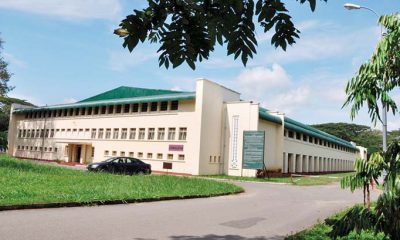
Library crisis hits Pera university
-

 News6 days ago
Wife raises alarm over Sallay’s detention under PTA
-

 News7 days ago
‘IRIS Dena was Indian Navy guest, hit without warning’, Iran warns US of bitter regret
-
 Latest News7 days ago
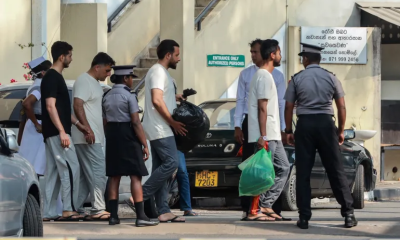
Sri Lanka evacuates crew of second Iranian vessel after US sunk IRIS Dena