
Editorial
Income tax a necessary evil

Our front page lead story last Sunday, headlined “Cops join IRD to raise revenue,” scooped the news that the police has launched a new collaboration with the Inland Revenue Department (IRD) to track down unexplained wealth and chase black money. This, as our story explained, was a spin-off from the widely publicized cases involving Pastor (also called Prophet) Jerome Fernando who has still not returned to the country after the smelly stuff hit the fan and a lady named Thilini Priyamali, who had allegedly collected some Rs. 226 million entrusted to her for investment, no doubt at sky high interests rates. Her clients, including reportedly some yet unnamed politicians and others have not come forward to assist the investigation. This is most probably because they prefer not to discuss the sources of what appears to be black money.
Pastor Jerome, it has been reported, had spent as much as Rs. 12 billion on his miracle dome. This, by any standard, is very high expenditure involving big bucks. No doubt much of this cash was donated by well wishers abroad, whom he clearly does not lack. But such cash infusions are subject to various regulations and interest and other earnings from such funds, we believe, must be liable to tax. Thus it makes sense that while the police continue with criminal investigations as required, the Inland Revenue Department ensures that obligatory tax payments are made. Whether the two agencies have been hitherto sharing information with each other for the benefit of the tax exchequer, we do not know. But it is obvious that they should be. Our report referred to a “new collaboration” suggesting this was not part of the already established scheme of things.
It was reported last week that the parliamentary oversight committee for National Economic and Physical Planning examining the performance of the various agencies responsible for the collection of state revenue found they are way behind target. It is fairly well known that three departments, Inland Revenue, Customs and Excise are the big revenue collectors for the government. It is also known that corruption is widely prevalent in all three agencies.
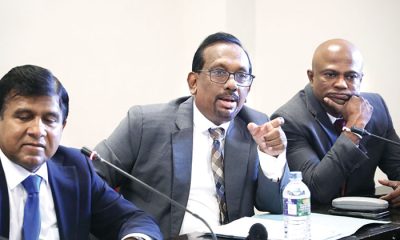
Former Minister Mahindananda Aluthgamage who chairs the oversight committee went on record a few days ago saying that although a collection of over Rs. 3.1 billion this year had been set for these three departments, approximately only half this amount had been, collected up to now. Where the Inland Revenue Department is concerned, Aluthgamage made some startling disclosures, long suspected but without an official imprimatur. Among these he was reported in the state-controlled Daily News to have said that although there are over 105,000 companies in business, only 15,000 are taxpayers.
This is not all. The number of personal income tax files on the books of the IRD standing at 500,000 in a population of 22 million is dismally low. And of these only 31,000 pay personal income tax, it was claimed. The Daily News report said the number of personal tax files was down to 295,000 last year and this had further shrunk this year.
According to an Economy Next report we front page today there is just one taxpayer on the IRD books paying over Rs. 300 million annually as income tax. Most people would dearly love to know who this worthy is. That report also gave numbers of those taxpayers on the high end of the taxpayers list. Whether these figures are accurate or not, we do not know.. Hopefully the IRD will clarify.
It was not so long ago that the government announced that all persons above the age of 18-years must have a tax file. This is all pie in the sky. The IRD lacks the will, technology and the personnel to achieve this target – if it is indeed a target. Time was when the annual administration report of the Commissioner of Inland Revenue, now grandly titled Commissioner General, published a list of names of individuals penalized for tax offences. Several decades ago, one of these lists included the name of a lawyer who is now a cabinet minister! Administration reports issued annually by government departments now appear to be a matter of history. It would be a good thing if the practice of publishing such reports is revived.
A frequent complaint by the few taxpayers who meet their obligations is that the IRD has a weakness for squeezing already squeezed lemons – that is taxpayers already on file. While widespread evasion is rampant, people who are paying taxes are often harassed by the department. IRD once upon a time rewarded good taxpayers with privileges including the right to purchase a vehicle at reduced import duties.
Those goodies are now history. The Pay-As-You-Earn (PAYE) tax system and withholding tax (WHT) on dividends and interest was something which was easy to administer and must certainly have greatly helped collection. While steps have been taken over the years to raise taxable thresholds on individuals, these by no means have kept pace with inflation.
As is frequently said, the only certainties of life are taxes and death. Professionals have been stridently protesting about the recently increased income tax rates with some even claiming that this is part of the reason some of them are quitting the country. Lankans can legitimately say that the mileage they get for their tax rupees is not satisfactory. Income tax payers often think that they carry a vast tax burden that is not evenly distributed. That is not without truth but there is very little realization among well to do income tax payers that the poor pay a big part of the indirect taxes that flow into the state exchequer. As an old time editor of an English newspaper in then Ceylon once said, each time you strike a match or flush the toilet, you are paying a tax!








Tuesday 24th March, 2026
The global energy crisis has taken a turn for the worse due to the Middle East conflict. International Energy Agency Executive Director Fatih Birol has issued a dire warning. If the Iran war persists, the world will face a mega energy crisis, whose economic impact will be far worse than those of the two oil crises in the 1970s, taken together, he has said, noting that today the world economy is losing about 11 million barrels of oil a day whereas it lost only five million barrels of oil each per day during the two crises in the 1970s. No country will be safe. However, the predicament of the developing nations, such as Sri Lanka, will be even worse, for their governments increase fuel prices in geometric progression when world oil prices rise in arithmetic progression, so to speak.
At this rate, a global recession may not be far off, economists have warned. Economies across the world are already screaming. But US President Donald Trump, who at the behest of Israeli Prime Minister Benjamin Netanyahu, started the current Middle East conflict, acts whimsically, and a credible endgame is conspicuous by its absence. It is doubtful whether he even has a well-thought-out military strategy. He orders airstrikes on Iran and keeps on pouring taxpayers’ money into an endless war, which may cost Americans more than a trillion dollars eventually, Prof. Linda Bilmes, a Harvard expert, has told The New York Times.
War is synonymous with destruction. In fact, it is hell, as American Civil War General W. T. Sherman famously said. Wars are said to have rules of engagement, but in reality, they are fought according to Rafferty’s rules. The US has used atomic bombs, napalm, Agent Orange, white phosphorus, etc., and carried out numerous massacres besides destroying critical infrastructure in other countries in a bid to win wars. Israel resorted to indiscriminate airstrikes and an equally devastating ground assault in Gaza in retaliation for the Hamas terror attacks. Therefore, the US and Israel should have anticipated fierce resistance and no-holds-barred retaliation from Iran when they carried out unprovoked attacks on that country. It was obvious from the beginning that Iran would shift the theatre of its military action to the economic front to pressure the US and Israel to stop attacks. It has done so with a devastating impact on the global economy. Not that it is totally blameless, but it is the US and Israel that conjured up a casus belli to start the current war and drove Iran to retaliate violently.
Those who started the Middle East war ought to stop it instead of asking Iran to declare a ceasefire, if the global economy is to be saved by reopening vital energy routes in that region. They will only aggravate the situation if they try to reopen the Hormuz Strait militarily. They have already made a series of military miscalculations. Israel and other US allies in the region have Iranian missiles and Kamikaze drones raining down on them. Iran is extending the range and capability of its missiles.
The US and Israel are obviously facing a situation they did not bargain for. They may have thought they would be able to bomb Iran into submission in a day or two and engineer a regime change. Their plan has gone awry. They expected the Iranian civilians to come out and overthrow the beleaguered government, but nothing of the sort has happened.
The best way to reopen the Hormuz Strait for international navigation and help overcome the global economic crisis is for the US and Israel to stop attacks immediately and let the neutral world powers negotiate with Iran, which has shown willingness to soften its stand. Now that Trump and Netanyahu have bragged that they wiped out Iranian nuclear facilities in the first few days of attacks, why they do not stop the war is the question.
It was reported at the time of going to press that President Trump had suspended planned strikes on the Iranian power grid for five days in view of “very good and productive conversations” with Tehran. One can only hope that this window for diplomacy will lead to de-escalation and an enduring ceasefire.

Monday 23rd March, 2026
The fuel price revision on the eve of the reintroduction of the QR-based fuel quota system the other day was only a feint, and the killer hook followed on Saturday, when massive fuel price hikes sent the public reeling. Curiously, Cabinet Spokesman and Minister Dr. Nalinda Jayatissa has said that despite the latest fuel price increases, “the Treasury is still bearing a cost of Rs. 100 per litre of diesel and Rs. 20 per litre of petrol, resulting in an estimated monthly subsidy expenditure of approximately Rs. 20 billion”. This claim lacks clarity. If it is true that fuel is still subsidised, the government ought to present a cost analysis based on landed costs of imported fuel, refining or processing costs, if any, administrative and distribution costs, dealer margins, and government taxes and levies. Mere words won’t do.
A statement made by President Anura Kumara Dissanayake on fuel pricing, in Parliament last Friday, runs counter to the Cabinet Spokesman’s aforesaid claim. What one gathered from the President’s speech was that the government would increase fuel prices in such a way as to make them cost-reflective. The President said the Ceylon Petroleum Corporation (CPC) accounted for 57% of the country’s fuel supply, and if it had been the sole supplier, world market price fluctuations could have been managed by offsetting current losses with future profits.
He said the private sector now controlled 43% of the market, and its position was that if retail prices did not reflect the current landed costs of fuel, it would stop imports. Emphasising that the contribution of the private sector was essential to maintaining the national fuel supply, the President noted that the private companies would participate only if they could sell fuel at cost-reflective prices. In other words, his position was that it was not possible to subsidise fuel. So, if the fuel prices determined by the CPC are not cost-reflective, due to subsidies, they will compel the private companies in the fuel trade to vote with their feet. It will be interesting to see whether they will do so. They have already matched the CPC prices.
Meanwhile, there are some measures that the government can adopt immediately to grant relief to the public. As we argued in last Saturday’s comment, the government should seriously consider suspending the loss-recovery levy of Rs. 50 per litre embedded in fuel prices, and imposing it again, if at all, when oil prices stabilise in the world market. This levy must also be replaced with a special commodity tax, which can be imposed on the private companies engaged in the fuel trade; at present they do not transfer the proceeds from loss-recovery levy to the Treasury, unlike the CPC, according to some former Petroleum ministers. Expanding the base of the loss-recovery levy in the form of a cess will help reduce its quantum. Surprisingly, this issue has not been taken up in Parliament.
There is also a pressing need for a car-pooling system to address the issue of soaring fuel prices and low-occupancy vehicles on the road. There are some car-pooling platforms in Sri Lanka, but they are not widely used. Car-pooling apps and similar services operate across Europe, Asia and Latin America in countries, such as France, Germany, Spain, Italy, Belgium, Poland, the UK, Turkey, India, Russia, Brazil and Mexico.
Successive governments have not cared to increase the country’s strategic petroleum reserves. The incumbent dispensation has failed to be different. In April 2020, world oil prices turned negative for the first time in history, with the oil producers paying buyers to remove the commodity owing to a fear that they would run out of storage facilities. Sri Lanka could not benefit from that windfall. The SLPP was in power at the time. If the Trinco oil tank farm had been repaired and made operational by then, the CPC would have been able to make huge profits and even turn itself around.
Speaking in Parliament, President Dissanayake recently lamented the limited oil storage facilities in Sri Lanka. No country can absorb oil price shocks unless it maintains strategic petroleum reserves. Only a few of the 99 oil tanks in Trincomalee have been developed. The Indian Oil Company (IOC) has been given 14 tanks, and the CPC 24 tanks, which remain unused; 61 tanks are to be developed under a joint venture between the CPC and the IOC. Each tank has a capacity of about 10,000 MT. There are no signs of the CPC-owned tanks in Trinco being made operational any time soon despite the JVP-led NPP’s election pledge to rehabilitate them fast as a national priority. Rhetoric is no substitute for strategic planning.

President Anura Kumara Dissanayake is often seen in Parliament, making special statements and long speeches in defence of his government. It is being argued in some quarters that no other President attended Parliament so frequently. This, however, is a moot point. We once commented on President Mahinda Rajapaksa’s regular presence in Parliament, asking whether he was trying to remind the Legislature that he was the boss. Why should the Presidents attend and address Parliament regularly?
President Dissanayake is apparently labouring under the misconception that he can shore up the government’s image single-handedly by attending Parliament and displaying his oratorical skills. Whenever he is sighted in Parliament, everybody knows that the government has blotted its copybook again and is badly in need of his help to distract the public from its blunders and misdeeds. President Dissanayake spoke in Parliament yesterday as well, stressing his government’s ‘neutral foreign policy’, among other things, for the umpteenth time.
Sri Lanka’s Constitution works the way it should only when the Executive is in a position to control the Legislature. When the President and the Prime Minister happen to represent two different political parties, the latter undermines the former, as was the case between 2001 and 2004, with President Chandrika Kumaratunga and Prime Minister Ranil Wickremesinghe leading the SLFP-led People’s Alliance and the UNP-led UNF, respectively. They were at loggerheads, and President Kumaratunga finally went so far as to sack the UNF government and hold a snap general election, which her party won, helping her consolidate her power by regaining control of Parliament. President Maithripala Sirisena faced a similar situation after breaking ranks with the UNP-led UNF in 2018. Thus, the Presidents do everything in their power to keep the Legislature under their thumb lest alternative power centres should form around the Prime Ministers in Parliament even when their own parties are in power.
The President is constitutionally required to attend Parliament once every three months. Article 32 (3) of the Constitution says: “The President shall, by virtue of his office, attend Parliament once in every three months ….” Article 32 (4) says: “The President shall by virtue of his office also have the right to address and send messages to Parliament. The President also has the power to make the Statement of Government Policy in Parliament at the commencement of each session of Parliament and preside over ceremonial sittings of Parliament, according to Article 33.
These constitutional provisions are widely thought to be aimed at ensuring periodic engagement between the Executive and the Legislature, thereby promoting accountability, communication, and constitutional balance in a presidential system. The Executive President’s regular presence in Parliament theoretically signals his or her respect for the legislature and helps reinforce the notions of accountability and constitutionalism, but it can also be interpreted as a form of ‘soft power projection’ when it is intended to shape political narratives in favour of the ruling party.
The Executive should be mindful of the time constraints faced by the Legislature. An oft-heard complaint in Parliament is that the members of both the government and the Opposition are denied sufficient time to speak. Their anger is directed at the Speaker. Not all of them come out with anything sensible in their speeches and during debates, which more often than not descend into slanging matches and even fisticuffs; they are known to say very little in so many words and often go off on a tangent. However, their right to express their views in Parliament as elected people’s representatives cannot be questioned. It is their time that the Executive uses to make speeches and statements in the House to further the interests of his or her party. The Executive ought to render unto the legislators what is theirs and refrain from trying to overshadow the Legislature.

Referendum defeat leaves Italy’s Meloni looking more vulnerable

Pakistan T20 cricket league to be held in empty stadiums amid oil crisis

Showers expected in the Western, Southern, Uva and Sabaragamuwa provinces and in Kandy and Nuwara-Eliya districts after 2.00 pm.

Tehran says Trump’s peace talk claims are ‘fake news’

SJB: China, India taking advantage of Lanka’s unregulated oil market

SL to redevelop Trinco tank farm expeditiously

‘Dates have the highest sugar content to fight Coronavirus’

Sunday Island 27 December – Headlines

#SundayIsland 17th December – Headlines

Sunday Island – 28th March

Sunday Island Headlines – 21 March

Sunday Island – 21st February – Headlines
-

 News6 days ago
CIABOC questions Ex-President GR on house for CJ’s maid
-

 News5 days ago
Bailey Bridge inaugurated at Chilaw
-

 News5 days ago
Pay hike demand: CEB workers climb down from 40 % to 15–20%
-

 News4 days ago
CIABOC tells court Kapila gave Rs 60 mn to MR and Rs. 20 mn to Priyankara
-

 Features1 day ago
Trincomalee oil tank farm: An engineering marvel
-

 Editorial6 days ago
Couple QR-based quota with odd-even rationing
-
 Features4 days ago
Science and diplomacy in a changing world
-

 News3 days ago
Colombo, Oslo steps up efforts to strengthen bilateral cooperation in key environmental priority areas