
News
IMF working with a government without a mandate – Handunnetti

By Saman Indrajith
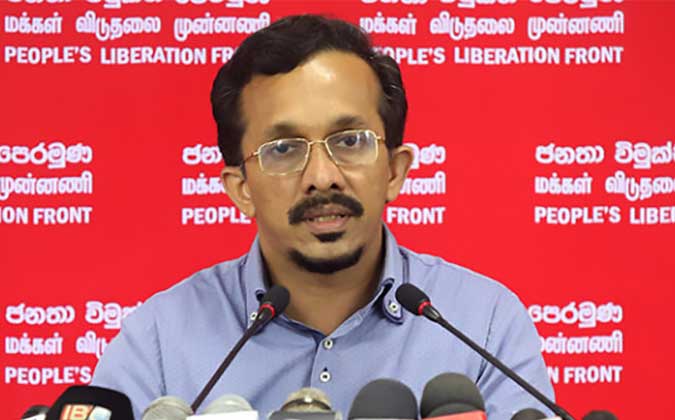
President Ranil Wickremesinghe had told opposition political parties that they would be given an opportunity to meet a high powered International Monetary Fund (IMF) delegation last Monday to discuss the IMF programme, but he had not invited representatives of the IMF to the discussion, National People’s Power (NPP) stalwart and former MP, Sunil Handunnetti told journalists in Colombo on Thursday (14) after attending a meeting with the IMF.
The two sides met yesterday at a hotel in Colombo.NPP representatives had inquired from the IMF officials the current state of Sri Lanka’s debt restructuring, Handunnetti told journalists.
IMF had no idea. They said they have to ask the government,” he said.
“We also told them that they work with the Ranil Wickremesinghe administration that does not have a popular mandate.
“Such a government cannot solve the economic crisis,” he said.
Handunetti added that the government had appointed Rohitha Abeygunawardena as the head of the Committee on Public Enterprises (COPE). This committee plays an important role in maintaining the parliament’s hold on public finances.
“What is the message that the government gave by appointing Abeygunawardena? We told IMF representatives that by appointing Abeygunawardena the government has shown its blatant disregard to any conventions or decorum. We also told the IMF that Sri Lanka needs elections so that people could elect a government that they think can dig the country out of the economic hole,” Handunnetti said.









Sri Lanka’s policy of neutrality in the ongoing Middle East conflict reflects both principle and pragmatism, while positioning the country to play a wider diplomatic role, the Asian Geopolitics Sustainability and Peace Council has said in a statement.
In the statement signed by Prof Mohan Munasinghe and Sugiswara Senadheera, the Council noted that Sri Lanka has maintained a firm stance of non-alignment, refusing to allow its territory to be used against any state while continuing to meet humanitarian obligations. It cited an instance in which Sri Lanka declined a request from the United States to provide refuelling access for warplanes.
Full text of the statement: Sri Lanka is maintaining strict neutrality in the middle east conflict, while preventing its territory from being used against any other state, and fulfilling humanitarian obligations. When one of the belligerents, the US, requested refueling rights for its warplanes, Sri Lanka refused. When an Iranian vessel was sunk within our maritime economic zone, it was the small Sri Lankan navy which rescued a large number of sailors and brought them for treatment in our hospitals. This is not a passive stance; it is both principled and pragmatic, while building the foundation for further potential diplomatic initiatives
Sri Lanka’s demonstrated neutrality presents an opportunity. Instead of being merely a bystander to great power rivalry, Sri Lanka could revive its historic diplomatic tradition and help mobilise a coalition of neutral nations from the Global South to push for peace.
The vast majority of the global population are peace-loving and aghast at the devastation of the economic and sociopolitical fabric in the Middle East due to the conflict, as well as its destructive impact on the economies of the Global South. Neutrality should not mean silence. Historically, many useful peace initiatives have come from smaller countries that were not directly involved in wars.
Norway facilitated peace talks in Colombia and the Tamil militancy in Sri Lanka. Qatar has mediated several regional conflicts. Switzerland has long hosted negotiations between hostile states.
Sri Lanka, too, has been a leading voice of moderation at world forums. In 1951, Finance Minister J R Jayewardene’s San Francisco speech quoted from Buddhist scriptures (“hatred begets hatred; only through loving kindness will it cease”), and persuaded world leaders to soften their reparation demands on Japan after World War II. In 1952, the pro-western UNP government, bravely defied the USA to sign the rubber-rice pact with the newly established communist Chinese government. We have benefited greatly from both initiatives ever since, because both China and Japan have been steadfast friends who have supported our development efforts for over seven decades.
It was Sri Lankan Prime Minister Sirimavo Bandaranaike who proposed the Indian Ocean Peace Zone resolution which was passed unanimously at the United Nations. She also presided over the 1976 NAM summit attended by 86 heads of state in Colombo, which envisaged a world where smaller nations could avoid being dragged into superpower rivalries. Sri Lankan UN Envoy
Shirley Amarasinghe also played a laudable role in getting the support of powerful nations to establish the UN Convention on Law of the Seas (UNCLOS) – a point which was stressed by Foreign Minister Vijitha Herath at the recent AI Impact Summit in New Delhi.
If the ongoing middle-east war spreads, the consequences will be dire. First, it will exacerbate the looming global recession — Sri Lanka and other neutral countries are already feeling the consequences of the effective closure of the Straits of Hormuz. Second, further escalation beyond the war crimes and genocide already underway, will greatly increase the risk of nuclear World War 3 – a truly human extinction event, to be avoided at all costs. Experts feel that we are closer to such a catastrophe, than ever before in human history, especially since prior nuclear arms limitation treaties have lapsed.
These grim realities give all affected countries a strong incentive and the moral authority to advocate immediate de-escalation. Sri Lanka could play a key role, by urging the global south, together with neutral and nonaligned nations that have no direct military stake in the conflict, to call for a lasting cessation of hostilities that goes beyond the current temporary ceasefire and ends this dangerous and destructive war. Individual nations cannot force the warring powers to negotiate. But collectively we carry weight, representing the voice of the Global South comprising over 85% of the global population, who are suffering the economic and humanitarian consequences of great-power rivalries.

A Parliamentary Select Committee, tasked with determining the electoral system for Provincial Council elections, has sought clarifications from the Attorney General’s Department and the Election Commission, as legal and procedural barriers continue to stall the long-delayed polls.
The Committee, chaired by Minister Vijitha Herath, met for the second time in Parliament last Tuesday (07), where election officials highlighted key shortcomings in the current reform process.
Officials of the Election Commission informed the Committee that the reform of the Provincial Council electoral system remains incomplete, primarily due to the failure to finalise constituency delimitation required to implement the mixed proportional representation system introduced under the 2017 Amendment No. 17. This lapse, they said, has created legal impediments preventing the conduct of elections.
The Commission further noted that the delimitation report has yet to receive Parliamentary approval. Although a five-member review committee had been appointed by the Speaker, under the leadership of the Prime Minister, and was expected to submit its report to the President within two months, the report remains outstanding. As a result, officials stressed that there are currently no legal provisions in place to proceed with elections under the existing framework.
During deliberations, Committee members explored the possibility of reverting to the original electoral law. The Department of Attorney General informed the Committee that the 2017 Amendment could be repealed, allowing the reinstatement of the original Act. Members also underscored the need to incorporate provisions ensuring representation for women and youth in any revised system.
The Committee also took up for discussion a Private Member’s Bill presented by MP Shanikkiyan Rasamanickam, which proposes conducting elections under the previous proportional representation system.
In a further move, the Committee Chair instructed the Attorney General’s Department to prepare a report detailing Supreme Court determinations related to the 2017 Amendment, the current legal obstacles, and possible legislative remedies.
The Committee also decided to summon officials of the Delimitation Committee to a future sitting.
The meeting was attended by Deputy Ministers Aruna Hemachandra, Sunil Watagala and Munir Mulaffar, along with MPs Ranjith Madduma Bandara, Manoganesan, Shanakkian Rajaputhiran Rasamanickam, Chandan Sooriyabandara, Dharmapriya Wijesinghe, Samanmalee Gunasinghe and Lakshman Nipuna Arachchi.

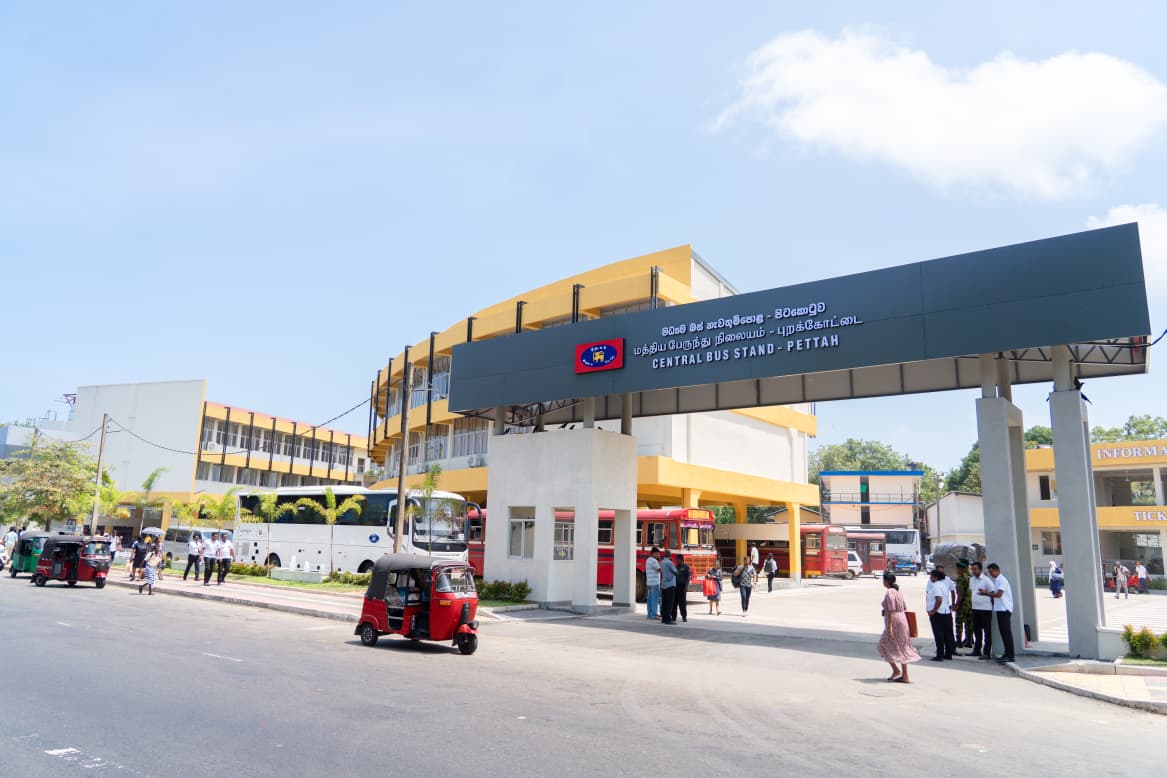
The Colombo Central Bus Stand, which has a history of over six decades and had remained without a proper maintenance for many years, has now been renovated under the current government’s development programme and vested to the public. Following that, the Prime Minister undertook an inspection tour of the newly renovated Colombo Central Bus Stand.
Originally constructed in 1964, the bus stand was refurbished with modern facilities to meet current needs and was officially reopened to the public on April 8. The primary objective of this initiative is to provide passengers with a higher-quality and more comfortable transportation service.
During the renovation process, special attention has been given to the comfort and safety of women, which was commended by the Prime Minister. In particular, a modern rest area designed to ensure privacy for nursing mothers travelling from distant areas received special praise.
The Prime Minister also reviewed the newly introduced passenger seat reservation system and information services established to assist commuters. In addition, the modern surveillance unit and other security measures installed within the premises to ensure passenger safety were also inspected.
During the visit, the Prime Minister engaged in conversations with passengers at the bus stand and inquired about their views on the newly renovated facilities and the quality of transport services.
It was emphasized that the government’s objective is to transform public transportation into a safe, technologically advanced service that can be used with convenience by all citizens.

(Prime Minister’s Media Division)

Govt. drops fig leaf

Customs easing Colombo Port congestion amid IMF push

SL’s economic outlook for 2026 being shaped by M-E conflict

Geopolitics experts call for Global South to lead push for lasting Middle East peace

Select Committee seeks clarifications amid legal hurdles to Provincial Council polls

Hameedia unveils “Threads of Culture”

‘Dates have the highest sugar content to fight Coronavirus’

Sunday Island 27 December – Headlines

#SundayIsland 17th December – Headlines

Sunday Island – 28th March

Sunday Island Headlines – 21 March

Sunday Island – 21st February – Headlines
-

 Features6 days ago
Ranjith Siyambalapitiya turns custodian of a rare living collection
-

 News6 days ago
Global ‘Walk for Peace’ to be held in Lanka
-

 News4 days ago
Lankan-origin actress Subashini found dead in India
-

 Business1 day ago
Israeli attack on Lebanon triggers local stock market volatility
-

 News2 days ago
AG: Coal procurement full of irregularities
-

 Features6 days ago
Beyond the Blue Skies: A Tribute to Captain Elmo Jayawardena
-

 Features6 days ago
Aspects of Ceylon/Sri Lanka Foreign Relations – 1948 to 1976
-

 Business2 days ago
Hayleys Mobility introduces Premium OMODA C9 PHEV