
News
IMF should oppose restrictions on Freedom of Expression, Civil Society Groups


Sri Lanka: Repression of Civic Space Threatens Financial Reform
The International Monetary Fund (IMF) should urge Sri Lanka’s government to abandon draft legislation that would severely curtail civil society and jeopardize the IMF’s programme in the country, Human Rights Watch said in a letter to the IMF that was released on Tuesday (12). The proposed Non-Governmental Organizations (Registration and Supervision) Act is among several recent and planned measures that would curtail fundamental freedoms, despite the critical role of public scrutiny in promoting good governance and combatting corruption.
The IMF’s US$3 billion bailout of Sri Lanka – which is linked to government commitments to reform – helped stem the immediate economic crisis after the country defaulted on its foreign debt in 2022, but further progress is threatened by the adoption of laws by President Ranil Wickremesinghe’s administration that would severely restrict basic rights. The Online Safety Act, enacted in January, creates vague and broad speech-related offenses punishable with lengthy prison terms. The Anti-Terrorism Bill, currently before Parliament, contains sweeping new speech-related offenses and arbitrary powers of arrest. And the draft law to regulate nongovernmental organizations could make independent civil society activity all but impossible in Sri Lanka.
“As the economy collapsed in 2022, Sri Lankans demanded good governance and an end to corruption, but instead now face draconian laws and policies that threaten human rights and undermine reforms,” said Meenakshi Ganguly, Deputy Asia Director at Human Rights Watch. “The protests helped bring President Wickremesinghe to power, but instead of listening to calls for change, he’s clamping down on peaceful dissent.”
A 2023 IMF study of Sri Lanka known as the Governance Diagnostic Assessment stated that “[a]nticorruption efforts are unlikely to achieve their objectives unless they also encompass initiatives designed and led by groups outside of government who are committed to rule-based inclusive economic and social progress.” However, the study found that civil society’s participation in oversight and monitoring of government actions has been “restricted by limited transparency, the lack of platforms for inclusive and participatory governance, and by broad application of counter-terrorism rules.” As a result, “opportunities for public participation and oversight of official behaviour, including by civil society, are increasingly restricted.”
The government on January 30, 2024, provided the draft NGO law to selected members of civil society, who were given three weeks to respond. The Bill does not address any evident need, but instead seeks to subject civil society organizations to invasive government scrutiny and interference, and threatens civil society members with prison if they don’t comply with cumbersome administrative procedures.
The National Collective of CSOs and NGOs, a coalition of Sri Lankan civil society organizations, wrote to the government on February 28 that the proposed law would “violate the fundamental rights to freedom of association and expression,” while damaging the delivery of services by civil society organizations, including to “the many families who are struggling to make ends meet in the midst of severe economic hardship.”
The United Nations High Commissioner for Human Rights, Volker Türk, in his March 1 update to the UN Human Rights Council on the crisis in Sri Lanka, said he was “concerned by the introduction of new or proposed laws with potentially far-reaching impact on fundamental rights and freedoms … which variously strengthen the executive, grant broad powers to the security forces, and severely restrict rights to freedom of assembly, association and expression, impacting not only on civic space but the business environment.”
The IMF should protect the credibility and efficacy of its programme in Sri Lanka by publicly calling upon the government to abandon the proposed NGO law, impose a moratorium on use of the Online Safety Act, and amend the Anti-Terrorism Bill to ensure that it respects human rights standards, Human Rights Watch said.
“The IMF and other international partners supporting Sri Lanka’s economic recovery recognize that this crisis has its roots in misgovernance and corruption,” Ganguly said. “If their efforts are to be successful, they need to stand firm against the government’s attempts to curtail fundamental civil and political rights.”





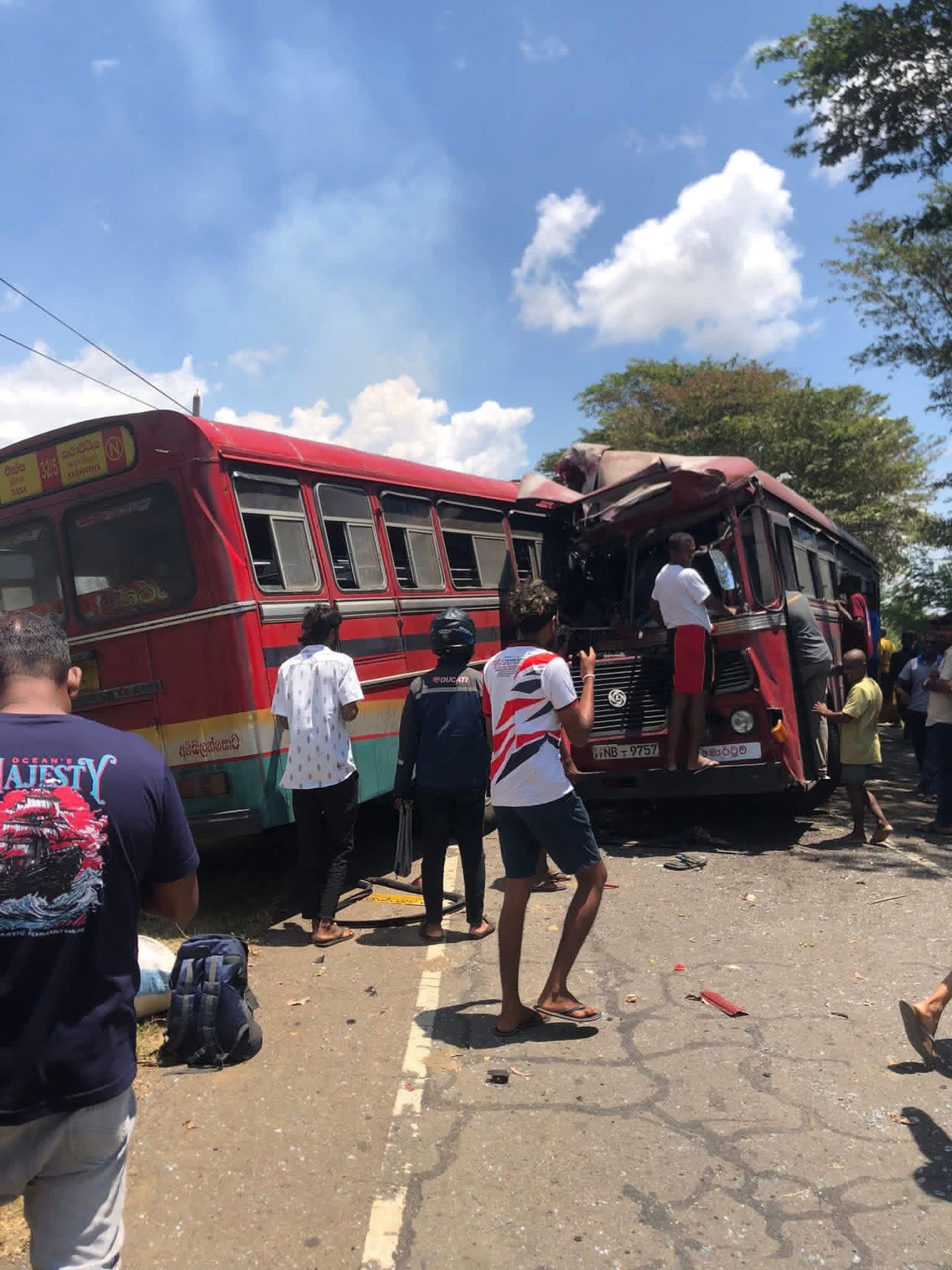
Four persons including a Budhist monk died and 32 others were injured when two SLTB buses collided head on at Weerawila at arond 12 noon today (18).
Three of the deceased were women. 22 of the injured were admitted to the Hambanthota Hospital while 10 others have been admitted to the Debarawewa hospital.
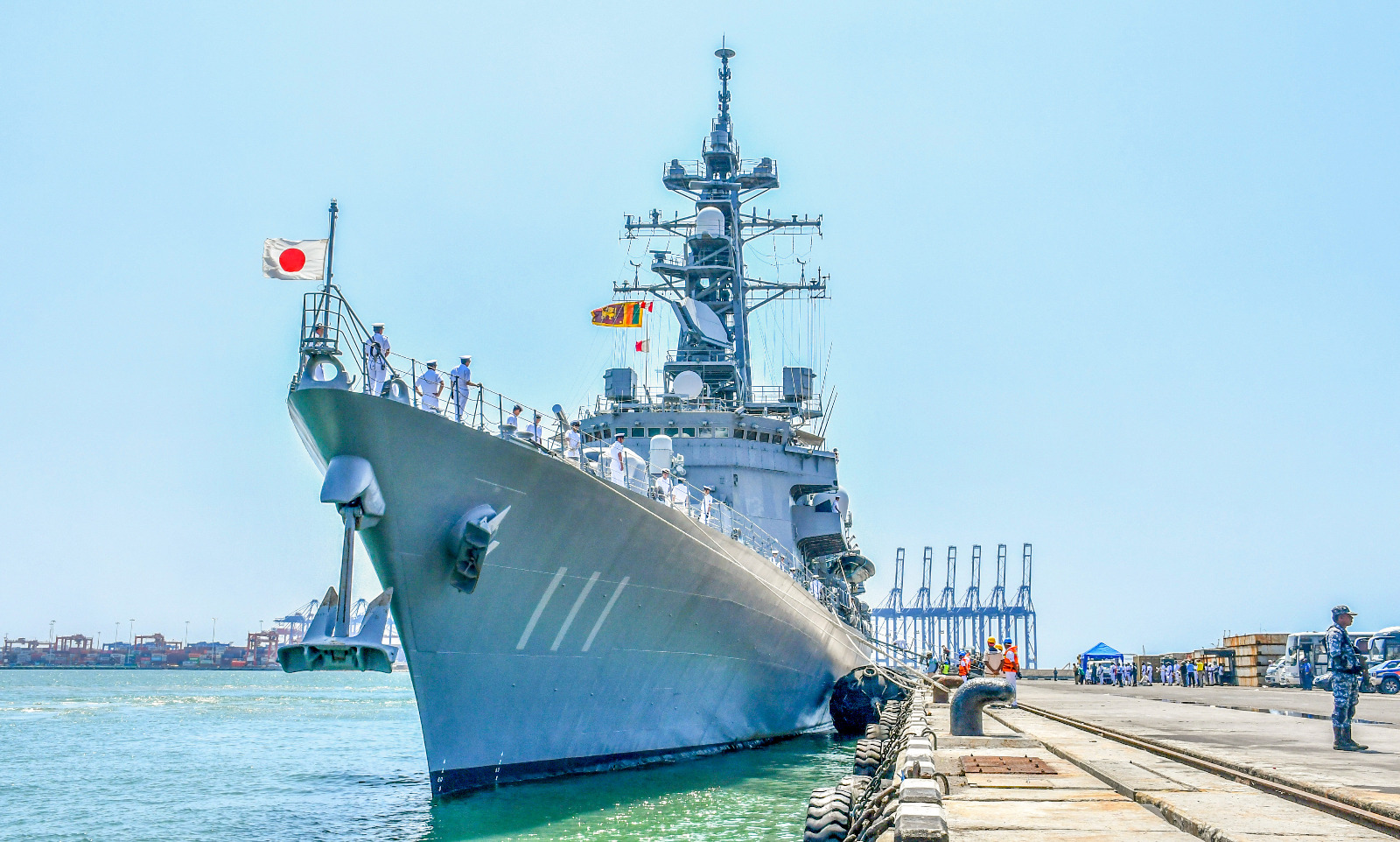
The Japan Maritime Self-Defence Force (JMSDF) ship OONAMI which arrived at the port of Colombo on a goodwill and replenishment visit on 09 Mar 26 departed on 11 March.
The departing ship was given a formal farewell from the Sri Lanka Navy, in keeping with naval traditions at the Port of Colombo.
The 150.5m long JMSDF OONAMI is commanded by Commander IIO Hiromasa.
During the stay in the island, crew members of the ship explored some tourist attractions in Colombo. The itinerary also included a coastal clean-up drive participated by naval personnel of both countries and engagements with the Sri Lanka Navy, designed to strengthen the bonds of friendship and cooperation.
The Central Cultural Fund established under the provisions of the Central Cultural Fund Act No. 57 of 1980 is responsible for development of cultural and religious monuments in Sri Lanka, settling the expenditure borne for development, renovation and conservation of local and foreign cultural monuments, awarding financial donations for artisans as well as awarding those who served the nation in the fields of culture and religious sectors.
The said act has been passed in Parliament 45 years back and, the requirement to revise the provisions of the act according to the contemporary requirements haa been recognized.
Accordingly, the Cabinet of Ministers granted their policy
approval to amend the said act, considering the resolution furnished by the Minister of Buddhasashana, Religious and Cultural Affairs.

SriLankan Airlines Alerts Customers to Social Media Scams

Four dead 32 injured in head on collision at Weerawila

JMSDF ship OONAMI concludes goodwill visit

Cabinet nod to amend Central Cultural Fund Act No. 57 of 1980
’National Namal Uyana’ declared as a National Heritage
Establishment of Supervisory Committees for restoring economic activities.

‘Dates have the highest sugar content to fight Coronavirus’

Sunday Island 27 December – Headlines

#SundayIsland 17th December – Headlines

Sunday Island – 28th March

Sunday Island Headlines – 21 March

Sunday Island – 21st February – Headlines
-

 News7 days ago
Historic address by BASL President at the Supreme Court of India
-

 Sports7 days ago
The 147th Royal–Thomian and 175 Years of the School by the Sea
-

 Business3 days ago
Browns EV launches fast-charging BAW E7 Pro at Rs. 5.8 million
-

 Life style4 days ago
From culture to empowerment: Indonesia’s vision for Sri Lanka
-
 News7 days ago
Power sector reforms jolted by 40% pay hike demand
-

 Latest News4 days ago
QR code system will be implemented for fuel with effect from 06.00 a.m. today (15th)
-
 Opinion6 days ago
M. D. Banda: Memories of Appachchi – II
-

 News2 days ago
Australian HC debunks misleading travel risk claims for Sri Lanka