
Editorial
Illusory rule of law


We have witnessed many false dawns, with self-proclaimed messiahs winning elections purportedly to put the country right and subsequently reneging on their solemn pledges in keeping with the Machiavellian maxim on promises.
One of the key campaign promises of the ruling JVP-led NPP was to restore the rule of law, which had been undermined by successive governments. The public reposed their trust in the NPP, expecting it to honour its promise and straighten up the legal system. But its pledge has gone unfulfilled, and government politicians and their supporters remain above the law, which is enforced strictly only when transgressors happen to be Opposition politicians and their cronies. The police, who even use force against ordinary people and the political rivals of the government over minor transgressions, unashamedly baulk at arresting the NPP politicians who commit serious offences.
No sooner had four Buddhist monks and five others been remanded, on Thursday, for allegedly violating coast conservation laws by putting up a shrine in Trincomalee than it was reported that the Geological Survey and Mines Bureau (GSMB) had sent a strongly worded letter to the Chairman of the Galgamuwa Pradeshiya Sabha (PS) over illegal soil excavation in some forest reserves in the PS area. The GSMB’s letter is a damning indictment of the NPP. It has revealed that a group of ruling party politicians and their supporters obstructed a team of GSMB officials during a raid on an illegal soil excavation site and forcibly secured the release of seven tractors and their drivers taken into custody. The police, who were present on the scene, just looked on. The GSMB has reminded the PS Chairman that its officers are legally empowered to conduct raids in any part of the country to prevent illegal activities.
How would the police have responded if a group of Opposition politicians and their backers had obstructed the GSMB personnel and the police during a raid? They would have been arrested immediately and hauled up before court, and perhaps the police would have held a special media briefing to announce the arrests.
No action has been taken against those who carried out illegal soil excavation in Galgamuwa and obstructed the GSMB officers and the police. One may recall that the police lost no time in arresting Chairman of the Matugama PS Kasun Munasinghe (SJB) recently over a mere allegation that he had obstructed the PS Secretary. There is irrefutable evidence that the NPP politicians and their supporters obstructed the GSMB officers and the police in Galgamuwa. Has the current government adopted the credo of the pigs in Orwell’s Animal Farm and decreed that all politicians are equal but the NPP politicians are more equal than others? Breathalyzers mysteriously disappear from police stations when an NPP MP causes a road accident allegedly under the influence of alcohol, and the CID resorts to dilatory tactics, such as seeking the Attorney General’s opinion unnecessarily, when they are required to arrest government politicians charged with forgery. Police officers who raid cannabis plantations that allegedly belong to NPP politicians or their relatives are arrested and transferred or suspended from service.
Ven. Balangoda Kassapa Thera, one of the four Buddhist monks remanded on Wednesday, reportedly launched a fast on Thursday. Those who are supportive of the shrine project in Trincomalee have demanded to know why the police and the Department of Coast Conservation and Coastal Resource Management have not removed the unauthorised business places, etc., in the coastal buffer zones in Trincomalee and elsewhere.
The police and the Coast Conservation officials owe an explanation. They have steered clear of many unauthorised structures in Trincomalee and other parts of the country. The western coastal buffer zone is dotted with illegal constructions including restaurants and hotels. Political interference and corruption have prevented their demolition. The NPP government has failed to be different from its predecessors which earned notoriety for the selective enforcement of the law.



Wednesday 11th February, 2026
Today’s front-page photo in this newspaper shows former President Mahinda Rajapaksa and Foreign Minister and JVP stalwart Vijitha Herath in conversation at a Chinese New Year reception in Colombo on Monday. This picture speaks volumes. Its significance and irony may not have escaped astute political observers familiar with Sri Lanka’s political marriages of convenience during the past several decades.
The JVP made a public show of its antipathy towards the Rajapaksas to win elections in 2024. It vowed to throw them behind bars immediately after forming a government. Some Opposition bigwigs have claimed that it was to settle political scores with Mahinda that the JVP-led NPP government made former Presidents leave their official residences. The JVP leaders continue to inveigh against Mahinda and other members of the Rajapaksa family, much to the glee of their cadres. They pretend that they have had nothing to do with the former ruling family. But the truth is otherwise.
The aforesaid photo may remind political observers of the pivotal role played by Herath and other JVP seniors, including Anura Kumara Dissanayake, in enabling Mahinda to achieve his presidential dream in 2005. The SLFP, which fielded Mahinda as its presidential candidate, did not throw its weight behind him in the presidential race; in fact, the then President Chandrika Kumaratunga did her best to queer the pitch for him, without success. The JVP campaigned extremely hard for him and ensured his victory.
The present-day JVP leaders are seen in some videos of Mahinda’s 2005 presidential election campaign, waving the Mahinda Chinthanaya policy framework at campaign rallies and portraying it as a silver bullet capable of helping Sri Lanka solve all its problems and achieve progress. Herath was among the key speakers at Mahinda’s election rallies. Perhaps, it would have been the end of the road for the Rajapaksas in national politics had Mahinda lost the 2005 presidential election. Thus, it may be seen that the blame for what the JVP accuses Mahinda, his family members and his cronies of having done since 2005 should be apportioned to the JVP leaders who made his elevation to the presidency possible.
The JVP fell out with President Rajapaksa as he did not fulfil some of his key promises, especially his pledge to abolish the executive presidency. It joined forces with the UNP, etc., thereafter and strove to defeat Mahinda in the 2010 presidential election, but in vain. However, it realised that goal by helping Maithripala Sirisena, who promised to scrap the executive presidency, win the 2015 presidential election. He reneged on his pledge.
Ironically, the Rajapaksas created conditions for the JVP’s meteoric rise to power, albeit unwittingly. After their return to power, they indulged in corruption, suppressed the rule of law, and, above all, bankrupted the economy in 2022, when the JVP had only three MPs and its national vote share had shrunk to a meagre 3%. The JVP effectively harnessed public anger over economic hardships to regain lost ground and win elections. It also promised to do away with the executive presidency. This pledge appears on page 109 of the NPP’s policy programme, A Thriving Nation: A Beautiful Life.
Today, the JVP is in a position to do what it pressured Mahinda and Sirisena to do in 2005 and 2015 respectively—abolishing the executive presidency. The NPP government led by the JVP has a two-thirds majority, and the Opposition is also demanding that the executive presidency be scrapped forthwith. So, the question is why the JVP is dragging its feet on its pledge to do so.
Tuesday 10th February, 2026
The Opposition has accused the government of seeking to exploit the impact of Cyclone Ditwah to postpone the much-delayed Provincial Council (PC) elections. It has challenged the JVP-led NPP to hold the PC polls immediately. Pivithuru Hela Urumaya leader and former minister Udaya Gammanpila told the media yesterday that the government was all out to avoid an electoral contest on some pretext or another because its vote share had dropped drastically, according to a recent survey.
The government’s approval rating must be decreasing. Otherwise, it would have amended the PC Elections Act promptly and held the PC polls under the Proportional Representation system. However, this does not mean that the Opposition is ready for an election and in a position to turn the tables on the government. Both the government and the Opposition are afraid of facing an election any time soon.
It amounts to a blatant subversion of democracy for a government to meddle with the country’s election calendar. Elections must not be advanced or postponed to suit anyone’s political agenda. Ideally, there should be midterms, which help gauge public perception of the performance of a government. The PC polls are expected to act as a referendum on the incumbent administration’s performance.
It is only wishful thinking that a government can win elections by postponing them. A poll postponement is counterproductive in that it causes public anger to well up and find expression in massive protest votes resulting in electoral anomalies, such as the return of corrupt politicians to power or huge majorities for untested political entities. One may recall that in 1977, the SLFP-led United Front government suffered a crushing defeat after postponing a general election. The UNP won an unprecedented five-sixths majority in Parliament. The SLFP could not make a comeback for 17 long years. The second term of President Jayewardene, who retained the UNP’s steamroller majority by replacing a general election due in 1982 with a heavily rigged referendum, became a disaster. The UNP-led Yahapalana government also postponed the Provincial Council elections in 2017, unable to face them, but lost the 2018 local government (LG) polls and collapsed the following year. President Gotabaya Rajapaksa also blundered by postponing the LG polls in 2022. If he had mustered the courage to hold them, the SLPP would have lost, but the people would have canalised their pent-up anger in the form of a protest vote, and the SLPP government would have been able to make a course correction. President Ranil Wickremesinghe made the same mistake the following year. Neither the SLPP nor the UNP could avoid electoral disasters by postponing the LG polls.
The NPP government finds itself in a dilemma. It has suffered a string of defeats in cooperative society elections, which the main political parties have turned into shows of strength. The LG election results did not meet the NPP’s expectations, which were extremely high. It emerged the winner, but failed to arrest a drop in its vote share and bag a considerable number of hung councils where it secured pluralities. There has been an erosion of its support base, with some powerful state sector trade unions turning against the government. The NPP would not have been in this predicament if it had held the PC polls early last year, when its popularity was high, and the Opposition was in total disarray. Its strategists should be blamed for missing that opportunity.
The government cannot go on postponing the PC polls indefinitely. It has to grasp the nettle. It is lucky that its political rivals are equally wary of facing an election, and have therefore stopped short of cranking up pressure on it to hold the PC elections. Their campaign against the postponement of the PC election is all sizzle and no steak, a wag says.

Monday 9th February, 2026
Politicians cannot bring themselves to let go of power after savouring it and do everything possible to retain their hold thereon. This may explain why excessive powers vested in the executive presidency, draconian laws such as the Prevention of Terrorism Act (PTA), and the misuse of Emergency regulations have survived successive governments led by self-righteous leaders who promised to protect democracy during election campaigns. Only President J. R. Jayewardene (JRJ) made no bones about his dictatorial intentions.
The incumbent dispensation has failed to be different from the previous governments which misused emergency regulations to further their political interests. On Friday (06), Parliament voted to extend a state of emergency, declared by President Anura Kumara Dissanayake in the aftermath of Cyclone Ditwah about two months ago. The Opposition let out a howl of protest, claiming that the JVP-NPP government kept on extending a state of emergency with an ulterior motive—suppressing democratic dissent.
On Friday, the government frontbenchers took great pains to have the public believe that the Opposition was seeing ‘more devils than vast hell can hold’ when it claimed the extension of the state of emergency was aimed at suppressing democracy. However, the Opposition’s arguments were tenable. Arguing that there was no need for emergency regulations for the ongoing relief and rebuilding programmes to be carried out, Opposition Leader Sajith Premadasa said that instead of extending the state of emergency, the government should amend the Disaster Management Act and create a new Ministry for Disaster Management. This is a cogent argument. The government’s disaster preparedness left much to be desired in November 2025. Sri Lanka is among the countries badly affected by the extreme weather events related to climate change, and the government must urgently set up a separate ministry for disaster management and give the existing disaster management laws stronger teeth.
Ironically, most of those who are berating the current administration for misusing emergency regulations had no qualms about doing so while in power. Only a snake will know the tracks of another snake, as a local saying goes. So, one should take serious note of what ‘snakes’ say about each other when they clash on the Diyawanna lakeshore.
There is no way the government can justify its decision to overuse emergency regulations by claiming that the call for declaring a state of emergency came from the Opposition in the immediate aftermath of Cyclone Ditwah.
President Dissanayake has declared that there will be no pay hikes until 2027, regardless of what trade unions may do to pressure his government. The emergency regulations which can be used to suppress workers’ right to strike should be viewed against President Dissanayake’s aforesaid statement which, in our book, is a warning. The government has resorted to brinkmanship in dealing with protesting doctors who have threatened to intensify their ongoing trade union action. Pro-government groups are astroturfing as ordinary citizens and calling for tough action to force the state sector trade unions into submission. Deputy Minister of Public Security Sunil Watagala has asked the police to use emergency regulations to deal with those who carry out what he describes as personal attacks on the President and the ministers. The Human Rights Commission of Sri Lanka has reportedly expressed serious concern over growing threats to freedom of expression in the country, particularly the targeting of journalists through police investigations into instances of alleged defamation.
Meanwhile, arrests are still made under the PTA, which the JVP-led NPP, in the run-up to the 2024 elections, pledged to abolish. It promised “the abolition of all oppressive acts including the Prevention of Terrorism Act and ensuring civil rights of people in all parts of the country”(NPP Policy Framework, A Thriving Nation: A beautiful Life, p. 129). Time was when Dissanayake, as an Opposition MP, waxed eloquent in Parliament, condemning governments for overusing emergency regulations.
All Executive Presidents, except D. B. Wijetunga, have been affected by what may be described as the JRJ syndrome, which drives the wielders of the presidency to arrogate to themselves the powers of vital state institutions and subjugate everything to the interests of their political parties. No surprise that President Dissanayake now has emergency regulations extended on some pretext or another. Besides, he travels by helicopter, and two choppers are deployed in tandem for his journeys even though he once condemned his predecessors for that practice, sarcastically asking whether a President could jump from one helicopter to another in midair in case of an emergency. This kind of behaviour exemplifies the popular local saying: “A water monitor (kabaragoya) becomes a land monitor (thalagoya) when one wants to eat it.”

Amendment of the Inland Revenue Act No. 24 of 2017

Cabinet nod for “National Mineral Policy” – 2026

Twelve sentenced to death by Gampaha High Court
Ten new buses with facilities for people with special needs

Ghosts of 2016 writ large as England, West Indies meet again
Amendment to the regulations for registration of Subscriber SIM Cards (Subscriber Identity Modules- SIM) and reregistration of subscriber information related to the SIM cards obtained before 02-08-2019

‘Dates have the highest sugar content to fight Coronavirus’

Sunday Island 27 December – Headlines

#SundayIsland 17th December – Headlines

Sunday Island – 28th March

Sunday Island Headlines – 21 March

Sunday Island – 21st February – Headlines
-
 Features3 days ago
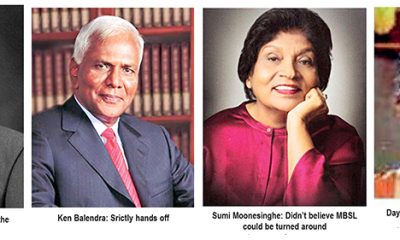
My experience in turning around the Merchant Bank of Sri Lanka (MBSL) – Episode 3
-

 Business4 days ago
Zone24x7 enters 2026 with strong momentum, reinforcing its role as an enterprise AI and automation partner
-

 Business3 days ago
Remotely conducted Business Forum in Paris attracts reputed French companies
-
 Business3 days ago
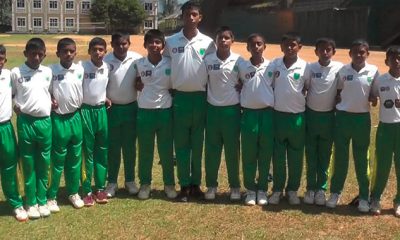
Four runs, a thousand dreams: How a small-town school bowled its way into the record books
-

 Business3 days ago
ComBank and Hayleys Mobility redefine sustainable mobility with flexible leasing solutions
-

 Business4 days ago
HNB recognized among Top 10 Best Employers of 2025 at the EFC National Best Employer Awards
-

 Editorial6 days ago
All’s not well that ends well?
-

 Business4 days ago
GREAT 2025–2030: Sri Lanka’s Green ambition meets a grid reality check