
Sports
Iga Swiatek, Jessica Pegula & Coco Gauff through to fourth round


World number one Iga Swiatek needed just 55 minutes to beat Spanish qualifier Cristina Bucsa and breeze into the Australian Open fourth round.Poland’s Swiatek, 21, won 6-0 6-1 on Margaret Court Arena and will play Wimbledon champion Elena Rybakina next.
Third seed Jessica Pegula also enjoyed a speedy victory on Friday, taking 65 minutes to beat Marta Kostyuk 6-0 6-2.Seventh seed Coco Gauff advanced with a 6-3 6-2 victory over American compatriot Bernarda Pera.
“I feel I’m more and more confident since day one here. I’m not even talking about matches, but also practices,” Swiatek said.
“I feel like I’ve done so much work to feel more confident, more relaxed on court. I’m pretty happy that I did it because it’s just a little bit easier.”
Reigning French and US Open champion Swiatek faces a tough task against Rybakina, who beat last year’s Melbourne finalist Danielle Collins 6-2 5-7 6-2 to advance.
“We know each other pretty well. For me it doesn’t really matter who it’s against. I just want to stay focused on myself,” Swiatek added.
Fellow title favourite Pegula will face 2021 French Open singles champion Barbora Krejcikova for a place in the quarter-finals, while Gauff plays 2017 Roland Garros winner Jelena Ostapenko.
Czech Krejcikova beat Ukraine’s Anhelina Kalinina 6-2 6-3, while Latvia’s Ostapenko claimed a 6-3 6-0 win against Kalinina’s compatriot Kateryna Baindl.Two-time Australian Open champion Victoria Azarenka came from a set down to beat 10th seed Madison Keys 1-6 6-2 6-1 and will face either sixth seed Maria Sakkari or Zhu Lin in the last 16.
(BBC Sports)



The Japan Premier League (JPL) T20 competition is cricket’s unlikely outpost – a self-sustaining though struggling-to-survive tournament far away from cricket’s traditional centres. It’s on a growth path just over a decade into its existence, starting to connect local players to those outside, and looking to create a cricketing community in the country.
It was founded in 2015 with four regions – North, South, East and West Kanto (Tokyo region) – in the fray, with games held at the home venues of each of the teams. That model was scrapped owing to low turnouts, and the tournament has since been played at one or the other venue, while Kansai (Osaka region) has come in as the fifth team.
In 2026, the JPL will be a three-day competition – May 2 to 4 – with 12 games at the Sano International Cricket Ground. All the buzz in the lead-up is about the participation of former Sri Lanka captain Dimuth Karunaratne, BBL winner Josh Brown, and Nepal allrounder Karan KC.
“A major goal,” Alan Curr, the Japan Cricket Association (JCA) chief operations officer, says, “is to showcase a good standard of cricket for Japanese fans so that they can really see and understand what the sport looks like.”
The challenge there is that despite being played in Japan since 1863, cricket hasn’t found a niche. There has been some systemic progress, with the formation of the JCA in the 1980s, five-year plans running up to 2032, and the presence of men and women’s leagues for juniors and seniors – including the JPL, which struggled to find traction early on.
One of the reasons for excitement recently was that a significant majority of the 15 players in Japan’s squad at the 2020 Under-19 World Cup came through the Cricket Blast, the junior participation programme. However, that’s not translated to mass acceptance or participation.

“Often, for us, cricket in itself isn’t enough to attract people to the ground,” Curr says. “We have to be creative and come up with other things – dance, music, food, drinks and Japanese commentary. But the hope is that if they see the game, it’s of a high standard because when fans see players doing special things, it’s easier to be impressed.”
When it comes to the players, not everyone is too ambitious. Those that are have rewards to aim for as the JPL can have a significant effect on selection for the national side. Having said that, those in the national side are not professionals – they are students or are employed – and use their annual leaves for international assignments. Making time can be a challenge.
“A lot of the players here play recreationally,” Curr says. “Cricket is a recreational hobby to them rather than a high-performance pursuit. For us, concentrating the talent, getting players together at once to give local players the opportunity to play at a higher standard, and going overseas and playing cricket isn’t a feasible option. [So] to be able to bring high-level cricket here is really important.”
The last bit is why Brown, especially, coming to JPL in 2024 was critical. Brown is a “pro player” – each team gets one – and will be returning for his third year in a row.
“He signed up quite a long time in advance – that year he had a breakthrough year in the Big Bash,” Curr says. “He scored 140 off 57 balls against Adelaide Strikers. We had him locked in when he did that, but we hadn’t announced it. Then his profile went up, and he started playing leagues around the world. Fair play to him, he still came.
“That year, people were pretty excited when we made that announcement, and people did come and the live-streaming certainly got up. It was the first time we had someone of genuine stature coming over and being involved.”
Other than pro players, the 14-player squads have four retained from the previous year’s teams. All of them find their teams in a draft – this year’s draft took place on March 24.

Where do these players come from, and how do they make their way? “Inside Japan is through domestic performances and trials at the start of the year for any new players,” Curr says. “The overseas talent right now comes from our own contacts as we want to make sure we get players who really understand what the tournament is about. It’s a development league; there’s no salary for these players. We just cover their costs.”
As for the future, there are different avenues for expansion. One is getting more pro players into teams, which, according to Curr, could squeeze out local players, making it a less-than-ideal option. Having more teams is more appealing, as is the prospect of having a nine-day tournament than one only over a long weekend.
“All of those things require funding. At the moment, we are relying heavily on the goodwill of people, who are happy to come out and play for no payment and out of the kindness of their heart,” Curr says. “We know that’s not sustainable. If we can get financial backing, getting a sponsor on board will really make a big difference.”
So far, cricket in Japan made news when the national team did anything of note, like qualifying for the 2020 and 2026 men’s Under 19 World Cups. If the JPL can take the next steps towards becoming bigger and better, maybe it will start attracting interest from other parts of the world in a more significant way. And that in turn could mean the next step for cricket in Japan as a whole.
[Cricinfo]

A stubborn knock of 59 runs by Praveen Rukunayake helped Trinity College recover from a disastrous start to post 173 runs against Nalanda College on day one of their Under 19 Division I Tier ‘A’ quarter-final played at the BOI Ground on Thursday.
Trinity suffered an early setback when open batsman Puleesha Thilakarathne and one-drop Mahendra Abeysinghe were dismissed in quick succession with the scoreboard yet to move. The early blows left Trinity struggling, and they continued to lose wickets at regular intervals as Nalanda’s bowlers maintained pressure.
With the innings in danger of collapsing completely, number eight batsman Praveen Rukunayake produced a determined effort, compiling a valuable 59 runs. His fighting knock helped Trinity recover from the early damage and guide them to a modest but competitive total of 173.
For Nalanda, Malsha Fernando led the bowling attack with an impressive spell, claiming four wickets for 49 runs, while Hasitha Rathnayake provided solid support with three wickets for 38.
In reply, Nalanda too found scoring difficult against a disciplined Trinity bowling attack. At the close of play on day one, Nalanda were struggling at 98 for five wickets, leaving the quarter-final finely poised heading into the second day.
Kumarasiri’s 11-wicket haul sets up thrilling finish
The Under 19 Division I Tier B cricket quarter-final between Sri Dharmaloka College, Kelaniya and Sri Sumangala College, Panadura was finely balanced after an eventful second day which saw 20 wickets tumble at Kuruvita on Thursday.
At stumps, Sri Sumangala were 59 for two wickets chasing a modest target of 156 runs, leaving the Panadura outfit needing fewer than 100 runs with eight wickets in hand when play resumes on the final day.
The biggest question heading into the decider will be whether the wicket continues to behave the same way it did on the second day when bowlers dominated proceedings throughout the day.
Sri Dharmaloka, who secured a useful first innings lead of 67 runs, failed to capitalise on the advantage as they collapsed dramatically in their second innings. Left-arm spinner Mevindu Kumarasiri produced a match-turning spell claiming six wickets to complete an outstanding match haul of 11 wickets.
Kumarasiri received excellent support from Methum Fernando as the pair shared all ten wickets between them while Sri Dharmaloka were bowled out for just 89 runs. Only Tharusha Mihiranga showed some resistance with a top score of 24.
Sri Dharmaloka appeared steady after moving past the 50-run mark for the loss of four wickets, but their middle and lower order folded quickly within the space of 14 overs to hand Sri Sumangala a realistic chance of victory.
Chasing 156 runs, Sri Sumangala made a confident start despite losing an early wicket. Opener Vidura Basuru played an aggressive knock of 33 runs which included three fours and a six and shared a valuable 41-run stand for the second wicket with Sandeepa Wijeratne.
Basuru was eventually dismissed by Koshitha Adithya, leaving Wijeratne unbeaten on 17 at the close of play with the match delicately poised.
Earlier in the day, Sri Dharmaloka’s bowlers staged a strong fightback to dismiss Sri Sumangala for 144 runs in reply to their first innings total of 211.
Tishan Nipun led the attack with impressive figures of 4 for 43 while Sathindu Praboda provided strong support with 3 for 44 as the pair shared seven wickets between them. Koshitha Adithya (2/27) and Mewan Randeepana picked up the remaining wickets.
With Sri Sumangala needing under 100 runs and Sri Dharmaloka requiring eight wickets, an exciting finish is on the cards when the teams return for the final day. (RF)

Sri Lanka Cricket will convene an Extraordinary General Meeting in April, with a clutch of resolutions set to be tabled before the membership for approval. SLC Secretary Bandula Dissanayake told Telecom Asia Sport that the EGM is pencilled in for April 6, 2026.
According to Dissanayake, a seasoned hand in cricket administration, while a few tweaks to the constitution will be up for discussion, the headline act on the agenda is the introduction of new playing conditions for SLC-conducted domestic tournaments.
At present, promotion and relegation in the top two domestic competitions are decided purely on performances in the three-day format. But SLC is now looking to change the field settings, aiming to give all three formats a fair crack of the whip.
“We want to make white ball cricket more competitive,” Dissanayake explained. “What we have seen is teams loading up for the three day competition and then taking their foot off the pedal when the one-day tournament comes around. By June, several players are off to England for league cricket and that leaves the white-ball competitions short changed.”
“This is part of a long term blueprint to ensure we are producing players who can hold their own in white ball cricket,” he added, signalling a shift in approach.
Under the proposed system, performances across all three formats will now count towards promotion and relegation, rather than just the red-ball game. However, the longer format will still call the shots, carrying a 51% weightage, while the one-day competition accounts for 25% and T20s for 24%.
In white-ball tournaments, where knockout cricket comes into play, quarter-finalists and semi-finalists will earn equal points, a move aimed at levelling the playing field and rewarding consistency.
At the business end, the side finishing with the lowest tally will face the drop. In the event of a tie on points, the three-day performances will act as the tie-breaker, a nod to the traditional format still being the backbone of the domestic structure.
SLC has been rolling up its sleeves to tidy up domestic cricket in recent years. Not too long ago, the First Class scene resembled an overcrowded outfield, with 24 teams holding status, a factor many felt diluted standards.
The introduction of a relegation system has since trimmed the fat, with underperforming teams losing their First Class status. Even heavyweights like SSC, boasting a dressing room full of Sri Lanka stars, found themselves on the wrong side of the cut last season. But like a champion side refusing to throw in the towel, they bounced back to reclaim their First Class status for the next season.
At present, Sri Lanka’s First Class competition has been streamlined to 14 teams.

Japan Premier League [JPL], building cricket from the ground up

Showers may occur at a few places in the Sabaragamuwa province and in Galle, Matara, Kalutara and Nuwara-Eliya districts in the evening

Energy Minister indicted on corruption charges ahead of no-faith motion against him

Over 1000 complaints of misuse of QR quotas

Fuel bowser operators demand 25% hike in haulage charges

Charge sheet issued against former NIE Director for contempt of court

‘Dates have the highest sugar content to fight Coronavirus’

Sunday Island 27 December – Headlines

#SundayIsland 17th December – Headlines

Sunday Island – 28th March

Sunday Island Headlines – 21 March

Sunday Island – 21st February – Headlines
-

 News2 days ago
Senior citizens above 70 years to receive March allowances on Thursday (26)
-

 Features4 days ago
Trincomalee oil tank farm: An engineering marvel
-

 Business1 day ago
Dialog Unveils Dialog Play Mini with Netflix and Apple TV
-

 Features4 days ago
The scientist who was finally heard
-

 News1 day ago
US dodges question on AKD’s claim SL denied permission for military aircraft to land
-

 News2 days ago
CEB Engineers warn public to be prepared for power cuts after New Year
-
 News2 days ago
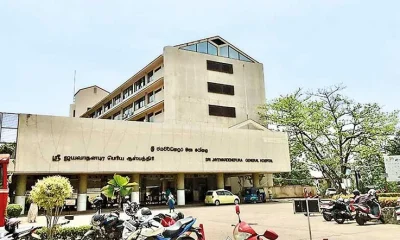
Japanese boost to Sri J’pura Hospital, an outright gift from Tokyo during JRJ rule
-
 News8 hours ago
Energy Minister indicted on corruption charges ahead of no-faith motion against him