
Sports
ICC suspends USA Cricket board


The ICC has finally decided to suspend USA Cricket (USAC), in the process hitting the reset button as it attempts to overhaul the leadership and governance structure of the sport in a key market. The decision was taken by the ICC Board after a virtual meeting on Tuesday. USAC’s suspension will not impact the national team’s participation in the T20 World Cup starting in February in India and Sri Lanka or the Los Angeles 2028 Olympic Games.
The suspension comes just over two months after the ICC, at its annual general meeting in July, had granted USAC three months to hold “free and fair elections” and carry out “comprehensive” governance reforms. At the time, the ICC reiterated that USAC would continue to remain “on notice”, as it has been since July 2024. The ICC Board also warned USAC that it reserved the right to take any action it deemed fit based on the progress of reforms.
Eventually, on Tuesday evening, the ICC suspended USAC with “immediate effect” and temporarily took over “management and administration of USA national teams.”
The decision, taken by the ICC Board during its meeting earlier, was based on USA Cricket’s repeated and continued breaches of its obligations as an ICC Member under the ICC’s Constitution,” an ICC press release said. “These include, but are not limited to, the failure to implement a functional governance structure, lack of progress toward achieving National Governing Body status with the United States Olympic and Paralympic Committee (USOPC), and significant actions that have caused reputational damage to cricket in the United States and around the world.”
The suspension does not have an immediate impact on cricket being part of the LA 2028 Games. The ICC clarified that USA teams will still be able to participate in ICC events as well as make preparations for the Olympics. Calling it “unfortunate but necessary” the ICC said it was forced to take such extreme action to “protect the long-term interests of the game and the ICC’s top priority remains ensuring that the athletes and the sport itself are not impacted due to the suspension.”
During the time USAC had been put on notice, the ICC had been working with it to draw a “roadmap” and facilitate its securing national governing body (NGB) status from the US Olympic and Paralympic Committee (USOPC). This is mandatory for all sports that were added to LA28 Games. As hosts, USA are expected to be one of the six teams to contest for medals in both men’s and women’s categories.
That roadmap, which comprises six steps, was drawn by the ICC’s Normalisation Committee, headed by chairman Jay Shah. Prior to that, the committee met USAC top brass Venu Pisike (chairman) and Johnathan Atkeison (CEO) twice – first in April virtually and then in person in June. The roadmap called for USAC to start an organisational revamp by bringing in three new independent directors to replace the incumbents on the Board. Following that the USAC Board would step down and prompt fresh elections. At this point USAC would apply for NGB status.
Simultaneously, the ICC also said a comprehensive review and reform of the USA Cricket Constitution “shall be undertaken” in close consultation with the Independent Directors and relevant ICC stakeholders. With USAC unable to meet these terms, it was suspended.
USAC was being considered for suspension at the ICC’s AGM in July and only managed its three-month reprieve by making “commitments” to the ICC Board to meet the criteria required for membership.
“When USAC was notified of the AGM’s decision,” the ICC press release said, “it was specifically advised in writing that, along with fulfilling the commitments it made to the Board and taking immediate steps in that respect, it must (i) not do/omit to do anything that might jeopardise cricket’s inclusion in the Olympics, and (ii) not do anything (by act or omission) that brings cricket or the ICC into disrepute or is contrary to the best interests of cricket or the ICC.”
For USAC to lift its suspension, it will need to follow procedure that the Normalisation Committee, in coordination with the ICC management, will outline and which “will include demonstrable and specific changes to USA Cricket’s governance structure, operations and overall status in the Cricket ecosystem. The normalisation committee will also monitor USA Cricket’s progress and provide consultatory support.
“The ICC remains committed to supporting the growth of cricket in the United States, protect the sporting ecosystem and its constituents, namely the athletes and bolstering its march towards a more significant role on the global stage.”
(Cricinfo)



Johannes Hoesflot Klaebo, Norway’s king of cross-country skiing, broke the record for the most gold medals won at a single Winter Olympics with his sixth of the Games.
Klaebo led a Norwegian sweep of the podium in the 50km mass start classic, with team-mates Martin Loewstroem Nyenget and Emil Iversen taking silver and bronze respectively.
The 29-year-old finished the brutal distance in two hours six minutes 44.8 seconds, 8.9secs ahead of Nyenget who takes his third medal of the Games.
“It’s been crazy, it’s a dream come true,” Klaebo told BBC Sport.
“I really think this Olympics has been perfect. Being able to crown the Olympics with the 50km was unbelievable.”
Klaebo breaks the previous record of five golds from a single Games, held by American speed skater Eric Heiden since the Lake Placid Olympics of 1980.
It also extends his own record for most Winter Olympic golds to 11, while he becomes the first athlete to win all six cross-country events at one Games.
Only US swimming great Michael Phelps, who won 23 gold medals, has more Olympic titles to his name.
Born in Oslo, Klaebo moved to Trondheim – a haven of cross-country skiing trails – as a young child, a move that has seen him become the greatest to ever do the sport.
No other man, active or retired, comes close to his record of 116 World Cup wins, while he is also a 15-time world champion, winning all six titles at last year’s edition on home snow in Trondheim.
“After the world championships last year, we knew that it was possible, but to be able to do it, it’s hard to find the right words,” he told reporters.
“[There were] so many emotions when I’m crossing the finish line.”
His sixth Olympic gold at Milan-Cortina adds to the titles he had won earlier in the Games in the skiathlon, sprint classic, 10km interval start free, 4×7.5km relay and the team sprint.
[BBC]
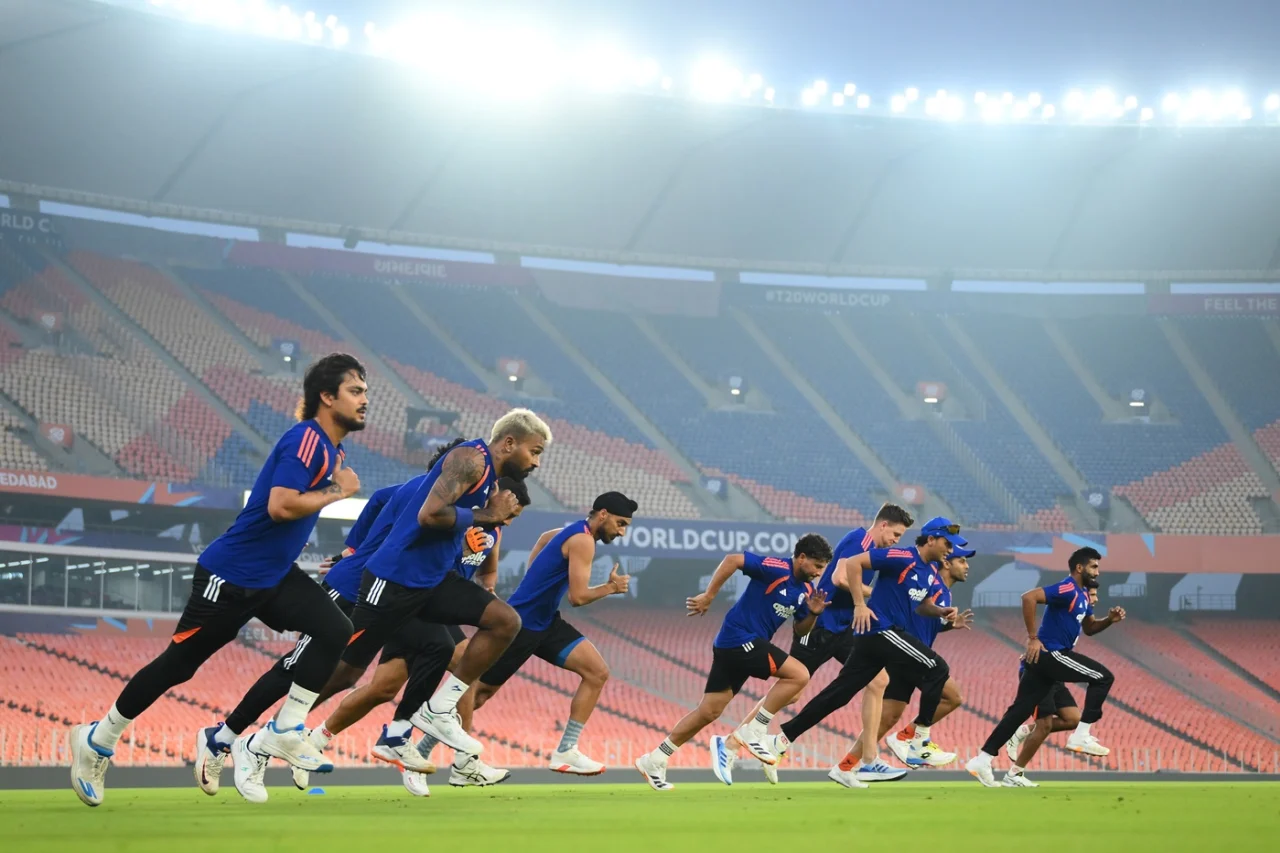
Some are calling this the final before the final. India were the clear favourites anyway, and South Africa have emerged unbeaten from the toughest group of the draw. Their easy win against New Zealand has sent warning signs.
A budding rivalry that began with the last T20 World Cup final, which South Africa lost despite bossing it for 35 overs, continued as they had their own back with a Test whitewash of India in India.
Throw in high stakes. This is no longer a match in which only India stand to lose something although they will not want to be the XI that breaks India’s winning streak of 12 at T20 World Cups. South Africa stand to lose a lot as well.
You lose this match, and the remaining two become must-wins but not a guarantee to make the semi-finals. It is a blockbuster start to the Group 1 Super Eight round. South Africa have been used to the Ahmedabad conditions having played three of their four matches there. India don’t need any more familiarity with Ahmedabad as every important match of any series or tournament invariably ends up there.
The last such game was the last T20I in the series against South Africa where India overcame the toss and buried South Africa by piling 231 runs. At that time, South Africa didn’t have any idea what their best XI looked like. Now they will hope to put up a much better fight against the all-conquering Indian side.
The two openers have been setting the tournament alight. Not long ago neither of them was opening. Ishan Kishan is a bolter thanks to his performance in the Syed Mushtaq Ali Trophy. In December when South Africa last played India in Ahmedabad, Aiden Markram was batting at No. 5. Now they are the leading openers of the tournament having aggregated in 170s at nearly two a ball. A lot of time will be spent on them in the respective strategy meetings.
Arshdeep Singh expectedly returned for the last match, but India rested Axar Patel to give Washington Sundar a game. Axar should come back into the XI.
India (probable): Abhishek Sharma, Ishan Kishan (wk), Tilak Varma, Suryakumar Yadav (capt.), Hardik Pandya, Rinku Singh, Shivam Dube, Axar Patel, Arshdeep Singh, Jasprit Bumrah, Varun Chakravarthy.
South Africa rested Lungi Ngidi in their last game, giving Kagiso Rabada time to attain full rhythm while also testing out Anrich Nortje. Ngidi, still their leading wicket-taker, should come back at the expense of one of the big quicks. This being a night game, Corbin Bosch is likelier to get the nod ahead of George Linde.
South Africa (probable): Aiden Markram (capt.), Quinton de Kock (wk), Ryan Rickelton, Dewald Brevis, Tristan Stubbs, David Miller, Marco Jansen, Corbin Bosch, Keshav Maharaj, Kagiso Rabada/Anrich Nortje, Lungi Ngidi.
[Cricinfo]

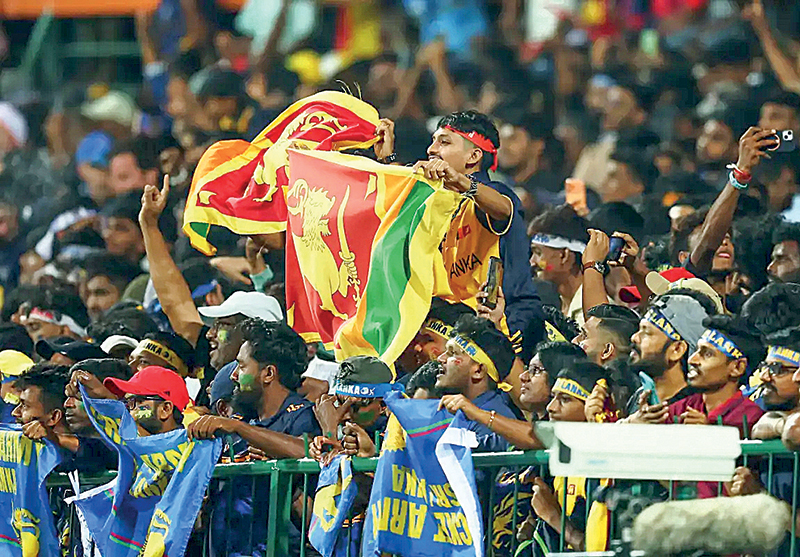
Sri Lanka’s final group game of the T20 World Cup was, on paper, a dead rubber. Zimbabwe had already punched their Super Eight ticket and so had the co-hosts. Yet, 24 hours before the toss, tickets were sold out. By the time the coin went up at Colombo’s R. Premadasa Stadium, the access roads were chock-a-block, horns blaring, vendors shouting, fans draped in blue streaming in like it was a final.
For a so-called inconsequential game, it felt anything but.
When supporters turn up in numbers for a fixture with nothing riding on it, that’s not blind loyalty, that’s belief. Sri Lanka, after years in the wilderness, have given their faithful something to cheer about. They are no longer making up the numbers. They are back in the contest.
The moment that injected oxygen into this campaign was the night they showed Australia the exit door. For Sri Lankan fans, there is no sweeter soundtrack than the silence of an Aussie dressing room packing up early. The younger fan brigade may relish having a go at India, but knocking out Australia still carries its own flavour.
Now the focus shifts to the Super Eight. Three games. Win two and Sri Lanka could be boarding flights to Calcutta or Bombay for a semi-final berth. That would be a seismic moment. The national side has not reached the last four of a global event for 12 long years. In cricketing terms, that’s an eternity.
Sport, like life, moves in cycles. Between 2007 and 2015, Sri Lanka were serial semi-finalists and finalists, a golden era when reaching the knockouts of ICC events was routine business. England, in contrast, were perennial underachievers in white-ball cricket, often bundled out early and licking their wounds. But they went back to the drawing board, addressed their white-ball philosophy, and emerged as a different beast, fearless, methodical and consistent on the global stage.
Sri Lanka appear to be following a similar blueprint.
One of the burning issues identified was strike rate. Last year, Chairman of Selectors Upul Tharanga publicly called for urgency with the bat. Too many Sri Lankan batters were stuck in second gear, striking at 120 or 130, respectable in another era, but pedestrian in modern T20 cricket.
This tournament has told a different story.
Kamindu Mendis has been batting as if the fielders are mere ornaments, striking at a jaw-dropping 225. Dasun Shanaka has rediscovered his finishing boots, going at 200. Pavan Rathnayake has muscled his way to 177, while Pathum Nissanka, long seen as more accumulator than aggressor, has operated at a healthy 155.
Those are not cosmetic improvements. Those are match-defining numbers.
Sri Lanka’s bowling cupboard has rarely been bare. Spin has been their calling card, seamers their workhorses. But too often in recent years, the batting has misfired, leaving bowlers with too little to defend. Now, with Pathum anchoring, Pavan counter-punching and Kamindu playing the role of accelerator, the top order is beginning to hum. Charith Asalanka, meanwhile, is far too gifted to be warming the bench for long.
The Super Eight will provide sterner examinations. England have had the wood over Sri Lanka in recent meetings. Pakistan and New Zealand, however, are sides we have found ways to outfox. More importantly, the middle order, once the soft underbelly, is showing signs of steel.
There are, of course, absentees that could haunt them in the business end. Wanindu Hasaranga, Matheesha Pathirana and Eshan Malinga would have been invaluable when the heat rises. Experience in global tournaments and franchise leagues like the IPL is currency you cannot easily replace. Hasaranga’s recurring hamstring troubles remain a concern and managing his fitness, including conditioning, must be a priority if he is to prolong his career.
Credit, too, must go upstairs. Sri Lanka Cricket have left no stone unturned. The appointment of Vikram Rathour and R. Sridhar, key lieutenants under Ravi Shastri during India’s successful run, has added tactical clarity. The involvement of South Africa’s Paddy Upton, a guru of the mental side of the game, has strengthened the team’s headspace.
The dividends are visible.
For now, the biggest victory may not be on the points table but in the stands. The blue flags are back. The roads are jammed again. The buzz has returned.
In Sri Lanka, that is often the first sign that a team has truly turned the corner.
by Rex Clementine

More than 1,500 Venezuelan political prisoners apply for amnesty

Six races, six golds – Klaebo’s historic Olympics

India, South Africa meet in the final before the final

Matara Festival for the Arts’ inaugurated by the Prime Minister

Showers or thundershowers will occur at most part of the Island after 1.00 p.m.

Only single MP refuses salary as Parliament details pays and allowances

‘Dates have the highest sugar content to fight Coronavirus’

Sunday Island 27 December – Headlines

#SundayIsland 17th December – Headlines

Sunday Island – 28th March

Sunday Island Headlines – 21 March

Sunday Island – 21st February – Headlines
-

 Business6 days ago
Ministry of Brands to launch Sri Lanka’s first off-price retail destination
-
 Latest News2 days ago
New Zealand meet familiar opponents Pakistan at spin-friendly Premadasa
-
 Latest News2 days ago
Tariffs ruling is major blow to Trump’s second-term agenda
-
 Latest News2 days ago
ECB push back at Pakistan ‘shadow-ban’ reports ahead of Hundred auction
-
 Features6 days ago
Giants in our backyard: Why Sri Lanka’s Blue Whales matter to the world
-
 Sports3 days ago
Old and new at the SSC, just like Pakistan
-
 News5 days ago
IMF MD here
-

 News2 days ago
Construction begins on country’s largest solar power project in Hambantota