
News
Human Rights Watch sceptical of Sri Lanka IMF deal, warns of rights erosion

Presenting a not-overly-optimistic outlook on Sri Lanka’s latest International Monetary Fund (IMF) programme, Human Rights Watch has called for policies that don’t further erode economic and social rights, days after Amnesty International expressed similar sentiments.In a statement titled ??’Sri Lanka: IMF Loan Risks Eroding Rights’, HRW said on March 30 that the IMF could use findings of the international lender’s governance diagnostic for the island nation in terms of anti-corruption measures to “set conditions later in the loan programme”.
HRW said that Sri Lanka should ensure that anti-corruption reforms provide accountability.
“Official corruption and tax rules that benefitted the wealthiest were key drivers of Sri Lanka’s economic crisis, for which Sri Lankans struggling to make ends meet should not have to carry the burden,” HRW South Asia director Meenakshi Ganguly was quoted as saying in the statement.
“The government should recognise that the public deserves real accountability, whether it’s for past war crimes or ongoing misgovernance and repression of critics,” she said.
Experts have blamed Sri Lanka’s latest currency crisis, the worst in decades, on several factors including excess money printing, misplaced subsidies that don’t go to the deserving, gross mismanagement and ill-considered state participation in the economy at a colossal cost to the state coffers.
Acknowledging that the IMF loan is intended to provide the country with a lifeline while addressing deep-seated problems that contributed to the crisis, HRW said that under international law, governments and financial institutions have an obligation to respond to economic crises in a way that advances rather than further jeopardises human rights, and should avoid pursuing policies that reduce low-income people’s access to essential goods and services.
“Currently, the IMF programme’s anti-corruption measures are centred on the government passing legislation in line with the United Nations Convention Against Corruption and the IMF carrying out a governance diagnostic that assesses Sri Lanka’s strengths and weaknesses in six areas, including the rule of law and fiscal governance. The conclusions could be used to set conditions later in the loan programme,” the IMF said.
For the analysis to be effective, civil society should play a prominent role, the international nongovernmental organisation said.
“Subsequent anti-corruption reforms should ensure that the government enforces its rules and holds corrupt officials and private businesspeople to account, including for past malfeasance.
These efforts should include recovering stolen assets, imposing back pay and penalties for tax evasion, and stemming illicit financial flows out of the country,” it said.The IMFprogramme’s focus on increasing government revenues, rather than reducing public spending as a percentage of Gross Domestic Product (GDP), will better protect rights, the organisation noted.
“When the crisis began, Sri Lanka had among the world’s lowest tax-to-GDP ratios at 7.3 percent. That ratio is expected to nearly double to 14 percent of GDP. However, while some of the new measures are designed to increase taxes on the wealthy and eliminate tax exemptions that benefit them, the heavy reliance on value-added taxes can worsen the cost-of-living crisis,” it said.
Sri Lanka’s trade unions affiliated with leftist parties and a number of professional associations have demanded that the government reverse an IMF-backed progressive income tax hike on the country’s highest earners. The government has so far not given in to the demand but has said more acceptable tax rates can be discussed in six months’ time when the IMF deal comes up for review.
“The programme reduces the threshold for taxing annual income to 1.2 million rupees (3,694 US dollars), a change that some have protested as burdening families who are already struggling to realise their rights. The government should publish data on the percentage of the population that is subject to income taxes under this change. It should also consider advancing the introduction of taxes on property, gifts, and inheritance, which the programme mandates by 2025,” the HRW statement said.
“The government has already increased corporate tax rates and removed all sector-specific tax exemptions, according to the IMF staff report. But most new tax revenue will come from value-added taxes (VAT), which were raised from 8 to 12 percent in May 2022 and again to 15 percent in September. Basic food items remain exempt from VAT, but the government committed to VAT reform by 2024 that would remove “almost all” product-specific exemptions,” it added.
HRW claimed that the programme includes other measures that could harm low-income people.
“Public services are central to delivering rights and are an important source of employment. The programme calls for keeping any increase in public wages to less than inflation, effectively reducing real salaries, and reducing total spending on wages from 5 to 3.6 percent of GDP. It also eliminates subsidies for both fuel and electricity and imposes an excise tax on fuel, but does not ensure that these critical measures are carried out in a way that fulfills rather than erodes rights. To protect rights when removing subsidies and introducing taxes for fossil fuels, the government should adequately invest in social protection, the use of renewable energy sources, and other measures to move toward a rights-aligned economy.”
HRW also questioned the adequacy of a social spending floor prescribed by the IMF that would “gradually raise” spending on four cash transfer programmes to help cushion the potential impact of macroeconomic adjustment on the poor and vulnerable groups.
“Recognising the pervasive flaws in the country’s targeted cash transfer programmes, it also mandates overhauling eligibility criteria in partnership with the World Bank to make them ‘based on objective and verifiable characteristics of households,’ and notes the government is working with the World Bank on a new electronic registry for selecting beneficiaries.
“While the floor brings up total spending on these programs to 0.6 percent of GDP, it is set at far less than developing countries’ average spending on safety nets, which is 1.6 percent.
“Furthermore, the insistence on targeting benefits based on eligibility criteria also risks continuing to exclude people who are unable to access goods and services essential for an adequate standard of living. The details of the new eligibility criteria and electronic registry have not been made public, but research has shown pervasive problems with targeting benefits, including high error and exclusion rates.”
For example, a proposal to use electricity consumption as a proxy measure – to overcome the lack of data on household income as well as the risk of corruption in selecting beneficiaries – would leave out about 35 percent of the bottom half of the population, HRW said. Because current beneficiaries who are ineligible under the new criteria would be removed by January 2024, this could mean people losing benefits they are currently receiving, it added.
“Contrary to this approach, the IMF’s technical note on social safety nets advises that in countries with “low administrative capacity” efforts should focus on enhancing tax capacity to ‘claw back’ benefits from high-income households, rather than lowering benefits or excluding low-income beneficiaries.
“When half of Sri Lankan families are buying food on credit, it’s not the time to experiment with fixing chronic and pervasive problems with targeted cash transfer programmes,” said Ganguly. “Instead of investing precious funds in new registries, the government’s focus should be on building a tax system that makes sure the wealthy pay their fair share.”
The HRW’s less than optimistic outlook on what is now Sri Lanka’s 17th IMF programme came two days after a visiting top Amnesty International official said he planned to meet IMF representatives in Colombo to discuss the socioeconomic implications of the deal.Speaking to EconomyNext on the sidelines of Amnesty’s South Asia regional launch of its State of Human Rights Report for 2022/2023 in Colombo, Muchena said on Tuesday March 29 that he would be meeting IMF officials this week to better understand the 2.9 billion dollar extended fund facility (EFF).


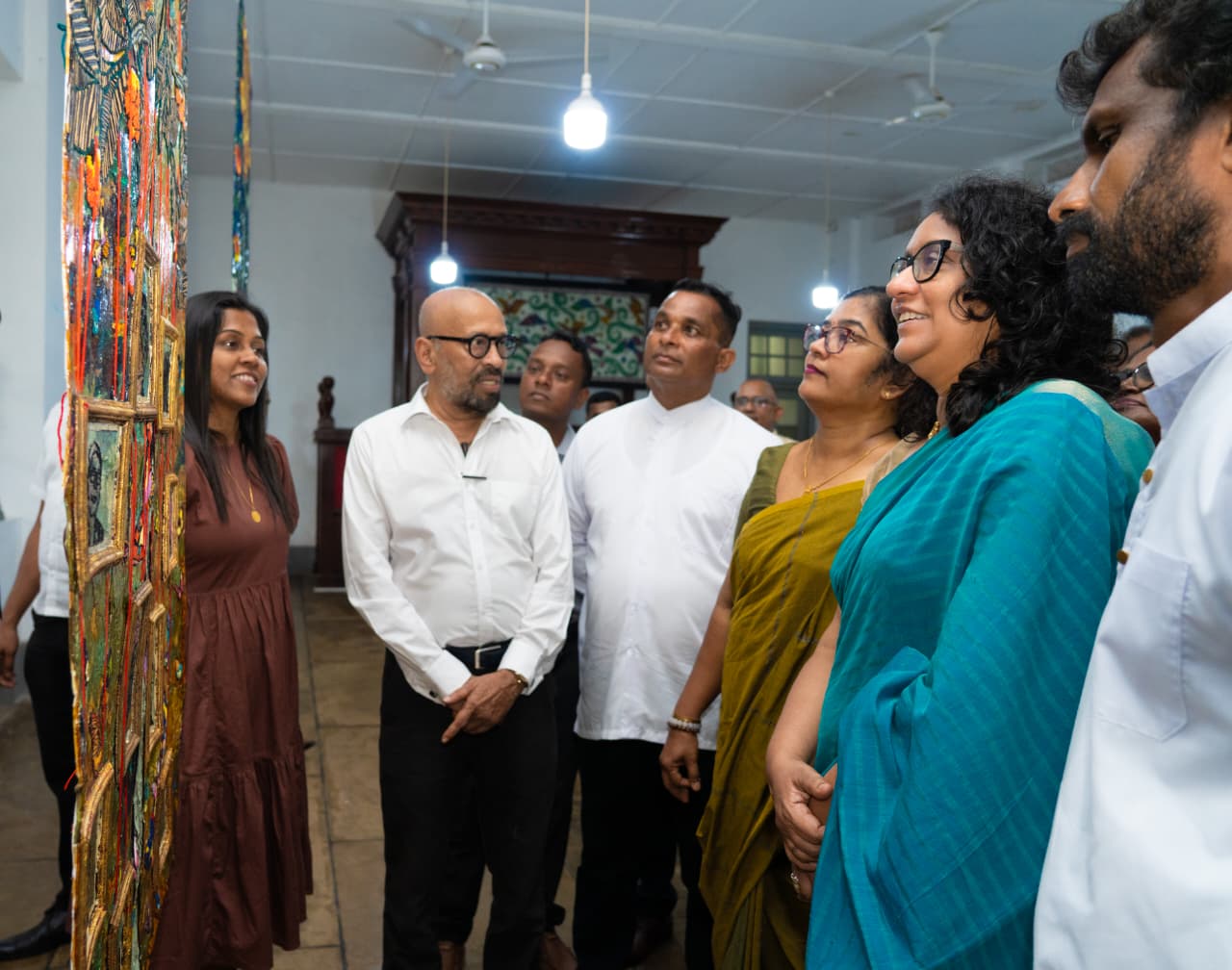
The inaugural ceremony of the Matara Festival for the Arts, featuring a wide range of creations by local and international artists, was held on February 19 at the Old High Court premises of the Matara Fort, under the patronage of Prime Minister Dr. Harini Amarasuriya.
The festival, centred around the Old High Court premises in Matara and the auditorium of the Matara District Secretariat, will be open to the public from 20 to 23 of February. The festival will be featured by visual art exhibitions, short film screenings, Kala Pola, and a series of workshops conducted by experts.
The inaugural event was attended by the Minister of Women and Child Affairs, Ms. Saroja Paulraj, along with artists, guests, and a large number of schoolchildren.
(Prime Minister’s Media Division)
Only one Member of Parliament has chosen not to receive the salaries and allowances entitled to MPs, Prime Minister Dr. Harini Amarasuriya revealed in Parliament last Thursday, shedding light on the financial perks enjoyed by members of the Tenth Parliament.
Speaking on Thursday (Feb. 19) in response to a question from SJB Badulla District MP Chaminda Wijesiri, the Prime Minister outlined the full range of pay and allowances provided to parliamentarians.
According to Dr. Amarasuriya, MPs receive a monthly allowance of Rs. 54,285, an entertainment allowance of Rs. 1,000, and a driver’s allowance of Rs. 3,500—though MPs provided with a driver through the Ministry of Public Security and Parliamentary Affairs are not eligible for the driver’s allowance.
Additional benefits include a telephone allowance of Rs. 50,000, a transport allowance of Rs. 15,000, and an office allowance of Rs. 100,000. MPs are also paid a daily sitting allowance of Rs. 2,500 for attending parliamentary sessions, with an additional Rs. 2,500 per day for participation in parliamentary sittings and Rs. 2,500 per day as a committee allowance.
Committee meetings held on non-parliament sitting days also attract Rs. 2,500 per day.
Fuel allowances are provided based on the distance between an MP’s electoral district and Parliament. National List MPs are entitled to a monthly allocation equivalent to 419.76 litres of diesel at the market price on the first day of each month.
Despite the comprehensive benefits, only SJB Badulla District MP Nayana Wasalathilaka has opted not to draw a salary or allowances. Dr. Amarasuriya said that in accordance with a written notification submitted by MP Wasalathilaka on August 20, 2025, payments have been suspended since that date.
The Prime Minister also confirmed that she, along with the Speaker, Deputy Speaker, committee chairs, ministers, deputy ministers, the Opposition Leader, and senior opposition whips, have all informed the Secretary-General of Parliament in writing that they will not claim the fuel allowance.
Challenging the ruling party’s voluntary pledge to forgo salaries, MP Wijesiri pointed out that all MPs except Wasalathilaka continue to receive their salaries and allowances. “On one hand you speak about the people’s mandate, which is good. But the mandate also included people who said they would voluntarily serve in this Parliament without salaries. Today we have been able to prove, Hon. Speaker, that except for one SJB MP, the other 224 Members are drawing parliamentary salaries,” he said.
The Prime Minister responded by defending the political culture and practice of allocating portions of MPs’ salaries to party funds. Referring to previous practices by the JVP and NPP, she said: “It is no secret to the country that the JVP has for a long time not personally taken MPs’ salaries or any allowances. I think the entire country knows that these go to a party fund. That is not new, nor is it something special to mention. The NPP operates in the same way. That too is not new; it is the culture of our political movement.”
When MP Wijesiri posed a supplementary question asking whether diverting salaries to party funds was an indirect method of taking care of MPs, Dr. Amarasuriya said: “There is no issue there. No question was raised; the Member made a statement. What we have seen throughout this week is an inability to understand our political culture and practice, and a clash with decisions taken by political movements that misused public funds. What is coming out is a certain mindset. That is why there is such an effort to find fault with the 159. None of these facts are new to people. He did not ask a question, so I have nothing to answer.”
The disclosures come days after the Government moved to abolish the parliamentary pension, a measure that has sparked renewed debate over MP compensation and the transparency of funds allocation.
Public Security and Parliamentary Affairs Minister Ananda Wijepala on Friday (20) disclosed in Parliament details of properties and assets allegedly acquired through illegal activities by suspects arrested in raids carried out since September last year.
The Minister made the disclosure in response to a question raised by MP Ravindra Bandara, stating that the identified assets have been frozen pending further investigations.
He said the assets include properties belonging to several alleged organised crime figures, among them Mandinu Padmasiri, alias ‘Kehelbaddara Padme’, who was arrested last year.
Listing the assets in the House, the Minister said Hapugoda Arachchige Kankanamge Duminda Dilruk has assets worth Rs. 23 million frozen, including a van, a motorcycle, a house and a roller gate.
In the case of Kandaiya Kalamogan, two motorboats have been identified, although their value has not yet been assessed.
Dilum Tharaka Balasuriya is reported to own a two-storey house situated on 15 perches of land with a face value of Rs. 800,000.
Assets belonging to Mohammad Harish Mohammad and Mohammad Shiyam were frozen on January 21, 2026. While the total value has not yet been assessed, five vehicles were confiscated from the former and a car from the latter.
Wijesuriya Mahaduruge Uditha Iroshan Wijesiri has assets valued at Rs. 5 million, including a lorry, while Indika Pathmakumara’s assets include a cab worth Rs. 2.5 million and a bank account containing Rs. 1 million.
Lahiru Sampath is reported to own a three-wheeler valued at Rs. 1.8 million.
According to the Minister, Hettiarachchige Dona Sriyani Chandralatha possesses a four-storey house and 14.7 perches of land valued at Rs. 60 million.
Mandinu Padmasiri, alias ‘Kehelbaddara Padme’, owns 20 perches of land with partially constructed buildings valued at Rs. 30 million and a half-finished six-room building worth Rs. 20 million, the Minister said.
Patabendi Maddumage Shehan Sathsara, alias ‘Dehi Bale Malli’, has five multi-day fishing trawlers valued at Rs. 200 million and a two-storey house with 15.8 perches of land worth Rs. 50 million.
The Minister further disclosed that Jayasinghege Maduranga Sampath owns a cab worth Rs. 5.4 million, a van valued at Rs. 14.5 million, five bank accounts containing Rs. 73.03 million, another account with Rs. 160,328.88 and USD 544, and Rs. 283 million in cash.
Adhikari Samantha Perera is reported to own 10.10 perches of land valued at Rs. 5 million and one acre and 1.5 perches of land worth Rs. 13 million.The Minister said investigations are continuing in respect of the suspects and the frozen assets.

India, South Africa meet in the final before the final

Matara Festival for the Arts’ inaugurated by the Prime Minister

Showers or thundershowers will occur at most part of the Island after 1.00 p.m.

Only single MP refuses salary as Parliament details pays and allowances

Illegal assets of underworld figures frozen since September, Minister tells parliament

Entire coal procurement rigged, SJB charges minister over substandard fuel

‘Dates have the highest sugar content to fight Coronavirus’

Sunday Island 27 December – Headlines

#SundayIsland 17th December – Headlines

Sunday Island – 28th March

Sunday Island Headlines – 21 March

Sunday Island – 21st February – Headlines
-

 Business6 days ago
Ministry of Brands to launch Sri Lanka’s first off-price retail destination
-

 Latest News1 day ago
New Zealand meet familiar opponents Pakistan at spin-friendly Premadasa
-

 Latest News1 day ago
Tariffs ruling is major blow to Trump’s second-term agenda
-

 Latest News2 days ago
ECB push back at Pakistan ‘shadow-ban’ reports ahead of Hundred auction
-

 Features6 days ago
Giants in our backyard: Why Sri Lanka’s Blue Whales matter to the world
-
 Sports3 days ago
Old and new at the SSC, just like Pakistan
-

 News5 days ago
IMF MD here
-
 Business5 days ago
Green Minds: A new platform to rethink environmental governance in Sri Lanka