
Business
How ISMM could contribute towards the eradication of corruption


By Ranil Abeyesekera
The Institute of Supply and Materials Management (ISMM) in Sri Lanka holds a unique and important position in shaping the country’s supply chain and procurement practices. As the founder and government-recognized institute in the field, ISMM’s role extends beyond education and training to include consultancy and advocacy for best practices in supply chain management.
The pressing need for a robust procurement law in Sri Lanka to eradicate corruption presents a significant opportunity for ISMM to leverage its resources, expertise, and influence.
Sri Lanka’s procurement processes, particularly in the public sector, have long been marred by inefficiencies and corruption. The absence of stringent legal frameworks and oversight mechanisms has allowed corrupt practices to thrive, resulting in substantial financial losses and eroding public trust. The introduction of a comprehensive procurement law could address these issues by setting clear guidelines, establishing accountability, and creating a transparent system for managing public and private sector procurement.
One of the primary ways ISMM can contribute is through its extensive educational programs. By conducting classes for professionals up to graduate levels and offering workshops and seminars, ISMM can ensure that the principles of ethical procurement and the importance of a solid legal framework are instilled in the next generation of supply chain professionals.
ISMM can revise its curriculum to include modules specifically focused on procurement law, ethics, and anti-corruption measures. This would prepare graduates not only to adhere to best practices but also to advocate for and implement these practices within their organizations.
Through ongoing workshops and seminars, ISMM can keep current professionals updated on the latest developments in procurement laws and anti-corruption strategies. These sessions can also serve as platforms for discussing the practical challenges and solutions related to implementing procurement law.
ISMM’s close collaboration with key governmental bodies like the Industrial Development Board (IDB) and the Ministry of Industries places it in a strategic position to influence policy development.
As a consultancy service provider for both private and public organizations, ISMM can conduct comprehensive research to highlight the economic and social benefits of a procurement law. By presenting data-driven insights and case studies from other countries, ISMM can build a compelling case for legal reform.
Policy Recommendations
ISMM can draft and submit policy recommendations to the government. These recommendations can include frameworks for the proposed law, guidelines for implementation, and suggestions for monitoring and evaluation mechanisms.
Organizing forums and discussions involving key stakeholders such as government officials, industry leaders, and civil society can help in building consensus and gathering support for the procurement law. ISMM’s reputation and network can facilitate meaningful dialogue and collaboration.
The annual National Supply Chain Excellence Awards Ceremony, conducted by ISMM, can play a significant role in promoting best practices and recognizing excellence in procurement.
By establishing high standards for the awards, ISMM can highlight the importance of ethical procurement practices. Criteria for the awards can include adherence to transparency, accountability, and efficiency in procurement processes.
Recognizing organizations and individuals who exemplify best practices in procurement can serve as a powerful incentive for others. It also raises public awareness about the benefits of ethical procurement and the need for a strong legal framework.
Public awareness and support are crucial for the successful implementation of procurement law. ISMM can leverage its resources to educate the public on the importance of this law and how it can contribute to reducing corruption and improving economic efficiency.
ISMM can launch public awareness campaigns through various media channels to explain the benefits of procurement law. These campaigns can also demystify the procurement process and highlight the role of transparency and accountability in reducing corruption.
Working with journalists and media houses to publish articles, reports, and features on procurement issues can help in shaping public opinion and building pressure on policymakers to enact the law.
For a procurement law to be effective, it is essential that public sector employees are well-versed in its requirements and equipped to implement it.
The Institute of Supply and Materials Management (ISMM) has a critical role to play in advocating for and facilitating the implementation of a procurement law in Sri Lanka. Through education, policy advocacy, public awareness campaigns, and capacity building, ISMM can drive the adoption of a legal framework that promotes transparency, accountability, and efficiency in procurement processes. Such a framework is essential for eradicating corruption and fostering a healthy economic environment in Sri Lanka. By leveraging its unique position and resources, ISMM can make a substantial contribution to this vital national initiative.

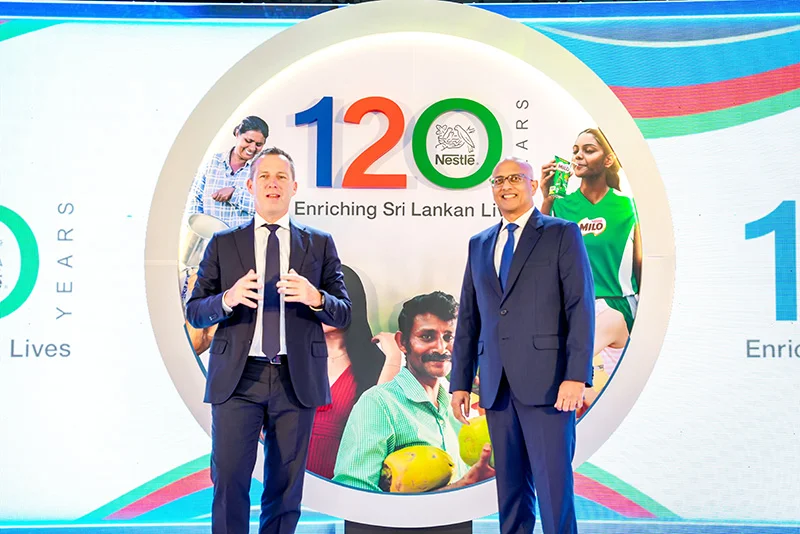
Nestlé Lanka Limited this year marks 120 years of operations in Sri Lanka, highlighting a century-long presence that has extended beyond food manufacturing to supporting farmers, communities, youth employment and environmental sustainability.
Established in 1906, the company has grown into one of Sri Lanka’s leading food and beverage manufacturers, today producing more than 90% of the products it sells locally. Over the decades, Nestlé Lanka has built a strong domestic footprint through local sourcing, long-term farmer partnerships and continued investment in manufacturing.
Through widely recognised brands such as Nestomalt, Milo and Maggi, the company has become a familiar presence in Sri Lankan households, offering products designed to meet local nutritional needs. Many of its products are fortified with micronutrients aimed at improving dietary intake, while brands such as Milo and Nestomalt have also supported youth sports and active lifestyles in the country.
Nestlé Lanka’s engagement with local agriculture has also played a role in strengthening rural livelihoods. The company works closely with dairy and coconut farmers, providing technical assistance, skills development and reliable market access as part of its responsible sourcing efforts.
The company has also expanded programmes aimed at improving youth employability. Through the “Nestlé Needs YOUth” initiative, young Sri Lankans are provided with access to training, learning and career opportunities. Partnerships with organisations such as BConnected have also helped promote inclusive employment opportunities for people with disabilities.
Sustainability has become an increasingly central focus of the company’s operations. Nestlé Lanka’s manufacturing facility in Kurunegala operates on 100% renewable electricity, while a biomass boiler commissioned in 2024 has helped reduce carbon emissions from manufacturing. The company aims to achieve net-zero carbon emissions by 2050.
Efforts to reduce environmental impact have also extended to packaging. Nestlé Lanka pioneered the shift from plastic to paper straws in aseptic beverage cartons in 2019 and supported the establishment of Sri Lanka’s first recycling plant for such cartons. The company aims to become fully plastic neutral by 2026.
Chairman and Managing Director Bernie Stefan said the milestone reflects the long-standing trust Sri Lankan consumers have placed in the company and the partnerships it has built across the country over generations.
By Sanath Nanayakkare
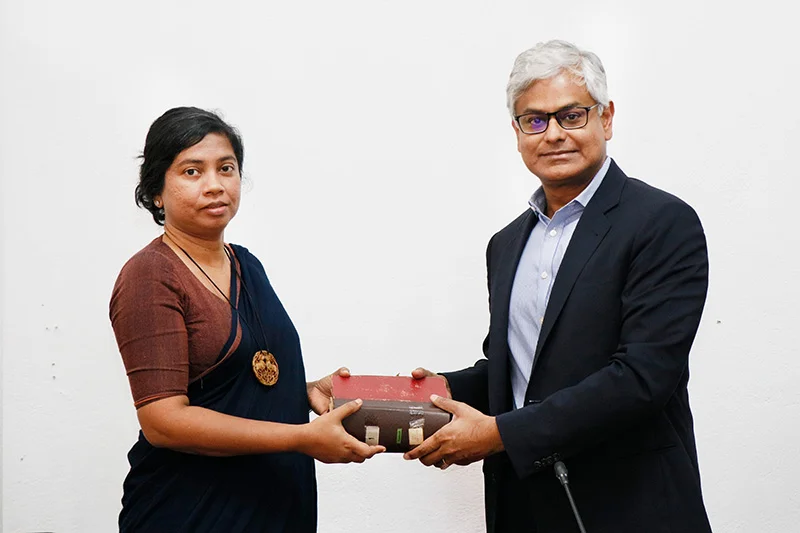
The Ceylon Chamber of Commerce has formally handed over its historical records to the National Archives Department of Sri Lanka, placing over a century of the nation’s commercial history into the care of the country’s official custodians of heritage.
The historical archive being handed over spans from the Chamber’s founding in 1839 to 1973, and includes correspondence, meeting minutes, reports, ledgers, and publications that chronicle the development of trade, enterprise, and industry in Sri Lanka. Together, these records provide a rare and detailed account of how the island’s economy evolved and how its business community helped shape national progress.
The Ceylon Chamber of Commerce was established on 25 March 1839 on the principle that the interests of commerce and trade are best advanced when merchants unite and cooperate in matters affecting the common good. At the time, Ceylon was among the earliest regions in Asia to establish a chamber of commerce, alongside counterparts in Bengal, Bombay, Madras, Canton, Penang, and Singapore.
From its earliest years, the Chamber played a central role in organising and guiding trade. It played a central role in establishing and growing the export economy built on commodities such as coffee, cinnamon, coconut oil, tea, and rubber, and hosted the island’s renowned tea and rubber auctions. It also developed rules and standards for trading practices, helping create an environment of trust and reliability that enabled Sri Lanka’s commerce to thrive.
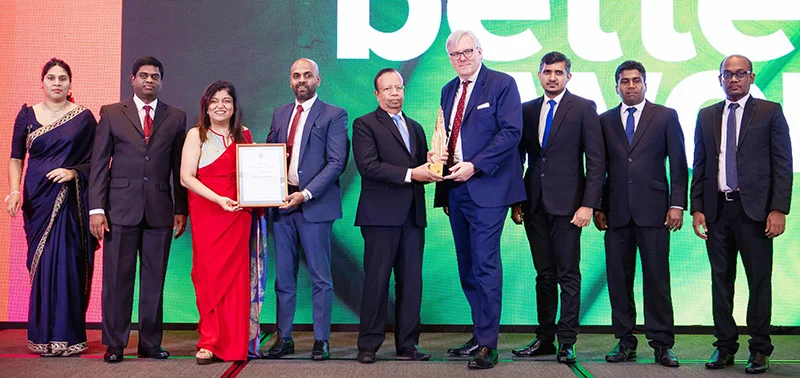
Ceylinco Life has secured two prestigious accolades for its 2024 Annual Report, reaffirming the Company’s leadership in transparent, accountable and sustainability-driven corporate reporting.
At the Association of Chartered Certified Accountants (ACCA) Sri Lanka Sustainability Reporting Awards, Ceylinco Life emerged winner in the ‘Other Financial Services’ category for the second time. Organised by the ACCA, one of the world’s most respected professional accounting bodies, the awards are assessed against globally accepted sustainability and reporting standards rather than local benchmarks, lending them strong international credibility. The recognition underscores Ceylinco Life’s sustained commitment to setting new benchmarks in sustainability reporting within Sri Lanka’s corporate sector.
The Company’s reporting excellence was also recognised at the TAGS Awards 2025 presented by the Institute of Chartered Accountants of Sri Lanka (CA Sri Lanka). Ceylinco Life was ranked among the Top 10 Integrated Reports in Sri Lanka and received the Silver Award in the Insurance Companies category for entities with Gross Premium above Rs. 10 billion. The TAGS Awards evaluate annual reports on the pillars of Transparency, Accountability, Governance and Sustainability, and are widely regarded as Sri Lanka’s benchmark for corporate reporting excellence.
Commenting on the significance of the recognitions, Ceylinco Life Senior Executive Director/ Chief Financial Officer Mr Palitha Jayawardena said these awards validate the Company’s disciplined approach to transparency, governance and sustainability. “Our integrated reporting journey is not only about compliance; it is about clearly demonstrating how we create and protect value over the long term. Being recognised both by the ACCA and by CA Sri Lanka affirms that our reporting standards meet the highest expectations and reflect the depth of our commitment to responsible and sustainable business practices,” he said.

Jemimah Rodrigues, Harmanpreet Kaur, Mitchell Starc and Kuldeep Yadav among ESPNcricinfo award winners for 2025

China approves ‘ethnic unity’ law requiring minorities to learn Mandarin

Nasa spacecraft weighing 1,300lb due to re-enter Earth’s atmosphere

Chinese national arrested over attempt to smuggle 2,000 queen ants from Kenya

Attacks reported on three more cargo ships in Gulf, with oil price back near $100

PM Visits the International Rice Research Institute (IRRI)

‘Dates have the highest sugar content to fight Coronavirus’

Sunday Island 27 December – Headlines

#SundayIsland 17th December – Headlines

Sunday Island – 28th March

Sunday Island Headlines – 21 March

Sunday Island – 21st February – Headlines
-
 News7 days ago
University of Wolverhampton confirms Ranil was officially invited
-

 News6 days ago
Peradeniya Uni issues alert over leopards in its premises
-

 News7 days ago
Female lawyer given 12 years RI for preparing forged deeds for Borella land
-

 News4 days ago
Repatriation of Iranian naval personnel Sri Lanka’s call: Washington
-

 News7 days ago
Library crisis hits Pera university
-

 News6 days ago
Wife raises alarm over Sallay’s detention under PTA
-

 News7 days ago
‘IRIS Dena was Indian Navy guest, hit without warning’, Iran warns US of bitter regret
-

 Latest News7 days ago
Sri Lanka evacuates crew of second Iranian vessel after US sunk IRIS Dena