
Latest News
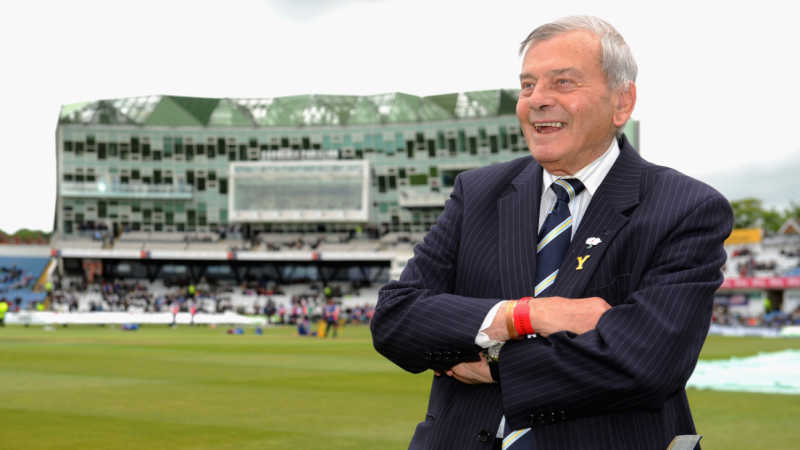
Harold ‘Dickie’ Bird, umpiring great, dies aged 92



Pallekele was the stage, just under a week ago, for Sri Lanka’s turbo charged victory over a shell-shocked (and soon-to-be-eliminated) Australia. One minute the Aussies were 104 for 0 in the ninth over, and the hosts themselves were the ones contemplating an anxious exit from an unexpectedly competitive Group B. The next thing you knew, their spinners had ripped out Australia’s soul, and Pathum Nissanka had come howling through the breach with his wonderful 52-ball century.
Pallekele’s passionate, opinionatwd, fanbase made their presence felt that night, and as the concurrent scenes in Colombo have indicated, Sri Lanka is somewhat gripped by World Cup fever right now – notwithstanding their team’s shock loss to a surging Zimbabwe in their final group game.
That six-wicket defeat made no odds to the Super Eight, with the pre-seeded pools now awkwardly featuring all the group winners on one side of the draw and all the runners-up on the other. But it was conceivably an untimely bump back to earth, just in time for Sri Lanka’s reunion with a familiar set of foes. England won five matches out of six on their white-ball warm-up tour of the country last month, including three out of three in the T20I leg.
None of these wins were emphatic, but each of them was sealed by subtly different means – Adil Rashid’s spin strangle in game 1, Tom Banton’s middle-order awakening in game 2, Sam Curran’s guts and glory on a tricky turning deck in game 3, in which England’s back-up tweakers, Will Jacks and Jacob Bethell applied the coup de grace.
The net effect was to give the impression of a well-rounded England team, one that was ready to march into the main event with form to fall back on and faith in their myriad methods. And while that might still be the case in an eminently surmountable Group 2 which also features the known unknowns of New Zealand and Pakistan, the sheer terror of those near-misses against Nepal and Italy cannot be easily forgotten. Nor the disturbing passivity of their old-school trouncing in Mumbai by West Indies.
The stage is therefore set for Sri Lanka to pounce on the big occasion, as they have often done in the recent past, most notably with their wins at the 2019 and 2023 ODI World Cups, when their brace of victories went against the grain of their one-sided bilateral records.
Sri Lanka’s batting has broadly fired across the group stages, with Nissanka leading the line and Kusal Mendis contributing a trio of fifties in four matches, but agonisingly they’ll have to take the stage without the raw pace of Matheesha Pathirana, whose slingy action had England’s top order in all sorts of bother throughout their bilateral engagements. He lasted just four balls of the Australia game before succumbing to a calf strain, and has been replaced by Dilshan Madushanka.
Pathum Nissanka joined a curiously niche club when he smoked Australia to the brink of elimination last week. Only Chris Gayle before him had managed a T20 World Cup hundred, in addition to an ODI double-hundred and a century in all three formats – and if he’s got some way to go to match Gayle’s twin Test 300s, then a career-best 187 in his last series against Bangladesh suggests he’s tracking in the right direction. England did not see the best of him in the bilateral series just gone, but they’ll remember it alright. At The Oval in 2024, he blazed a superb fourth-innings 127 not out from 124 balls to swipe the third Test from under his opponents’ noses. At a time when England’s own batting lacks a touch of bravado, Nissanka is perfectly placed to steal a march once again.
Adil Rashid has been an unlikely barometer of England’s struggles. On his day, he remains absolutely integral to his team’s hopes of adding to the silverware that he has been instrumental in collecting over the course of the past decade. In England’s loss to West Indies, he did not concede a single boundary in serving up figures of 2 for 16 in four overs, while a combined haul of 5 for 69 in 12 in Pallekele last month suggests he will be right back on the mark on his return to a happy hunting ground. In between whiles, however, he has been treated with rare disdain by a succession of Associate batters, serving up combined figures of 4 for 121 in 11 overs, including a brutal outing of 3-0-42-0 against Nepal. Part of that might come down to a lack of inhibition from a succession of unfancied opponents who had licence to take him on. But with Brook’s tournament stratergy lean8ng so heavily on spin, England cannot afford many more bad days from their veteran. They aren’t programmed to cope when he goes missing.
England’s nerves haven’t been settled, but their team certainly has. Their depth of batting and bowling options came to the fore on their previous trip to Pallekele, and while there’s no expectation of wholesale changes, Brook did hint that some tweaks might be needed to avoid becoming predictable. Whether those are personnel or positional remain to be seen, although Luke Wood’s skiddier left-arm seam might be restored in place of Jamie Overton’s heavier lengths. The cut to Jacob Bethell’s bowling hand (sustained during the match against West Indies), may prevent him from bowling, because those fingers are still strapped. Brook hoped he’d recover in time, however.
England: (probable) Phil Salt, Jos Buttler (wk), Jacob Bethell, Tom Banton, Harry Brook (capt), Sam Curran, Will Jacks, Liam Dawson, Luke Wood, Jofra Archer, Adil Rashid
Pramod Madushan made his first appearance of the campaign in the Zimbabwe defeat, with Dushmantha Chameera taking a break with qualification already assured. That short-term arrangement is likely to be reversed, with Madushanka keeping his spot.
Sri Lanka: (probable) Pathum Nissanka, Kusal Perera, Kusal Mendis (wk), Pavan Rathnayake, Kamindu Mendis, Dasun Shanaka (capt), Dunith Wellelage, Dushan Hemantha, Maheesh Theekshana, Dilshan Madushanka, Dushmantha Chameera
(Cricinfo)
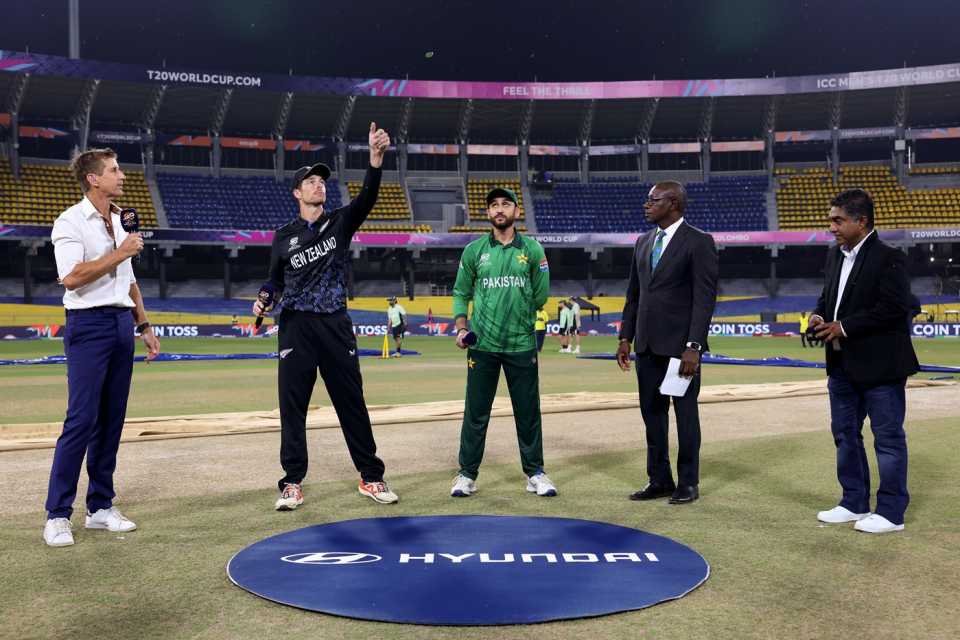
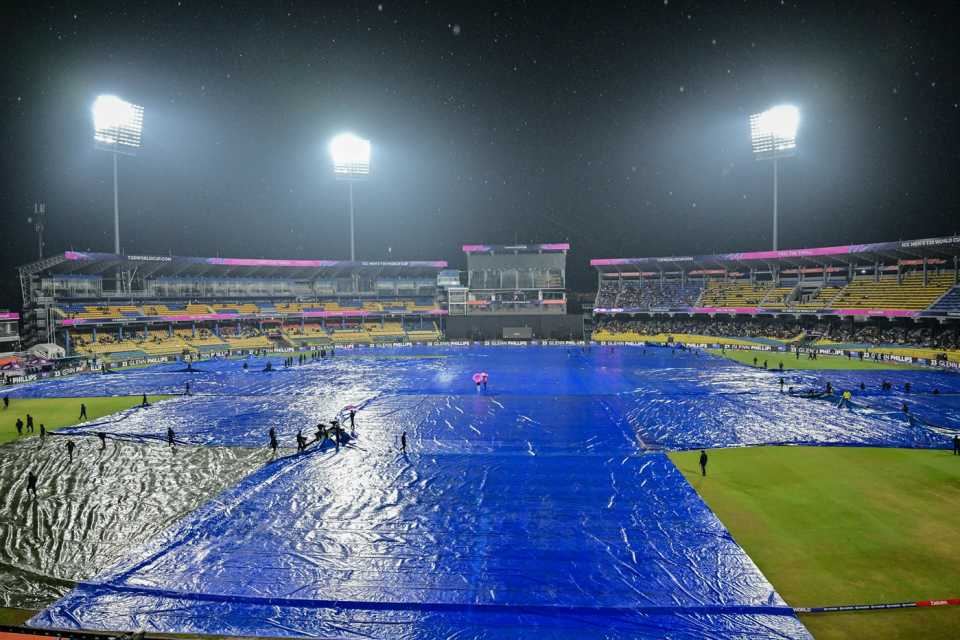
New Zealand and Pakistan will share the points after rain forced a washout in Colombo. The officials waited over two hours from the official start time for an improvement in the weather conditions, but the steady drizzle that began at the toss only grew heavier and never quite relented.
With puddles forming on the covers and the overhead conditions no closer to improving, the umpires made the inevitable call.
There was a strong chance of showers as toss time approached. The previous day, Pakistan’s evening training session had to be cancelled due to rain. At the toss, which Pakistan won with Salman Agha opting to bat first, a drizzle began as the captains were speaking, and the ground staff began to move the covers into position. From thereon, the fate of the game was sealed.
Pakistan had left Khawaja Nafay out and brought in Fakhar Zaman, while New Zealand made three changes, including welcoming their captain Mitchell Santner back into the XI.
Both teams got off the mark in the Super Eight, but are left with little room for error. Pakistan will play England next on Tuesday and Sri Lanka a week from today, while New Zealand take on Sri Lanka on Wednesday and England on Friday. All games in this group take place in Sri Lanka.
(Cricinfo)
Latest News
Advisory for Heavy Rain issued for the Central, Uva and Sabaragamuwa provinces and in the Ampara, Batticaloa and Polonnaruwa districts

Advisory for Heavy Rain Issued by the Natural Hazards Early Warning Centre at 12.00 noon on 21 February 2026 valid for the period until 08.30 a.m. 22 February 2026
Due to the low level atmospheric disturbance in the vicinity of Sri Lanka, Heavy showers above 100 mm are likely at some places in the Central, Uva and Sabaragamuwa provinces and in the Ampara, Batticaloa and Polonnaruwa districts and fairly heavy showers above 75 mm are likely at some places elsewhere.
Therefore, the general public is advised to take adequate precautions to minimize damages caused by heavy rain, strong winds and lightning during thundershowers.

Showers or thundershowers will occur at most part of the Island after 1.00 p.m.

Only single MP refuses salary as Parliament details pays and allowances

Illegal assets of underworld figures frozen since September, Minister tells parliament

Entire coal procurement rigged, SJB charges minister over substandard fuel

WNPS demands immediate ban on illegal construction

CID probes suspect lawyer’s multi-million-rupee money trail in Sanjeewa murder case

‘Dates have the highest sugar content to fight Coronavirus’

Sunday Island 27 December – Headlines

#SundayIsland 17th December – Headlines

Sunday Island – 28th March

Sunday Island Headlines – 21 March

Sunday Island – 21st February – Headlines
-

 Business6 days ago
Ministry of Brands to launch Sri Lanka’s first off-price retail destination
-
 Latest News1 day ago
New Zealand meet familiar opponents Pakistan at spin-friendly Premadasa
-

 Latest News1 day ago
Tariffs ruling is major blow to Trump’s second-term agenda
-

 Latest News2 days ago
ECB push back at Pakistan ‘shadow-ban’ reports ahead of Hundred auction
-

 Features6 days ago
Giants in our backyard: Why Sri Lanka’s Blue Whales matter to the world
-

 Sports3 days ago
Old and new at the SSC, just like Pakistan
-

 News5 days ago
IMF MD here
-

 Business5 days ago
Green Minds: A new platform to rethink environmental governance in Sri Lanka