
Features
Greatest ‘Lovers’ Quarrel’ of all time

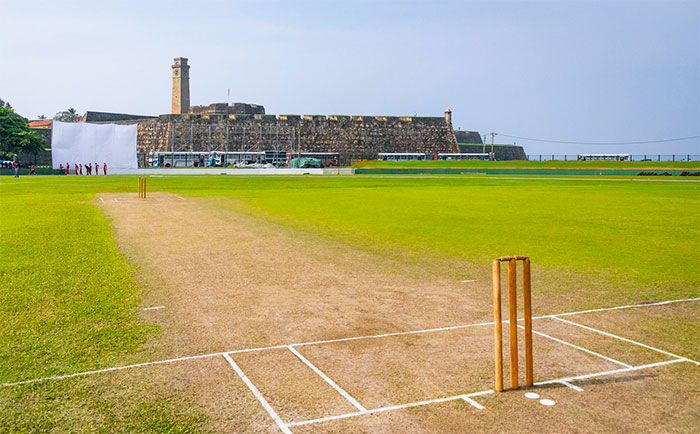
Mahinda-Richmond Big match – 1972
By Captain Chandra
Godakanda Arachchi
It was 50 years ago that the beautiful port city of Galle witnessed the 67th Mahinda-Richmond “Lovers’ Quarrel”, on 24 and 25 March 1972. A 33-year-old batting record, set by a batsman from Mahinda College, in 1939 was broken by a Richmondite, on the first day of play, and then the new record was smashed the following day by a Mahindian. The two-day event was full of drama, thrills, fun, and excitement.
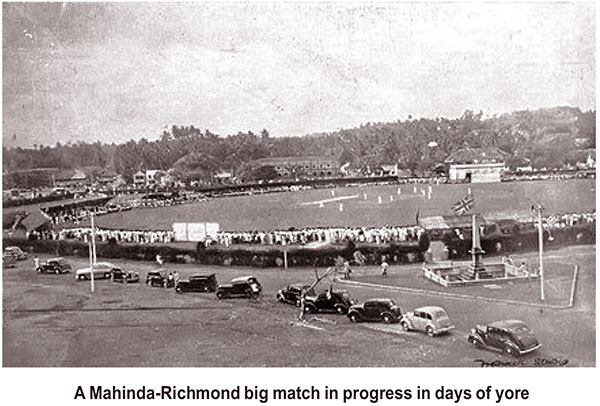
There couldn’t have been a better setting for the game played on a matting wicket prior to the turf wicket days, ably prepared by the veteran George and Peter, ground staff of the Galle CC, with the Dutch Fort in the backdrop, adjacent to the beautiful Galle bay, with no buildings, other than the historic Galle Cricket Club on the Northern flank of the ground, with a white picket fence, Gamini Football Club too was on the Northern side more towards the Railway station, and the scoreboard towards the eastern side of the ground. It was a practice from the colonial era to put up cadjan thatched huts, on the Western side of the ground by both schools, for the students, academic staff, invitees, old boys and other supporters, with the regulars having a few temporary tents on the Southern flank of the ground. Renowned Principal of Richmond College (1906 to 1922) Rev W. J. T. Small, who officiated the big match in 1907, was in the Richmond tent. (Rev Small officiated the big match in 1907, with another renowned, former principal of Mahinda College Frank Lee Woodward). The eastern side of the ground accommodated people from all walks of life, in Galle, some seated on the boundary line while others standing just outside.
With this beautiful setting for the game, the two captains, Ivan Kariyawasam and Prasad Kariyawasam (interestingly captains bearing the same surname only for the second time in the Galle big match history) walked to the middle for the toss of the coin to the accompaniment of rapturous cheers from boys from both schools, and supporters with black and gold flags, as well as red and blue flags, flying high in both camps. Richmond captain having won the toss decided to take the first lease unsurprisingly and quite rightly as the outfield was very dry and expected to be fast due to the prevailing dry weather.
Mahinda
 Ivan Kariyawasam (Captain) PHKH Ranasinghe (Vice Captain) Saliya Samaranayake, Gamini Karunanayake, Ananda Wijegunawardane, D.L. Stanley De Silva, Gamini Amendra, D.Jayantha Mendis, Jagath Ariyaratne, K.G. Wanigaratne, and Mervin Wickremaratne
Coach: Frank Guruge Master in charge: D E Jayanetti
Richmond
Prasad Kariyawasam (Captain) Dudley Dias (Vice Captain) Hema Dissanayake, Wasantha G Meegoda, L. Dias, Ravi Arunthawanathan, P. Ranatunge, S. Amarasiriwardane, Ranjan Jayasinghe, U. Hemalal and A. Abeyratne, Coach: Marcus Jayasinghe Master in charge: Mahindapala De Silva.
Mahinda was considered the underdog, with Richmond having performed better during the season, though it is a tradition of Mahindians to leave any statistics behind and get on with the job as best as they could. Captain Ivan led his team to the field, followed by Richmond opening batsmen Hema Dissanayake and Wasantha Meegoda. The match started with D L Stanley De Silva bowling the first over with Hema Dissanayake facing the first ball, followed by P H K H Ranasinghe bowling from left arm leg spin in Fort end. It was the first time in big match history that a spinner opened bowling. Later Hema Dissanayake was caught by Ivan Kariyawasam off the bowling of Mervyn Wicramarathne when the Richmond score was 43 with Mahinda camp jumping up in joy. Prasad Kariyawasam walked to the middle, amidst cheers from Richmondites and their supporters, not long after L K Munasinghe (Loku Mune), an old boy of Mahinda providing entertainment for the boys with Mahinda flag flying high in his hand sprinted along the boundary line towards where K. G. Wanigarathne was fielding at deep fine leg as the ball skied by Prasad towards Wanige, only to be disappointed when the ball sailed through the gap between his body and the hands and there was pin drop silence in the Mahinda camp. Prasad hadn’t even opened his account then. It was a sitter never to be missed, and the fileder had ample time to take the catch. In lighter vein, this incident would go down cricketing history of Mahinda College as the most crucial dropped catch in the 20th century. Loku Mune started walking back muttering to himself.
Prasad took full advantage of the life given by Mahindians, making steady progress. Second wicket, Wasantha Meegoda being dismissed with the Richmond score at 99. Whilst Prasad was consolidating his innings to the merriment of Richmondites. Third wicket fell when the total was 168. Dudley Dias was out when the Richmond score was 189 with Luxman Dias following Dudley back to the dressing room soon afterwards. Prasad, still at the wicket in his nineties, was again dropped behind the wicket. It was quite unfortunate for Mahinda whilst Richmondites were over the moon. Ravi Aruthwanathan was the next batsman and he was to face left arm leg spinner Ranasinghe and was out for 12 with Prasad still needing a few more runs to achieve his goal of 156 runs, to break the 33-year-old record held by Sirisena Hettige of Mahinda since 1939. Everyone was at the edge of their seats with the Mahindians hoping for the dismissal of Prasad, who was batting so confidently.
Prasad reached the target of 156 in style to the roar of cheer of Richmondites, who invaded the pitch in joy (quite usual at big matches) with Richmond flags flying high; Prasad declared theRichmond innings when the total was 274 for five wickets. It was a moment of great pride and achievement for skipper Prasad and all Richmondites alike. Former Principal of Richmond Rev Small watching the proceedings from the Richmond tent was elated with the seemingly formidable total posted by Richmondites.
Declared for five wickets
 It was Mahinda’s turn to face the music having toiled under the hot sun fielding almost all day, the strategy was discussed among the team mates with the coach, master-in- charge D E Jayanetti and a few past cricketers. It was decided to bat till close of play without losing a wicket. Prasad led his team to the field followed by Mahinda’s opening pair Saliya Samaranayake and Gamini Karunanayke walking to the middle with about one hour’s play left for the day. Mahinda openers started well facing Richmond fast bowlers Hema Dissanayake and Abeyratne though with half hour before the end of the day’s play, Saliya was caught by Prasad off Wasantha Meegoda’s bowling when the total was 19. It should not be an excuse though Saliya would have been exhausted after having kept wickets nearly the whole day and then having to open the batting. There was no such player as a night watchman at the time, P H K H Ranasinghe (Rane) was compelled to walk to the middle amidst cheers from the Mahinda camp. Rane played a defensive role until the close of play only scoring a single in the last ball of the final over. Day’s play ended with Gamini and Rane at the crease with the Mahinda total at 34 for one wicket. The day’s honours certainly belonged to Richmond captain Prasad Kariyawasam standing out.
Day 2
Rane was on old Galle CC ground floor near the stairs when the late P A D A Theodore, sports lover, the legendary teacher of Mahinda College, called Rane for a chat, inspired Rane with all the encouragement basically advising him to take his time to settle down to the business advising him that he could achieve the unthinkable. Mahinda’s strategy was reviewed, deciding first to overcome the challenge of scoring 174 runs to avoid a follow on, but the Richmondites would have had other ideas. Umpires took up their positions on day two sharp at 1000 hrs , Prasad led his team to the field followed by Karunanayke and Rane walking to the middle to face the challenge of scoring more than 175 in the first innings which was considered a very good score whilst Richmond having posted a very good total. Everyone seemed excited on day two having witnessed how the game unfolded on day one. Proceedings on day two began with different expectations from the two camps, Richmond wanting to bowl Mahindians out quickly though Mahindian’s strategy was to reach Richmond score of 174. Both Gamini Karunanayke and Rane started making progress steadily scoring runs confidently, but Karunanayake was bowled by U Hemalal for 41 runs when the total was 83. Captain Ivan was the next batsman to join Rane who was out LBW for 9 off Prasad’s left arm leg spin bowling when the total was 110 for three. This was still before lunch and it really seemed a steep curve for Mahindians to achieve what they desired to. However, three down batsman Ananda Wjegunawardane steadied the ship and he was not out with Rane at the lunch break with Rane scoring 88 runs not out batting confidently with the total of 159 runs for three wickets. Mahinda’s strategy was reviewed again at lunch as the first target of 174 runs now within easy reach, deciding for Rane to get through his century as the preliminary target, thereafter, scoring as much as possible beyond that.
Proceedings resumed post lunch steadily again with different expectations from Richmond and Mahinda with Rane continuing to bat confidently reaching his century elegantly to the cheer of Mahinda supporters. Cricket lovers who read the game correctly at the time were quite confident the way Rane played his game on the day that he was capable of regaining the record though it was not in Rane’s thoughts yet. The play continued and not long after Wjegunawardane was the next to go caught by Hema Dissanayake off a delivery from Ranathunga when the total was 221 for four wickets. Next batsman in was sixteen-year-old D L Stanley De Silva (who was a member of Sri Lanka’s World Cup team in 1979 as a fast bowler, a player with huge potential unfortunately died young following an accident riding his motorcycle) who scored a quickfire 35 runs before being bowled by Hemalal when the total was 276 for 5 overtaking Richmond’s score.
Rane was in his 120s, contemplating the possibility of regaining the batting record then deciding to bat cautiously while remaining batsmen held the fort. Gamini Amendra, last of the famous Amendra brothers was in, but out for six runs when the total was 289. Mendis was next, scoring valuable 22 runs when the score was 309. In the meantime, Rane was making ground slowly, but steadily with reaching 157 in his mind when he was dropped by Ranjan Jayasinghe at mid-off when he was on 142. With the pendulum swinging either way with everyone watching the game with excitement. What a let off when dropped 15 runs shy of the target! Jagath Ariyarathne scored 12 runs then the last man in, anything could happen Rane regaining the record or Mahindians all out. K G Wanigarathne was at the crease after the fall of Ariyarathne supported well as Rane was inching towards the target. In fact, Rane scored singles from 150 until 157 yet the scoreboard indicated 150 (those who witnessed cricket matches in Galle at the time would remember the scoreboard was manual and changes were made every 10 runs). It was a glorious moment of a lifetime Rane establishing a batting record within 24 hours after it was broken with supporters cheering loudly, some shedding tears of joy with some running to the middle to congratulate Rane, hugging him, someone bringing a white pigeon to the middle handing Rane for releasing, some dancing around him. What a scene it was! Prasad was the first to congratulate Rane though it wasn’t the practice of players in the dressing room running to the field on such occasions, Ivan and his team resisted the urge running to the field! Spectators burst into cheers when Rane reached 157 seemed like never ending! Mahinda’s first innings was declared at the tea break at 359 for nine wickets with Rane losing his wicket for 162 runs.
Declared for nine wickets
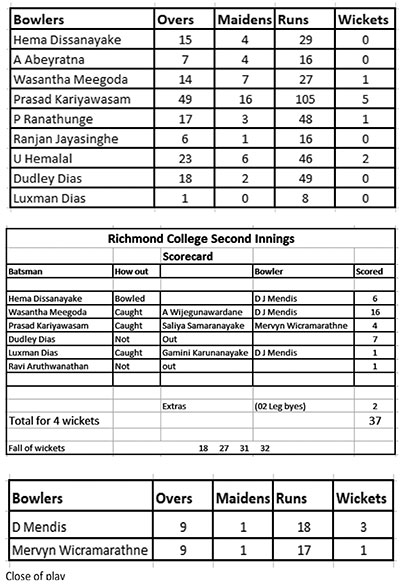 Richmond started batting in the second innings with skipper Ivan having a different strategy in terms of opening bowling combination. D Mendis was the opening bowler followed by his opening bowling partner Mervyn Wicramarathne. The trick worked well; Hema Dissanayake got out for 6 runs followed by skipper Prasad for 4 when the total was 18 and 27 respectively. Next to go was Laxman Dias, who scored just one run followed by Meegoda having scored 16 runs. At the close of play Richmond were 37 for 4 wickets and the game was drawn!
Mahinda carried trophies for the Best Batsman – Ranasinghe and Mendis were adjudged the Best bowler and Prasad winning a special award for his extraordinary performance. Mahinda’s total of 359 is a record for an innings, and a combined total of 633 from both schools is a record too. Mahinda faced 150 overs in total.
Richmond coach Marcus Jayasinghe walking to Mahinda dressing room congratulated Ivan and the team not long after the Principal of Mahinda College J. H. Gunasekara arrived in the dressing room to congratulate the team. This game had it all, filled with fun, excitement, suspense, and joy. Prasad in his batting demonstrated all the qualities a super batsman should possess and no doubt demonstrated his leadership skills too. Ivan proved his mettle by coming from behind, standing tall under tremendous pressure to deal with the situation and come out a winner for his team! Ivan was a giant in the game.
It was an outstanding performance by Vice Captain Ranasinghe beyond any words to regain the record for Mahinda within 24 hours of losing it, his ability to listen to advice and choose what’s right to take on board, commitment from the word go, patience, confidence, endurance, and skill to counter opposition strategies to get him out, a fierce competitor and a role model for any youngster. Interesting to note that both record breaking batsmen were right hand bat and left arm leg spin bowlers. The record was established by P H K H Ranasinghe stands intact to date after 50 years on!
The game was played in an era when not many facilities were available for players unlike in this day and age.
Both teams played the game in the true spirit of cricket while being competitive. Both captains led their teams from the front despite swinging fortunes and odds either way. The way the game was played strengthened the long-standing friendship between two premier schools in Galle. Cricket is a game that promotes sportsmanship, discipline, and self-respect which both teams demonstrated the qualities beyond doubt. Ultimate winner was cricket!
Thanks to Rear Admiral Ivan Kariyawasam and P H K H Ranasinghe for the valuable information. Author of this write up was a schoolboy at the time watching the game from the Mahinda tent.
Feedback: chandra.godakanda@hotmail.com

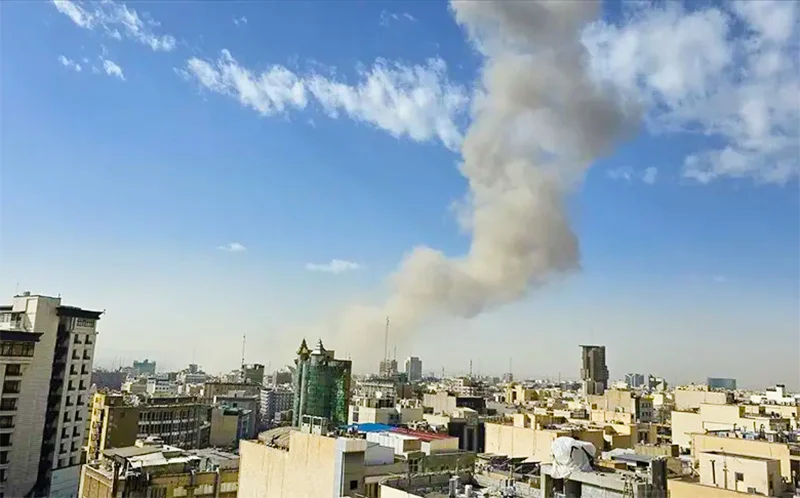
 The recent humanly costly torpedoing of an Iranian naval vessel in Sri Lanka’s Exclusive Economic Zone by a US submarine has raised a number of issues of great importance to international political discourse and law that call for elucidation. It is best that enlightened commentary is brought to bear in such discussions because at present misleading and uninformed speculation on questions arising from the incident are being aired by particularly jingoistic politicians of Sri Lanka’s South which could prove deleterious.
As matters stand, there seems to be no credible evidence that the Indian state was aware of the impending torpedoing of the Iranian vessel but these acerbic-tongued politicians of Sri Lanka’s South would have the local public believe that the tragedy was triggered with India’s connivance. Likewise, India is accused of ‘embroiling’ Sri Lanka in the incident on account of seemingly having prior knowledge of it and not warning Sri Lanka about the impending disaster.
It is plain that a process is once again afoot to raise anti-India hysteria in Sri Lanka. An obligation is cast on the Sri Lankan government to ensure that incendiary speculation of the above kind is defeated and India-Sri Lanka relations are prevented from being in any way harmed. Proactive measures are needed by the Sri Lankan government and well meaning quarters to ensure that public discourse in such matters have a factual and rational basis. ‘Knowledge gaps’ could prove hazardous.
Meanwhile, there could be no doubt that Sri Lanka’s sovereignty was violated by the US because the sinking of the Iranian vessel took place in Sri Lanka’s Exclusive Economic Zone. While there is no international decrying of the incident, and this is to be regretted, Sri Lanka’s helplessness and small player status would enable the US to ‘get away with it’.
Could anything be done by the international community to hold the US to account over the act of lawlessness in question? None is the answer at present. This is because in the current ‘Global Disorder’ major powers could commit the gravest international irregularities with impunity. As the threadbare cliché declares, ‘Might is Right’….. or so it seems.
Unfortunately, the UN could only merely verbally denounce any violations of International Law by the world’s foremost powers. It cannot use countervailing force against violators of the law, for example, on account of the divided nature of the UN Security Council, whose permanent members have shown incapability of seeing eye-to-eye on grave matters relating to International Law and order over the decades.
The foregoing considerations could force the conclusion on uncritical sections that Political Realism or Realpolitik has won out in the end. A basic premise of the school of thought known as Political Realism is that power or force wielded by states and international actors determine the shape, direction and substance of international relations. This school stands in marked contrast to political idealists who essentially proclaim that moral norms and values determine the nature of local and international politics.
While, British political scientist Thomas Hobbes, for instance, was a proponent of Political Realism, political idealism has its roots in the teachings of Socrates, Plato and latterly Friedrich Hegel of Germany, to name just few such notables.
On the face of it, therefore, there is no getting way from the conclusion that coercive force is the deciding factor in international politics. If this were not so, US President Donald Trump in collaboration with Israeli Rightist Premier Benjamin Natanyahu could not have wielded the ‘big stick’, so to speak, on Iran, killed its Supreme Head of State, terrorized the Iranian public and gone ‘scot-free’. That is, currently, the US’ impunity seems to be limitless.
Moreover, the evidence is that the Western bloc is reuniting in the face of Iran’s threats to stymie the flow of oil from West Asia to the rest of the world. The recent G7 summit witnessed a coming together of the foremost powers of the global North to ensure that the West does not suffer grave negative consequences from any future blocking of western oil supplies.
Meanwhile, Israel is having a ‘free run’ of the Middle East, so to speak, picking out perceived adversarial powers, such as Lebanon, and militarily neutralizing them; once again with impunity. On the other hand, Iran has been bringing under assault, with no questions asked, Gulf states that are seen as allying with the US and Israel. West Asia is facing a compounded crisis and International Law seems to be helplessly silent.
Wittingly or unwittingly, matters at the heart of International Law and peace are being obfuscated by some pro-Trump administration commentators meanwhile. For example, retired US Navy Captain Brent Sadler has cited Article 51 of the UN Charter, which provides for the right to self or collective self-defence of UN member states in the face of armed attacks, as justifying the US sinking of the Iranian vessel (See page 2 of The Island of March 10, 2026). But the Article makes it clear that such measures could be resorted to by UN members only ‘ if an armed attack occurs’ against them and under no other circumstances. But no such thing happened in the incident in question and the US acted under a sheer threat perception.
Clearly, the US has violated the Article through its action and has once again demonstrated its tendency to arbitrarily use military might. The general drift of Sadler’s thinking is that in the face of pressing national priorities, obligations of a state under International Law could be side-stepped. This is a sure recipe for international anarchy because in such a policy environment states could pursue their national interests, irrespective of their merits, disregarding in the process their obligations towards the international community.
Moreover, Article 51 repeatedly reiterates the authority of the UN Security Council and the obligation of those states that act in self-defence to report to the Council and be guided by it. Sadler, therefore, could be said to have cited the Article very selectively, whereas, right along member states’ commitments to the UNSC are stressed.
However, it is beyond doubt that international anarchy has strengthened its grip over the world. While the US set destabilizing precedents after the crumbling of the Cold War that paved the way for the current anarchic situation, Russia further aggravated these degenerative trends through its invasion of Ukraine. Stepping back from anarchy has thus emerged as the prime challenge for the world community.

A Living Legend of the Peradeniya Tradition:
(First part of this article appeared yesterday)
H.L. Seneviratne’s tenure at the University of Virginia was marked not only by his ethnographic rigour but also by his profound dedication to the preservation and study of South Asian film culture. Recognising that cinema is often the most vital expression of a society’s aspirations and anxieties, he played a central role in curating what is now one of the most significant Indian film collections in the United States. His approach to curation was never merely archival; it was informed by his anthropological work, treating films as primary texts for understanding the ideological shifts within the subcontinent
The collection he helped build at the UVA Library, particularly within the Clemons Library holdings, serves as a comprehensive survey of the Indian ‘Parallel Cinema’ movement and the works of legendary auteurs. This includes the filmographies of directors such as Satyajit Ray, whose nuanced portrayals of the Indian middle class and rural poverty provided a cinematic counterpart to H.L. Seneviratne’s own academic interests in social change. By prioritising the works of figures such as Mrinal Sen and Ritwik Ghatak, H.L. Seneviratne ensured that students and scholars had access to films that wrestled with the complex legacies of colonialism, partition, and the struggle for national identity.
These films represent the ‘Parallel Cinema’ movement of West Bengal rather than the commercial Hindi industry of Mumbai. H.L. Seneviratne’s focus initially cantered on those world-renowned Bengali masters; it eventually broadened to encompass the distinct cinematic languages of the South. These films refer to the specific masterpieces from the Malayalam and Tamil regions—such as the meditative realism of Adoor Gopalakrishnan or the stylistic innovations of Mani Ratnam—which are culturally and linguistically distinct from the Bengali works. Essentially, H.L. Seneviratne is moving from the specific (Bengal) to the panoramic, ensuring that the curatorial work of H.L. Seneviratne was not just a ‘Greatest Hits of Kolkata’ but a truly national representation of Indian artistry. These films were selected for their ability to articulate internal critiques of Indian society, often focusing on issues of caste, gender, and the impact of modernisation on traditional life. Through this collection, H.L. Seneviratne positioned cinema as a tool for exposing the social dynamics that often remain hidden in traditional historical records, much like the hidden political rituals he uncovered in his early research.
Beyond the films themselves, H.L. Seneviratne integrated these visual resources into his curriculum, fostering a generation of scholars who understood the power of the image in South Asian politics. He frequently used these screenings to illustrate the conflation of past and present, showing how modern cinema often reworks ancient myths to serve contemporary political agendas. His legacy at the University of Virginia therefore encompasses both a rigorous body of writing that deconstructed the work of the kings and a vivid archive of films that continues to document the work of culture in a rapidly changing world.
In his lectures on Sri Lankan cinema, H.L. Seneviratne has frequently championed Lester James Peries as the ‘father of authentic Sinhala cinema.’ He views Peries’s 1956 film Rekava (Line of Destiny) as a watershed moment that liberated the local industry from the formulaic influence of South Indian commercial films. For H.L. Seneviratne, Peries was not just a filmmaker but an ethnographer of the screen. He often points to Peries’s ability to capture the subtle rhythms of rural life and the decline of the feudal elite, most notably in his masterpiece Gamperaliya, as a visual parallel to his own research into the transformation of traditional authority. H.L. Seneviratne argues that Peries provided a realistic way of seeing for the nation, one that eschewed nationalist caricature in favour of complex human emotion.
However, H.L. Seneviratne’s praise for Peries is often tempered by a critique of the broader visual nationalism that followed. He has expressed concern that later filmmakers sometimes misappropriated Peries’s indigenous style to promote a narrow, majoritarian view of history. In his view, while Peries opened the door to an authentic Sri Lankan identity, the state and subsequent commercial interests often used that same door to usher in a simplified, heroic past. This critique aligns with his broader academic stance against the rationalization of culture for political ends.
Constitutional Governance:
H.L. Seneviratne’s support for independent commissions is best described as a hopeful pragmatism; he views them as essential, albeit fragile, instruments for diffusing the hyper-concentration of executive power. Writing to Colombo Page and several news tabloids, H.L. Seneviratne addresses the democratic deficit by creating a structural buffer between partisan interests and public institutions, theoretically ensuring that the judiciary, police, and civil service operate on merit rather than political whim. However, he remains deeply aware that these commissions are not a panacea and are indeed inherently susceptible to the ‘politics of patronage.’
In cultures where power is traditionally exercised through personal loyalties, there is a constant risk that these bodies will be subverted through the appointment of hidden partisans or rendered toothless through administrative sabotage. Thus, while H.L. Seneviratne advocates for them as a means to transition a state from a patron-client culture to a rule-of-law framework, his anthropological lens suggests that the success of such commissions depends less on the law itself and more on the sustained pressure of civil society to keep them honest.
Whether discussing the nuances of a film’s narrative or the complexities of a constitutional clause, H.L. Seneviratne’s approach remains consistent in its focus on the spirit behind the institution. He maintains that a healthy democracy requires more than just the right laws or the right symbols; it requires a citizenry and a clergy capable of critical self-reflection. His career at the University of Virginia and his continued engagement with Sri Lankan public life stand as a testament to the idea that the intellectual’s work is never truly finished until the work of the people is fully realized.
In the context of H.L. Seneviratne’s philosophy, as discussed in his work of the kings ‘the work of the people’ is far more than a populist catchphrase; it represents the practical application of critical consciousness within a democracy. Rather than defining ‘work’ as labour or voting, H.L. Seneviratne views it as the transition of a population from passive subjects to an active, self-reflective citizenry. This means that a democracy is only truly ‘realized’ when the public possesses the intellectual autonomy to look beyond the ‘right laws’ or ‘right symbols’ and instead engage with the underlying spirit of their institutions. For H.L. Seneviratne, this work is specifically tied to the ability of the people—including influential groups like the clergy—to perform rigorous self-critique, ensuring that they are not merely following tradition or authority, but are actively sustaining the ethical health of the nation. It is a perpetual process of civic education and moral vigilance that moves a society from the ‘paper’ democracy of a constitution to a lived reality of accountability and insight.
This decline of the ‘intellectual monk’ had a catastrophic impact on the political landscape, particularly surrounding the watershed moment of 1956 and the ‘Sinhala Only’ movement. H.L. Seneviratne posits that when the Sangha exchanged their role as impartial moral advisors for that of political kingmakers, they became the primary obstacle to ethnic reconciliation. He suggests that politicians, fearing the immense grassroots influence of the monks, entered a state of monachophobia, where they felt unable to propose pluralistic or fair policies toward minority communities for fear of being branded as traitors to the faith. In H.L. Seneviratne’s framework, the monk’s transition from a social servant to a political vanguard effectively trapped the state in a cycle of majoritarian nationalism from which it has yet to escape.
H.L. Seneviratne’s work serves as a multifaceted critique of the modern Sri Lankan state and its cultural foundations. Whether he is dissecting what he sees as the betrayal of the monastic ideal or celebrating the humanistic vision of an Indian filmmaker, his goal remains the same: to champion a world where intellect and compassion are not sacrificed on the altar of political power. His legacy at the University of Virginia and his continued voice in Sri Lankan discourse remind us that the work of the intellectual is to provide a moral compass even, indeed especially, when the nation has lost its way.
(Concluded)
by Professor
M. W. Amarasiri de Silva

 Nilanka Anjalee Wickramasinghe is, in fact, a reputed doctor, but the plus factor is that she has an awesome singing voice, as well., which stands as a reminder that music and intellect can harmonise beautifully.
Well, our spotlight today is on ‘Nilanka – the Singer,’ and not ‘Nilanka – the Singing Doctor!’
Nilanka’s journey in music began at an early age, nurtured by an ear finely tuned to nuance and a heart that sought expression beyond words.
Under the tutelage of her singing teachers, she went on to achieve the A.T.C.L. Diploma in Piano and the L.T.C.L. Diploma in Vocals from Trinity College, London – qualifications recognised internationally for their rigor and artistry.
These achievements formally certified her as a teacher and performer in both opera singing and piano music, while her Performer’s Certificate for singing attested to her flair on stage.
Nilanka believes that music must move the listener, not merely impress them, emphasising that “technique is a language, but emotion is the message,” and that conviction shines through in her stage presence –serene yet powerful, intimate yet commanding.
Her YouTube channel, Facebook and Instagram pages, “Nilanka Anjalee,” have become a window into her evolving artistry.
Here, audiences find not only her elegant renditions of local and international pieces but also her original songs, which reveal a reflective and modern voice with a timeless sensibility.
Each performance – whether a haunting ballad or a jubilant interpretation of a traditional hymn – carries her signature blend of technical finesse and emotional depth.
Beyond the concert hall and digital stage, Nilanka’s music is driven by a deep commitment to meaning.
Her work often reflects her belief in empathy, inner balance, and the beauty of simplicity—values that give her performances their quiet strength.
She says she continues to collaborate with musicians across genres, composing and performing pieces that reflect both her classical discipline and her contemporary outlook.
Widely acclaimed for her ability to adapt to both formal and modern stages, with equal grace, and with her growing repertoire, Nilanka has become a sought-after soloist at concerts and special events,
For those who seek to experience her artistry, firsthand, Nilanka Anjalee says she can be contacted for live performances and collaborations through her official channels.
Her voice – refined, resonant, and resolutely her own – reminds us that music, at its core, is not about perfection, but truth.
Dr. Nilanka Anjalee Wickramasinghe also indicated that her newest single, an original, titled ‘Koloba Ahasa Yata,’ with lyrics, melody and singing all done by her, is scheduled for release this month (March)

Heat Index at ‘Caution level’ at some places in the Western, Sabaragamuwa, Southern and North-western provinces and in Monaragala and Mannar districts

Showers or thundershowers will occur at several places in the Western and Sabaragamuwa provinces and in Galle, Matara, Kandy and Nuwara-Eliya districts after 2.00 pm.

Power sector reforms jolted by 40% pay hike demand

UN scientific research ship here amidst ban on such vessels

Prez assures energy supplies for the time being

Historic address by BASL President at the Supreme Court of India

‘Dates have the highest sugar content to fight Coronavirus’

Sunday Island 27 December – Headlines

#SundayIsland 17th December – Headlines

Sunday Island – 28th March

Sunday Island Headlines – 21 March

Sunday Island – 21st February – Headlines
-

 News6 days ago
University of Wolverhampton confirms Ranil was officially invited
-

 News5 days ago
Peradeniya Uni issues alert over leopards in its premises
-

 News6 days ago
Female lawyer given 12 years RI for preparing forged deeds for Borella land
-

 News3 days ago
Repatriation of Iranian naval personnel Sri Lanka’s call: Washington
-
 News6 days ago
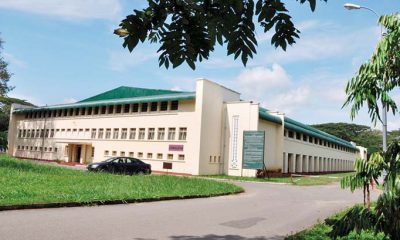
Library crisis hits Pera university
-

 News5 days ago
Wife raises alarm over Sallay’s detention under PTA
-

 News6 days ago
‘IRIS Dena was Indian Navy guest, hit without warning’, Iran warns US of bitter regret
-
 Latest News6 days ago
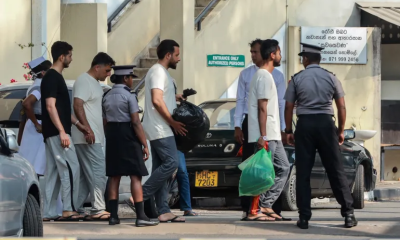
Sri Lanka evacuates crew of second Iranian vessel after US sunk IRIS Dena