
Life style
Grace, diplomacy, and dialogue: Meet Vietnam’s Ambassador to Sri Lanka

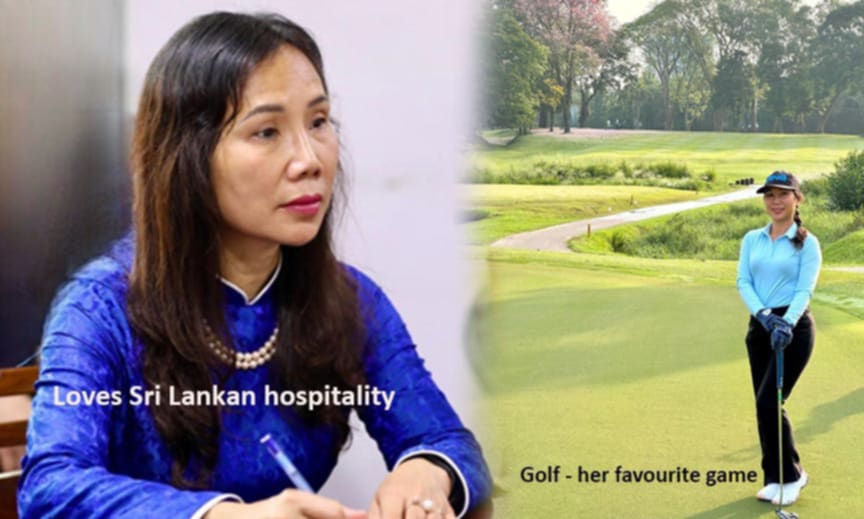
 A seasoned diplomat with decades of experience in foreign service Ambassador of Vietnam in Sri Lanka, Trinh Thi Tam brings with her not just a wealth geo-political insight, but a deep appreciation for cultural diplomacy, economic co-operation and people to people connection,
She has worked diligently to enhance mutual understanding and trade relations between Vietnam and Sri Lanka.
Known for her warm demeanour and thoughtful dialogue she has become a respected voice in fostering Asia’s shared future. In her interview with the Sunday Island, Ambassador Trinh speaks candidly about her vision for Vietnam, Sri Lanka’s relations, her personal journey in diplomacy and what inspires her every day in Sri Lanka. With her radiant smile, and a calm presence, she has won the hearts of Colombo’s diplomatic circle.
2025 marks a significant milestone in the history of Vietnam – Sri Lanka relations as the two countries celebrate the 55th anniversary of their diplomatic relations (July 1970 – July 2025). It also marks the 80th anniversary of the founding of Vietnam’s Foreign Service (August 1945- August 2025). On this important occasion, we had the opportunity to speak with the Ambassador of Vietnam to Sri Lanka, Trinh Thi Tam, to reflect on her journey as a diplomat as well as the evolution of Vietnam-Sri Lanka relations over the years.
Q: Your diplomatic career?
My diplomatic career started in 1994 when I joined the Ministry of Foreign Affairs of Vietnam. Since then, I have worked continuously in the Department of Southeast Asia, South Asia and South Pacific, covering bilateral relations between Vietnam and countries in these regions. Before Sri Lanka, I have been posted to Korea (as Second Secretary), Australia (as Deputy Ambassador) and Laos (as Deputy Ambassador).
What is the most challenging part of being the Ambassador to Sri Lanka?
This is the first time I have assumed the duty of a Viet Nam Ambassador to a country. My posting to Sri Lanka, therefore, has a more special sense. The most challenging part may lie ahead, when I and my team have to work more to advance bilateral cooperation, with both opportunities and challenges awaiting.
Q: What do you like most about living in Sri Lanka?
The true beauty of Sri Lanka is not only its nature but also its hospitable and friendly people. Vietnam and Sri Lanka share many similar features in culture, history and geography, therefore, I feel like I am staying in my home country Viet Nam.

Following Lankan traditions during Sinhalese and Tamil New Year
Q: What were your first thoughts when you were assigned to become the ambassador of Sri Lanka?
I was looking after Viet Nam-Sri Lanka relations when working in the Ministry of Foreign Affairs of Vietnam; however, this is the first time I’ve been to this beautiful island. I will have a mixed feeling of curiosity, excitement and concern before my departure.
Sri Lanka and Viet Nam celebrated 55 years of diplomatic relations with a State visit of our President in May 2025.
Q: Could you tell us more about the significance of the Sri Lanka-Vietnam strategic partnership?
This is the first State visit to Vietnam by a President of Sri Lanka since 2009. Viet Nam is the first Southeast Asia country that President Dissanayake has visited since he assumed his duty. The visit takes place in the 55th commemorative year of diplomatic relations. Beside the State visit, President Dissanayake also attends the 20th UN Day of Vesak Celebrations in Ho Chi Minh City as a Chief Guest, showing the close Buddhism connection between the two countries. We can say that the success of the State visit has opened a new chapter to Viet Nam-Sri Lanka relations.
Q: How do you believe the relationship between Sri Lanka and Vietnam has evolved over 55 years?
The diplomatic relationship between Vietnam and Sri Lanka was officially established in 1970. Since then, our nations have fostered a strong partnership built on mutual respect, shared values, and collaborative efforts across various sectors. Regular exchange of delegations, frequent conduction of bilateral mechanisms, significant increase of trade turnover and investment, closer people-to-people links, mutual support at international fora… are highlights in our relations, among others. Looking back at the 55 years of relations, we are proud of the shared achievements and pleased to see potentials and opportunities awaiting us ahead.
Q: How would you characterise current bilateral cooperation between Sri Lanka and VietNam?
The bilateral cooperation between our two countries are comprehensive and of mutual benefit, based on mutual trust, understanding and respect. Trade turnover has increased, recording approximately USD 300 million/year recently. Currently, Sri Lanka operates 30 projects in Viet Nam with a total investment capacity exceeding USD 42 million; Viet Nam has one project in the construction sector in Sri Lanka, valued about USD 300.000. Both countries are committed to deepening cooperation in agriculture, fisheries, education and tourism, and exploring cooperation opportunities in sectors of construction, technology, pharmaceuticals and renewable energy. Culture cooperation, people-to-people links, Buddhist connection have also availed recently, reinforcing traditional friendship.
Q: Speaking of chopsticks, Vietnamese culinary diplomacy is a growing force. What makes Vietnamese cuisine special?
Vietnamese cuisine is special due to its diverse spices and recipes from different regions of Vietnam. If you travel from the North to the South of Viet Nam, you can experience abundant dishes from 34 provinces and cities of Vietnam. I am very pleased to see that dishes Pho, Banh Mi have become more and more popular among Sri Lankan people.
Q: As a woman diplomat what are your biggest challenges?
The biggest challenge for me is to keep a good mental health and a good balance of work and family life.
Q: Finally, what message would you like to convey to the Leader and people of Sri Lanka on the occasion of the 55th anniversary of diplomatic relations?
I would like to take this opportunity to express my heartfelt gratitude to the Leaders and people of Sri Lanka for their unwavering support and friendship. Our relationship is a testament to the power of enduring friendship and cooperation. As we look to the future, I am confident that our partnership will continue to flourish to new heights, bringing prosperity and mutual benefits to both our nations. Thank you.
It has been evolving in a very positive direction. I feel honoured to represent my country as a woman ambassador. Charming, gentle, flexible manners are of women’s strength, which can become “soft powers” in diplomacy, helping to create friendship, empathy, resilience and collaboration among nations.
By Zanita Careem ✍️

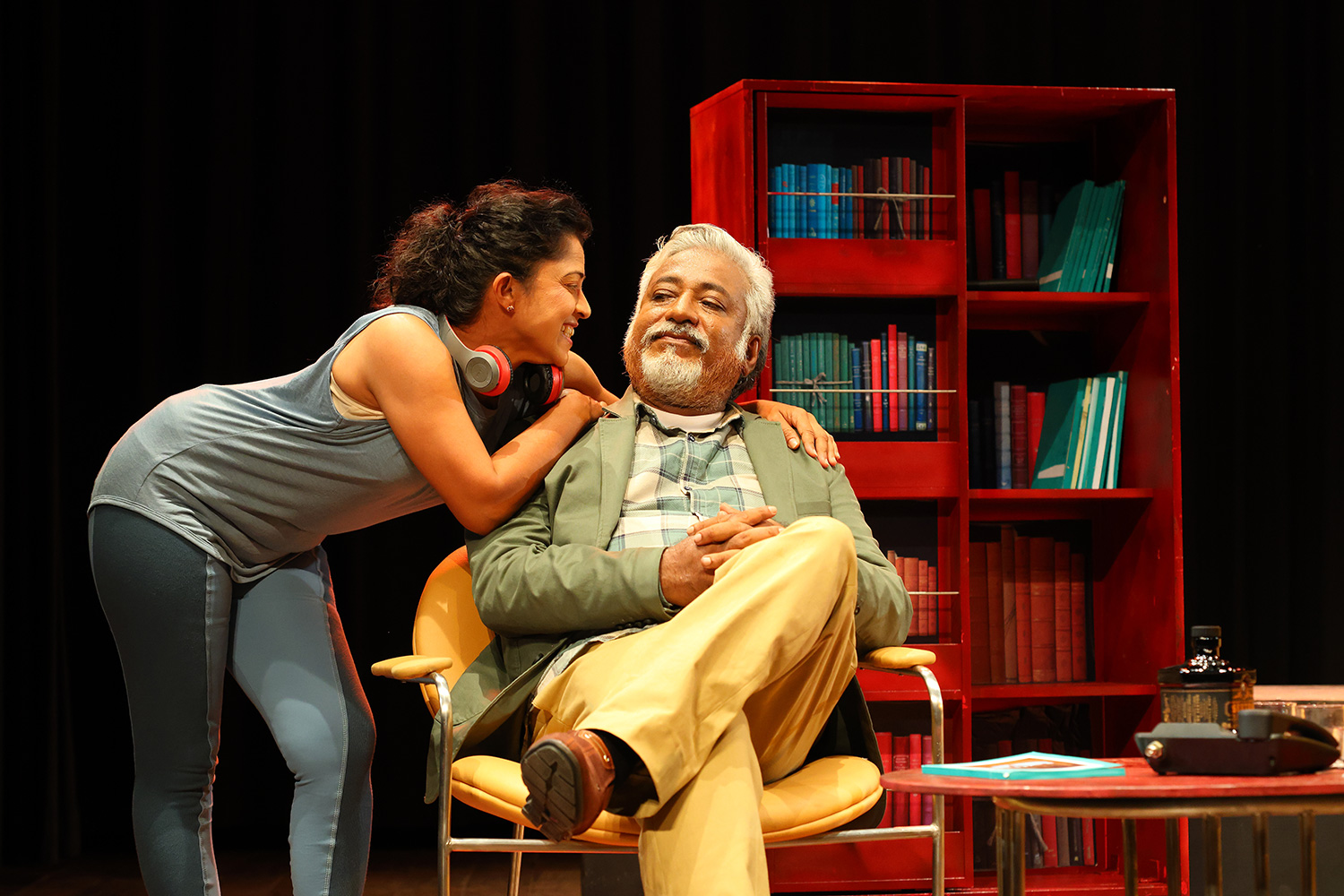
EMD Upali, a familiar name in both the Colombo Bar and the Sinhala stage, is gearing up to unveil his latest theatrical venture, Pavul Kana Minihek, the Sinhala adaptation of Iris Murdoch’s acclaimed novel The Black Prince. The play goes on board on December 6 at 7 pm at the open-air theatre of the Sudarshi Hall, Colombo.
Though not physically tall, he stands tall in fame. Upali’s open, friendly nature and ever-present smile make him a respected figure in both legal and theatrical circles. The veteran director is also remembered for introducing the late Jackson Anthony to the stage through his 1983 hit Methanin Maruwenu, a production that went on to win national acclaim.
But his journey began much earlier. As an undergraduate at the University of Colombo, he created Methanin Maruwenu for an inter-faculty drama competition in 1981 and walked away with the Best Director award. The reworked version won him another Best Director title at the 1983 State Drama Festival. Two years later, he repeated the feat with Piyambana Assaya.
Academic commitments kept him away from the stage until 1995, when he returned with Eva Balawa, a Sinhala adaptation of J.B. Priestley’s An Inspector Calls.
“Lucien de Zoysa first staged the English version at the Lionel Wendt in memory of his son Richard,” Upali recalls. “I adapted it into Sinhala using the script by my guru and friend, Upali Attanayake. Eva Balawa went on to win four State Awards, including Best Director (Adaptation).”
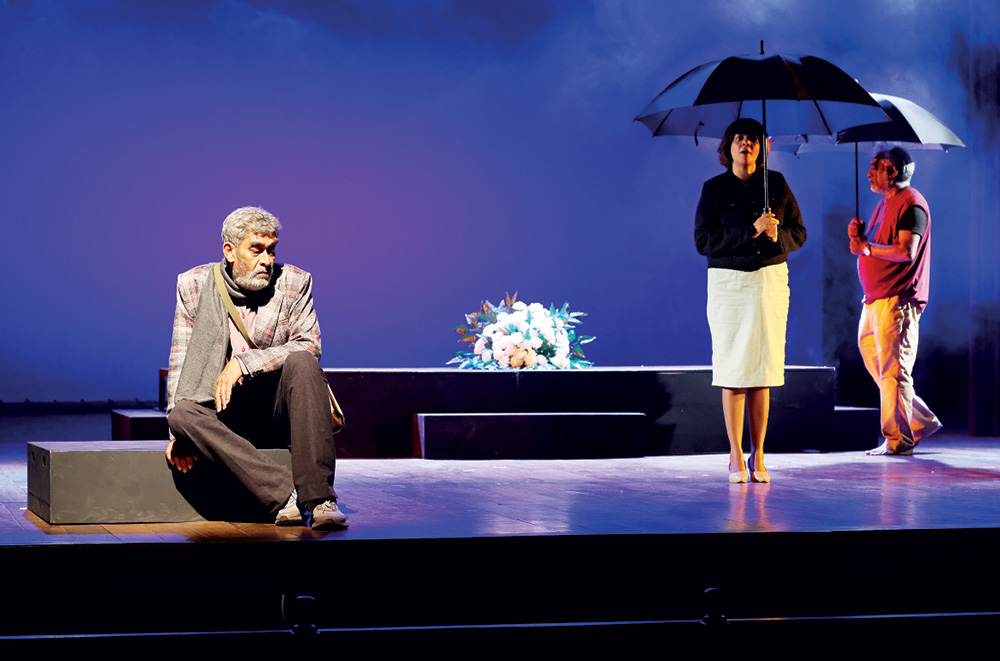
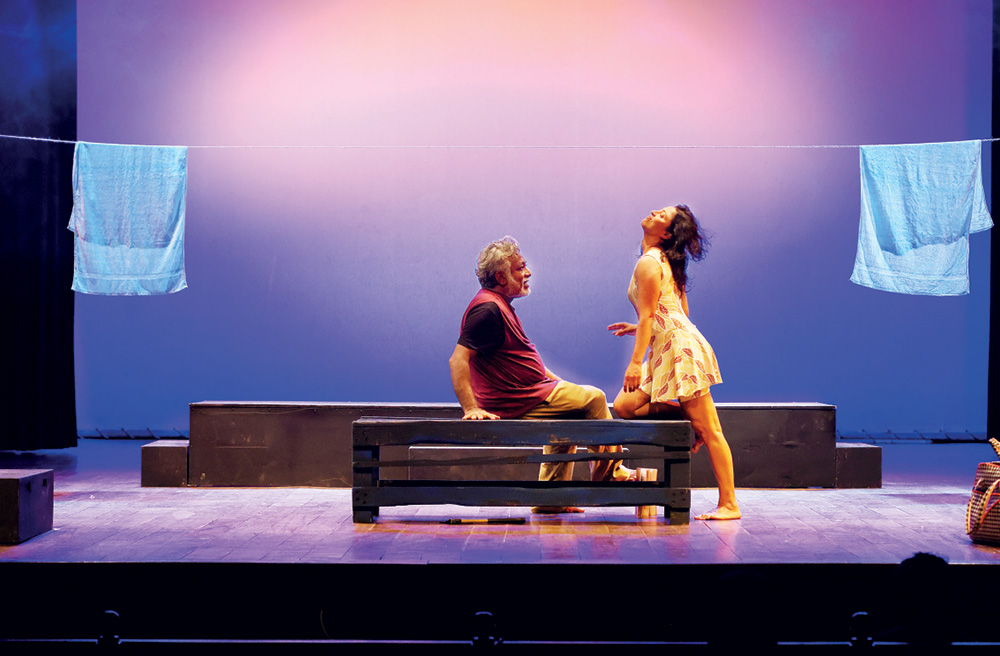
He followed this success with Chara Purusha (2000), adapted from Gogol’s The Government Inspector; Wana Tharavi, his staging of Ibsen’s The Wild Duck during the Ibsen Centenary celebrations; and Chekhov’s The Cherry Orchard as Idamedi Wikine in 2014.
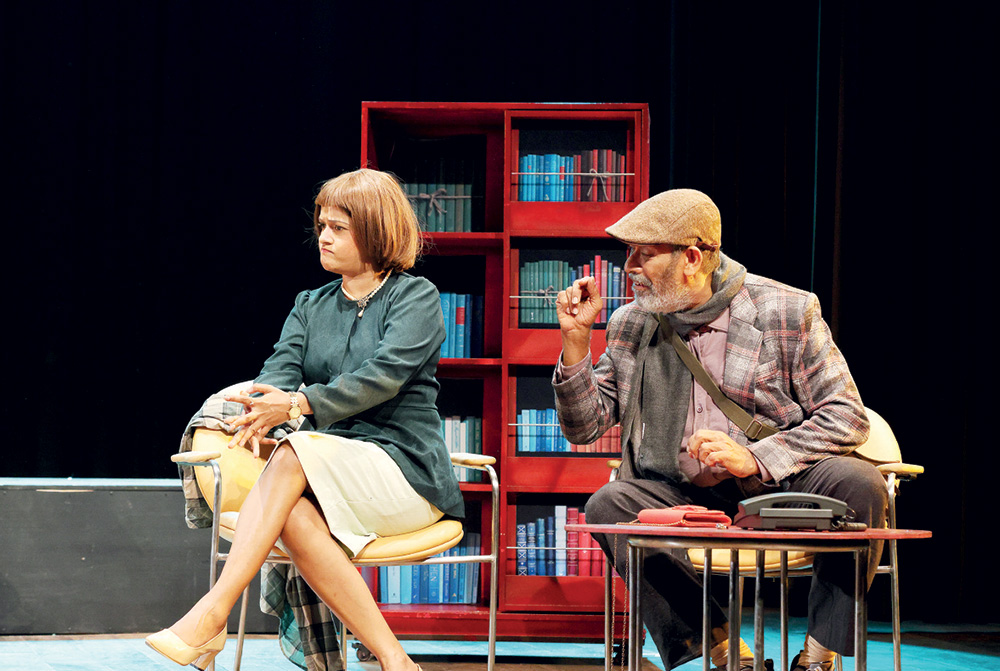
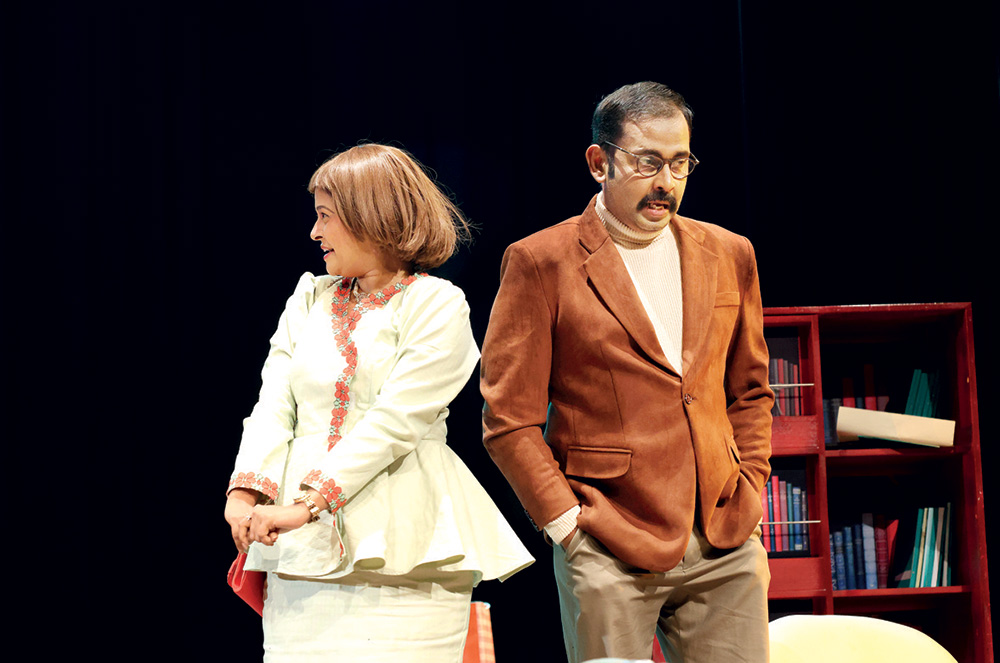
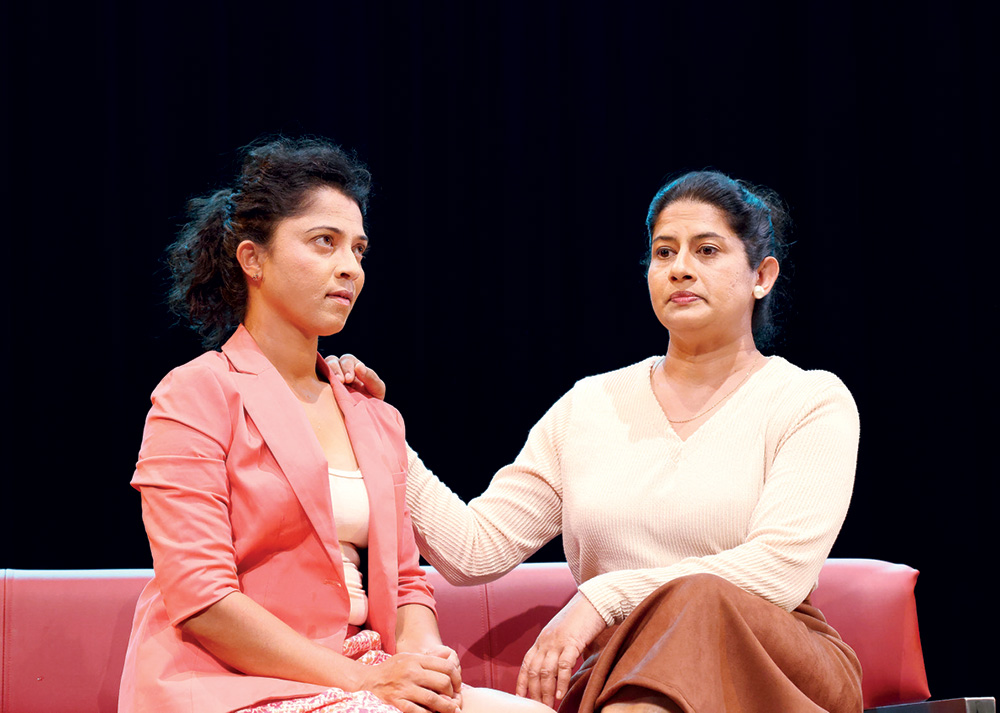
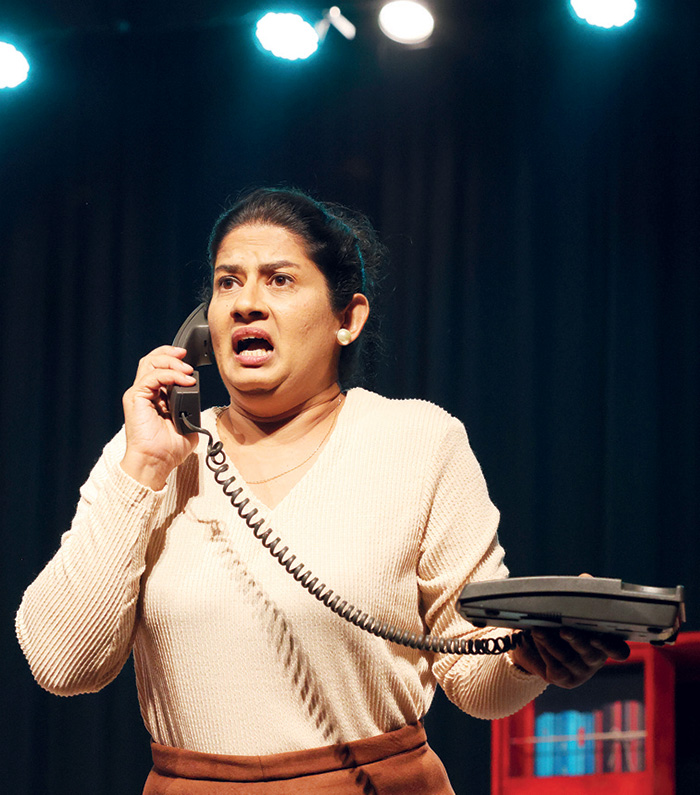
Pavul Kana Minihek is Murdoch’s philosophical and psychologically charged masterwork, adapted from Prof. J.A.P. Jayasinghe’s Sinhala translation. Produced by Jude Srimal, the play features Sampath Perera as Bradley Pearson alongside theatre stalwarts Lakshman Mendis, Nilmini Sigera, Madani Malwage, Jayanath Bandara, Mihiri Priyangani and Chanu Disanayake. Music is by Theja Buddika Rodrigo.
Behind the curtain sits an equally seasoned crew: production designer Pradeep Chandrasiri, costume designer Ama Wijesekara, lighting designer Ranga Kariyawasam, make-up artist Sumedha Hewavitharana and stage manager Lakmal Ranaraja.
Murdoch’s philosophical depth, Upali notes, is central to both the novel and the play.
“Murdoch’s background in philosophy flows through the narrative,” he says. “The Black Prince grapples with the pursuit of truth, through erotic love, through art, through suffering. She was a Platonist, and that worldview shapes the protagonist Bradley Pearson’s journey.”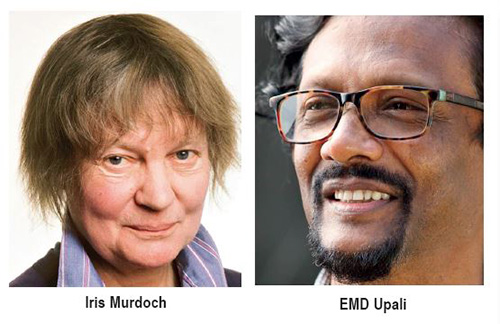
Murdoch’s novel, published in 1973, won the James Tait Black Memorial Prize and was shortlisted for the Booker Prize before being adapted for the stage in 1989.
“We condensed the play into a sharp, two-hour production,” Upali says. “With Pradeep Chandrasiri’s design, we recreated both Bradley’s and Arnold Baffin’s homes on stage. Our approach was minimalistic, but every decision was grounded in careful experimentation.”
Upali is candid about the realities surrounding Sinhala theatre especially when adapting world-class works.
“The biggest challenge is funding,” he says. “A proper production costs at least five million rupees. Institutions like the British Council or Goethe-Institut help occasionally, but not enough.”
He points to recent successes such as Nuga Gahak, Kanchuka Dharmasena’s Sinhala adaptation of Tim Crouch’s The Oak Tree, staged with the help of the British Council, and Rajitha Dissanayake’s Ape Gedarata Gini Thiyaida, supported by the Sunera Foundation.
“We must be happy some people get sponsorships. It’s rare. But if we create good theatre, audiences still come.”
The director laments Sri Lanka’s lack of proper theatrical infrastructure.
“In Sri Lanka, theatre is treated as a ahikuntika kalawa, a gypsy art,” he says. “Actors and crew load a bus with props, travel, perform once and return. In developed countries, theatres run the same play for months, sometimes years.”
Venues remain limited and expensive. Lionel Wendt is booked out months ahead; most other halls lack even basic acoustics.
“Many places are just meeting halls. Audiences beyond the middle rows can’t hear the actors. These shortcomings drain the cultural life of the nation.”
With auditorium rentals running between Rs. 75,000 and Rs. 100,000 a day, directors often wait months for dates.
“A play must be staged at least once a month to stay alive,” he remarks. “Theatre isn’t something you can store on a chip.”
Sri Lanka also lacks full-time theatre companies. “Our actors must juggle movies, teledramas, TV ads, political stages, news anchoring — everything,” Upali notes. “They have to. There’s no other income.”
Hiring them for a single performance can cost Rs. 300,000. Full production ranges from Rs. 2 million to Rs. 5 million.
“When we began, even films didn’t cost this much.”
Meanwhile, audiences are shrinking. “We are living in a TikTok world,” he says with a wry smile. “People want instant gratification. Sitting through a two-hour play is becoming harder and harder.”
Yet despite the odds, Upali remains committed to the stage and to bringing global literature to Sinhala audiences.
“I believe in theatre,” he says simply. “And I believe our audiences still care, even in a distracted world.”
Pavul Kana Minihek
opens this week and promises to remind us of that serious theatre still has a place, and a voice, in Sri Lanka.
(Pix by Hemantha Chandrasiri)
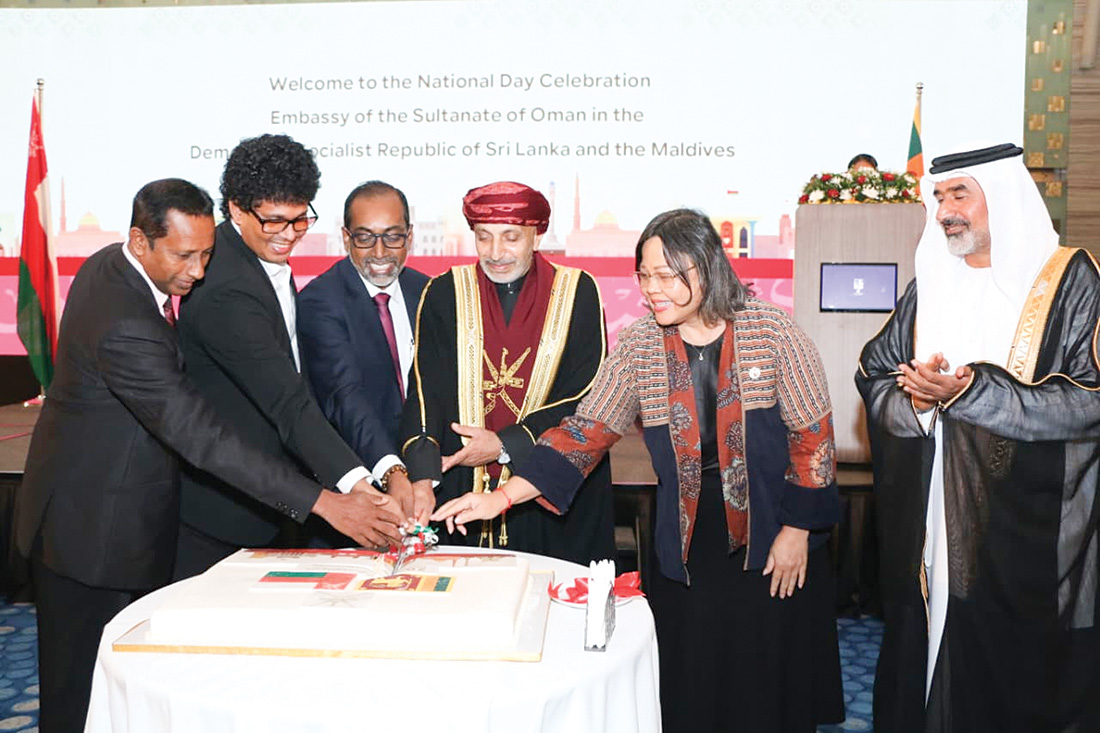
The celebration of the National Day of the Sultanate of Oman unfolded with distinguished elegance, as diplomats, dignitaries and invited guests gathered to honour the rich heritage and modern achievements of the Sultanate of Oman, under the leadership of Sultan Hatham bin Tarik.
The Ambassador of Oman in Sri Lanka Ahamed Ali Said Al Rashdi delivered a gracious and heart-felt address reflecting on the deep-rooted ties between Sri Lanka and the Sultanate of Oman.
He spoke of the region’s shared maritime history, centuries of cultural exchanges and the growing partnerships that continue to strengthen bilateral friendships between Sri Lanka and with the Sultanate of Oman.
-
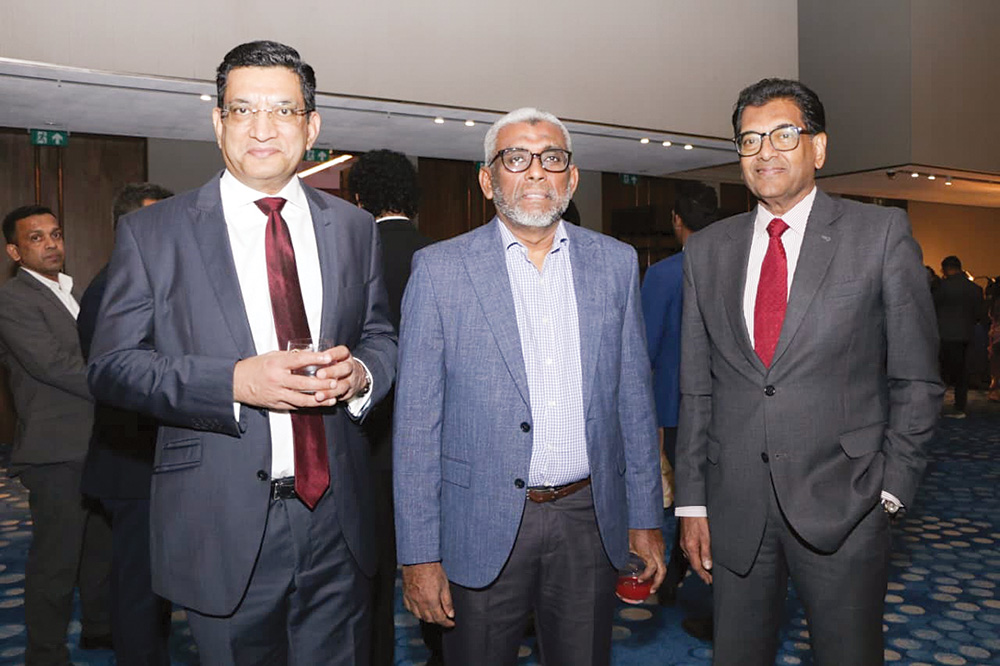
- Former Foreign Minister Al Sabry with other guests
-
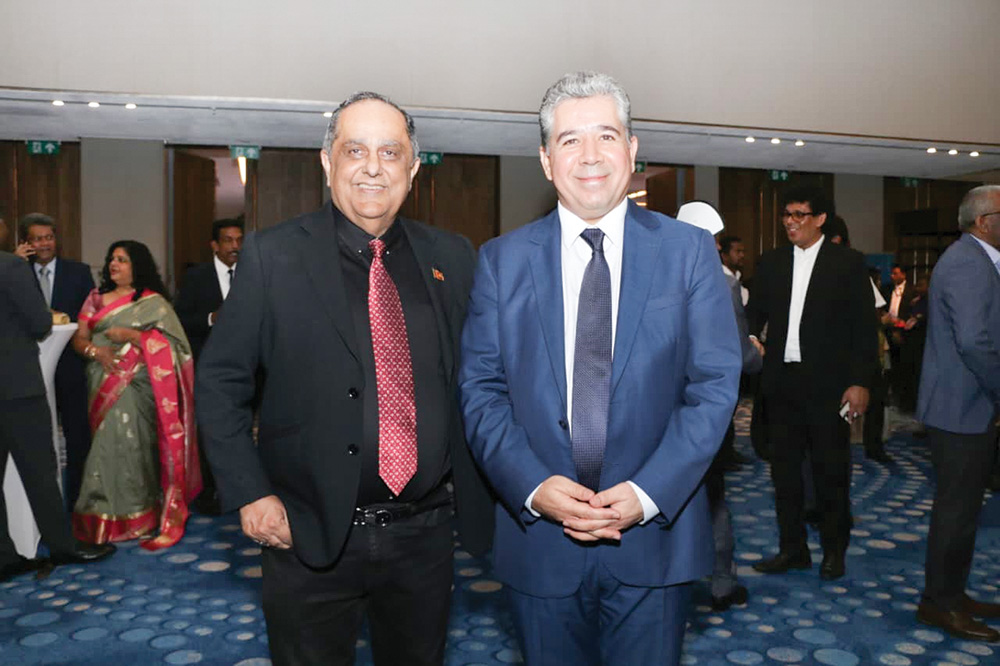
- The Ambassador of Turkiye Semih Lutfu Turgot with Governor of Western province Hanif Yusuf
-
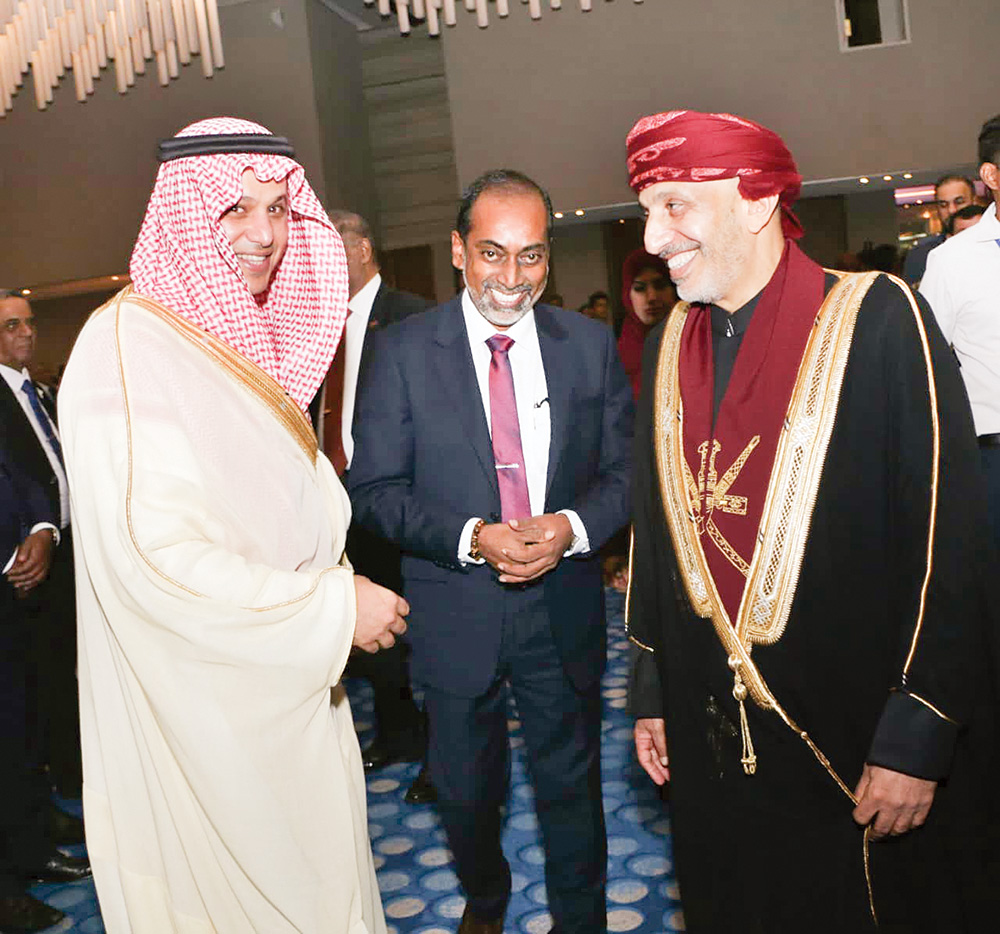
- Gracious welcome from the Ambassador of Oman, Ahamad Ali Said Al Rashid
The Ambassador also highlighted Oman’s progress under the visionary leadership of the Sultanate, celebrating the nation’s advances in economic and regional co-operation, values that align closely with Sri Lanka’s aspirations.
One of the evening’s best highlights was the culinary journey, specially curated to offer guests an authentic taste of Omani hospitality.
The buffet unfolded a tapestry of flavours, fragrant Omani biryani, slow cooked meats, grilled seafood and an array of vibrant desserts like delicacies especially Omani dates, offering a sweet finale while the aroma of Omani coffee lingered like a gentle cultural embrace.
It was an evening that did far more than celebrate a National Day. It unfolded as a journey into the soul of Oman, wrapped in sophistication and unforgettable charm.
The glamour of the evening was heightened by the graceful flow of distinguished guests in elegant allure, warm diplomatic exchanges and the subtle rhythm of traditional Omani melody.
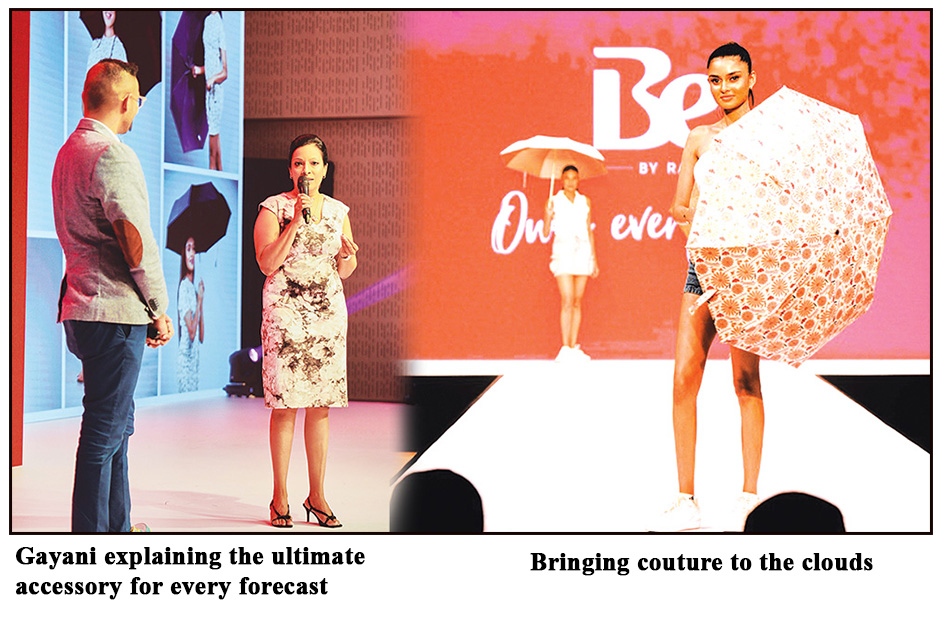
Rainco’s touch of couture
It was a dazzling evening that merged fashion, function and fine design, as Rainco Sri Lanka’s homegrown brand synonymous with quality and craftsmanship – unveiled its new umbrella collection ‘Be my Rainco’ at Cinnamon Life setting a new standard for stylish innovation.

Chic,sleek,and storm ready
This event graced by a distinguished guest list of fashion connoisseurs, influencers and design enthusiasts was more than a product launch. It was a celebration of form and artistry. The highlight of the evening was a fashion showcase curated by acclaimed designer Brian Kerkovan who brought his international flair to Rainco’s refined aesthetic. Models glided down the runaway carrying striking umbrellas, their balanced elegance and engineering transforming a daily essential into statement of luxury.
Bathed in soft lighting and accompanied by an evocative musical score, the ambience exuded sophistication. The collection crafted with meticulous attention in detail, featured bold silhouettes, luxe finished and innovative textures, echoing the brand’s philosophy of merging practicality with panache.
Speaking at the launch, Rainco’s General Manager marketing and innovation, Awarna Ventures (Ltd)Gayani Gunawardena said with pride his milestone collaboration, noting how the brand’s evolution from a household essential to a symbol of contemporary lifestyle.
The evening concluded with a toast to creativity – a fitting finale for a brand that continues to inspire confidence and styles ,rain or sunshine.
(ZC)

Death toll rises to 607, missing persons reduce to 214 at 1800hrs today (5)

Sri Lanka Navy takes delivery of Ex-USCGC DECISIVE

Hope holds firm as West Indies drag New Zealand into fifth-day battle

Ireland among countries boycotting Eurovision after Israel allowed to compete

Putin says Russia will take Donbas by force or Ukraine’s troops will withdraw
486 dead, 341 missing, 171,778 displaced as at 0600hrs today [05]

‘Dates have the highest sugar content to fight Coronavirus’

Sunday Island 27 December – Headlines

#SundayIsland 17th December – Headlines

Sunday Island – 28th March

Sunday Island Headlines – 21 March

Sunday Island – 21st February – Headlines
-
 News6 days ago
Weather disasters: Sri Lanka flooded by policy blunders, weak enforcement and environmental crime – Climate Expert
-
 Latest News6 days ago
Level I landslide RED warnings issued to the districts of Badulla, Colombo, Gampaha, Kalutara, Kandy, Kegalle, Kurnegala, Natale, Monaragala, Nuwara Eliya and Ratnapura
-

 Latest News6 days ago
INS VIKRANT deploys helicopters for disaster relief operations
-
News3 days ago
Lunuwila tragedy not caused by those videoing Bell 212: SLAF
-

 Latest News7 days ago
Department of Irrigation issues Critical flood warning to the Kelani river basin
-
 Latest News4 days ago
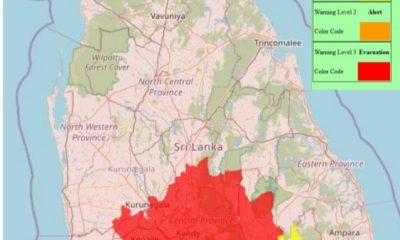
Level III landslide early warnings issued to the districts of Badulla, Kandy, Kegalle, Kurunegala, Matale and Nuwara-Eliya
-
 News2 days ago
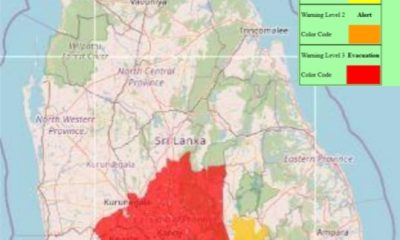
Level III landslide early warning continue to be in force in the districts of Kandy, Kegalle, Kurunegala and Matale
-

 Editorial7 days ago
Needed: Action not rhetoric