
News
Govt. urged to reconsider Central Bank Act

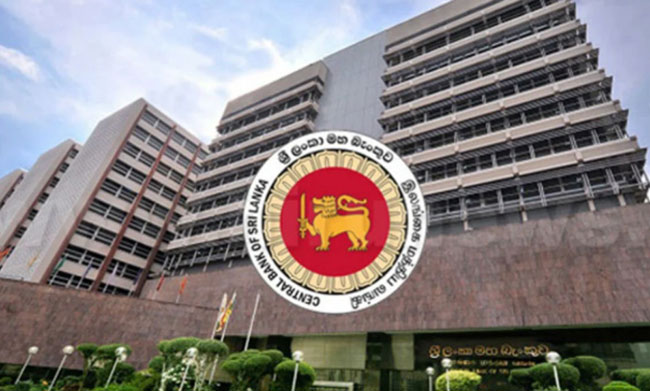
Sri Lanka Association for Political Economy (SLAPE) has urged the government to reconsider certain provisions in the proposed Bill to repeal the Monetary Law Act to pave the way for Central Bank of Sri Lanka Act. SLAPE called for the introduction of clauses to provide for CBSL’s policy interventions could be implemented only subject to approval by the Cabinet of Ministers, and in case of any divergent opinion, subject to scrutiny and final approval by the Parliament
The following is the text of statement issued by Study Committee, SLAPE: “The Sri Lanka Association for Political Economy (SLAPE), having perused the Gazette Notification dated 17th February 2023, publishing the Bill to repeal the existing Monetary Law Act (Chapter 422) and to introduce a new enactment titled Central Bank of Sri Lanka Act, wishes to bring the following observations and comments on its content and also its intents apparently explicit and implicit through such contents, to the notice of the general public, including the professionals.
It should be mentioned, at the outset, that the economic sovereignty of Sri Lanka, which is an essential ingredient of the country’s national sovereignty, cannot be compromised or alienated. SLAPE cannot agree with any attempt by the Government, or any other party, to bring in any legislative or policy provisions which could directly or indirectly harm this supreme objective of the nation.
The very premise of introducing the bill to enact a new Central Bank of Sri Lanka ACT appears to be make the Central Bank of Sri Lanka (CBSL) “autonomous” [Refer Clause 5]. Though it is not explicitly mentioned, the way the Clauses 5 and 6 have been composed, it is evident that the CBSL is intended to be “autonomous”, and thus “independent” even from the Executive and Legislature of Sri Lanka, through which the people exercise their sovereignty. While the SLAPE has no objection of making any Statutory authority, and particularly a regulator, “administratively screened off” from undue influence in conducting day-to-day affairs, it cannot understand or accept as to how CBSL could be made “autonomous” in “policy making” as “policy changing and/or continuation” is an inalienable “right” of the people, exercised through elections of Executive and Legislature, from time-to-time. Removing such authority, and vesting it to a “Board”, will undoubtedly lead to very seriously compromising the sovereignty of the people of this country.
The proponents of the Bill appear to have considered that “price stability” should be the exclusive objective of monetary policy, even though there is no strategic rationale to consider “price stability” being more important than many other macroeconomic policy goals such as, inter-alia, growth and employment. In fact, there are different economic thoughts which offer different diagnostics and policy prescriptions which consider growth, welfare and employment as more important parameters to be concerned than “inflation”; the possibility of which objectives being deleteriously impacted by a monetary policy thrust, exclusively targeting “inflation control”, could not be excluded either, the SLAPE observes. Besides, economic policy perspectives cannot be considered “in isolation”, but essentially “together with other national objectives”, such as, inter-alia, national security, defence, international relations, geo-political considerations, national self-reliance, fairer income distribution, reduction of regional development disparities, development financing. The policies pertaining to these cannot be considered, diagnosed, analysed, formulated or implemented in isolation, by any individual agency, but with an overall national strategic perspective. Therefore, expecting that CBSL would formulate monetary policy devoid of any inputs or directives from such overall policy formulating authorities, will be futile, if not disastrous.
The SLAPE well understands the concern that sub-optimal influence could damage professional functioning of a Governmental organ. Yet, addressing that concern should be without compromising the overall policy making authority of the Parliament and the Cabinet of Ministers. Instead of aiming that, the proposed Bill appears to have removed one of the vital organs of the national body, which is synonymous to expecting the heart of a person to function without any regard to lungs or kidneys, or even away from the overall systemic control, including that of the brain…!
The contents of the Bill also have no explicit provisions to make the CBSL “independent from influence by international bodies”, which is yet another concern the SLAPE has, as such absence of explicit provisions could eventually result in CBSL being made “independent” from the control of Sri Lankans, but under the influence of international authorities. This lacuna is very significant in the context where one could not exclude for certainty, the possibility of officials or groups of bodies of organisations being influenced to make sub-optimal decisions vis-à-vis national development, cannot be excluded, and particularly when explicit provisions appear being proposed to provide “legal immunity” to individual officials or decision-making bodies based on the outcomes of any official decisions made.
Under the above explained context, the SLAPE cannot consider the proposed new Central Bank of Sri Lanka Bill as nationally beneficial towards the country’s economic sovereignty objective. It therefore urges the Government to re-consider the provisions in the said bill, to specifically introduce clauses to provide for CBSL’s policy interventions could be implemented only subject to approval by the Cabinet of Ministers, and in case of any divergent opinion, subject to scrutiny and final approval by the Parliament. The SLAPE also wishes to request all those Parliamentarians, who have sworn in to defend the national sovereignty as an uncompromisable objective, not to pass this Bill without bringing in the necessary clauses to ensure that the CBSL’s professional diagnostics and policy interventions are sanctioned by the Executive and/or Legislature prior to their implementation.”

Latest News
Heat Index at Caution level’ in the Northern, North-central, North-western, Western and Southern provinces and in Trincomalee district.


Warm Weather Advisory
Issued by the Natural Hazards Early Warning Centre
Issued at 3.30 p.m. on 12 April 2026, valid for 13 April 2026.
Heat index, the temperature felt on human body is likely to increase up to ‘Caution level’ at some places in the Northern, North-central, North-western, Western and Southern provinces and in Trincomalee district.
The Heat Index Forecast is calculated by using relative humidity and maximum temperature and this is the condition that is felt on your body. This is not the forecast of maximum temperature. It is generated by the Department of Meteorology for the next day period and prepared by using global numerical weather prediction model data.

Effect of the heat index on human body is mentioned in the above table and it is prepared on the advice of the Ministry of Health and Indigenous Medical Services.
ACTION REQUIRED
Job sites: Stay hydrated and takes breaks in the shade as often as possible.
Indoors: Check up on the elderly and the sick.
Vehicles: Never leave children unattended.
Outdoors: Limit strenuous outdoor activities, find shade and stay hydrated.
Dress: Wear lightweight and white or light-colored clothing.
Note:
In addition, please refer to advisories issued by the Disaster Preparedness & Response Division, Ministry of Health in this regard as well. For further clarifications please contact 011-7446491.

On the apparent northward relative motion of the sun, it is going to be directly over the latitudes of Sri Lanka from 05th to 15th of April in this year.
The nearest areas of Sri Lanka over which the sun is overhead today (13th) are Pesalai, Mankulam and Nedunkerny about 12:11 noon.

The Pakistan Navy Ship (PNS) TAIMUR and ASLAT arrived at the Port of Colombo on a goodwill visit on 12 Apr 26.
The visiting ships were welcomed by the Sri Lanka Navy in
compliance with naval traditions.
The duo of ships is commanded by Captain NIAMAT SAEED KHAN (PNS TAIMUR) and Captain NADIR MATEEN AFRIDI (PNS ASLAT).
Meanwhile, the ships are expected to conduct a Bilateral Naval Exercise LION STAR V with the Sri Lanka Navy in Colombo seas.

Salt and Patidar power RCB past Mumbai Indians

Prasidh, Buttler set up comfortable win for Gujarat Titans

Heat Index at Caution level’ in the Northern, North-central, North-western, Western and Southern provinces and in Trincomalee district.

Showers above 75 mm are likely at some places in the Western, Sabaragamuwa, Central, Southern and North-western provinces.

Sun directly overhead Pesalai, Mankulam and Nedunkerny about 12:11 noon

PNS TAIMUR & ASLAT arrive in Colombo

‘Dates have the highest sugar content to fight Coronavirus’

Sunday Island 27 December – Headlines

#SundayIsland 17th December – Headlines

Sunday Island – 28th March

Sunday Island Headlines – 21 March

Sunday Island – 21st February – Headlines
-

 News6 days ago
Lankan-origin actress Subashini found dead in India
-

 News4 days ago
AG: Coal procurement full of irregularities
-

 News1 day ago
CEB orders temporary shutdown of large rooftop solar systems
-

 Business3 days ago
Israeli attack on Lebanon triggers local stock market volatility
-

 Business4 days ago
Hayleys Mobility introduces Premium OMODA C9 PHEV
-

 Business3 days ago
HNB Assurance marks 25 years with strategic transformation to ‘HNB Life’
-

 News6 days ago
UN Regional Director launches SL’s first Country Gender Equality Profile during official visit
-

 News6 days ago
Dialog Launches ‘GanuDenu QR’, Making Cashless Transfers Free for All with eZ Cash and Dialog Finance