
News
Govt. should reduce expenditure on infrastructure development temporarily to feed people faced with hunger


We live in a highly commercialized world where making maximum profit is the measure of success, and not the outcomes and their real benefit to humanity with minimal harm to life and the environment. In addition in Sri Lanka there is a high degree of exploitation of both the farmer and the consumer by excessive profiteering by middlemen, such as mill owners and traders. The result is that the farmers are suffering and are facing hunger. The vast mass of consumers are also faced with hunger.
Society led by the scientific community has to be on constant vigilance to ensure the safety of all living things. It was with great satisfaction that a majority of people in Sri Lanka welcomed the President’s demand for the immediate cessation of the use of agrochemicals (an accepted cause of various serious diseases such as cancer and kidney disease) and the switch over to the use of organic fertilizer. An open and valuable discussion has resulted, especially with regard to the outcomes and implementation.
The powerful chemicals lobby says that yields will drop due to the fact that the hybrid seeds used and the chemical fertilizers complement each other, and the pesticide/weedicide lobby joins in, as they too will lose much income.
I am happy that the local scientific community is by and large for the switch over to organic farming. The best proposal appears to be that of Dr. C. M. Wijeyaratne, Dr. Lionel Weerakoon, Buddhi Jayasuriya and some others. It envisages “a planned shift to Ecological Farming” within the farm itself, without just “adding organic fertilizer” from outside. Setting this up in the country results in a wide network of farmer organizations to coordinate this shift, and to ensure that the farmer and the consumer get a good deal. (The LSSP has all along promoted the setting up and linking of farmer and consumer cooperatives to eliminate exploitation by the middleman). These three have proposed a gradual step-wise process based on the FAO recommendations while stressing the use of appropriate technology and the importance of good water management.
An excellent strategy is included for the plantation sector, “Employee By Out of plantations for improving productivity, production and conservation”. The LSSP has always promoted the idea of worker participation in management, but this takes it a step further giving the workers a share in the ownership of the enterprise,(which has also been a part of the LSSP program). The importance of further developing animal husbandry is also stressed. As part of the implementation mechanism they propose establishing a Sustainable Agriculture Development Authority (SADA) which I appreciate. This would ensure maximum benefits to the farmer and the consumer and ensure that the replacement of harmful chemicals by organic inputs will be ensured. I am hoping to go along with them to present this valuable set of proposal to the President to obtain his support for its implementation.
As a further step in controlling the major problems of hunger among our people I would also appeal to the President and the Prime Minister to reduce the expenditure on infrastructure development temporarily in order to provide food for all those who are faced with hunger.
Besides the acute problem of hunger the major problem facing our people is that of the Covid-19 pandemic. This is now once again becoming a major problem with a marked increase in the number of cases and deaths. The introduction of the Delta variant of the virus has increased the threat to humanity. This causes more severe illness with a higher proportion of deaths, and also spreads much quicker. I urged the Minister of Health and her officials to accept the fact that there is community spread of the Covid infection and that it is not confined to identified clusters. This needs a community based strategy for its control. I suggest that there should be a committee of party leaders set up in Parliament to interact with the Minister to get maximum support countrywide to get the message across that this is a National problem.
This would enable the Covid Committees to be established down to village and slum levels and procure the cooperation of everybody. This should emphasize the understanding and implementation of the health guidelines (like the regular wearing of masks, social distancing and the constant washing of hands with soap and water). These committees should ensure that everybody fully implements these health practices. This will be vital if there is an upsurge of the Delta variant of the virus. These committees can also identify possible cases as soon as they appear and get them hospitalized after PCR testing and help in the tracing and quarantining of contacts.
The committee would also conduct intensive health education so that everyone is fully aware of the need for the above mentioned action. The Government would then be able to carry out an intensive and effective control program across the country. If the situation gets worse the government will have to act sternly to ensure that people do not form crowds anywhere and that even at home visitors are kept out. All workplaces should use minimal staff, observing the health rules and confine the group meetings to five persons.
The education of children maintained with the use of digital communication is desirable. The cost of this is heavy and the Government may not able to fund that program widely. It may be mainly richer children who will benefit from a such a scheme. For the other children the best option would be the use of television channels. If indicated, specially for senior students, there could be small classes held according to the health rules on important subjects with the presence of the teacher.
The vaccination program is being done fairly widely, but in a haphazard manner. The vaccines to be used in the country should be carefully chosen and it would be preferable if RNA based vaccines are avoided in view of the possibility of future genetic consequences. Considering their limited level and time of protection, I would use vaccines mainly to protect the vulnerable group (elderly and those with chronic illnesses). The scare about a post-Covid syndrome affecting children does not need immunization of children. This is a relatively rare occurrence in a few children and it fits into the pattern of the Kawasaky disease which is seen as an occasional event with many virus infections. Large scale vaccination is costly and not necessary. Further the vaccine against the Alpha variant is not very effective against the Delta variant.
In the present situation facing the country, the major emphasis must be placed on providing food to the hungry and also to reducing the spread of the Covid-19 virus (specially the Delta variant), and the proper treatment in hospital of those who are seriously affected. But if there is proper health education and strict enforcement of the health rules then the problem itself can be prevented.
Prof. Tissa Vitarana



The foundation stone laying ceremony for the proposed seven-storey Sadaham Mandiraya at the historic Sri Jayewardenepura Kotte Rajamaha Viharaya was held on 03rd of January with the participation of Prime Minister Dr. Harini Amarasuriya.
The religious programme, organised to coincide with the Duruthu Full Moon Poya Day, commenced with the chanting of Seth Pirith by the Maha Sangha.
Subsequently, the Prime Minister participated in laying of the foundation stone, formally marking the commencement of construction of the seven-storey Sadaham Mandiraya.
The Sadaham Mandiraya will be constructed as a centre dedicated to the preservation of Buddhist heritage while providing Dhamma education and spiritual guidance for future generations.
The event was graced by the presence of Chief Incumbent of the Kotte Rajamaha Viharaya, Venerable Aluth Nuwara Anuruddha Thero, together with members of the Maha Sangha; and attended by the Deputy Minister of Industry and Entrepreneurship Development, Chathuranga Abeysinghe, local political representatives, state officials, and a large gathering of devotees.

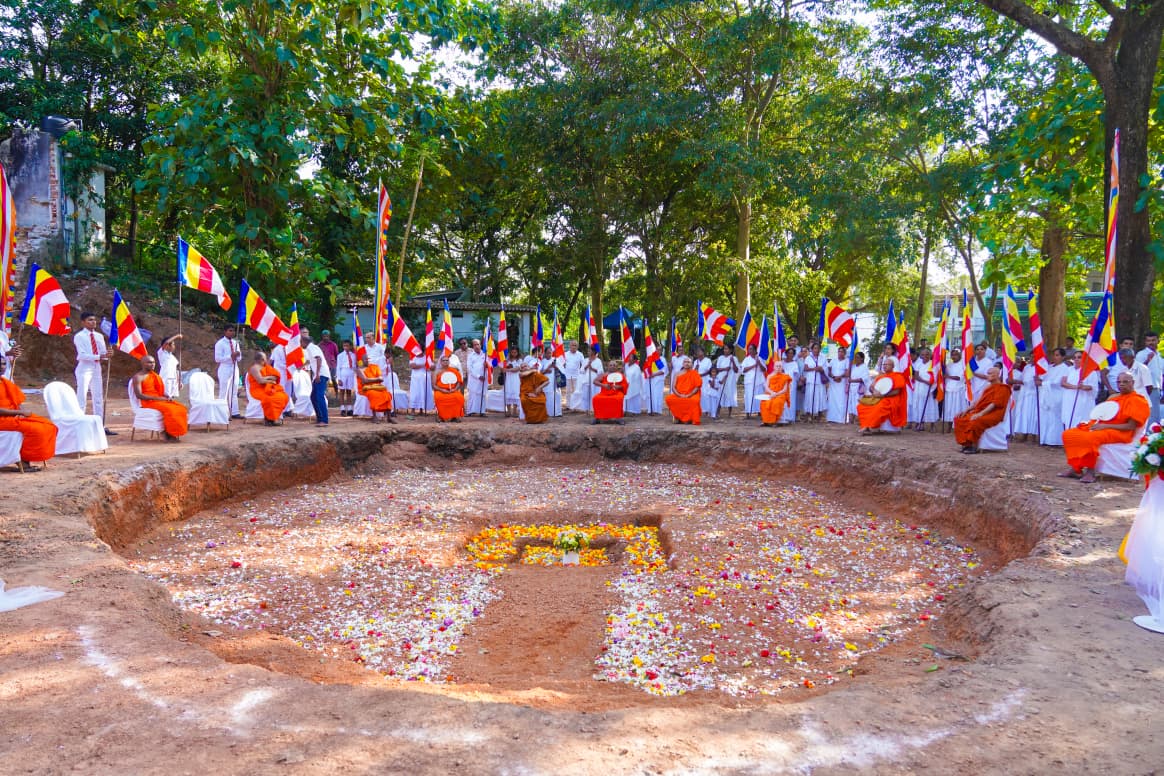
(Prime Minister’s Media Division)


The Public Utilities Commission of Sri Lanka (PUCSL) and the Treasury are facing heightened scrutiny as the Ceylon Electricity Board (CEB) presses for an 11.5 percent electricity tariff increase, a move closely tied to IMF-driven state-owned enterprise (SOE) reforms aimed at curbing losses and easing fiscal pressure on the State.
The proposed hike comes as the Treasury intensifies efforts to reduce the budgetary burden of loss-making SOEs under Sri Lanka’s IMF programme, which places strong emphasis on cost-reflective pricing, improved governance and the elimination of quasi-fiscal deficits.
Power sector sources said the PUCSL has completed its technical evaluation of the CEB proposal and is expected to announce its determination shortly.
The decision is being closely watched not only as a test of regulatory independence, but also as an indicator of how Treasury-backed fiscal discipline is being enforced through independent regulators.Under the IMF agreement, Sri Lanka has committed to restructuring key SOEs, such as, the CEB to prevent recurring losses from spilling over into public finances.
Treasury officials have repeatedly warned that continued operational losses at the utility could ultimately require state intervention, undermining fiscal consolidation targets agreed with the IMF.
The CEB has justified the proposed 11.5 percent hike by citing high generation costs, foreign currency loan repayments and accumulated legacy losses, arguing that further tariff adjustments are necessary to stabilise finances and avoid a return to Treasury support.
However, critics argue that IMF-aligned reforms should not translate into routine tariff hikes without meaningful improvements in efficiency, cost controls and governance within the utility.
Trade unions and consumer groups have urged the PUCSL to resist pressure from both the CEB and fiscal authorities to simply pass costs on to consumers.
They also note that improved hydropower availability should reduce dependence on expensive thermal generation, easing cost pressures and giving the regulator room to moderate any tariff increase.
Energy analysts say the PUCSL’s ruling will reflect how effectively the Treasury’s fiscal objectives are being balanced against the regulator’s statutory duty to protect consumers, warning that over-reliance on tariff increases could erode public support for IMF-backed reforms.
Business chambers have cautioned that another electricity price hike could weaken industrial competitiveness and slow economic recovery, particularly in export-oriented and energy-intensive sectors already grappling with elevated costs.
Electricity tariffs remain one of the most politically sensitive aspects of IMF-linked restructuring, with previous hikes triggering widespread public discontent and raising concerns over social impact.
The PUCSL is expected to outline the basis of its decision, including whether the proposed 11.5 percent increase will be approved in full, scaled down, or restructured through slab-based mechanisms to cushion low-income households.
An energy expert stressed that Sri Lanka navigates IMF-mandated fiscal and SOE reforms, the forthcoming ruling is widely seen as a defining moment—testing not only the independence of the regulator, but also the Treasury’s ability to pursue reform without deepening the burden on consumers.
By Ifham Nizam ✍️

Massive waste, corruption, irregularities and mismanagement at laboratories of the country’s premier hospital, revealed by the National Audit Office (NAO), couldn’t be suppressed by sacking or accusing him of issuing death threats to Health Secretary Dr. Anil Jasinghe, recently sacked Director of the National Hospital of Sri Lanka (NHSL) Dr. Rukshan Bellana told The Island.
Dr. Bellana said so responding to Dr. Jasinghe’s request for police protection claiming that he (Bellana) was directly responsible for threatening him.
The NPP government owed an explanation without further delay as the queries raised by NAO pertained to Rs 900 mn fraud/loss caused as a result of procurement of chemical reagents for the 2022 to 2024 period remained unanswered, Dr. Bellana said, pointing out that NAO raised the issue in June last year.
Having accused all other political parties of corruption at all levels, the NPP couldn’t under any circumstances remain mum on NAO’s audit query, DR. Bellana said, claiming that he heard of attempts by certain interested parties to settle the matter outside legal procedures.
The former GMOA official said that the NPP’s reputation was at stake. Perhaps President Anura Kumara Dissanayake should look into this matter and ensure proper investigation. Dr. Bellana alleged that those who had been implicated in the NAO inquiry were making an attempt to depict procurement of shelf time expired chemical reagents as a minor matter.
By Shamindra Ferdinando ✍️

PM lays foundation stone for seven-storey Sadaham Mandiraya

Showers will occur at times in the Eastern and Uva provinces and in Nuwara-Eliya, Matale, Polonnaruwa, and Mullaittivu districts

Curran, bowlers lead Desert Vipers to maiden ILT20 title

PUCSL and Treasury under IMF spotlight as CEB seeks 11.5% power tariff hike

Bellana says Rs 900 mn fraud at NHSL cannot be suppressed by moving CID against him

First harvest of rice offered to Dalada Maligawa

‘Dates have the highest sugar content to fight Coronavirus’

Sunday Island 27 December – Headlines

#SundayIsland 17th December – Headlines

Sunday Island – 28th March

Sunday Island Headlines – 21 March

Sunday Island – 21st February – Headlines
-

 News2 days ago
Health Minister sends letter of demand for one billion rupees in damages
-

 Features6 days ago
It’s all over for Maxi Rozairo
-
 News5 days ago
Leading the Nation’s Connectivity Recovery Amid Unprecedented Challenges
-
 News11 hours ago
Private airline crew member nabbed with contraband gold
-

 Opinion4 days ago
Remembering Douglas Devananda on New Year’s Day 2026
-
 News6 days ago
Dr. Bellana: “I was removed as NHSL Deputy Director for exposing Rs. 900 mn fraud”
-
 News5 days ago
Dons on warpath over alleged undue interference in university governance
-

 Features6 days ago
Rebuilding Sri Lanka Through Inclusive Governance