
News
Ghanaian music legend who founded Afro-rock band Osibisa dies

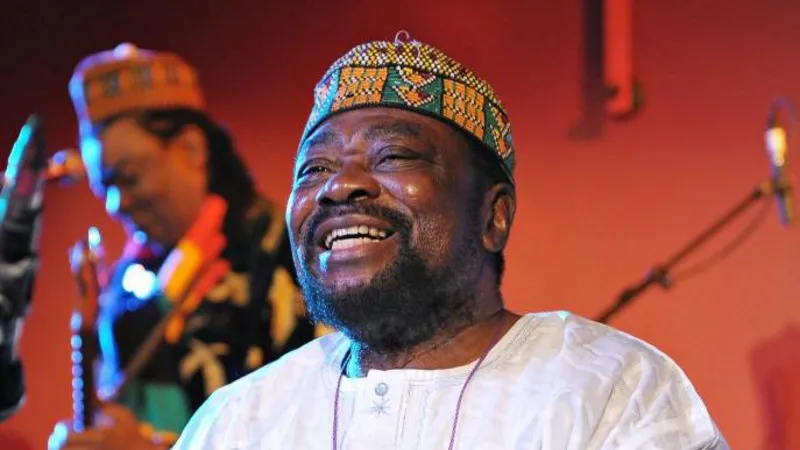
Ghanaian music legend and saxophonist Teddy Osei, who founded the Afro-rock band Osibisa, has died aged 88.
The talented drummer and vocalist passed away in London on Tuesday.
He was “an important voice in music and culture, and he will be missed, but never forgotten,” the statement read.
Osei rose to acclaim as the leader of Osibisa, where his boundless creativity as a multi-instrumentalist never conformed to a single genre.
He played an instrumental role in shaping the unique sound of the band, which captivated the world with its warm, infectious songs that transcended cultural and musical boundaries.
The Musicians Union of Ghana (Musiga) shared a heartfelt tribute.
“Teddy Osei was not only a pioneer in the world of music but also a cultural ambassador who helped bridge the gap between African rhythms and global sounds,” said Musiga President Bessa Simons.
Born on 1 December, 1937, in Kumasi, Ghana, Teddy Osei was introduced to music by his father, who played in prominent school bands.
A gifted multi-instrumentalist, Osei was best known for his passion for the saxophone, a love he cultivated while studying in the western town of Sekondi.
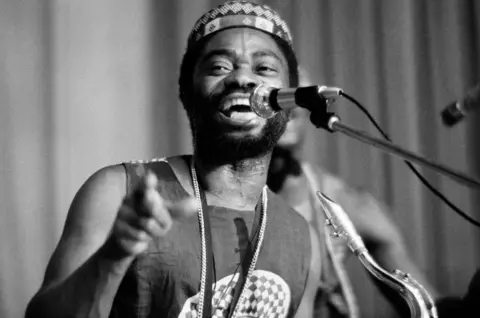
Osei moved to London in the early 1960s on a government scholarship to study music and drama.
During this time, Osei formed a band called Cat’s Paw, which blended the vibrant rhythms of highlife – a popular West African genre – with the energetic styles of rock and soul.
In 1969, Osei co-founded the pioneering Afro-Rock group Osibisa alongside fellow Ghanaian musicians Sol Amarfio and Mac Tontoh.
The band’s name, Osibisa, comes from a word in the Fante language, meaning “highlife”.
Osibisa’s fusion of Afrocentric sounds with rock, soul, jazz, and funk put them on the global music map as one of the first African bands to gain international recognition.
Osei’s contribution to the success of Osibisa is undeniable.
His crucial input towards the group led to chart successes in the UK with singles like Sunshine Day and Dance the Body Music.
Their live performances left audiences in awe the world over, leading to extensive tours across Europe, Asia, and Africa.
One of their key performances was at Zimbabwe’s independence celebrations in 1980, where Bob Marley and the Wailers also performed.
Osei’s dedication to promoting African music on the global stage has left an indelible mark on the international music industry.
In 2021, he told The Guardian he ventured into music because he “wanted to make a difference to the African music scene.”
Without Osibisa, Osei said, there would have been no Fela Kuti, widely regarded as the godfather of Afrobeat.
His contributions served as a cultural bridge that connected diverse audiences through the universal language of music.
“Osibisa gave Africans confidence in their own music,” Osei once said, reflecting on what he considered his greatest achievement.
His passing marks the end of an era, but his musical innovations and the pathways he forged for African artists will endure, continuing to inspire and resonate with future generations.
[BBC]



Sri Lanka has stepped up efforts to detect and respond to a potential outbreak of the deadly Nipah virus (NiV), with health authorities enhancing surveillance and laboratory readiness amid growing concerns in the region.
The Medical Research Institute (MRI), the country’s premier laboratory, has upgraded its testing capacity with the latest technology to identify the Nipah virus, enabling early detection of suspected cases, an MRI source said.
Nipah virus is a highly infectious zoonotic disease that can spread from animals
to humans and also through human-to-human contact. Fruit bats are the natural hosts of the virus.
First identified in Malaysia in 1988, the virus has since caused deadly outbreaks in countries including India and Bangladesh. Experts warn that Sri Lanka, with its close human-animal interactions and tropical climate, must remain vigilant against such emerging infectious diseases.
The case fatality rate of Nipah virus ranges from 40% to 75%, making it one of the most lethal viral infections affecting humans. There are currently no specific drugs or vaccines, with treatment relying mainly on intensive supportive care, health specialists say.
Symptoms of infection initially include fever, headaches, muscle pain, vomiting, and sore throat, followed by dizziness, drowsiness, altered consciousness, and neurological signs indicating acute encephalitis. Severe cases may progress to atypical pneumonia, acute respiratory distress, seizures, and coma within 24 to 48 hours.Authorities continue to urge heightened awareness and precautionary measures, emphasizing that early detection and rapid response are key to preventing outbreaks.
by Chaminda Silva ✍️

The Free Media Movement (FMM) has demanded government accountability on many freedom of expression issues referred to in a statement issued by the Human Rights Commission in a statement issued last week.
The statement under the hands of FMM Convener Lasantha De Silva and Secretary Dileesha Abeysundera says FMM has paid close attention to the statement issued by the Human Rights Commission (HRC) under reference number HRC/S/i/E/03/02/26. It has also informed that global stakeholders, including the International Federation of Journalists—of which it is a member—that are already closely monitoring this matter.
In its statement, HRC has elaborated at length on the issues that have arisen in Sri Lanka concerning freedom of expression and online safety. It specifically points out that the actions of the Sri Lanka Police have been a major contributing factor to these concerns. The Commission notes that recent conduct of the police has indirectly interfered even with the professional activities of journalists.
HRC has also drawn attention to the practice of summoning journalists and other activists before the police without providing clear reasons, in violation of circulars issued by the IGP. In certain instances, the police have stated that journalists were summoned due to alleged defamation arising from media activities.
However, freedom of expression guaranteed by the Constitution is restricted only within constitutionally prescribed limits. Accordingly, defamation that is no longer a criminal offence cannot be acted upon by the police. Such matters constitute civil offences that must be resolved before courts of law. The Commission further observes that attempts by politicians and others to lodge complaints with the Criminal Investigation Department regarding defamation are efforts to portray defamation as a criminal offence.
The HRC statement also addresses the Online Safety Act. While emphasizing the need to be mindful of online safety, the Commission points out that the current law does not address genuine needs. Therefore, as already demanded by many stakeholders, the government has the option to repeal this Act.
In addition, HRC has outlined a three-pronged approach that should be adopted to safeguard freedom of expression, as guaranteed by the Constitution and in line with Sri Lanka’s commitments under the Universal Declaration of Human Rights of the United Nations.
FMM said it is of the view that the Government of Sri Lanka must give serious consideration to this statement and to the recommendations emphasized therein. “This is a moment in which the accountability of the Sri Lankan government is being questioned. Accordingly, the Free Media Movement urges the government to take immediate steps to implement the recommendations set out in this statement,” it said.
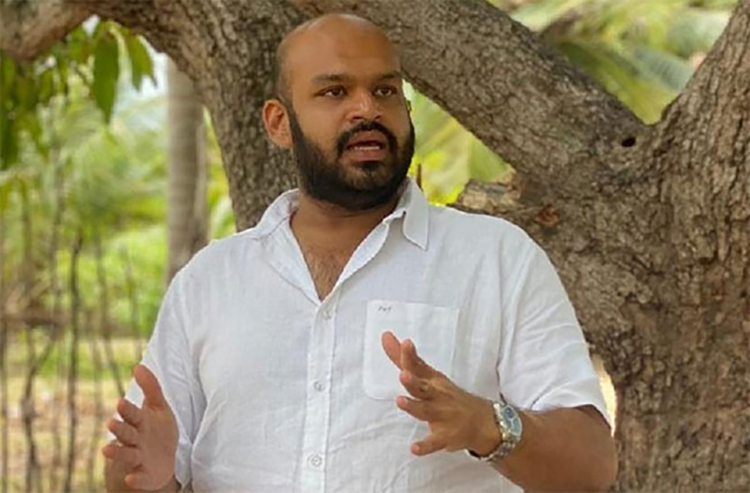
ITAK Batticaloa District MP Shanakiyan Rasamanickam accused the government in Parliament on Friday of deliberately delaying Provincial Council elections, pointing to its failure to nominate members to a Parliamentary Select Committee.
The committee, tasked with considering matters related to Provincial Council polls, was announced on 6 January 2026. Opposition parties submitted their nominees promptly.
However, a month later, the government has yet to name its eight members, preventing the committee from being constituted and from commencing its work, Rasamanickam alleged.
Opposition representatives argue that this delay represents intentional inaction aimed at postponing elections. They urged the government to appoint its nominees without further delay to allow the committee to proceed.

‘Dates have the highest sugar content to fight Coronavirus’

Sunday Island 27 December – Headlines

#SundayIsland 17th December – Headlines

Sunday Island – 28th March

Sunday Island Headlines – 21 March

Sunday Island – 21st February – Headlines
-

 Business1 day ago
Zone24x7 enters 2026 with strong momentum, reinforcing its role as an enterprise AI and automation partner
-

 Business5 days ago
SLIM-Kantar People’s Awards 2026 to recognise Sri Lanka’s most trusted brands and personalities
-

 Business6 days ago
All set for Global Synergy Awards 2026 at Waters Edge
-

 Business1 day ago
HNB recognized among Top 10 Best Employers of 2025 at the EFC National Best Employer Awards
-

 Business5 days ago
API-first card issuing and processing platform for Pan Asia Bank
-

 Business1 day ago
GREAT 2025–2030: Sri Lanka’s Green ambition meets a grid reality check
-

 Editorial3 days ago
All’s not well that ends well?
-

 Features3 days ago
Phew! The heat …