
Features
Fusing horrors of reality and supernatural intricately

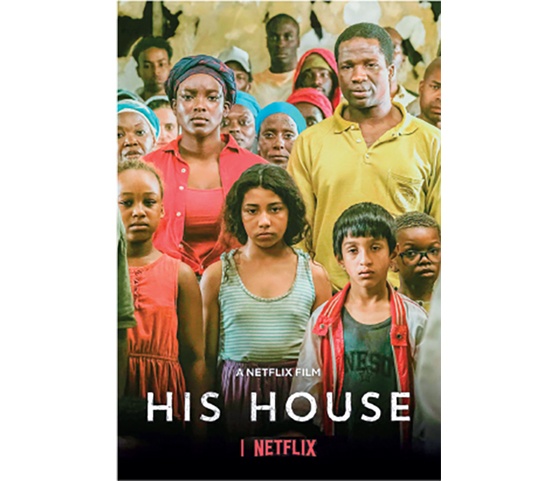
His House
By Tharishi Hewavithanagamage
Netflix’s latest horror movie titled ‘His House,’ is British director Remi Weekes’s feature directorial debut. Written by Remi Weekes himself, with a story by Felicity Evans and Toby Venables, the film premiered at the Sundance Film Festival and has received positive reviews from critics and audiences alike. The director has taken the mainstream and over-familiar haunted house subgenre, but rejuvenates it. He combines fresh horrors, ones not normally discussed in this genre, with the old-fashioned tale of a haunting, and neatly oscillates between the two, making sure that the message he tries to convey isn’t lost. The film stars Ṣọpẹ́ Dìrísù, Wunmi Mosaku, Matt Smith and Javier Botet, among others.
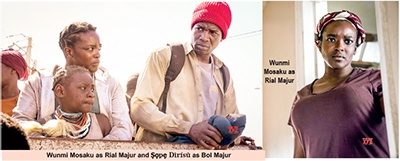 The film follows a young refugee couple, Bol (Ṣọpẹ́ Dìrísù) and Rial Majur (Wunmi Mosaku) who are forced to flee their home country of South Sudan due to violence. They attempt to cross the sea, along with many others in the night, however, an unfortunate accident at sea has them arriving in Britain, devastated by the loss of their daughter, Nyagak. The couple are released ‘on probation’ and granted a house in an unnamed English city, after spending an indefinite time in a detention center. The house although in shambles, is nevertheless their own and they are elated over the chance they’ve been given, to start their lives again. As they enthusiastically try to fit in to their new environment, things begin to take a dark turn, as they come to realize that they are not alone in their new house.
The film discusses so many significant aspects of the social dialogue on refugees, with the added elements of the supernatural. In the beginning the audience is given the impression that the house is actually haunted by an entity, just like any other horror movie. To start off the couple is already feeling the strains of having to cope with their dark past in Sudan, alongside having to adapt and survive in an alien country, that is apathetic at best and hostile at worst. The conditions imposed on them deprive them of having a normal life, and they are constantly mocked by both black and white British citizens, as shown to audiences by Weekes, with focus on the daily activities of the couple.
But Weekes also avoids leaning too much into caricature, and offers audiences Matt Smith’s character, as the empathetic housing officer. Weekes also uses Matt’s character to voice issues facing citizens themselves, pointing to the fact that their jobs have moved abroad and they too are fighting their own wars trying to earn money in their own country. The couple on the other hand, as protagonists of the story, are caught in a state of constant unrest. They dream about their experiences in Sudan and on the boat, and the more the dreams seem to come to life as they try to ‘fit in’ and be ‘the good ones’ in their new home.
 Their flashbacks are what bring the pieces of the story together, and the film does not spend too much time thinking about whether everything is simply playing out in Bol’s mind alone, because Rial can also see and hear the ‘night witch’ or ‘apeth’ (brought to life by the talented Javier Botet), an entity that is a cornerstone of the Dinka people’s beliefs about witchcraft. Bol’s visions are far more visceral and visual while the witch converses with Rial. This spectral force stands as a symbol of the monstrosity of Bol’s actions, which the audience learn towards the end of the film.
The fact that Bol and Rial never had a daughter, but Bol in hopes of escaping their homeland, simply takes away Nyagak from her mother, and then fails to save her as she drowned in the ocean, is what draws in the ‘apeth’ to their home. While both Bol and Rial see the little girl, Rial is overwhelmed by the memories of her family. Weekes highlights that the haunting that takes place is tied not just to the grief over the death of the little girl, but the overwhelming weight of survivor’s guilt, over the ones that were lost along the way or left were behind.
Furthermore, the film plays out a fundamental theme of belonging, with Rial manifesting a sense of not belonging anywhere, while Bol tries hard to ‘fit in’ in the new community. He yearns to stay in England, hoping he’d never have to face the darkness of his past. He constantly tells Rial to speak English instead of her mother tongue, and even suggests using cutlery instead of eating their meals the traditional way. Bol is seen struggling, as his past and present often clash. The couple realizes that the more they run from their fears and refuse to accept their realities, the more mental and physical torment they are forced to undergo. The final scene, where they stand looking at the ghost of Nyagak and the house fills with the spirits of other refugees (from many different countries), is how Weekes shows their moment of acceptance.
Ṣọpẹ́ Dìrísù, Wunmi Mosaku as protagonists make excellent performances, acing both the technical and emotional roles they portray. Their ability to draw in and keep audiences engrossed throughout speaks volumes of their talent. Remi Weekes weaves and fuses the horrors of reality and the supernatural intricately. ‘His House’ is a unique horror movie all on its own, as it speaks of moments where the horrors of reality really outweigh those brought on by spirits. Weekes succeeds in putting all his effort into reinventing a gut-wrenching story with a powerful social message.

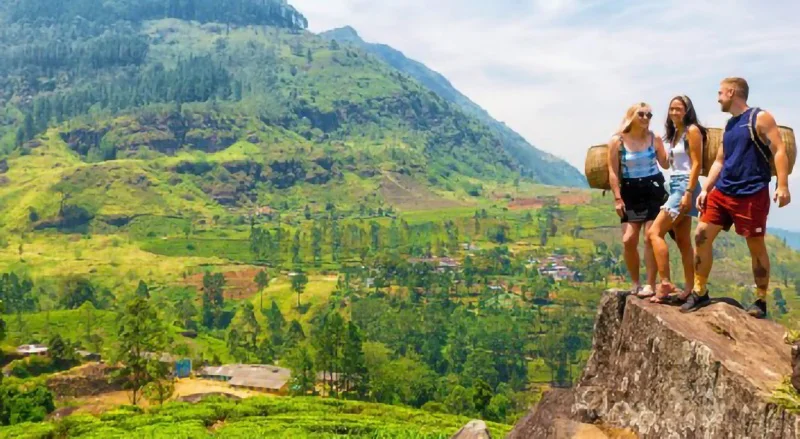
(Article 2 of the 4-part series on Sri Lanka’s tourism stagnation)
 If Sri Lanka’s tourism story were a corporate income statement, the top line would satisfy any minister. Arrivals went up 15.1%, targets met, records broke. But walk down the statement and the story darkens. Revenue barely budges. Per-visitor yield collapses. The money that should accompany all those arrivals has quietly vanished, or, more accurately, never materialised.
This is not a recovery. It is a volume trap, more tourists generating less wealth, with policymakers either oblivious to the math or unwilling to confront it.
Problem Diagnosis: The Paradox of Plenty:
The numbers tell a brutal story.
Read that again: arrivals grew 15.1% year-on-year, but revenue grew only 1.6%. The average tourist in 2025 left behind $181 less than in 2024, an 11.7% decline. Compared to 2018, the drop is even sharper. In real terms, adjusting for inflation and currency depreciation, each visitor in 2025 generates approximately 27-30% less revenue than in 2018, despite Sri Lanka being “cheaper” due to the rupee’s collapse. This is not marginal variance. This is structural value destruction. (See Table 1)

The math is simple and damning: Sri Lanka is working harder for less. More tourists, lower yield, thinner margins. Why? Because we have confused accessibility with competitiveness. We have made ourselves “affordable” through currency collapse and discounting, not through value creation.
Root Causes: The Five Mechanisms of Value Destruction
The yield collapse is not random. It is the predictable outcome of specific policy failures and market dynamics.
1. Currency Depreciation as False Competitiveness
The rupee’s collapse post-2022 has made Sri Lanka appear “cheap” to foreigners. A hotel room priced at $100 in 2018 might cost $70-80 in effective purchasing power today due to depreciation. Tour operators have aggressively discounted to fill capacity during the crisis recovery.
This creates the illusion of competitiveness. Arrivals rise because we are a “bargain.” But the bargain is paid for by domestic suppliers, hotels, transport providers, restaurants, staff, whose input costs (energy, food, imported goods) have skyrocketed in rupee terms while room rates lag in dollar terms.
The transfer is explicit: value flows from Sri Lankan workers and businesses to foreign tourists. The tourism “recovery” extracts wealth from the domestic economy rather than injecting it.
2. Market Composition Shift: Trading European Yields for Asian Volumes
SLTDA data shows a deliberate (or accidental—the policy opacity makes it unclear) shift in source markets. (See Table 2)

The problem is not that we attract Indians or Russians, it is that we attract them without strategies to optimise their yield. As the next article in this series will detail, Indian tourists average approximately 5.27 nights compared to the 8-9 night overall average, with lower per-day spending. We have built recovery on volume from price-sensitive segments rather than value from high-yield segments.
This is a choice, though it appears no one consciously made it. Visa-free entry, aggressive India-focused marketing, and price positioning have tilted the market mix without any apparent analysis of revenue implications.
3. Length of Stay Decline and Activity Compression
Average length of stay has compressed. While overall averages hover around 8-9 nights in recent years, the composition matters. High-yield European and North American tourists who historically spent 10-12 nights are now spending 7-9. Indian tourists spend 5-6 nights.
Shorter stays mean less cumulative spending, fewer experiences consumed, less distribution of value across the tourism chain. A 10-night tourist patronises multiple regions, hotels, guides, restaurants. A 5-night tourist concentrates spending in 2-3 locations, typically Colombo, one beach, one cultural site.
The compression is driven partly by global travel trends (shorter, more frequent trips) but also by Sri Lanka’s failure to develop compelling multi-day itineraries, adequate inter-regional connectivity, and differentiated regional experiences. We have not given tourists reasons to stay longer.
4. Infrastructure Decay and Experience Degradation
Tourists pay for experiences, not arrivals. When experiences degrade, airport congestion, poor road conditions, inadequate facilities at cultural sites, safety concerns, spending falls even if arrivals hold.
The 2024-2025 congestion at Bandaranaike International Airport, with reports of tourists nearly missing flights due to bottlenecks, is the visible tip. Beneath are systemic deficits: poor last-mile connectivity to tourism sites, deteriorating heritage assets, unregistered businesses providing sub-standard services, outbound migration of trained staff.
An ADB report notes that tourism authorities face resource shortages and capital expenditure embargoes, preventing even basic facility improvements at major revenue generators like Sigiriya (which charges $36 per visitor and attracts 25% of all tourists). When a site generates substantial revenue but lacks adequate lighting, safety measures, and visitor facilities, the experience suffers, and so does yield.
5. Leakage: The Silent Revenue Drain
Tourism revenue figures are gross. Net foreign exchange contributions after leakages, is rarely calculated or published.
Leakages include:
· Imported food, beverages, amenities in hotels (often 30-40% of operating costs)
· Foreign ownership and profit repatriation
· International tour operators taking commissions upstream (tourists book through foreign platforms that retain substantial margins)
· Unlicensed operators and unregulated businesses evading taxes and formal banking channels
Industry sources estimate leakages can consume 40-60% of gross tourism revenue in developing economies with weak regulatory enforcement. Sri Lanka has not published comprehensive leakage studies, but all indicators, weak licensing enforcement, widespread informal sector activity, foreign ownership concentration in resorts, suggest leakages are substantial and growing.
The result: even the $3.22 billion headline figure overstates actual net contribution to the economy.
The Way Forward: From Volume to Value
Reversing the yield collapse requires
systematic policy reorientation, from arrivals-chasing to value-building.
First
, publish and track yield metrics as primary KPIs. SLTDA should report:
· Revenue per visitor (by source market, by season, by purpose)
· Average daily expenditure (disaggregated by accommodation, activities, food, retail)
· Net foreign exchange contribution after documented leakages
· Revenue per room night (adjusted for real exchange rates)
Make these as visible as arrival numbers. Hold policy-makers accountable for yield, not just volume.
Second
, segment markets explicitly by yield potential. Stop treating all arrivals as equivalent. Conduct market-specific yield analyses:
· Which markets spend most per day?
· Which stays longest?
· Which distributes spending across regions vs. concentrating in Colombo/beach corridors?
· Which book is through formal channels vs. informal operators?
Target marketing and visa policies accordingly. If Western European tourists spend $250/day for 10 nights while another segment spends $120/day for 5 nights, the revenue difference ($2,500 vs. $600) dictates where promotional resources should flow.
Third
, develop multi-day, multi-region itineraries with compelling value propositions. Tourists extend stays when there are reasons to stay. Create integrated experiences:
· Cultural triangle + beach + hill country circuits with seamless connectivity
· Themed tours (wildlife, wellness, culinary, adventure) requiring 10+ days
· Regional spread of accommodation and experiences to distribute economic benefits
This requires infrastructure investment, precisely what has been neglected.
Fourth
, regulations to minimise leakages. Enforce licensing for tourism businesses. Channel bookings through formal operators registered with commercial banks. Tax holiday schemes should prioritise investments that maximise local value retention, staff training, local sourcing, domestic ownership.
Fifth
, stop using currency depreciation as a competitive strategy. A weak rupee makes Sri Lanka “affordable” but destroys margins and transfers wealth outward. Real competitiveness comes from differentiated experiences, quality standards, and strategic positioning, not from being the “cheapest” option.
The Hard Math: What We’re Losing
Let’s make the cost explicit. If Sri Lanka maintained 2018 per-visitor spending levels ($1,877) on 2025 arrivals (2.36 million), revenue would be approximately $4.43 billion, not $3.22 billion. The difference: $1.21 billion in lost revenue, value that should have been generated but wasn’t.
That $1.21 billion is not a theoretical gap. It represents:
· Wages not paid
· Businesses not sustained
· Taxes not collected
· Infrastructure not funded
· Development not achieved
This is the cost of volume-chasing without yield discipline. Every year we continue this model; we lock in value destruction.
The Policy Failure: Why Arrivals Theater Persists
Why do policymakers fixate on arrivals when revenue tells the real story?
Because arrivals are politically legible. A minister can tout “record tourist numbers” in a press conference. Revenue per visitor requires explanation, context, and uncomfortable questions about policy choices.
Arrivals are easy to manipulate upward, visa-free entry, aggressive discounting, currency depreciation. Yield is hard, it requires product development, market curation, infrastructure investment, regulatory enforcement.
Arrivals theater is cheaper and quicker than strategic transformation. But this is governance failure at its most fundamental. Tourism’s contribution to economic recovery is not determined by how many planes land but by how much wealth each visitor creates and retains domestically. Every dollar spent celebrating arrival records while ignoring yield collapse is a waste of dollars.
The Uncomfortable Truth
Sri Lanka’s tourism “boom” is real in volume, but it is a value bust. We are attracting more tourists and generating less wealth. The industry is working harder for lower returns. Margins are compressed, staff are paid less in real terms, infrastructure decays, and the net contribution to national recovery underperforms potential.
This is not sustainable. Eventually, operators will exit. Quality will degrade further. The “affordable” positioning will shift to “cheap and deteriorating.” The volume will follow yield down.
We have two choices: acknowledge the yield crisis and reorient policy toward value creation or continue arrivals theater until the hollowness becomes undeniable.
The money has spoken. The question is whether anyone in power is listening.
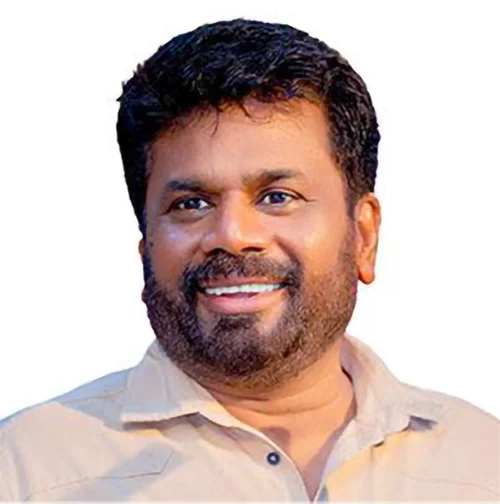
President Anura Kumara Dissanayake has been investing his political capital in going to the public to explain some of the most politically sensitive and controversial issues. At a time when easier political choices are available, the president is choosing the harder path of confronting ethnic suspicion and communal fears. There are three issues in particular on which the president’s words have generated strong reactions. These are first with regard to Buddhist pilgrims going to the north of the country with nationalist motivations. Second is the controversy relating to the expansion of the Tissa Raja Maha Viharaya, a recently constructed Buddhist temple in Kankesanturai which has become a flashpoint between local Tamil residents and Sinhala nationalist groups. Third is the decision not to give the war victory a central place in the Independence Day celebrations.
Even in the opposition, when his party held only three seats in parliament, Anura Kumara Dissanayake took his role as a public educator seriously. He used to deliver lengthy, well researched and easily digestible speeches in parliament. He continues this practice as president. It can be seen that his statements are primarily meant to elevate the thinking of the people and not to win votes the easy way. The easy way to win votes whether in Sri Lanka or elsewhere in the world is to rouse nationalist and racist sentiments and ride that wave. Sri Lanka’s post independence political history shows that narrow ethnic mobilisation has often produced short term electoral gains but long term national damage.
Sections of the opposition and segments of the general public have been critical of the president for taking these positions. They have claimed that the president is taking these positions in order to obtain more Tamil votes or to appease minority communities. The same may be said in reverse of those others who take contrary positions that they seek the Sinhala votes. These political actors who thrive on nationalist mobilisation have attempted to portray the president’s statements as an abandonment of the majority community. The president’s actions need to be understood within the larger framework of national reconciliation and long term national stability.
Reconciler’s Duty
When the president referred to Buddhist pilgrims from the south going to the north, he was not speaking about pilgrims visiting long established Buddhist heritage sites such as Nagadeepa or Kandarodai. His remarks were directed at a specific and highly contentious development, the recently built Buddhist temple in Kankesanturai and those built elsewhere in the recent past in the north and east. The temple in Kankesanturai did not emerge from the religious needs of a local Buddhist community as there is none in that area. It has been constructed on land that was formerly owned and used by Tamil civilians and which came under military occupation as a high security zone. What has made the issue of the temple particularly controversial is that it was established with the support of the security forces.
The controversy has deepened because the temple authorities have sought to expand the site from approximately one acre to nearly fourteen acres on the basis that there was a historic Buddhist temple in that area up to the colonial period. However, the Tamil residents of the area fear that expansion would further displace surrounding residents and consolidate a permanent Buddhist religious presence in the present period in an area where the local population is overwhelmingly Hindu. For many Tamils in Kankesanturai, the issue is not Buddhism as a religion but the use of religion as a vehicle for territorial assertion and demographic changes in a region that bore the brunt of the war. Likewise, there are other parts of the north and east where other temples or places of worship have been established by the military personnel in their camps during their war-time occupation and questions arise regarding the future when these camps are finally closed.
There are those who have actively organised large scale pilgrimages from the south to make the Tissa temple another important religious site. These pilgrimages are framed publicly as acts of devotion but are widely perceived locally as demonstrations of dominance. Each such visit heightens tension, provokes protest by Tamil residents, and risks confrontation. For communities that experienced mass displacement, military occupation and land loss, the symbolism of a state backed religious structure on contested land with the backing of the security forces is impossible to separate from memories of war and destruction. A president committed to reconciliation cannot remain silent in the face of such provocations, however uncomfortable it may be to challenge sections of the majority community.
High-minded leadership
The controversy regarding the president’s Independence Day speech has also generated strong debate. In that speech the president did not refer to the military victory over the LTTE and also did not use the term “war heroes” to describe soldiers. For many Sinhala nationalist groups, the absence of these references was seen as an attempt to diminish the sacrifices of the armed forces. The reality is that Independence Day means very different things to different communities. In the north and east the same day is marked by protest events and mourning and as a “Black Day”, symbolising the consolidation of a state they continue to experience as excluding them and not empathizing with the full extent of their losses.
By way of contrast, the president’s objective was to ensure that Independence Day could be observed as a day that belonged to all communities in the country. It is not correct to assume that the president takes these positions in order to appease minorities or secure electoral advantage. The president is only one year into his term and does not need to take politically risky positions for short term electoral gains. Indeed, the positions he has taken involve confronting powerful nationalist political forces that can mobilise significant opposition. He risks losing majority support for his statements. This itself indicates that the motivation is not electoral calculation.
President Dissanayake has recognized that Sri Lanka’s long term political stability and economic recovery depend on building trust among communities that once peacefully coexisted and then lived through decades of war. Political leadership is ultimately tested by the willingness to say what is necessary rather than what is politically expedient. The president’s recent interventions demonstrate rare national leadership and constitute an attempt to shift public discourse away from ethnic triumphalism and toward a more inclusive conception of nationhood. Reconciliation cannot take root if national ceremonies reinforce the perception of victory for one community and defeat for another especially in an internal conflict.
BY Jehan Perera
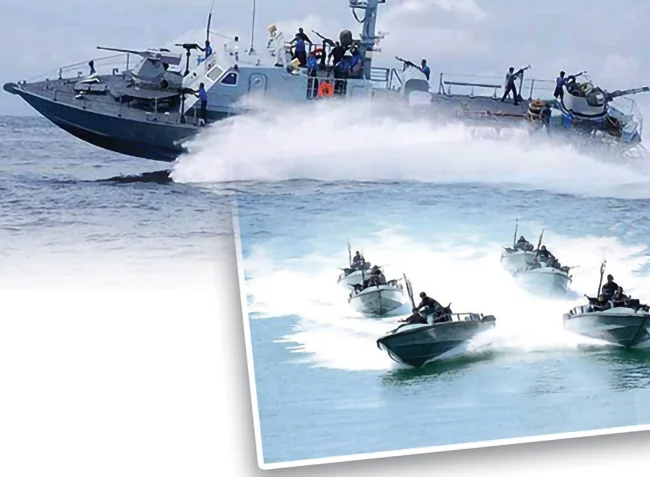
I have read a newspaper report that the Special Task Force of Sri Lanka Police, with help of Military Intelligence, recovered three buried yet well-preserved 84mm Carl Gustaf recoilless rocket launchers used by the LTTE, in the Kudumbimalai area, Batticaloa.
These deadly weapons were used by the LTTE SEA TIGER WING to attack the Sri Lanka Navy ships and craft in 1990s. The first incident was in February 1997, off Iranativu island, in the Gulf of Mannar.
Admiral Cecil Tissera took over as Commander of the Navy on 27 January, 1997, from Admiral Mohan Samarasekara.
The fight against the LTTE was intensified from 1996 and the SLN was using her Vanguard of the Navy, Fast Attack Craft Squadron, to destroy the LTTE’s littoral fighting capabilities. Frequent confrontations against the LTTE Sea Tiger boats were reported off Mullaitivu, Point Pedro and Velvetiturai areas, where SLN units became victorious in most of these sea battles, except in a few incidents where the SLN lost Fast Attack Craft.
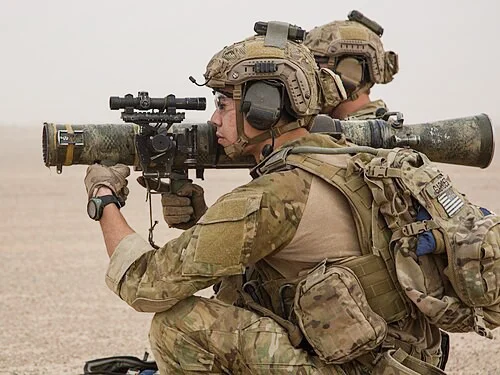
Carl Gustaf recoilless rocket launchers
The intelligence reports confirmed that the LTTE Sea Tigers was using new recoilless rocket launchers against aluminium-hull FACs, and they were deadly at close quarter sea battles, but the exact type of this weapon was not disclosed.
The following incident, which occurred in February 1997, helped confirm the weapon was Carl Gustaf 84 mm Recoilless gun!
DATE: 09TH FEBRUARY, 1997, morning 0600 hrs.
LOCATION: OFF IRANATHIVE.
FACs: P 460 ISRAEL BUILT, COMMANDED BY CDR MANOJ JAYESOORIYA
P 452 CDL BUILT, COMMANDED BY LCDR PM WICKRAMASINGHE (ON TEMPORARY COMMAND. PROPER OIC LCDR N HEENATIGALA)
OPERATED FROM KKS.
CONFRONTED WITH LTTE ATTACK CRAFT POWERED WITH FOUR 250 HP OUT BOARD MOTORS.
TARGET WAS DESTROYED AND ONE LTTE MEMBER WAS CAPTURED.
LEADING MARINE ENGINEERING MECHANIC OF THE FAC CAME UP TO THE BRIDGE CARRYING A PROJECTILE WHICH WAS FIRED BY THE LTTE BOAT, DURING CONFRONTATION, WHICH PENETRATED THROUGH THE FAC’s HULL, AND ENTERED THE OICs CABIN (BETWEEN THE TWO BUNKS) AND HIT THE AUXILIARY ENGINE ROOM DOOR AND HAD FALLEN DOWN WITHOUT EXPLODING. THE ENGINE ROOM DOOR WAS HEAVILY DAMAGED LOOSING THE WATER TIGHT INTEGRITY OF THE FAC.
THE PROJECTILE WAS LATER HANDED OVER TO THE NAVAL WEAPONS EXPERTS WHEN THE FACs RETURNED TO KKS. INVESTIGATIONS REVEALED THE WEAPON USED BY THE ENEMY WAS 84 mm CARL GUSTAF SHOULDER-FIRED RECOILLESS GUN AND THIS PROJECTILE WAS AN ILLUMINATER BOMB OF ONE MILLION CANDLE POWER. BUT THE ATTACKERS HAS FAILED TO REMOVE THE SAFETY PIN, THEREFORE THE BOMB WAS NOT ACTIVATED.
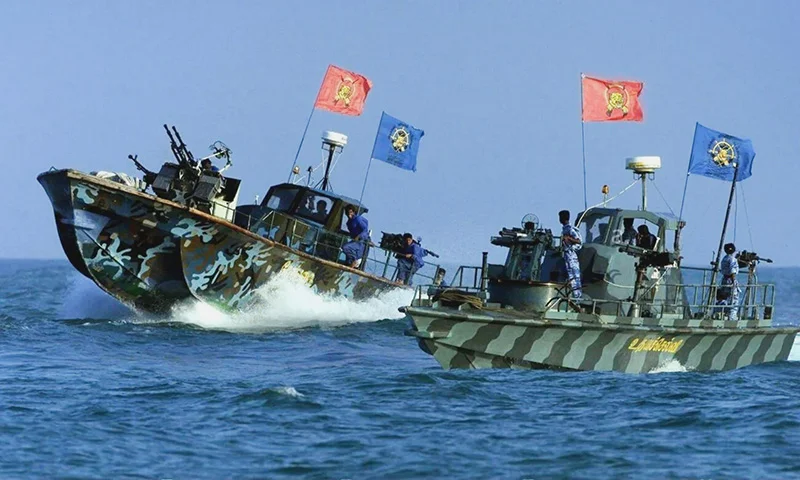
Sea Tigers
Carl Gustaf 84 mm recoilless gun was named after Carl Gustaf Stads Gevärsfaktori, which, initially, produced it. Sweden later developed the 84mm shoulder-fired recoilless gun by the Royal Swedish Army Materiel Administration during the second half of 1940s as a crew served man- portable infantry support gun for close range multi-role anti-armour, anti-personnel, battle field illumination, smoke screening and marking fire.
It is confirmed in Wikipedia that Carl Gustaf Recoilless shoulder-fired guns were used by the only non-state actor in the world – the LTTE – during the final Eelam War.
It is extremely important to check the batch numbers of the recently recovered three launchers to find out where they were produced and other details like how they ended up in Batticaloa, Sri Lanka?
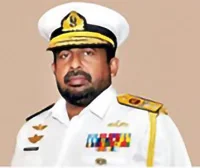 By Admiral Ravindra C. Wijegunaratne
WV, RWP and Bar, RSP, VSV, USP, NI (M) (Pakistan), ndc, psn, Bsc (Hons) (War Studies) (Karachi) MPhil (Madras)
Former Navy Commander and Former Chief of Defence Staff
Former Chairman, Trincomalee Petroleum Terminals Ltd
Former Managing Director Ceylon Petroleum Corporation
Former High Commissioner to Pakistan

Police open fire on speeding van in Jaffna: 17-year-old driver killed

HRCSL employee protests demanding justice, takes swipe at Presidential Secretariat

SL-EU Jt. Commission meeting tomorrow

Sri Lanka’s ranking improves in global corruption index

Hemas posts resilient nine-month results

Shaky middle order a concern for Sri Lanka in World Cup

‘Dates have the highest sugar content to fight Coronavirus’

Sunday Island 27 December – Headlines

#SundayIsland 17th December – Headlines

Sunday Island – 28th March

Sunday Island Headlines – 21 March

Sunday Island – 21st February – Headlines
-
 Features3 days ago
My experience in turning around the Merchant Bank of Sri Lanka (MBSL) – Episode 3
-

 Business4 days ago
Zone24x7 enters 2026 with strong momentum, reinforcing its role as an enterprise AI and automation partner
-
 Business3 days ago
Remotely conducted Business Forum in Paris attracts reputed French companies
-
 Business3 days ago
Four runs, a thousand dreams: How a small-town school bowled its way into the record books
-
 Business3 days ago
ComBank and Hayleys Mobility redefine sustainable mobility with flexible leasing solutions
-
 Business4 days ago
HNB recognized among Top 10 Best Employers of 2025 at the EFC National Best Employer Awards
-

 Editorial6 days ago
All’s not well that ends well?
-

 Business4 days ago
GREAT 2025–2030: Sri Lanka’s Green ambition meets a grid reality check