
News
Foreign Secretary sounds ‘consensual resolution’ as pressure mounts in Geneva

by Shamindra Ferdinando
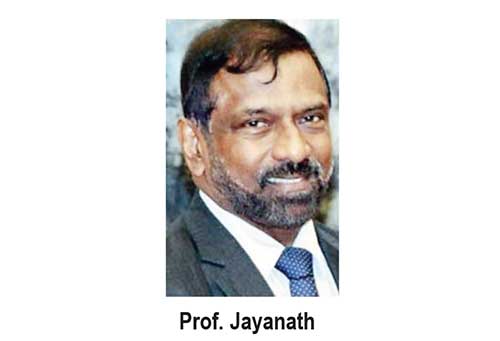
Foreign Secretary Admiral Prof. Jayanath Colombage on Monday (25) night revealed that the government was having discussions with the UK-led Sri Lanka Core Group in a bid to explore the possibility of reaching a consensus on what he described as a ‘consensual resolution’ ahead of the 46th sessions of the Geneva-based United Nations Human Rights Council (UNHRC) scheduled for Feb-March this year.
Admiral Colombage acknowledged that an agreement on a consensual resolution was a politically challenging task. FS Colombage said so in conversation with Faraz Shauketaly on ‘News Line’ on TV 1.
Asked whether the government was under pressure to co-sponsor the new resolution or face a vote in case Sri Lanka rejected the UK-led move, the naval veteran said there was dialogue between the two parties in this regard. Talks have to be concluded today (27)
Prof. Colombage ruled out the possibility of Sri Lanka co-sponsoring the new resolution. The top Foreign Ministry official also dismissed the interviewer’s assertion the government was under pressure to accept the new resolution.
Admiral Colombage said they were also studying some suggestions made by the Core Group.
Asked whether the government would try to convince the Tamil National Alliance (TNA) led political grouping that had demanded an international war crimes investigation in addition to a range of punitive measures to reverse its decision, FS Colombage emphasized that Sri Lanka waged war against an internationally proscribed terrorist group.
The interviewer sought the Foreign Secretary’s assertion of retired justice C.V. Wigneswaran, MP, who signed Jan. 15 dated petition, in his capacity as the leader of Tamil Makkal Thesiya Kutani (TMTK). Altogether, 13 lawmakers represented the three political parties that called for external intervention.
Declaring that serious war crimes hadn’t been committed during the war, FS Colombage questioned the motives of those continuing to harp on unsubstantiated war crimes allegations. Referring to the failure on the part of the Northern Provincial Council to spend the funds allocated for the benefit of the public, FS Colombage asked whether an agenda detrimental to post-war national reconciliation was being pursued.
In the wake of Sri Lanka quitting in Feb 2020 Geneva Resolution co-sponsored by the previous government against one’s own country in Oct 2015, Geneva has warned Sri Lanka of serious consequences. In addition to freezing assets and travel bans slapped on those who had been ‘credibly accused of human rights violations,’ Geneva recommended the launch of criminal proceedings at the International Criminal Court and an international mechanism to gather evidence.
Referring to the US travel ban imposed on Army Commander Gen. Shavendra Silva in Feb 2020, the interviewer sought the Foreign Secretary’s opinion on the Geneva report. Refuting allegations, Admiral Colombage alleged serious shortcomings, including factual errors.
Asked whether the recent appointment of a three-member Commission of Inquiry (CoI) chaired by Supreme Court Judge Nawaz to examine previous CoI reports et al wasn’t too late as well as insufficient just ahead of the 46th sessions, Admiral Colombage explained how eruption of first Covid-19 wave that resulted in the postponement of general elections scheduled for April 2020 caused serious setback to government efforts.
Commenting on simmering controversy over the Sri Lanka-India agreement on the East Container Terminal (ECT) at the Colombo harbour, Admiral Colombage expressed confidence the issue could be resolved soon. The former Navy Chief categorically denied India’s valuable support to Sri Lanka at Geneva et al would be linked with agreement on ECT.
Responding to criticism directed at India over a spate of issues, including the forced imposition of the 13th Amendment thereby creating the Provincial Council system, Admiral Colombage pointed out the Tamil Nadu factor. Admiral Colombage, having reiterated President Gotabaya Rajapaksa’s foreign policy statement, assured Sri Lanka’s commitment to friendly ties with major powers.
FS Colombage emphasized that Sri Lanka’s bilateral relations wouldn’t be at the expense of another country.
Admiral Colombage regretted the recent mid-sea collision involving an SLN Fast Attack Craft and an Indian fishing trawler that resulted in the deaths of four fishermen. The FS emphasized that the incident happened well within Sri Lankan waters near Delft Island.
Navy headquarters last week alleged that the Indian vessel collided with FAC while trying to flee a naval cordon.
Admiral Colombage said that the SLN vessel would have suffered serious damage if the Indian trawler happened to be one with a steel hull.
Asked whether US, India, Japan and Australia would take a common stand vis a vis Sri Lanka in respect of accountability issues, Admiral Colombage asserted that wouldn’t be the case. “Sri Lanka is important to them” Admiral Colombage said, while describing them as the four pillars of the Quad-a security alliance.
Commenting on the disclosures made by Lord Naseby in the House of Lords in Oct 2017, Admiral Colombage appreciated the British politician’s efforts to set the record straight as regards war crimes accusations. The Foreign Secretary said that the revelations were made on the basis of genuine and accurate sources.
The British Lord used classified wartime British HC cables (Jan – May 2009) obtained following a legal battle to counter Geneva accusations. Sri Lanka is yet to officially request Geneva to revisit the 2015 resolution on the basis of Lord Naseby’s revelations.


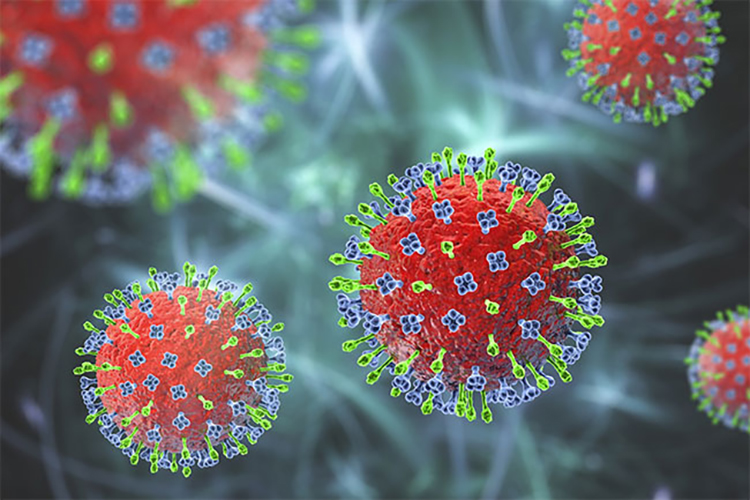
Sri Lanka has stepped up efforts to detect and respond to a potential outbreak of the deadly Nipah virus (NiV), with health authorities enhancing surveillance and laboratory readiness amid growing concerns in the region.
The Medical Research Institute (MRI), the country’s premier laboratory, has upgraded its testing capacity with the latest technology to identify the Nipah virus, enabling early detection of suspected cases, an MRI source said.
Nipah virus is a highly infectious zoonotic disease that can spread from animals
to humans and also through human-to-human contact. Fruit bats are the natural hosts of the virus.
First identified in Malaysia in 1988, the virus has since caused deadly outbreaks in countries including India and Bangladesh. Experts warn that Sri Lanka, with its close human-animal interactions and tropical climate, must remain vigilant against such emerging infectious diseases.
The case fatality rate of Nipah virus ranges from 40% to 75%, making it one of the most lethal viral infections affecting humans. There are currently no specific drugs or vaccines, with treatment relying mainly on intensive supportive care, health specialists say.
Symptoms of infection initially include fever, headaches, muscle pain, vomiting, and sore throat, followed by dizziness, drowsiness, altered consciousness, and neurological signs indicating acute encephalitis. Severe cases may progress to atypical pneumonia, acute respiratory distress, seizures, and coma within 24 to 48 hours.Authorities continue to urge heightened awareness and precautionary measures, emphasizing that early detection and rapid response are key to preventing outbreaks.
by Chaminda Silva ✍️
The Free Media Movement (FMM) has demanded government accountability on many freedom of expression issues referred to in a statement issued by the Human Rights Commission in a statement issued last week.
The statement under the hands of FMM Convener Lasantha De Silva and Secretary Dileesha Abeysundera says FMM has paid close attention to the statement issued by the Human Rights Commission (HRC) under reference number HRC/S/i/E/03/02/26. It has also informed that global stakeholders, including the International Federation of Journalists—of which it is a member—that are already closely monitoring this matter.
In its statement, HRC has elaborated at length on the issues that have arisen in Sri Lanka concerning freedom of expression and online safety. It specifically points out that the actions of the Sri Lanka Police have been a major contributing factor to these concerns. The Commission notes that recent conduct of the police has indirectly interfered even with the professional activities of journalists.
HRC has also drawn attention to the practice of summoning journalists and other activists before the police without providing clear reasons, in violation of circulars issued by the IGP. In certain instances, the police have stated that journalists were summoned due to alleged defamation arising from media activities.
However, freedom of expression guaranteed by the Constitution is restricted only within constitutionally prescribed limits. Accordingly, defamation that is no longer a criminal offence cannot be acted upon by the police. Such matters constitute civil offences that must be resolved before courts of law. The Commission further observes that attempts by politicians and others to lodge complaints with the Criminal Investigation Department regarding defamation are efforts to portray defamation as a criminal offence.
The HRC statement also addresses the Online Safety Act. While emphasizing the need to be mindful of online safety, the Commission points out that the current law does not address genuine needs. Therefore, as already demanded by many stakeholders, the government has the option to repeal this Act.
In addition, HRC has outlined a three-pronged approach that should be adopted to safeguard freedom of expression, as guaranteed by the Constitution and in line with Sri Lanka’s commitments under the Universal Declaration of Human Rights of the United Nations.
FMM said it is of the view that the Government of Sri Lanka must give serious consideration to this statement and to the recommendations emphasized therein. “This is a moment in which the accountability of the Sri Lankan government is being questioned. Accordingly, the Free Media Movement urges the government to take immediate steps to implement the recommendations set out in this statement,” it said.
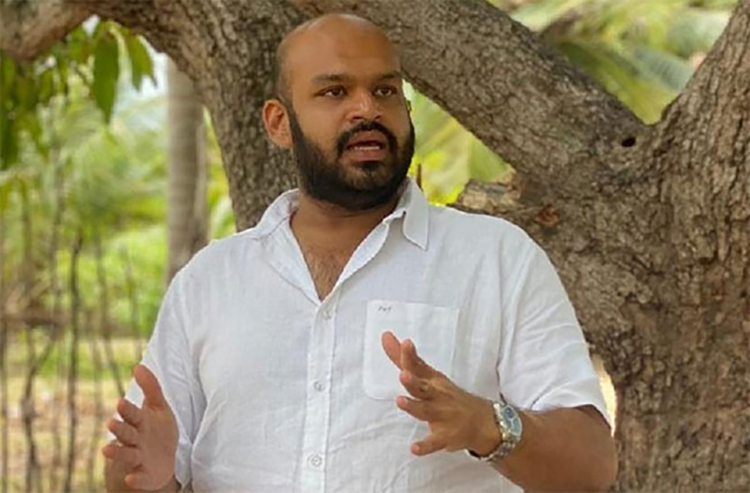
ITAK Batticaloa District MP Shanakiyan Rasamanickam accused the government in Parliament on Friday of deliberately delaying Provincial Council elections, pointing to its failure to nominate members to a Parliamentary Select Committee.
The committee, tasked with considering matters related to Provincial Council polls, was announced on 6 January 2026. Opposition parties submitted their nominees promptly.
However, a month later, the government has yet to name its eight members, preventing the committee from being constituted and from commencing its work, Rasamanickam alleged.
Opposition representatives argue that this delay represents intentional inaction aimed at postponing elections. They urged the government to appoint its nominees without further delay to allow the committee to proceed.

‘Dates have the highest sugar content to fight Coronavirus’

Sunday Island 27 December – Headlines

#SundayIsland 17th December – Headlines

Sunday Island – 28th March

Sunday Island Headlines – 21 March

Sunday Island – 21st February – Headlines
-

 Business1 day ago
Zone24x7 enters 2026 with strong momentum, reinforcing its role as an enterprise AI and automation partner
-

 Business5 days ago
SLIM-Kantar People’s Awards 2026 to recognise Sri Lanka’s most trusted brands and personalities
-

 Business6 days ago
All set for Global Synergy Awards 2026 at Waters Edge
-
 Business5 days ago
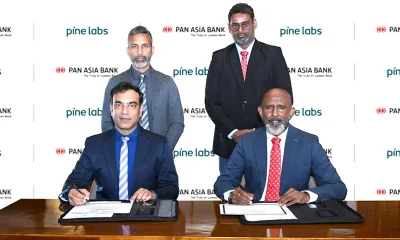
API-first card issuing and processing platform for Pan Asia Bank
-
 Business1 day ago
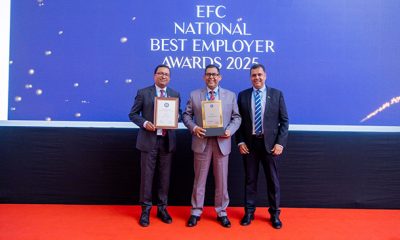
HNB recognized among Top 10 Best Employers of 2025 at the EFC National Best Employer Awards
-

 Business1 day ago
GREAT 2025–2030: Sri Lanka’s Green ambition meets a grid reality check
-

 Editorial3 days ago
All’s not well that ends well?
-

 Features3 days ago
Phew! The heat …