
Business
Focus on Sri Lanka’s plastic waste management

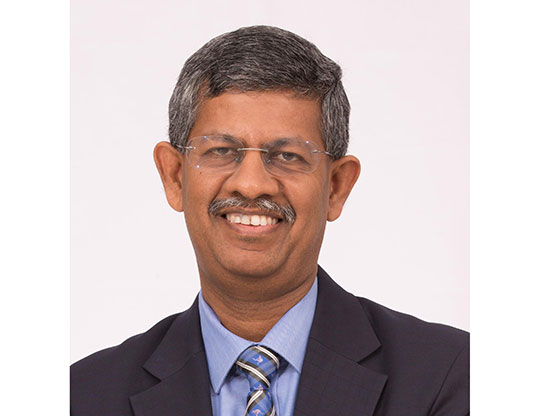
By Manjula de Silva, Secretary General and CEO, Ceylon Chamber of Commerce
Each year, over 640,000 metric tonnes of plastic leak into the Indian Ocean from Sri Lanka (Clean Cities, Blue Ocean, June 2020). The Western Province alone generates around 7500 metric tons of solid waste every day, out of which only 3500 metric tons are collected (Central Environmental Authority, 2018). Of this, close to 15% become compost, 10% is recycled and 75% is thrown into open dumps. While plastics have made essential products more accessible, the impact to the environment needs to be addressed.
As consumerism evolves, the earth continues to suffer. For over half a century, consumers have been placed at the forefront to bear the brunt of the burden they have placed on the Earth. But, are consumers only to blame? Consumers are a key stakeholder in the waste management process but they share this responsibility alongside legislators, civil society, importers of plastic and, producers who use plastic in their manufacturing and packaging processes.
Today’s consumers are even more aware of what they consume and hold these products, services and brands to renewed standards of transparency and accountability. Due to this, the conversation on sustainability among brands has shifted from a mere marketing gimmick, to a legitimate requirement that is demanded by the next generation of consumers, the world over.
The 3 Rs of responsible waste management – Reduce, Reuse, Recycle will remain the holy mantra across the spectrum of sustainability. However, as producers take up accountability, we have to ask the important questions. Are organizations able to switch to plastic alternatives and meet their current demands? How will this affect the product design and its safety for consumption? Elimination and reduction will only take away from the end consumer’s ease of access to the product. The end consumers in this case, are Sri Lankans like you and I.
This is where Extended Producer Responsibility comes into play. According to the Organization for Economic Co-Operation and Development, Extended Producer Responsibility (EPR) is a policy mechanism through which producers are given the responsibility (either financial and/or physical) for the treatment or disposal of post-consumer products. EPR is a critical tool in driving linear economies into a circular economy, as they supplement an extended product cycle even after the products initial use. Assigning such responsibility could in principle, provide incentives to prevent waste at the source, promote environmentally friendly product design and support the achievement of the national recycling goals.
EPR is systematic approach to ensuring commitment to the waste hierarchy of the 3 Rs by facilitating producers to remain responsible in the treatment and disposal of post-consumer products. This at present, is a more sustainable tool over bans as most products are created for utility and cannot be removed from the market overnight. For recyclable items such as PET (Polyethylene terephthalate) and HIPS (High Impact Polystyrene) plastic, better alternatives need to be sought which encourage recovery and recyclability.


The recent announcement of Wealth Trust Securities Ltd.’s Rs. 500.8 million Initial Public Offering -IPO- comes at a moment when Sri Lanka’s interest-rate environment is gradually easing, allowing well-capitalised primary dealers to expand their trading portfolios and secure long-term positions in government securities.
Company chairman Senaka Weerasooria told journalists in Colombo that the IPO is not merely a capital-raising exercise, but a reinforcement of the disciplined structure that has defined the company since its inception.
He noted that WTS enters the public market with what is already one of the most robust capital bases in the industry, and with “absolute confidence that investors are joining a journey that has consistently returned value.”
Weerasooria said the capital infusion will further solidify WTS’s ability to absorb volatility, particularly amid cyclical movements in Treasury yields.
Despite maintaining a conservative trading outlook, the company has managed to average a 31% ROE over the past twelve years — a figure management repeatedly highlighted as evidence of resilience across both tightening and loosening rate cycles.
Managing Director and CEO Romesh Gomez said that in recent months the direction of policy rates and market liquidity has begun shifting favourably, creating clear value-accretion opportunities for disciplined portfolio expansion. With additional capital, he noted, WTS has greater room to capture advantageous auction positions, broaden secondary market activity and align its investment scale to emerging market windows.
Gomez acknowledged that FY25 reflected compressed performance due to systemic realignment, with revenue at Rs. 4.6 billion and PAT at Rs. 1.2 billion. However, he pointed out that profit sustainability, even through a difficult cycle, speaks to strong operational controls. The A- rating with a Positive outlook continues to stand, reinforcing the company’s position as a stable counterparty in a specialised sector.
Asia Securities Advisors, managing the IPO, pointed out that the offer price of Rs. 7 presents meaningful upside when benchmarked against underlying valuation metrics. The move into the listed environment, they noted, enhances governance visibility — a point increasingly valued among institutional investors participating in the Government securities market.
By Ifham Nizam
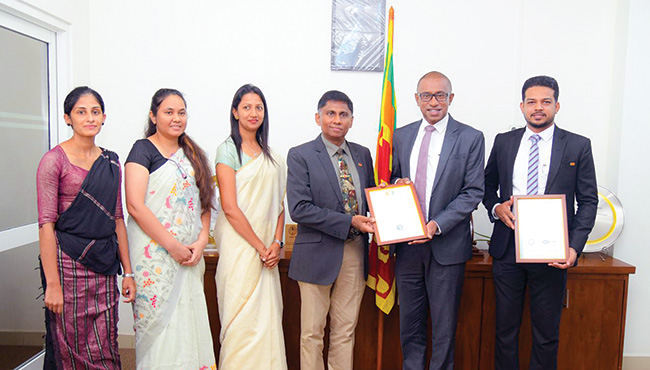
BoardPAC, the global leader in digital board meeting automation, has secured the Carbon Neutral Certification for 2024, marking the fourth consecutive year the company has achieved this milestone. The certification, awarded by the Sri Lanka Climate Fund (SLCF) under the Ministry of Environment in October 2025, underscores BoardPAC’s commitment to environmental sustainability and responsible corporate governance.
BoardPAC’s operations, spanning over 40 countries, were assessed against the ISO 14064 – 1:2018 standard, and the company’s organization-level Greenhouse Gas (GHG) emissions were successfully offset, reflecting its ongoing commitment to reducing its environmental impact.
Business
Uber marks 10 years in Sri Lanka: Moving People, Powering Livelihoods, Impacting Communities

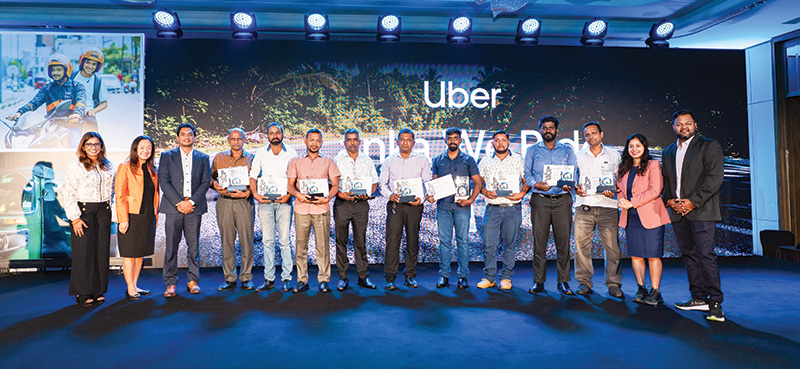
Uber today marked ten years of operations in Sri Lanka, a decade in which the platform has reshaped how people commute, and how thousands of Sri Lankans earn a livelihood. Over the past decade, ride-hailing has become one of the most transformative shifts in Sri Lanka’s urban mobility landscape, providing safe, reliable and affordable transport at scale.
Chathuranga Abeysinghe, Deputy Minister for Entrepreneurship, Ministry of Industries and Entrepreneurship Development, Government of Sri Lanka, graced the milestone event as the Chief Guest. U.S. Ambassador Julie Chung attended as the Guest of Honor, joined by Akanksha Singh, Head – South Asia Markets, Uber, and Kaushalya Gunaratne, Country Manager – Mobility, Uber Sri Lanka.
As per the 2024 Sri Lanka Economic Impact Report, compiled by global policy research firm – Public First, Uber and Uber Eats together generated over LKR 160 billion in economic activity in Sri Lanka within a single year. Since its entry in Sri Lanka in 2015, Uber rides have covered over 1.15 billion kilometers – equivalent to nearly 3000 trips from Earth to the moon! Over 320,000 Sri Lankans have earned through the platform as drivers.
Uber has also supported the tourism ecosystem, enabling more than 700,000 airport trips, connecting visitors seamlessly to their destinations. Over the last year, we’ve further intensified our service in the Western and Central provinces and expanded our offerings in the Southern and Northern provinces – bringing its services closer to more communities across the country. Uber has emerged as one of the most preferred ride-hailing platforms across the island, offering affordable, reliable, and safer rides at different price points.
Deputy Minister for Entrepreneurship, Ministry of Industries and Entrepreneurship Development, Government of Sri Lanka, Chathuranga Abeysinghe, said, “Over the past decade, Uber has become part of the fabric of daily life in Sri Lanka – not only by helping people get where they need to go, but by enabling thousands to earn an income with dignity and flexibility.

Tickner and Rae bowl West Indies out for 205 to give New Zealand the edge

French Ambassador pledges support for relief efforts

India extends multi-front support to Sri Lanka’s cyclone relief efforts

Relief Cargo from the UAE arrives in Sri Lanka

639 deaths reported as at 0600AM today [10th]

Showers above 100 mm are likely at some places in the Northern, North-Central and Eastern provinces

‘Dates have the highest sugar content to fight Coronavirus’

Sunday Island 27 December – Headlines

#SundayIsland 17th December – Headlines

Sunday Island – 28th March

Sunday Island Headlines – 21 March

Sunday Island – 21st February – Headlines
-

 News2 days ago
Over 35,000 drug offenders nabbed in 36 days
-
 News6 days ago
Level III landslide early warning continue to be in force in the districts of Kandy, Kegalle, Kurunegala and Matale
-

 Business4 days ago
LOLC Finance Factoring powers business growth
-

 News4 days ago
CPC delegation meets JVP for talks on disaster response
-
 News4 days ago
A 6th Year Accolade: The Eternal Opulence of My Fair Lady
-
 News1 day ago
Cyclone Ditwah leaves Sri Lanka’s biodiversity in ruins: Top scientist warns of unseen ecological disaster
-

 News2 days ago
Rising water level in Malwathu Oya triggers alert in Thanthirimale
-
 Latest News4 days ago
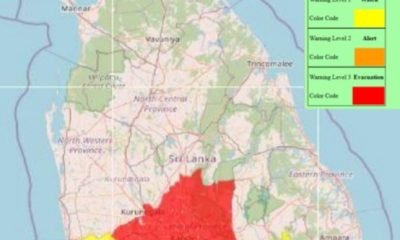
Landslide RED warnings continue to be in force for the Districts of Kandy, Kegalle, Kurunegala, Matale and Nuwara Eliya