
News
Expert advises public, private sectors invest in modern technology as in HK, Taiwan, Singapore


Long-term solutions even after present pandemic
By Rathindra Kuruwita
The public and private sectors should invest in the latest technologies to prevent the spread of COVID-19 and remotely identify those who had contracted the virus to minimise disruptions to the economy, Pharmaceutical and healthcare management consultant Dr. Sanjaya Perera told The Island yesterday.
Dr. Perera said that since 2020 three lockdowns had been imposed, but the country had not benefited.
“We have also imposed lockdowns at the wrong times. We allowed people to party in April 2021. We also relaxed too fast when experts said we have the delta variant in Colombo. Everyone agrees that closing the country almost at regular intervals is bad, we have to take steps so that this doesn’t happen,” he said.
 Perera, who works as a consultant in East Asia and Europe said that investment in new technology and adhering to strict travel guidelines had helped many institutions to function without continuous disruptions. Last year, a number of institutions had introduced machines that could easily detect those with COVID-19 and protect those who worked in air conditioned environments, he said.
“For example there are new technologies like infrared thermal monitoring, which are widely used in Singapore, Taiwan and Hong Kong. High-performance infrared thermal cameras are set-up at airports or at entrances to offices to capture people’s thermal images in real time, easily identifying people with fever. There are new machines powered by artificial intelligence that can identify those who have 0.01 higher temperature. These machines can also work as an attendance register that can be accessed by HR officers from anywhere. I am glad that some top private firms have already set up these machines,” he said.
Perera said that Sri Lanka had kept its airports open for the most part of the pandemic and a number of COVID-19 infected people had come through without detection. Health sector unions had called for stricter measures but the government had cited inconveniences to passengers for not implementing tougher policies.
“Singapore Airport is now using a breath test to detect Covid-19 that gives accurate results within a minute. A person blows into a one-way valve mouthpiece, and compounds in the person’s breath – think of it as a breath signature – are compared by machine learning software against the sort of breath signature that would be expected from someone who’s Covid-positive. We can clear passengers in minutes. If the government wants to keep the airport open it should invest in these technologies,” he said.
Dr. Perera pointed out that SARS-CoV-2 could remain on various surfaces and that caused serious issues when schools, offices and factories were open. The virus could remain outside, especially in places that were not exposed to the sun and in air conditioned places.
In the past year researchers had looked at UV radiation, in particular UV-C to inactivate different viruses, including SARS-CoV-2, he added
“With machines that emit UV-C radiation you can easily disinfect surfaces. If you place such a machine near an AC machine, it can kill most of the viruses there. There are also handheld devices that people can use to disinfect documents, pens, and other things that you touch. Another technology we can use is pathogen testing. We can place this unit at the office, and it will capture pathogens that people at work emit. At the end of the day, a lab can test and find out if a person there has contracted COVID-19. This way we don’t need to check everyone at work, we can just check the people who came on that day,” he said.
Dr. Perera said that while some of those technologies were expensive, investing on the long term solutions and protocols would benefit the economy greatly in the long term. Already the government spent large amounts of money on testing, quarantining and treating people and frequent lockdowns too had cost colossal sums, he said.
“Also these investments are not only for COVID-19. Even if COVID goes away, we can still use this equipment to make the office environment safer for the workers. A healthy workforce is good for business and both the private and public sector must understand this,” he said.


The Pakistan Navy Ship (PNS) TAIMUR and ASLAT arrived at the Port of Colombo on a goodwill visit on 12 Apr 26.
The visiting ships were welcomed by the Sri Lanka Navy in
compliance with naval traditions.
The duo of ships is commanded by Captain NIAMAT SAEED KHAN (PNS TAIMUR) and Captain NADIR MATEEN AFRIDI (PNS ASLAT).
Meanwhile, the ships are expected to conduct a Bilateral Naval Exercise LION STAR V with the Sri Lanka Navy in Colombo seas.
Latest News
Heat index likely to increase up to ‘Caution level’ at some places in the Northern, North-central, North-western, Western, Sabaragamuwa, Southern and Eastern provinces and Monaragala district


Warm Weather Advisory
Issued by the Natural Hazards Early Warning Centre at 3.30 p.m. on 11 April 2026, valid for 12 April 2026
The Heat index, the temperature felt on the human body is likely to increase up to ‘Caution level’ at some places in the Northern, North-central, North-western, Western, Sabaragamuwa, Southern and Eastern provinces and Monaragala district.
The Heat Index Forecast is calculated by using relative humidity and maximum temperature and this is the condition that is felt on your body. This is not the forecast of maximum temperature. It is generated by the Department of Meteorology for the next day period and prepared by using global numerical weather prediction model data.
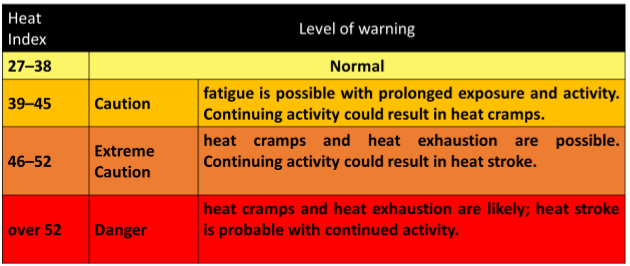
Effect of the heat index on human body is mentioned in the above table and it is prepared on the advice of the Ministry of Health and Indigenous Medical Services.
ACTION REQUIRED
Job sites: Stay hydrated and takes breaks in the shade as often as possible.
Indoors: Check up on the elderly and the sick.
Vehicles: Never leave children unattended.
Outdoors: Limit strenuous outdoor activities, find shade and stay hydrated.
Dress: Wear lightweight and white or light-colored clothing.
Note: In addition, please refer to advisories issued by the Disaster Preparedness & Response Division, Ministry of Health in this regard as well. For further clarifications please contact 011-7446491.
Latest News
Sun directly overhead Cheddikulam, Kebithigollewa, Gomarankadawala and Nilaveli about 12:11 noon. today [12]

On the apparent northward relative motion of the sun, it is going to be directly over the latitudes of Sri Lanka from 05th to 15th of April in this year.
The nearest areas of Sri Lanka over which the sun is overhead today (12th) are Cheddikulam, Kebithigollewa, Gomarankadawala and Nilaveli about 12:11 noon.

PNS TAIMUR & ASLAT arrive in Colombo

Sanju Samson and Jamie Overton deliver first points for Chennai Super Kings

Arya, Prabhsimran and Shreyas help Punjab Kings ace another 200-plus chase

Beauty of Sri Lanka in focus: Global showcase blends art, diplomacy and conservation

Showers expected in the Western, Sabaragamuwa, Central, Southern, North-western and Uva provinces and in Ampara, Batticaloa and Polonnaruwa districts after 1.00 p.m.

Heat index likely to increase up to ‘Caution level’ at some places in the Northern, North-central, North-western, Western, Sabaragamuwa, Southern and Eastern provinces and Monaragala district

‘Dates have the highest sugar content to fight Coronavirus’

Sunday Island 27 December – Headlines

#SundayIsland 17th December – Headlines

Sunday Island – 28th March

Sunday Island Headlines – 21 March

Sunday Island – 21st February – Headlines
-

 News6 days ago
Lankan-origin actress Subashini found dead in India
-

 News4 days ago
AG: Coal procurement full of irregularities
-

 Business3 days ago
Israeli attack on Lebanon triggers local stock market volatility
-

 News23 hours ago
CEB orders temporary shutdown of large rooftop solar systems
-

 Business4 days ago
Hayleys Mobility introduces Premium OMODA C9 PHEV
-

 Business3 days ago
HNB Assurance marks 25 years with strategic transformation to ‘HNB Life’
-

 News6 days ago
UN Regional Director launches SL’s first Country Gender Equality Profile during official visit
-

 Sports4 days ago
DS to face St. Anthony’s in ‘Bridges of Brotherhood’ cricket encounter