
Editorial
Enter AI Steve!

Saturday 22nd June, 2024
Anything is possible in politics all over the world. It has been reported that the UK voters will be able to ‘elect the world’s first AI MP’ (AI Steve) in the forthcoming parliamentary election. This claim, which the international media has given wide publicity, is not entirely true, for AI Steve is only a virtual proxy candidate sans independent agency, as is obvious, standing in for a 59-year-old businessman, Steve Endacott, who will enter Parliament in case his AI avatar polling enough votes. In other words, there will be no AI lawmaker as such! It would have been more appropriate if media reports had said the British public would be able to vote for AI Steve and help its human namesake enter Parliament.
Endacott’s modus operandi is similar, in some respects, to a ruse used by Sri Lankan political parties, which gain mileage by presenting, as their National List nominees, eminent persons, who are appointed to Parliament and then made to resign so that the party leaders’ cronies can become MPs. It looks as if Endacott had taken a leaf out of our guys’ book and given it a technological twist to suit his purpose.
As for this method, a popular Sri Lankan saying comes to mind: nangi pennala akka denawa wage (‘like duping a man into marrying a not-so-attractive woman by showing him her pretty younger sister as the would-be bride during the customary betrothal visit’.) Something similar happened here in 2019, when the SLPP tricked the public into voting for Gotabaya so that Basil could run the country as an eminence grise.
Since AI Steve is a virtual persona, the wisdom of the British voters being made to vote for or against it is in question. This electoral experiment does not make sense. But such absurd things are to be expected in the Global North, where bizarreness is fast becoming the new normal.
Endacott reportedly refers to AI Steve as an ‘eco-friendly capitalist with a conscience, who is fed up with traditional politics’. It is said that his AI avatar can even ‘dodge questions like a real politician’. If so, AI Steve is no better than human politicians.
AI Steve is said to be capable of the following, among other things: having 10,000 conversations simultaneously, being always available for calls; engaging with voters in real-time on various issues such as LGBTQ rights, housing, garbage collection, the Israel-Hamas war, cycling lanes, and immigration; offering policy ideas and seeking public feedback; interacting with the candidates and discussing policies, ensuring continuous communication and responsiveness to public needs. All this is fine, and AI Steve’s capabilities will go a long way towards helping carry real Steve’s message across effectively and efficiently in the Brighton Pavilion constituency, but it defies comprehension why it should appear on the ballot.
Sri Lankan politicians also claim to be blessed with some of these capabilities, and the SLPP insists that its founder is blessed with as many as seven brains, which, however, failed him miserably in 2022 and left the task of saving his life to his legs, which carried him as fast as they could with violent mobs in close pursuit.
Perhaps, Sri Lankan politicians who have ruined the country and are scared of facing the public may benefit from Endacott’s method. The failed, corrupt SLPP politicians, and their Viyathmaga lackeys, the crooks who caused the downfall of the UNP and cannot go before the people again, may be able to use their AI avatars to engage in electioneering for them, for they run the risk of being roughed up if they take part in canvassing. But they will have to have their tarnished names on the ballot as Sri Lanka’s election laws do not provide for fielding proxy candidates, AI or otherwise. There’s the rub.



Thursday 12th February, 2026
President Anura Kumara Dissanayake once spoke of a ‘shadow state’ run by powerful crime syndicates and vowed to dismantle it. The general consensus is that such an unseen, parallel power structure really exists and must be eliminated as a national priority. However, criminals are not alone in running ‘parallel governments’. Extremely powerful business cartels also challenge the writ of the state and exploit the public, with impunity.
Transport Minister Bimal Rathnayake has evinced a keen interest in bringing order out of chaos in the passenger transport sector. He deserves praise and public support for his efforts. He has taken upon himself the onerous task of safeguarding the interests of commuters and ensuring road safety. His attempts to bring the private industry to heel have run into stiff resistance, with the bus mudalalis issuing warnings and even threats.
Minister Rathnayake has warned that the tough measures under consideration to make roads safer include the cancellation of the route permits of the buses whose drivers and conductors are addicted to narcotics. Desperate situations are said to call for desperate measures. In 2021, the then State Minister of Transport Dilum Amunugama made a chilling revelation: about 80% of private bus drivers in Colombo and its suburbs were addicted to drugs. The situation must be more or less the same in other parts of the country as well. A survey conducted by the Lanka Private Bus Owners’ Association (LPBOA) has revealed that 45% of private bus drivers are addicted to narcotics. Their addiction to relatively new drugs such as ICE (crystal methamphetamine) is on the rise, according to the police, who disclosed in 2023 that out of 1,781 drivers subjected to drug tests in the Western Province about 100 had been found to be under the influence of dangerous drugs; most of them were ICE addicts. LPBOA President Gemunu Wijeratne himself has said that about 50% of bus workers are addicted to narcotics.
The severity of drug addiction among bus drivers and conductors may have compelled Minister Rathnayake to consider deterrent measures, such as the cancellation of route permits, as a way out. Private bus owners’ associations have condemned the proposed move and threatened to stage a countrywide strike.
Wijeratne did not mince his words when he tore into the government, at a media briefing, the other day. Insisting that bus owners must not be penalised for what their workers did, he said they had no way of finding out whether drivers and conductors were under the influence of drugs. “Would Minister Rathnayake resign if his driver was found to be using illicit drugs?” Wijeratne rhetorically asked, accusing the government of selectively implementing the law. He cited several instances where NPP politicians and their cronies had got away with serious transgressions.
Wijeratne’s arguments are not without merit. The legal process was blatantly subverted to let former Speaker Asoka Ranwala off the hook following a road accident he caused two months ago, as Wijeratne said. Ranwala was not made to undergo a blood-alcohol test for more than 12 hours, and the police audaciously claimed that they had run out of breathalyser test kits. No legal action has been taken against the questionable release of as many as 323 high-risk containers, without Customs inspection, from the Colombo Port. A mega coal scam has gone uninvestigated. When a cannabis plantation on a plot of land belonging to an NPP MP’s relative was raided, it was the police officers responsible for the raid who had to face disciplinary and legal action. The JVP supporters who parked buses on the Southern Expressway in violation of traffic laws last year have got off scot-free. So, Wijeratne may have struck a responsive chord with the public when he highlighted how the government itself was undermining the rule of law. However, the fact that the incumbent administration shields transgressors within its ranks is no reason why the private bus operators should be allowed to enjoy the freedom of the wild ass. Wijeratne seems to think two wrongs make a right.
The government should not make hasty decisions when handling sensitive issues. It ought to respect the fundamental legal maxim, audi alteram partem, and listen to what the bus operators have to say. However, the imperious private bus associations must not be allowed to intimidate a democratically elected government. Wijeratne has warned that the government’s efforts to cancel the route permits of buses driven by drug addicts will be its undoing, for the bus operators will launch a countrywide strike. He has asked the government not to rouse ‘sleeping tigers’. In saying so, he has made an unintentional allusion to the Liberation Tigers of Tamil Eelam militarily neutralised by a previous government. It remains to be seen whether the incumbent administration with a supermajority is equal to the task of taming the ‘sleeping tigers’, safeguarding the interests of the public and ensuring road safety while redressing the legitimate grievances of the bus operators.
Wednesday 11th February, 2026
Today’s front-page photo in this newspaper shows former President Mahinda Rajapaksa and Foreign Minister and JVP stalwart Vijitha Herath in conversation at a Chinese New Year reception in Colombo on Monday. This picture speaks volumes. Its significance and irony may not have escaped astute political observers familiar with Sri Lanka’s political marriages of convenience during the past several decades.
The JVP made a public show of its antipathy towards the Rajapaksas to win elections in 2024. It vowed to throw them behind bars immediately after forming a government. Some Opposition bigwigs have claimed that it was to settle political scores with Mahinda that the JVP-led NPP government made former Presidents leave their official residences. The JVP leaders continue to inveigh against Mahinda and other members of the Rajapaksa family, much to the glee of their cadres. They pretend that they have had nothing to do with the former ruling family. But the truth is otherwise.
The aforesaid photo may remind political observers of the pivotal role played by Herath and other JVP seniors, including Anura Kumara Dissanayake, in enabling Mahinda to achieve his presidential dream in 2005. The SLFP, which fielded Mahinda as its presidential candidate, did not throw its weight behind him in the presidential race; in fact, the then President Chandrika Kumaratunga did her best to queer the pitch for him, without success. The JVP campaigned extremely hard for him and ensured his victory.
The present-day JVP leaders are seen in some videos of Mahinda’s 2005 presidential election campaign, waving the Mahinda Chinthanaya policy framework at campaign rallies and portraying it as a silver bullet capable of helping Sri Lanka solve all its problems and achieve progress. Herath was among the key speakers at Mahinda’s election rallies. Perhaps, it would have been the end of the road for the Rajapaksas in national politics had Mahinda lost the 2005 presidential election. Thus, it may be seen that the blame for what the JVP accuses Mahinda, his family members and his cronies of having done since 2005 should be apportioned to the JVP leaders who made his elevation to the presidency possible.
The JVP fell out with President Rajapaksa as he did not fulfil some of his key promises, especially his pledge to abolish the executive presidency. It joined forces with the UNP, etc., thereafter and strove to defeat Mahinda in the 2010 presidential election, but in vain. However, it realised that goal by helping Maithripala Sirisena, who promised to scrap the executive presidency, win the 2015 presidential election. He reneged on his pledge.
Ironically, the Rajapaksas created conditions for the JVP’s meteoric rise to power, albeit unwittingly. After their return to power, they indulged in corruption, suppressed the rule of law, and, above all, bankrupted the economy in 2022, when the JVP had only three MPs and its national vote share had shrunk to a meagre 3%. The JVP effectively harnessed public anger over economic hardships to regain lost ground and win elections. It also promised to do away with the executive presidency. This pledge appears on page 109 of the NPP’s policy programme, A Thriving Nation: A Beautiful Life.
Today, the JVP is in a position to do what it pressured Mahinda and Sirisena to do in 2005 and 2015 respectively—abolishing the executive presidency. The NPP government led by the JVP has a two-thirds majority, and the Opposition is also demanding that the executive presidency be scrapped forthwith. So, the question is why the JVP is dragging its feet on its pledge to do so.
Tuesday 10th February, 2026
The Opposition has accused the government of seeking to exploit the impact of Cyclone Ditwah to postpone the much-delayed Provincial Council (PC) elections. It has challenged the JVP-led NPP to hold the PC polls immediately. Pivithuru Hela Urumaya leader and former minister Udaya Gammanpila told the media yesterday that the government was all out to avoid an electoral contest on some pretext or another because its vote share had dropped drastically, according to a recent survey.
The government’s approval rating must be decreasing. Otherwise, it would have amended the PC Elections Act promptly and held the PC polls under the Proportional Representation system. However, this does not mean that the Opposition is ready for an election and in a position to turn the tables on the government. Both the government and the Opposition are afraid of facing an election any time soon.
It amounts to a blatant subversion of democracy for a government to meddle with the country’s election calendar. Elections must not be advanced or postponed to suit anyone’s political agenda. Ideally, there should be midterms, which help gauge public perception of the performance of a government. The PC polls are expected to act as a referendum on the incumbent administration’s performance.
It is only wishful thinking that a government can win elections by postponing them. A poll postponement is counterproductive in that it causes public anger to well up and find expression in massive protest votes resulting in electoral anomalies, such as the return of corrupt politicians to power or huge majorities for untested political entities. One may recall that in 1977, the SLFP-led United Front government suffered a crushing defeat after postponing a general election. The UNP won an unprecedented five-sixths majority in Parliament. The SLFP could not make a comeback for 17 long years. The second term of President Jayewardene, who retained the UNP’s steamroller majority by replacing a general election due in 1982 with a heavily rigged referendum, became a disaster. The UNP-led Yahapalana government also postponed the Provincial Council elections in 2017, unable to face them, but lost the 2018 local government (LG) polls and collapsed the following year. President Gotabaya Rajapaksa also blundered by postponing the LG polls in 2022. If he had mustered the courage to hold them, the SLPP would have lost, but the people would have canalised their pent-up anger in the form of a protest vote, and the SLPP government would have been able to make a course correction. President Ranil Wickremesinghe made the same mistake the following year. Neither the SLPP nor the UNP could avoid electoral disasters by postponing the LG polls.
The NPP government finds itself in a dilemma. It has suffered a string of defeats in cooperative society elections, which the main political parties have turned into shows of strength. The LG election results did not meet the NPP’s expectations, which were extremely high. It emerged the winner, but failed to arrest a drop in its vote share and bag a considerable number of hung councils where it secured pluralities. There has been an erosion of its support base, with some powerful state sector trade unions turning against the government. The NPP would not have been in this predicament if it had held the PC polls early last year, when its popularity was high, and the Opposition was in total disarray. Its strategists should be blamed for missing that opportunity.
The government cannot go on postponing the PC polls indefinitely. It has to grasp the nettle. It is lucky that its political rivals are equally wary of facing an election, and have therefore stopped short of cranking up pressure on it to hold the PC elections. Their campaign against the postponement of the PC election is all sizzle and no steak, a wag says.

Kim Jong Un chooses teen daughter as heir, says Seoul

Newly appointed ADB Country Director to Sri Lanka and delegation meet PM

School student transport services are being regulated

Shanaka and Rathnayake blow Oman away with frenetic half-centuries

Namibia look to make a splash with India battling injury and illness

Powerful cyclone kills at least 31 as it tears through Madagascar port

‘Dates have the highest sugar content to fight Coronavirus’

Sunday Island 27 December – Headlines

#SundayIsland 17th December – Headlines

Sunday Island – 28th March

Sunday Island Headlines – 21 March

Sunday Island – 21st February – Headlines
-
 Features5 days ago
My experience in turning around the Merchant Bank of Sri Lanka (MBSL) – Episode 3
-

 Business6 days ago
Zone24x7 enters 2026 with strong momentum, reinforcing its role as an enterprise AI and automation partner
-
 Business5 days ago
Remotely conducted Business Forum in Paris attracts reputed French companies
-
 Business5 days ago
Four runs, a thousand dreams: How a small-town school bowled its way into the record books
-
 Business5 days ago
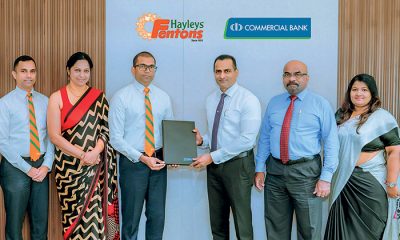
ComBank and Hayleys Mobility redefine sustainable mobility with flexible leasing solutions
-
 Business2 days ago
Autodoc 360 relocates to reinforce commitment to premium auto care
-
 Business6 days ago
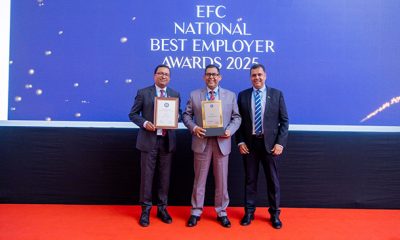
HNB recognized among Top 10 Best Employers of 2025 at the EFC National Best Employer Awards
-

 Business6 days ago
GREAT 2025–2030: Sri Lanka’s Green ambition meets a grid reality check