
News
Enhancing waste management in healthcare and agri sectors in Lanka

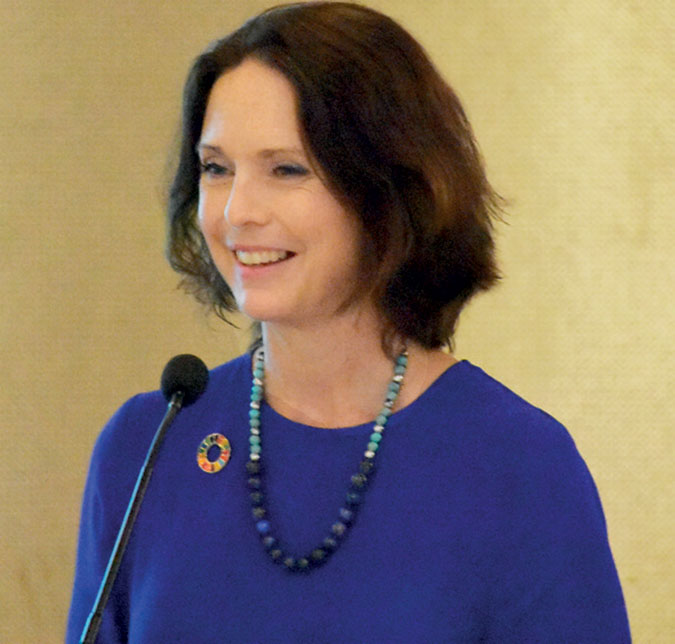
Validation Workshop on Integrated Management and Environmentally Sound Disposal of POPs Pesticides, Mercury and Waste
Having ratified the Stockholm Convention on Persistent Organic Pollutants in 2005, Sri Lanka has taken many positive steps including the preparation and updating of the National Implementation Policy (NIP) for the control of Persistent Organic Pollutants (POPs) and strengthening regulations on POP management. With the onset of COVID-19, there was an increase in the use of plastics in PPEs, while vaccination drives also increased the generation of healthcare waste. To cope with increased levels of healthcare waste, current trends are to burn waste which can generate Unintentionally Produced Persistent Organic Pollutants (U-POPs) which are hazardous carcinogenic substances.
To combat the issues arising as a result of hazardous waste, the Ministry of Environment together with the United Nations Development Programme (UNDP) in Sri Lanka with the support of the Global Environment Facility (GEF) is developing a project to improve the regulatory framework on chemical management, strengthen national capacities in agricultural chemicals management, and support the transformation of healthcare waste management systems specifically to enforce regulations and minimize or eliminate releases of POPs, mercury, and other chemicals of concern and phase-out the use of mercury-based products in the health sector and improve healthcare waste management systems.
Speaking on the challenges and way forward, Dr. Anil Jasinghe, Secretary, Ministry of Environment noted that, “The cross-cutting nature and the complexity of the issues faced by the key government institutions involved regarding chemical management has made it complicated to find a single solution that works for all. This project, implemented by UNDP, allows all key institutions to realise the importance of collectively coming together to create one framework that strengthens national capacities in agricultural chemical management and healthcare waste management systems in Sri Lanka.”
Sri Lanka is also a signatory to the Minamata Convention on Mercury, which stipulates that the manufacturing of mercury-based items, including medical equipment, must cease as of January 2021. Thus, replacing mercury-based products must be coordinated to avoid hazardous waste from contaminating municipal solid waste and affecting both human health and the environment.
Highlighting UNDP’s role in supporting waste management efforts in the health and agriculture sectors in Sri Lanka, Malin Herwig, Officer In Charge, UNDP in Sri Lanka emphasized that, “The improper management of healthcare and agricultural waste has adversely affected the health of individuals working in the healthcare and agriculture sectors, communities and the environment at large while jeopardizing food and nutrition, which is a timely concern for Sri Lanka. The project serves to improve the regulatory framework on chemical management, strengthen national capacities in agricultural chemicals management, and support the transformation of healthcare waste management systems”.
In line with this, a validation workshop was held on 15th September 2022 with over 70 participants to discuss and finalise key elements of the project with relevant stakeholders, and secure agreement and support for its implementation, to build a safe, clean and green Sri Lanka for all.




Approval of the Cabinet of Ministers has been granted at their meeting held on 19.05.2025 in order to introduce amendments to the Inland Revenue Act No. 24 of 2017 including the proposed tax revisions to enhance the tax structure paving way for state financial integrity based on revenue.
Accordingly, the revised draft bill has been prepared by the legal draftsman and clearance of the Attorney General has been received.
Therefore, the Cabinet of Ministers has granted approval for
the resolution furnished by the President in his capacity as the Minister of Finance, Policy Planning and Economic Development to publish the aforementioned draft bill in the government gazette notification and subsequently, forward the same to the Parliament for its concurrence.
The National Mineral Policy was prepared for the first time in the year 1999, and the aforementioned policy has been amended in 2023 to cover matters such as preparing an updated data system related to mineral resources, adding value to the export of minerals, encouraging mineral-related industrialists, extracting mineral resources and managing the environment sustainably, and resolving the issues related to the ownership of the land arising in extracting mineral resources.
The revised National Mineral Policy has been reupdated in line with the manifesto “A Sustainable Resource Utilization – Generation of the Highest Benefit” under the policy statement of the current government” A Thriving Nation – A Beautiful Life.”
Accordingly, the Cabinet of Ministers has approved the resolution presented by the Minister of Industries and
Entrepreneurship to implement the so-formulated “National Mineral Policy—2026.”

The Gampaha High Court has sentenced Twelve (12) individuals to death over the 2022 murder of former Polonnaruwa District Member of Parliament Amarakeerthi Athukorala and his security officer.

Heartbreak for Gurbaz and Afghanistan as South Africa win after double Super Over

Amendment of the Inland Revenue Act No. 24 of 2017

Cabinet nod for “National Mineral Policy” – 2026

Twelve sentenced to death by Gampaha High Court
Ten new buses with facilities for people with special needs

Ghosts of 2016 writ large as England, West Indies meet again

‘Dates have the highest sugar content to fight Coronavirus’

Sunday Island 27 December – Headlines

#SundayIsland 17th December – Headlines

Sunday Island – 28th March

Sunday Island Headlines – 21 March

Sunday Island – 21st February – Headlines
-

 Features4 days ago
My experience in turning around the Merchant Bank of Sri Lanka (MBSL) – Episode 3
-

 Business5 days ago
Zone24x7 enters 2026 with strong momentum, reinforcing its role as an enterprise AI and automation partner
-

 Business4 days ago
Remotely conducted Business Forum in Paris attracts reputed French companies
-

 Business4 days ago
Four runs, a thousand dreams: How a small-town school bowled its way into the record books
-
 Business4 days ago
ComBank and Hayleys Mobility redefine sustainable mobility with flexible leasing solutions
-
 Business5 days ago
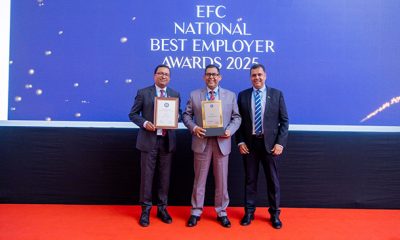
HNB recognized among Top 10 Best Employers of 2025 at the EFC National Best Employer Awards
-

 Editorial7 days ago
All’s not well that ends well?
-
 Business5 days ago
GREAT 2025–2030: Sri Lanka’s Green ambition meets a grid reality check