
News
Empowering Communities for Leopard Conservation: WNPS, LOLC, and Sirasa TV Unite to Protect Sri Lanka’s Iconic Predator


The Wildlife and Nature Protection Society (WNPS), in collaboration with LOLC and Sirasa TV, successfully conducted a series of awareness programs throughout November to spotlight the importance of conserving the Sri Lankan leopard. These programs, part of the “Save the Sri Lankan Leopard” documentary initiative under the WNPS LOLC Multi-Regional Leopard Research and Conservation Project, were designed to educate local communities and schools in key wildlife regions about the ecological and economic significance of leopards and the need for their protection,a WNPS news release said.
Held across three distinct regions, the programs aimed to address the threats faced by leopard populations, minimize negative human-leopard interactions, and highlight the pivotal role local communities play in preserving wildlife. The sessions combined educational presentations with interactive discussions, fostering a comprehensive understanding of leopard conservation.
The Department of Wildlife Conservation (DWC) field officers played an integral role in these sessions by providing insights into wildlife protection laws, conservation strategies, and actionable steps to prevent poaching and habitat destruction. Their on-the-ground expertise ensured participants could directly address concerns regarding leopard-related incidents and engage in meaningful conservation practices.
On November 8, the first sessions took place at Mount Vernon Tamil Vidyalayam and the Logie Estate, focusing on the ecological significance of leopards and how communities can help protect them. On November 22, events were conducted at Ranamuregama Kanishta Vidyalaya and the Handungamuwa village, emphasizing coexistence strategies, including improved livestock management to reduce human-leopard conflicts. Finally, on November 29th, programs at Panapola Kanishta Vidyalaya and the Hapugoda village highlighted the vital role of leopards in the wet zone’s ecosystems and the need for sustainable coexistence.
These programs targeted regions with reported leopard-related incidents, ensuring that the initiative addressed the specific challenges faced by local communities. By engaging schools and residents, the initiative aimed to foster a culture of conservation, reduce fear and misconceptions about leopards, and encourage responsible actions to protect both wildlife and habitats.
The WNPS LOLC Multi-Regional Leopard Research and Conservation Project, under which these programs were organized, is a flagship initiative aimed at studying leopard populations outside Sri Lanka’s protected areas and promoting human-leopard coexistence. The sessions were coordinated through the project’s regional centers in Kotagala, Sigiriya, and Kalawana by center coordinators S. Ranjith and R. Yuthahari (Kotagala), W.A.N. Heshani (Sigiriya), and Malitha Dissanayake (Kalawana).
This collaborative effort underscores the commitment of WNPS, LOLC, and Sirasa TV to ensuring the long-term survival of Sri Lanka’s leopards and fostering harmony between humans and wildlife.


The Ceylon Electricity Board Engineers’ Union (CEBEU) yesterday warned that uncertainty surrounding the ongoing restructuring of the Ceylon Electricity Board (CEB) had forced many employees to refrain from performing their regular duties, raising concerns about potential disruptions to electricity sector operations.
The engineers’ union said the current situation had arisen due to what it described as either deliberate actions or extreme negligence in implementing the restructuring process, which has created significant confusion among staff who previously served under the CEB.
According to the union, although the state power utility has been formally restructured and new companies established, a large majority of former CEB employees have yet to receive official appointment letters, confirming their positions in the newly formed entities.
“The reality is that the institution, previously known as the Ceylon Electricity Board, no longer exists in its earlier form, yet most employees, who served under it, have not been issued proper appointment letters, or related documentation, assigning them to the newly established companies,” the CEBEU said.
The union said that while some workers had been issued “assignation letters”, those documents merely indicate the institution to which an employee has been attached and do not clearly define employment conditions, responsibilities, authority, or reporting structures.
“As a result, employees currently lack the necessary legal framework confirming their employment status, their duties, the authority under which they operate, and who they are accountable to within the new institutions,” the CEBEU said.
The engineers’ union emphasised that the current crisis was not created by employees but was the direct result of, what it called, shortsighted and questionable actions taken by those responsible for implementing the reforms.
It also expressed concern that the relevant Minister, appointed through the National List, had failed to hold meaningful discussions with employees, despite having previously advocated strongly for workers’ rights.
The union said trade union action had been launched only after months of unsuccessful attempts to resolve the issues through verbal requests and written communication with the authorities.
“Despite repeated appeals made over several months, there has been no satisfactory response. Decisions appear to have been taken under the assumption that a government with a strong mandate can proceed without proper consultation,” the union said.
However, the CEBEU stressed that employees engaged in essential operations—including power generation, transmission, and distribution—continue to work in order to ensure electricity supply to the public.
“These staff members are continuing their duties under considerable risk to prevent major disruptions to the electricity supply,” the union noted.
Nevertheless, the union warned that the prevailing uncertainty could affect certain operational activities, and restoration work following breakdowns may take longer than usual.
The CEBEU appealed to the public to understand the situation and expressed regret for any inconvenience that may arise.
“We request the public to understand the situation and cooperate with us during this difficult period. We sincerely regret any inconvenience that may be caused,” the union added.
By Ifham Nizam
News
Remittances up compared to last year before outbreak of war, but the economic picture is not rosy


Sri Lanka Bureau of Foreign Employment (SLBFE) yesterday said that foreign remittances, during January and February this year, had been 32% higher than the corresponding period in the previous year.
According to a press release issued by the SLBFE, Sri Lanka received Rs 1,480.1 mn during January and February this year, whereas in 2025 the country received Rs1,121 mn during the corresponding period. During the first two months of this year, 47,819 Sri Lankans had left the country for employment abroad.
However, Prof. Priyanga Dunusinghe has warned that Sri Lanka could face a catastrophic situation due to a rapid and sharp drop in revenue caused by the escalating Gulf war. Fighting erupted on February 28 following a joint US-Israel attacks on Iran.
Appearing on Derana ‘Big Focus’ on Monday, the Professor in Economics in the Department of Economics, and Head – Department of Information Technology, University of Colombo, Dunusinghe said that that the drop in remittances from the Middle East, as well as exports, should be examined against the backdrop of runaway oil prices.
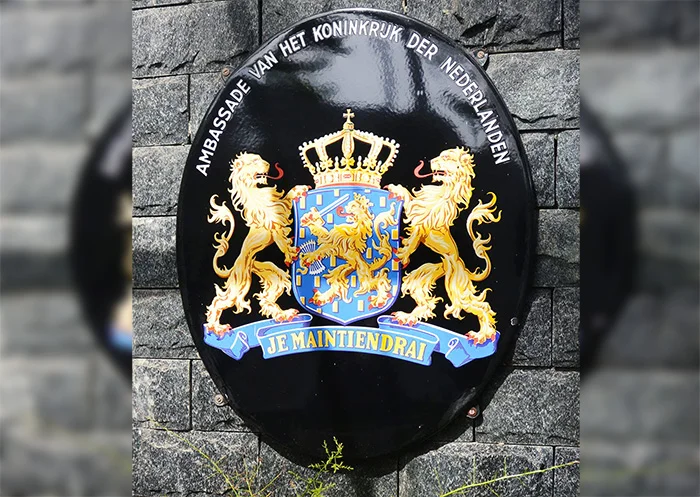
The Netherlands Embassy in Colombo has accused the Russian Embassy of trying to limit freedom of expression and right to know in Sri Lanka. The Embassy yesterday issued the following statement: “The Embassy of the Kingdom of the Netherlands’ attention has been drawn to the attempts by the Russian Embassy in Colombo to deny the people of Sri Lanka’s right to information and freedom of expression by demanding photos related to “Russia’s war of aggression” on Ukraine be removed from the World Press Photo exhibition, currently on display in Sri Lanka.
The 2025 edition of the World Press Photo Exhibition was officially opened by Dr Kaushalya Ariyaratne, Deputy Minister of Mass Media, and Wiebe de Boer, Ambassador of the Kingdom of the Netherlands on February 27, 2026, at One Galle Face. The same exhibition will be held in Kandy from 13 to 17 March 2026 at Sahas Uyana.
The Ambassador of the Russian Federation to Sri Lanka visited the exhibition during the weekend of March 7 and 8 and demanded the photographs, related to “Russia’s war of aggression on Ukraine,” be removed from the exhibition, and threatened to stage a protest if the organisers failed to do so.
The exhibition is jointly organised by the Netherlands Embassy, along with the Sri Lanka Press Institute, and the World Press Photo Foundation in the Netherlands.
Continuing the same demand, the Russian Embassy has now approached the Sri Lankan Ministry of Foreign Affairs to remove the said photos from the exhibition in Kandy. The same exhibition is currently underway in the USA and Germany and is showing all around the world in dozens of countries with freedom of expression.
The photos, including the photos that the Russian Embassy in Colombo wanted to hide from the Sri Lankan citizens, are also available online on the World Press Photo website for free for anyone to access them.
The Embassy of the Kingdom of the Netherlands deplores the attempts by any party to compromise people’s right to know and right to freedom of expression. It also amounts to a violation of the host country’s sovereignty if an Embassy attempts to decide what and which content its citizens should see and not. While we, as the Embassy of the Kingdom of the Netherlands, assure the Sri Lankan public that as our commitment to protect press freedom and respect for editorial integrity, we will continue the exhibition in Kandy with its full content without censoring any photos of the exhibition.
The exhibition is open to the public, free of charge, from 10.30am on Friday, March 13, till March 17, at Sahas Uyana in Kandy.”

Australia grants asylum to 2 more members of Iranian women’s football team

Showers are likely in the Northern, Eastern, Sabaragamuwa, Southern and Uva provinces and in Kandy and Nuwara-Eliya districts

CEBEU warns of operational disruptions amid uncertainty over CEB restructuring

Remittances up compared to last year before outbreak of war, but the economic picture is not rosy

The Netherlands alleges Russian Embassy interfering in World Press Photo Exhibition

Switzerland appreciates GoSL’s stand on ME situation

‘Dates have the highest sugar content to fight Coronavirus’

Sunday Island 27 December – Headlines

#SundayIsland 17th December – Headlines

Sunday Island – 28th March

Sunday Island Headlines – 21 March

Sunday Island – 21st February – Headlines
-

 News5 days ago
University of Wolverhampton confirms Ranil was officially invited
-

 News6 days ago
Legal experts decry move to demolish STC dining hall
-

 News5 days ago
Female lawyer given 12 years RI for preparing forged deeds for Borella land
-

 News4 days ago
Peradeniya Uni issues alert over leopards in its premises
-
 News2 days ago
Repatriation of Iranian naval personnel Sri Lanka’s call: Washington
-

 Business7 days ago
Cabinet nod for the removal of Cess tax imposed on imported good
-
 News5 days ago
Library crisis hits Pera university
-

 News4 days ago
Wife raises alarm over Sallay’s detention under PTA