
Features
Egg white scene …


 Hi! Great to be back after my Christmas break.
Thought of starting this week with egg white.
Yes, eggs are brimming with nutrients beneficial for your overall health and wellness, but did you know that eggs, especially the whites, are excellent for your complexion?
OK, if you have no idea about how to use egg whites for your face, read on.
Egg White, Lemon, Honey:
Separate the yolk from the egg white and add about a teaspoon of freshly squeezed lemon juice and about one and a half teaspoons of organic honey. Whisk all the ingredients together until they are mixed well.
Apply this mixture to your face and allow it to rest for about 15 minutes before cleansing your face with a gentle face wash.
Don’t forget to apply your favourite moisturiser, after using this face mask, to help seal in all the goodness.
Egg White, Avocado:
In a clean mixing bowl, start by mashing the avocado, until it turns into a soft, lump-free paste, and then add the whites of one egg, a teaspoon of yoghurt and mix everything together until it looks like a creamy paste.
Apply this mixture all over your face and neck area, and leave it on for about 20 to 30 minutes before washing it off with cold water and a gentle face wash.
Egg White, Cucumber, Yoghurt:
In a bowl, add one egg white, one teaspoon each of yoghurt, fresh cucumber juice and organic honey. Mix all the ingredients together until it forms a thick paste.
Apply this paste all over your face and neck area and leave it on for at least 20 minutes and then gently rinse off this face mask with lukewarm water and immediately follow it up with a gentle and nourishing moisturiser.
Egg White, Aloe Vera, Castor Oil:
To the egg white, add about a teaspoon each of aloe vera gel and castor oil and then mix all the ingredients together and apply it all over your face and neck area in a thin, even layer.
Leave it on for about 20 minutes and wash it off with a gentle face wash and some cold water. Follow it up with your favourite moisturiser.


 ‘Adapt, shrink or die’ – thus runs the warning issued by the Trump administration to UN humanitarian agencies with brute insensitivity in the wake of its recent decision to drastically reduce to $2bn its humanitarian aid to the UN system. This is a substantial climb down from the $17bn the US usually provided to the UN for its humanitarian operations.
Considering that the US has hitherto been the UN’s biggest aid provider, it need hardly be said that the US decision would pose a daunting challenge to the UN’s humanitarian operations around the world. This would indeed mean that, among other things, people living in poverty and stifling material hardships, in particularly the Southern hemisphere, could dramatically increase. Coming on top of the US decision to bring to an end USAID operations, the poor of the world could be said to have been left to their devices as a consequence of these morally insensitive policy rethinks of the Trump administration.
Earlier, the UN had warned that it would be compelled to reduce its aid programs in the face of ‘the deepest funding cuts ever.’ In fact the UN is on record as requesting the world for $23bn for its 2026 aid operations.
If this UN appeal happens to go unheeded, the possibilities are that the UN would not be in a position to uphold the status it has hitherto held as the world’s foremost humanitarian aid provider. It would not be incorrect to state that a substantial part of the rationale for the UN’s existence could come in for questioning if its humanitarian identity is thus eroded.
Inherent in these developments is a challenge for those sections of the international community that wish to stand up and be counted as humanists and the ‘Conscience of the World.’ A responsibility is cast on them to not only keep the UN system going but to also ensure its increased efficiency as a humanitarian aid provider to particularly the poorest of the poor.
It is unfortunate that the US is increasingly opting for a position of international isolation. Such a policy position was adopted by it in the decades leading to World War Two and the consequences for the world as a result for this policy posture were most disquieting. For instance, it opened the door to the flourishing of dictatorial regimes in the West, such as that led by Adolph Hitler in Germany, which nearly paved the way for the subjugation of a good part of Europe by the Nazis.
If the US had not intervened militarily in the war on the side of the Allies, the West would have faced the distressing prospect of coming under the sway of the Nazis and as a result earned indefinite political and military repression. By entering World War Two the US helped to ward off these bleak outcomes and indeed helped the major democracies of Western Europe to hold their own and thrive against fascism and dictatorial rule.
Republican administrations in the US in particular have not proved the greatest defenders of democratic rule the world over, but by helping to keep the international power balance in favour of democracy and fundamental human rights they could keep under a tight leash fascism and linked anti-democratic forces even in contemporary times. Russia’s invasion and continued occupation of parts of Ukraine reminds us starkly that the democracy versus fascism battle is far from over.
Right now, the US needs to remain on the side of the rest of the West very firmly, lest fascism enjoys another unfettered lease of life through the absence of countervailing and substantial military and political power.
However, by reducing its financial support for the UN and backing away from sustaining its humanitarian programs the world over the US could be laying the ground work for an aggravation of poverty in the South in particular and its accompaniments, such as, political repression, runaway social discontent and anarchy.
What should not go unnoticed by the US is the fact that peace and social stability in the South and the flourishing of the same conditions in the global North are symbiotically linked, although not so apparent at first blush. For instance, if illegal migration from the South to the US is a major problem for the US today, it is because poor countries are not receiving development assistance from the UN system to the required degree. Such deprivation on the part of the South leads to aggravating social discontent in the latter and consequences such as illegal migratory movements from South to North.
Accordingly, it will be in the North’s best interests to ensure that the South is not deprived of sustained development assistance since the latter is an essential condition for social contentment and stable governance, which factors in turn would guard against the emergence of phenomena such as illegal migration.
Meanwhile, democratic sections of the rest of the world in particular need to consider it a matter of conscience to ensure the sustenance and flourishing of the UN system. To be sure, the UN system is considerably flawed but at present it could be called the most equitable and fair among international development organizations and the most far-flung one. Without it world poverty would have proved unmanageable along with the ills that come along with it.
Dehumanizing poverty is an indictment on humanity. It stands to reason that the world community should rally round the UN and ensure its survival lest the abomination which is poverty flourishes. In this undertaking the world needs to stand united. Ambiguities on this score could be self-defeating for the world community.
For example, all groupings of countries that could demonstrate economic muscle need to figure prominently in this initiative. One such grouping is BRICS. Inasmuch as the US and the West should shrug aside Realpolitik considerations in this enterprise, the same goes for organizations such as BRICS.
The arrival at the above international consensus would be greatly facilitated by stepped up dialogue among states on the continued importance of the UN system. Fresh efforts to speed-up UN reform would prove major catalysts in bringing about these positive changes as well. Also requiring to be shunned is the blind pursuit of narrow national interests.

 Superlatives galore were used, especially on social media, to highlight R&B singer Ne-Yo’s trip to Sri Lanka: Global superstar Ne-Yo to perform live in Colombo this December; Ne-Yo concert puts Sri Lanka back on the global entertainment map; A global music sensation is coming to Sri Lanka … and there were lots more!
At an official press conference, held at a five-star venue, in Colombo, it was indicated that the gathering marked a defining moment for Sri Lanka’s entertainment industry as international R&B powerhouse and three-time Grammy Award winner Ne-Yo prepares to take the stage in Colombo this December.
What’s more, the occasion was graced by the presence of Sunil Kumara Gamage, Minister of Sports & Youth Affairs of Sri Lanka, and Professor Ruwan Ranasinghe, Deputy Minister of Tourism, alongside distinguished dignitaries, sponsors, and members of the media.
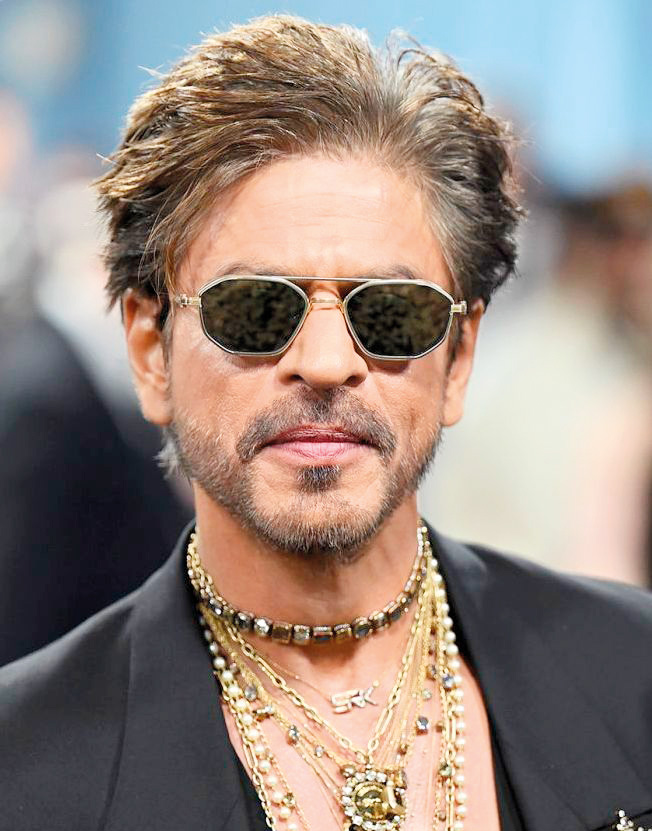
Shah Rukh Khan: Disappointed his fans in Sri Lanka
According to reports, the concert had received the official endorsement of the Sri Lanka Tourism Promotion Bureau, recognising it as a flagship initiative in developing the country’s concert economy by attracting fans, and media, from all over South Asia.

Nick Carter: His concert, too, was cancelled due to “Unforeseen circumstances
However, I had that strange feeling that this concert would not become a reality, keeping in mind what happened to Nick Carter’s Colombo concert – cancelled at the very last moment.
Carter issued a video message announcing he had to return to the USA due to “unforeseen circumstances” and a “family emergency”.
Though “unforeseen circumstances” was the official reason provided by Carter and the local organisers, there was speculation that low ticket sales may also have been a factor in the cancellation.
Well, “Unforeseen Circumstances” has cropped up again!
In a brief statement, via social media, the organisers of the Ne-Yo concert said the decision was taken due to “unforeseen circumstances and factors beyond their control.”
Ne-Yo, too, subsequently made an announcement, citing “Unforeseen circumstances.”
The public has a right to know what these “unforeseen circumstances” are, and who is to be blamed – the organisers or Ne-Yo!
Ne-Yo’s management certainly need to come out with the truth.
However, those who are aware of some of the happenings in the setup here put it down to poor ticket sales, mentioning that the tickets for the concert, and a meet-and-greet event, were exorbitantly high, considering that Ne-Yo is not a current mega star.
We also had a cancellation coming our way from Shah Rukh Khan, who was scheduled to visit Sri Lanka for the City of Dreams resort launch, and then this was received: “Unfortunately due to unforeseen personal reasons beyond his control, Mr. Khan is no longer able to attend.”
Referring to this kind of mess up, a leading showbiz personality said that it will only make people reluctant to buy their tickets, online.
“Tickets will go mostly at the gate and it will be very bad for the industry,” he added.


(This is the 100th column of the Out of the Box series, which began on 6 September, 2023, at the invitation of this newspaper – Ed.)
A new year is an appropriate moment to pause, not for celebration, but to interrogate what our politics, policies, and public institutions have chosen to remember, forget, and repeat. We celebrate the dawn of another brand-new year. But whose calendar defines this moment?
We hang calendars on our walls and carry them in our phones, trusting them to keep our lives in order, meetings, exams, weddings, tax deadlines, pilgrimages. Yet calendars are anything but neutral. They are among humanity’s oldest instruments of power: tools that turn celestial rhythms into social rules and convert culture into governance. In Sri Lanka, where multiple traditions of time coexist, the calendar is not just a convenience, it is a contested terrain of identity, authority, and fairness.
Time is never just time
Every calendar expresses a political philosophy. Solar systems prioritise agricultural predictability and administrative stability; lunar systems preserve religious ritual even when seasons drift; lunisolar systems stitch both together, with intercalary months added to keep festivals in season while respecting the moon’s phases. Ancient India and China perfected this balancing act, proving that precision and meaning can coexist. Sri Lanka’s own rhythms, Vesak and Poson, Avurudu in April, Ramadan, Deepavali, sit inside this wider tradition.
What looks “technical” is actually social. A calendar decides when courts sit, when budgets reset, when harvests are planned, when children sit exams, when debts are due, and when communities celebrate. It says who gets to define “normal time,” and whose rhythms must adapt.
The colonial clock still ticks
Like many postcolonial societies, Sri Lanka inherited the Gregorian calendar as the default language of administration. January 1 is our “New Year” for financial statements, annual reports, contracts, fiscal plans, school terms, and parliamentary sittings, an imported date shaped by European liturgical cycles and temperate seasons rather than our monsoons or zodiac transitions. The lived heartbeat of the island, however, is Avurudu: tied to the sun’s movement into Mesha Rāshi, agricultural renewal, and shared rituals of restraint and generosity. The result is a quiet tension: the calendar of governance versus the calendar of lived culture.
This is not mere inconvenience; it is a subtle form of epistemic dominance. The administrative clock frames Gregorian time as “real,” while Sinhala, Tamil, and Islamic calendars are relegated to “cultural” exceptions. That framing shapes everything, from office leave norms to the pace at which development programmes expect communities to “comply”.
When calendars enforce authority
History reminds us that calendar reforms are rarely innocent. Julius Caesar’s reshaping of Rome’s calendar consolidated imperial power. Pope Gregory XIII’s reform aligned Christian ritual with solar accuracy while entrenching ecclesiastical authority. When Britain finally adopted the Gregorian system in 1752, the change erased 11 days and was imposed across its empire; colonial assemblies had little or no say. In that moment, time itself became a technology for governing distant subjects.
Sri Lanka knows this logic. The administrative layers built under colonial rule taught us to treat Gregorian dates as “official” and indigenous rhythms as “traditional.” Our contemporary fiscal deadlines, debt restructurings, even election cycles, now march to that imported drumbeat, often without asking how this timing sits with the island’s ecological and cultural cycles.
Development, deadlines and temporal violence
Modern governance is obsessed with deadlines: quarters, annual budgets, five-year plans, review missions. The assumption is that time is linear, uniform, and compressible. But a farmer in Anuradhapura and a rideshare driver in Colombo do not live in the same temporal reality. Monsoons, harvests, pilgrimage seasons, fasting cycles, school term transitions, these shape when people can comply with policy, pay taxes, attend trainings, or repay loans. When programmes ignore these rhythms, failure is framed as “noncompliance,” when in fact the calendar itself has misread society. This mismatch is a form of temporal violence: harm produced not by bad intentions, but by insensitive timing.
Consider microcredit repayment windows that peak during lean agricultural months, or school examinations scheduled without regard to Avurudu obligations. Disaster relief often runs on the donor’s quarterly clock rather than the community’s recovery pace. In each case, governance time disciplines lived time, and the least powerful bend the most.
Religious time vs administrative time
 Sri Lanka’s plural religious landscape intensifies the calendar question. Buddhism, Hinduism, Islam, and Christianity relate to time differently: lunar cycles, solar markers, sacred anniversaries. The state acknowledges these mainly as public holidays, rather than integrating their deeper temporal logic into planning. Vesak is a day off, not a rhythm of reflection and restraint; Ramadan is accommodated as schedule disruption, not as a month that reorganises energy, sleep, and work patterns; Avurudu is celebrated culturally but remains administratively marginal. The hidden assumption is that “real work” happens on the Gregorian clock; culture is decorative. That assumption deserves challenge.
The wisdom in complexity
Precolonial South and East Asian calendars were not confused compromises. They were sophisticated integrations of astronomy, agriculture, and ritual life, adding intercalary months precisely to keep festivals aligned with the seasons, and using lunar mansions (nakshatra) to mark auspicious thresholds. This plural logic admits that societies live on multiple cycles at once. Administrative convenience won with the Gregorian system, but at a cost: months that no longer relate to the moon (even though “month” comes from “moon”), and a yearstart with no intrinsic astronomical significance for our context.
Towards temporal pluralism
The solution is not to abandon the Gregorian calendar. Global coordination, trade, aviation, science, requires shared reference points. But ‘shared’ does not mean uncritical. Sri Lanka can lead by modelling temporal pluralism: a policy posture that recognises different ways of organising time as legitimate, and integrates them thoughtfully into governance.
Why timing is justice
In an age of economic adjustment and climate volatility, time becomes a question of justice: Whose rhythms does the state respect? Whose deadlines dominate? Whose festivals shape planning, and whose are treated as interruptions? The more governance assumes a single, imported tempo, the wider the gap between the citizens and the state. Conversely, when policy listens to local calendars, legitimacy grows, as does efficacy. People comply more when the schedule makes sense in their lives.
Reclaiming time without romanticism
This is not nostalgia. It is a pragmatic recognition that societies live on multiple cycles: ecological, economic, ritual, familial. Good policy stitches these cycles into a workable fabric. Poor policy flattens them into a grid and then blames citizens for falling through the squares.
Sri Lanka’s temporal landscape, Avurudu’s thresholds, lunar fasts, monsoon pulses, exam seasons, budget cycles, is rich, not chaotic. The task before us is translation: making administrative time converse respectfully with cultural time. We don’t need to slow down; we need to sync differently.
The last word
When British subjects woke to find 11 days erased in 1752, they learned that time could be rearranged by distant power. Our lesson, centuries later, is the opposite: time can be rearranged by near power, by a state that chooses to listen.
Calendars shape memory, expectation, discipline, and hope. If Sri Lanka can reimagine the governance of time, without abandoning global coordination, we might recover something profound: a calendar that measures not just hours but meaning. That would be a reform worthy of our island’s wisdom.
(The writer, a senior Chartered Accountant and professional banker, is Professor at SLIIT, Malabe. The views and opinions expressed in this article are personal.)
-
 News6 days ago
Street vendors banned from Kandy City
-

 Sports3 days ago
Gurusinha’s Boxing Day hundred celebrated in Melbourne
-

 News6 days ago
Lankan aircrew fly daring UN Medevac in hostile conditions in Africa
-
 News1 day ago
Leading the Nation’s Connectivity Recovery Amid Unprecedented Challenges
-

 Sports4 days ago
Time to close the Dickwella chapter
-

 Features6 days ago
Rethinking post-disaster urban planning: Lessons from Peradeniya
-

 Features2 days ago
It’s all over for Maxi Rozairo
-

 Opinion6 days ago
Are we reading the sky wrong?