
News
Easter carnage: Unmasking real culprits of will begin as prosecutions get underway – Johnston

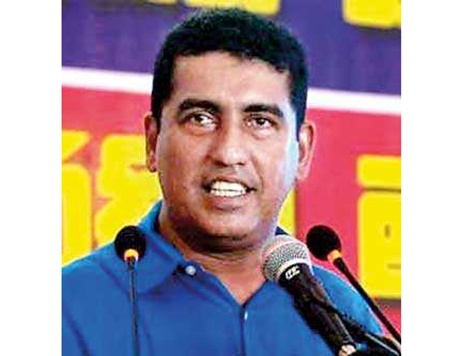
The unmasking of the real culprits responsible for the Easter Sunday carnage would happen as the judicial process gets underway, Chief Government Whip Highways Minister Johnston Fernando said yesterday (7).
Addressing the media at his Ministry, Minister Fernando said that the judicial process would help identify the persons who had aided and abetted the terror attacks and also those who had shirked their duties.
“The Presidential Commission report has made recommendations. Once that process commences, the culpability of those who committed the crimes, as well as those who failed to prevent the terror strikes, will be known. Some Opposition politicians seem to think they can get away by picking holes in the Commission report. They are mistaken.”
The Minister said that the main task of the Cabinet sub-committee headed by former Speaker and Minister Chamal Rajapaksa was to study the findings and recommendations of the PCoI and to advice the government on the next course of action. “We studied the reports on the Easter Sunday attacks at length and have identified 78 recommendations. We thereafter submitted a report to the President outlining how those recommendations are to be implemented and which agencies are implementing them.
“When the PCoI completed its investigations the Opposition members demanded its report.
When it was released, the Opposition wanted it tabled in Parliament. Since then, they have been berating the Commission. These vociferous leaders now in the Opposition, were not seen when the country was in near anarchy soon after the terror attacks on Easter Sunday. It was Malcolm Cardinal Ranjith who came forward and appealed to the people against further violence and prevented another bloodbath in this country. The nation must be thankful to him for his brave action on that day. I do not think that they could just escape from their wrongdoing by changing their name from the UNP to SJB and shifting from the elephant symbol to the telephone symbol. They placed the country’s national security in jeopardy by making structural changes in the police to form special units and divisions such as the FCID to suppress their political rivals. They imprisoned intelligence operatives. There were five secretaries to the Ministry of Defence within a period of four years.
“The yahapalana government could investigate the April 21 terror attacks. They too appointed committees including a parliamentary select committee. What were their results? Instead of finding those responsible, that PSC brought before it the intelligence officials and made public information pertaining to national security further worsening the situation. Those now accusing the PCoI of failing to identify the masterminds of the attacks were in that PSC then. Why couldn’t they make such identifications? Did the yahapalana regime implement at least a single recommendation made by that PSC? Soon after receipt of this PCoI report the President presented it to the Cabinet and then to Parliament. A Cabinet sub-committee was appointed to make further suggestions on implementation of the PCoI recommendations. We have completed those tasks and now all is set for the judicial process which will unmask many wrongdoers and offenders responsible for the Easter Sunday carnage.”

Latest News
New circular issued to support disaster-affected Micro, Small and Self-Employed Businesses


A new circular has been issued by the Ministry of Finance, Planning and Economic Development to provide relief to micro, small and self-employed businesses affected by the emergency situation caused by Cyclone Ditwah. The circular has been issued in line with Circular No. 08/2025, which was introduced to restore disrupted livelihoods following the disaster.
The Government programme to empower communities affected by the disaster was introduced through Budget Circular No. 08/2025 dated December 5, 2025. Expanding this relief framework further and ensuring more effective and efficient delivery of assistance, additional circulars No. 08/2025(i) dated December 20, 2025 and No. 08/2025(iii) dated January 22, 2026 have been issued.
The social empowerment programme under the newly issued circular is structured as follows.
Assistance for affected individual, small and micro businesses
A one-time grant to restore businesses damaged by the disaster to a condition suitable for reopening.
LKR 200,000 for individual, small and micro-businesses registered with the Ministry of Industry.
LKR 200,000 for individual, small and micro-businesses registered with the Divisional Secretariat as a business entity.
LKR 50,000 for unregistered home-based businesses operated from a permanent structure.
LKR 50,000 per unit for unregistered production industries, including greenhouses.
LKR 25,000 for temporary business setups, including mobile and street hawking.
A grant will be provided to owners of the commercial buildings affected by the disaster to restore their business premises to operational condition.
A grant of Rs. 500,000/- will be provided to each business building owner who voluntarily opts to receive assistance without a damage assessment.
A grant of up to Rs. 5,000,000/- will be provided to each business building owner who opts to receive assistance after a damage assessment, based on the assessed value of the building.
In addition to the above grants, the following loan facilities have also been provided.
In addition to these grants, the Treasury has introduced a new credit scheme to provide loans for business owners whose enterprises were affected by the disaster, enabling them to restart their operations and meet essential requirements.
Accordingly:
Facilities have been provided for affected businesses to obtain loans ranging from Rs. 250,000 to Rs. 25,000,000 through the banking system at an interest rate of 3%, with a 6-month grace period and repayment over 3 years to restart their operations.
As part of the investment loans for business reconstruction, entrepreneurs whose businesses were damaged can access bank loans of up to Rs. 25 million at an interest rate of 5%, with a 12-month grace period and repayment over 10 years.
Latest News
Food safety practices should not be confined to the school curriculum alone, but must become an integral part of the attitude and daily behavioral patterns of the child -PM
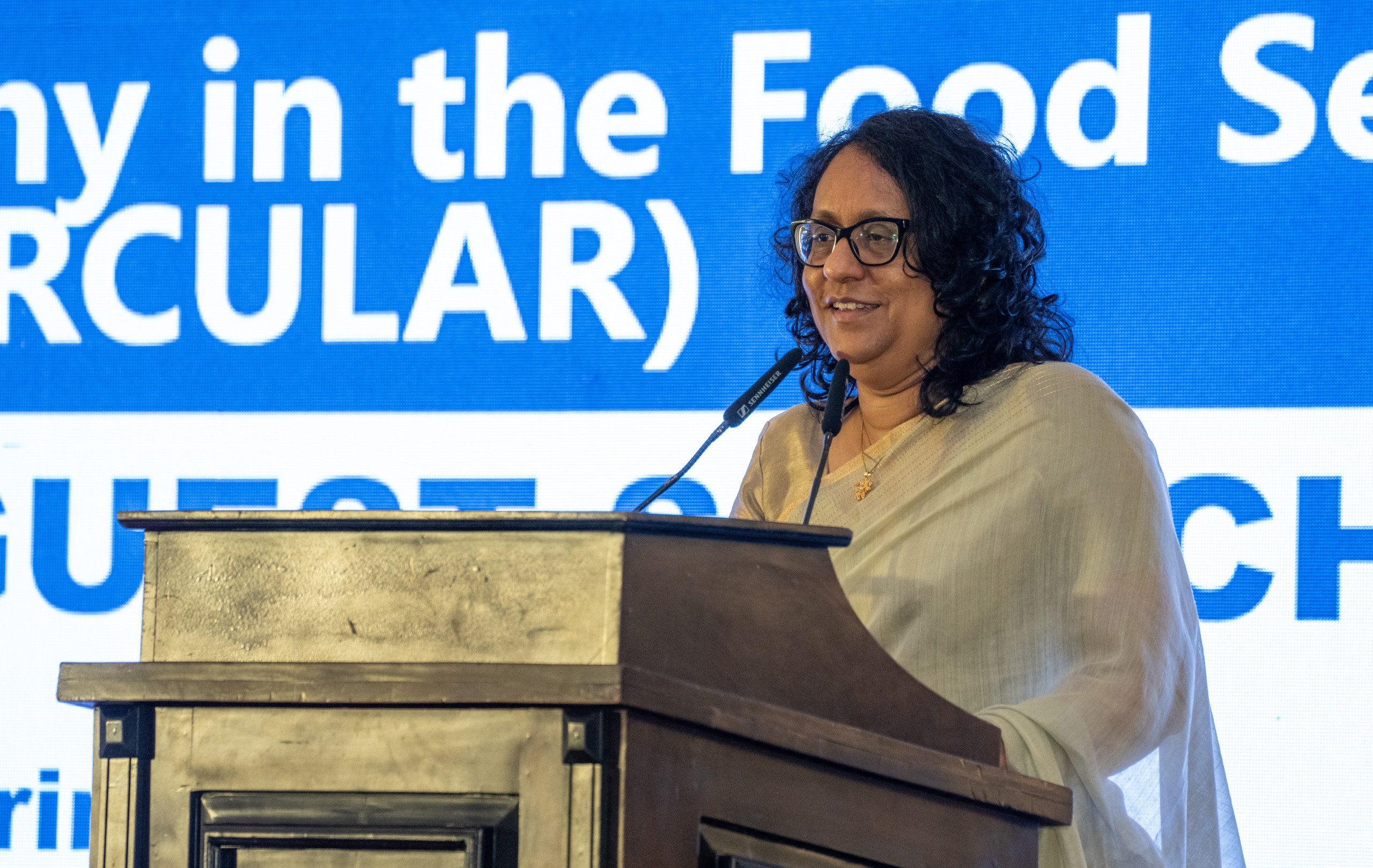
Prime Minister Dr. Harini Amarasuriya stated that food safety practices should not be confined merely to the school curriculum, but should be nurtured as an integral part of a child’s attitudes and behavioral patterns.
The Prime Minister made these remarks today (28) while addressing the National Workshop on Education for Building and Strengthening a Domestic Circular Economy, held at the Galle Face Hotel, Colombo, under the Circular Economy in the Food Sector Project (2024–2027).
Implemented with financial support from the European Union, under the Global Gateway programme in collaboration with the Food and Agriculture Organization of the United Nations (FAO), the workshop aimed to identify challenges and opportunities in integrating circular economy concepts into school education; to develop practical action plans through policymakers, youth and skills development sectors, and formal education stakeholders; and to establish a educational foundation to promote sustainable circular economy practices in the food sector of Sri Lanka by 2027.
The Prime Minister stated:
“Education is not merely about passing examinations and securing employment. True education fosters a sense of responsibility and connection towards society and the environment. At present, what is most important is the concept of the circular economy, which promotes the repeated and efficient use of resources.
This concept is not unfamiliar to our ancestors. I am reminded of my grandmother, who demonstrated remarkable skill in minimizing food waste. From what we discard today such as passion fruit peels, she prepared delicious jams and chutneys. Even the metal lids of milk bottles were not thrown away. Instead, she transformed them into creative household decorations. ’Nothing should be wasted’ was a core philosophy of their way of life.
However, today, women deal with intense time pressures. Balancing employment and childcare responsibilities, food waste such as vegetables or cooked meals left unused in refrigerators has become increasingly common due to time restrictions. This should not be seen as the sole responsibility of women; rather, household responsibilities and labour must be shared collectively within the family”.
The Prime Minister further emphasized that practices such as taking only the required portion of food, cleaning one’s own plate, and developing respect for conserving resources should not remain theoretical lessons, but should be embraced as everyday life practices. She also reaffirmed that the Ministry of Education would extend its full support towards achieving this goal.
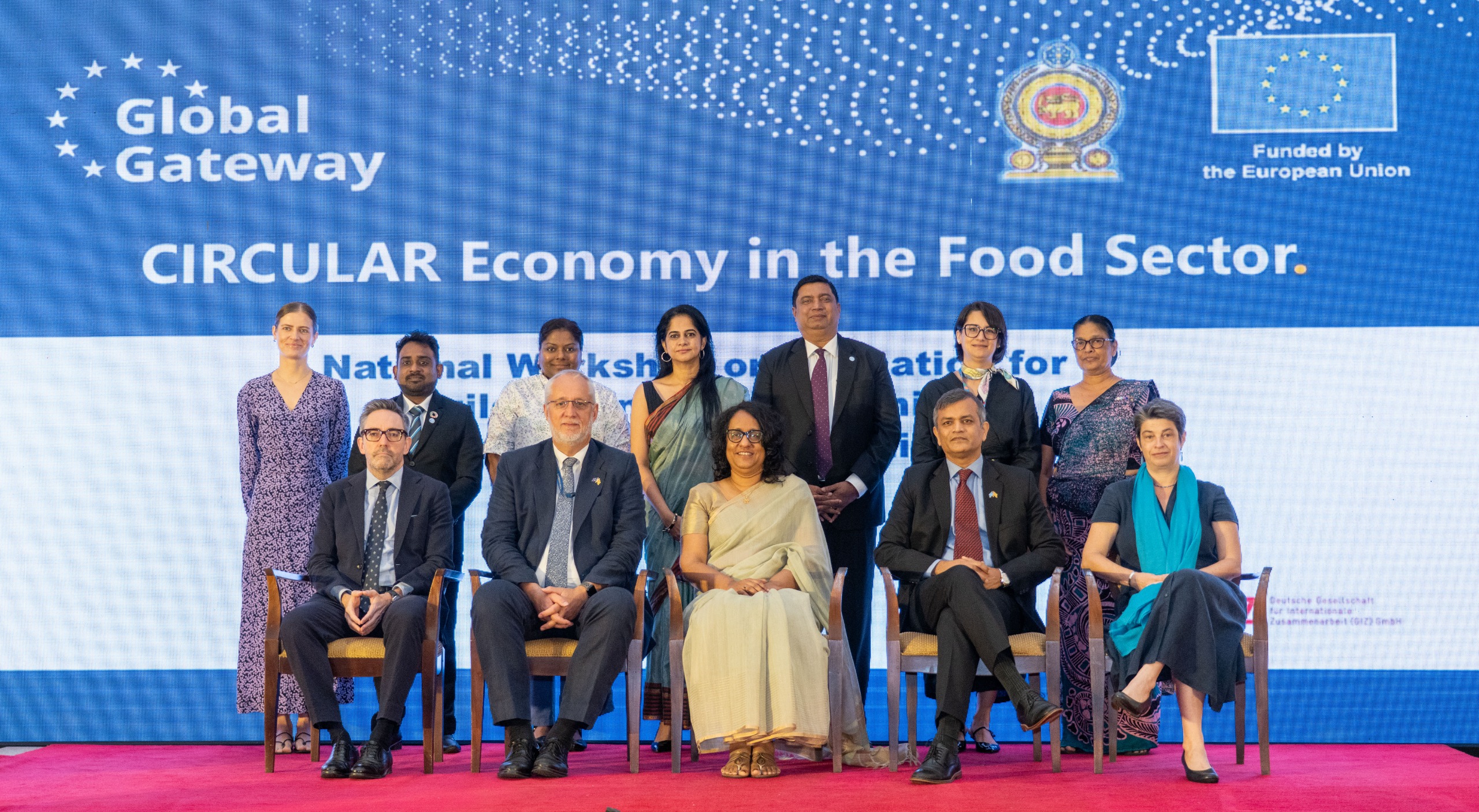
The event was attended by Carmen Moreno, Ambassador of the European Union to Sri Lanka and the Maldives; Dr. Johann Hesse, Head of Cooperation of the European Union; FAO Representative Vimlendra Sharan; along with representatives from the National Institute of Education (NIE), and a number of government and non-governmental organizations.
[Prime Minister’s Media Division]
Romania, a country that has maintained diplomatic relationship with Sri Lanka for several decades in various fields, has become an increasingly popular destination among Sri Lankan skilled and semi-skilled Labour categories, especially in the fields of construction, manufacturing, hospitality, and services sectors.
At present, the recruitment of Sri Lankan workers to Romania is carried out by licensed private employment agencies under the
supervision of the Sri Lanka Foreign Employment Bureau. However, since both parties have recognized the need of establishing a more organized and sustainable recruitment method due to increasing demand, the Cabinet of Ministers has approved the proposal presented by the Minister of Foreign Affairs, Foreign Employment, and Tourism to enter into a Memorandum of Understanding between the Government of the Democratic Socialist Republic of Sri Lanka and the Government of Romania regarding cooperation in the field of the labour sector with the following objectives.
• Establishment of proper mechanism for recruitment and management of workers.
• Promotion of ethical and transparent recruitment practices.
• Protection of rights and welfare of the migrant workers.
• Facilitation of regular discussions between the formal and relevant authorities ofboth countries.
• Improvement of technical cooperation, skills recognition, and capacity building in the labour sector.

South Korea’s former first lady sentenced to jail term in bribery case

Plane crash kills prominent Indian politician Ajit Pawar

New circular issued to support disaster-affected Micro, Small and Self-Employed Businesses

Food safety practices should not be confined to the school curriculum alone, but must become an integral part of the attitude and daily behavioral patterns of the child -PM

Vintage Markram, clinical Linde headline South Africa’s comfortable win

Cabinet nod for MOU between Sri Lanka and Romania on the cooperation in the Labour Field

‘Dates have the highest sugar content to fight Coronavirus’

Sunday Island 27 December – Headlines

#SundayIsland 17th December – Headlines

Sunday Island – 28th March

Sunday Island Headlines – 21 March

Sunday Island – 21st February – Headlines
-
 Business3 days ago
ComBank, UnionPay launch SplendorPlus Card for travelers to China
-
 Business4 days ago
ComBank advances ForwardTogether agenda with event on sustainable business transformation
-

 Opinion7 days ago
Remembering Cedric, who helped neutralise LTTE terrorism
-
 Business7 days ago
CORALL Conservation Trust Fund – a historic first for SL
-
 Opinion4 days ago
Conference “Microfinance and Credit Regulatory Authority Bill: Neither Here, Nor There”
-

 Opinion6 days ago
A puppet show?
-

 Opinion3 days ago
Luck knocks at your door every day
-
 Features6 days ago
‘Building Blocks’ of early childhood education: Some reflections