
Opinion
Downhill after 2009 victory


By Prof. Rajiva Wijesinha
Though obviously the current mess in the country is exceptionally bad, the rot has been going on for a very long time. This was brought home to me vividly when I had home for dinner an African friend who had served in Geneva in 2009 and been a solid supporter when we were under attack by several Western countries. He said that had seemed the highest point of Sri Lankan diplomacy whereas now he saw us lower than we had ever been.
What went wrong?
I have often observed that the rot began almost immediately when Mahinda Rajapaksa sacked Dayan and replaced him with someone who totally ignored the coalition he had built to defend us. But I have not closely explored the reasons for that dismissal in that while it was obvious Mahinda was being pressured by several of those he relied on, more foolishly than he did on Dayan given the internationalisation that had taken place, the exact responsibility of those concerned seemed beyond precise understanding.
Dayan himself was convinced that Gota was the moving force behind the dismissal. He felt by then that Gota was a disaster, a feeling he has not swerved from since then, whereas I was not convinced. It seemed sad to me that whereas in 2007 we had both thought Gota by far the most able of the brothers, and had in fact discussed the possibility of Basil positioning himself instead as the successor, two years later Dayan viewed both of them as equally incapable of statesmanship.
Ironically, the diehard nationalists blamed Dayan for what they claimed was dragooning Mahinda into indulgence towards the Indians whereas it was in fact both Gota and Basil who along with Lalith Weeratunge signed an agreement with India before the final victory in the war. It was totally shameful that none of them thereafter made it clear that Dayan was not responsible for this; nor was he responsible for the communique Mahinda issued together with Ban ki Moon just before the special session in Geneva.
Indeed, only Dayan and I registered that the commitment to address concerns about the war that Mahinda made could lead to problems whereas Prasad Kariyawasam, who managed thereafter to win favour from all regimes, assured me that it was not the case. Dayan was instructed to use that communique which contributed to the immense victory Sri Lanka achieved in Geneva. Unfortunately, neither Dayan nor I ever thought that Mahinda would welsh on that agreement, setting up a Commission only after Ban ki Moon in despair had set up his own, and then failing to fulfil its recommendations. This was despite C R de Silva having presented them in a way that would have enabled us to get rid of the sword of Damocles that has hung over us for the last decade.
What went wrong with Mahinda? Why did he make not just Ban ki Moon bitter, but also the Indians who had stood by us so forcefully during the war? Why did the consummate politician give in to those who understood nothing of international realities, nor the economic problems that would arise if we alienated all our major trading partners?
Dayan had told me long before this happened about what he described as the Brotherhood, extremists loyal to Gota who thought they could model themselves on Israel – which was very bitter about Dayan and had almost got him sacked three months earlier, a disaster which was thankfully averted, or else the West would have stopped us in our tracks through resolutions in Geneva before the war ended. But Israel was assured then that Dayan would be dismissed after the war ended, and that is what happened.
At this point, I should add that a major contributory factor to our relentless decline since then is the fact that hardly anyone in senior positions dares to criticise decisions made at the top. I was the only one who had worked with Dayan who spoke to him after what was seen as his fall from grace. The other exception was Mahinda himself, who made much of him when he finally returned to Sri Lanka, and said when Dayan mentioned how he had been ignored that of course that would have been done by those who had treated him so badly.
When I urged Mahinda to make further use of Dayan, he did appoint him to Paris, but he did not defend him against the persecution of those who by then ran foreign policy, and ran us into the ground. While this was being done, the Brotherhood ensured that nothing was done about reconciliation, about fulfilling vital recommendations of the LLRC, and worst of all about maintaining Indian support.
I think Mahinda did not know what was happening, for he did on occasion say things that suggested he had no idea that the establishment was determined to avoid reconciliation initiatives. And, he did after the first debacle in Geneva ensure that there was an Action Plan on the LLRC recommendations. But then he lapsed into lethargy again and did not ensure follow up so that despite the best efforts of Dhara Wijayathilaka and Anura Dissanayake, vital areas were left untouched.
It is of course possible that Mahinda told me what he thought I wanted to hear and had no qualms about the failure to reconcile. He is after all a consummate actor. But Dayan, like me, thinks that he was not responsible for the extent of neglect, though of course he was culpable for it was after all his commitments that he was flouting, and thus endangering the country of which he was President.
Dayan has no doubt that Gota was the villain of the peace, though I was not so sure, for Gota did tell me that he had urged an early Provincial Council election in the north, and it was Basil who had given Mahinda contrary advice. Mahinda himself told me that Gota had told him not to go for an early presidential election, a Pavlovian response that presidents from the days of JR’s disastrous Third Amendment have engaged in whenever they feel that their parliamentary majorities are in danger.
The bankruptcy for which the seeds were sown during Mahinda’s second term as President will have to be discussed in another article. But suffice it to say here, where I have concentrated on the political disasters that followed thick and fast on our war victory, that the recourse to elections when feeling insecure meant of course that Mahinda engaged in populism that cost a lot. This was not only in terms of money spent and permanent unproductive jobs created, but also of the enormous expenditure elections lead to in this country, expenditure which is recouped through greater corruption.

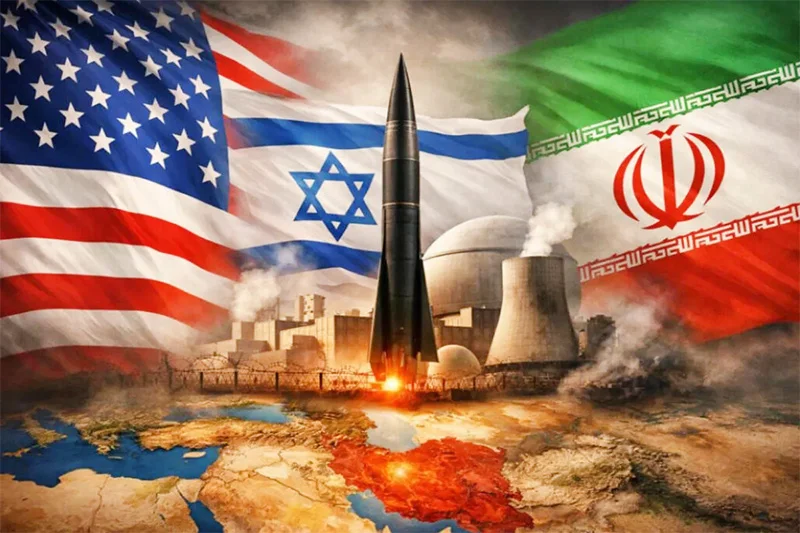
The world’s most theatrical stage
Welcome to the Grand Circus
 If global geopolitics were a TV show, it would be cancelled after the first season for being too unbelievable. Consider the plot: the world’s largest arms exporter lectures others about peace; a government that executed over 500 people in a single year tells its citizens it governs by divine law; and international bodies created to enforce rules seem to apply those rules with remarkable … flexibility. Welcome to the real world of international relations, where the rules are made up and the principles don’t matter.
This analysis examines two of the most consequential actors shaping global instability today: the United States of America, a democracy that can’t quite decide whether it believes in democracy, and the Islamic Republic of Iran, a theocracy that has perfected the art of punishing its own people for simply existing.
Episode I: The United States, ‘Do as I Say, Not as I Do’
The Democracy Export Business
The United States has, for decades, positioned itself as the global guardian of democracy, freedom, and human rights. It is a noble brand. The marketing budget alone, in the form of military expenditure at $886 billion in 2023, is staggering. And yet, the product being sold and the product being delivered have often been … different things.
The CIA-backed coup of 1953, codenamed Operation Ajax, removed Iran’s democratically elected Prime Minister Mohammad Mosaddegh and reinstated the autocratic Shah Mohammad Reza Pahlavi, primarily to protect Anglo-American oil interests.
Nuclear Exceptionalism: The World’s Worst-Kept Secret
The United States currently holds approximately 5,044–5,177 nuclear warheads (depending on the source and year), while Russia being the largest with a stockpile estimated at approximately 5,580 warheads. yet it leads international campaigns demanding that other nations not develop nuclear weapons. This is a bit like the world’s most heavily armed person standing at the door of a gun shop, telling customers they cannot purchase firearms.
Furthermore, Israel is widely believed to possess 80–90 nuclear warheads. The United States has never imposed sanctions on Israel for this. India and Pakistan, both outside the NPT, were rewarded with nuclear cooperation deals after the tested nuclear weapons.
The Saudi Arabia Paradox
Perhaps, no relationship illustrates U.S. foreign policy hypocrisy more vividly than Washington’s alliance with Saudi Arabia. The Kingdom is an absolute monarchy with no elections, no free press, where women were legally barred from driving until 2018, and where the murder of journalist Jamal Khashoggi, carried out, according to U.S. intelligence, on orders from Crown Prince Mohammed bin Salman, resulted in … arms sales continuing and diplomatic ties intact.
The United States sold Saudi Arabia over $37 billion in arms between 2015 and 2020, weapons used in a Yemen war that the United Nations described as one of the world’s worst humanitarian catastrophes. Yet the U.S. simultaneously held press conferences about human rights. The cognitive dissonance is not a bug. It is the feature.
Iraq: The Weapons of Mass Distraction
In 2003, the United States invaded Iraq on the basis of alleged weapons of mass destruction (WMD) that did not exist. The invasion resulted in an estimated 150,000–1,000,000 Iraqi civilian deaths depending on methodology, the displacement of millions, the destabilization of an entire region, and the rise of the Islamic State, none of which appeared in the original brochure. The officials responsible for this foreign policy catastrophe faced no international tribunal. No sanctions were imposed on the United States. Several architects of the war are today respected media commentators.
Meanwhile, the International Criminal Court (ICC), an institution the United States has never ratified, is expected to hold others to account for far lesser offenses. As of 2024, the U.S. has actively sanctioned ICC officials who attempted to investigate American personnel for potential war crimes in Afghanistan.
Episode II: Iran, The People’s Nightmare
Iran’s political system is built on the concept of Velayat-e Faqih, the Guardianship of the Islamic Jurist, a political-theological doctrine holding that a senior Islamic cleric should govern society. In practice, this means that Supreme Leader Ali Khamenei, unelected by the general public, holds veto power over all branches of government, controls the military, the judiciary, state media, and the powerful Islamic Revolutionary Guard Corps (IRGC).
The elected president, whether ‘moderate’ or ‘hardliner’, operates within a system where real power resides with the Supreme Leader and an unelected Guardian Council that vets all candidates and can disqualify anyone it deems insufficiently Islamic. In the 2021 presidential election, the Guardian Council disqualified over 590 candidates out of 592 who applied. The word ‘election’ is being used loosely here.
Women’s Rights: A Systematic Dismantling
Since the 1979 Islamic Revolution, Iranian women have endured one of the most comprehensive rollbacks of rights in modern history. Within weeks of the revolution, mandatory hijab laws were imposed, women were barred from serving as judges, and the minimum marriage age for girls was reduced to 9 years (later revised to 13 in 1982). This was not incidental policy; it was ideological architecture.
Today, Iranian women face legal discrimination across virtually every domain. Under the Iranian Civil Code, a woman’s testimony in court counts as half that of a man’s. Women cannot travel abroad without the written permission of their husband or male guardian. Married women cannot work without spousal consent in many circumstances. The diyeh (blood money) for a woman’s life is legally valued at half that of a man.
In September 2022, 22-year-old Mahsa (Zhina) Amini died in the custody of Iran’s Morality Police, after being arrested for allegedly wearing her hijab improperly. Her death triggered the Woman, Life, Freedom uprising, one of the largest protest movements in Iranian history. The government’s response was to kill over 500 protesters, arrest more than 19,000, and execute at least four people in connection with the protests by early 2023.
The IRGC and State-Sponsored Repression
The Islamic Revolutionary Guard Corps is a military-economic-political entity unlike any other in the region. It controls an estimated 20–40% of Iran’s economy through businesses, construction contracts, and import monopolies. It commands proxy militias across Iraq, Syria, Lebanon, and Yemen. And it suppresses domestic dissent with a ruthlessness that has drawn consistent condemnation from United Nations human rights bodies.
Amnesty International’s 2022-2023 annual report documented the IRGC and security forces using live ammunition, birdshot, and metal pellets against protesters, deliberately targeting eyes, resulting in hundreds being blinded. The UN Special Rapporteur on Iran documented ‘serious, widespread and systematic human rights violations’ constituting potential crimes against humanity.
Episode III: Where the Two Hypocrisies Meet
The relationship between the United States and Iran is, in many ways, a story of two entities who deserve each other in the sense that the behavUior of each government has fed the domestic narrative of the other for decades.
Washington uses Iran as justification for its military presence in the Gulf, its arms sales to autocratic Gulf states, and its general posture as indispensable regional hegemon. Tehran uses American hostility and sanctions as justification for economic failure, political repression, and nuclear advancement. Both governments’ hard-liners need each other to remain in power.
The Iranian people, 85 million of them, majority under 35, highly educated, and overwhelmingly wanting engagement with the world, are trapped between a government that treats them as subjects and an international sanctions regime that punishes them for their government’s choices. The American people, meanwhile, continue paying for a foreign policy architecture that serves arms manufacturers, defense contractors, and geopolitical abstractions more than it serves democratic values or human security.
Some Uncomfortable Truths
The United States is not the villain of every story, nor is Iran irredeemably authoritarian in the hearts of its people. What is consistent, and what this analysis has documented, is that both governments operate by standards they refuse to apply to themselves.
Tehran’s theocratic governance has failed its population economically, politically, and most visibly in its treatment of women and dissidents. The Woman, Life, Freedom movement showed the world what Iranian society wants. The government’s violent response showed the world what the Islamic Republic fears.
The lesson, uncomfortable as it is, is that powerful states, whether wielding aircraft carriers or theology, tend to exempt themselves from the rules they want others to follow. The only antidote is an informed public that refuses to accept these double standards as the natural order of things. Read critically. Follow the money. And remember: when a government tells you it acts in the name of God or democracy.
(The writer, a senior Chartered Accountant and professional banker, is Professor at SLIIT, Malabe. The views and opinions expressed in this article are personal.)
The scale and manner of grant distributions underscore the urgent need to rectify the weaknesses identified by the Auditor General. Remarkably, the accounts for the years 2024 and 2025 are still not published and only the 2023 accounts are available for public scrutiny.
Grants to clubs and associations increased from LKR 1.30 billion in the prior year to LKR 2.46 billion in 2023, representing an escalation of over LKR 1.15 billion year-on-year. These grants were distributed among 36 recipient clubs and associations, with individual allocations ranging from approximately LKR 1.5 million to almost LKR 300 million. Such wide variation and substantial growth warrant clear public disclosure of the allocation framework, the approval processes, and the beneficiary criteria.
While it is understandable that higher profitability enables greater financial support to clubs, the absence of a transparent, rule-based grant policy gives rise to governance concerns, and unless properly explained, leaves room for malicious or unfounded allegations that grant allocations may be used to influence voting behaviour or entrench existing officials. Robust disclosure and effective oversight are therefore essential to safeguard institutional credibility. The precise immediate need for high funding and their monitoring processes need to be divulged.
A case in point is Colombo Cricket Club (CCC), which received LKR 279,531,827 in 2023, making it the highest individual club recipient. As disclosed under the related-party notes to the financial statements, the President of Sri Lanka Cricket is also the President of Colombo Cricket Club, resulting in this transaction being classified as a related-party transaction.
In contrast to several grant recipient entities reporting profits, Sri Lanka Cricket recorded a deficit of approximately Rs. 2 billion in its Statement of Financial Performance for 2023.
It is also noteworthy from the cash flow statement that cash and fund balances declined sharply, from approximately LKR 10.8 billion in the previous year to around LKR 5.6 billion in 2023, representing a significant depletion of liquid resources within a single financial year.
A more meaningful and complete evaluation of these developments—particularly the position of funds available as at 31 December 2024 and 31 December 2025—will only be possible once the financial statements for 2024 and 2025 are released and subjected to public scrutiny.
A cricket enthusiast – Moratuwa
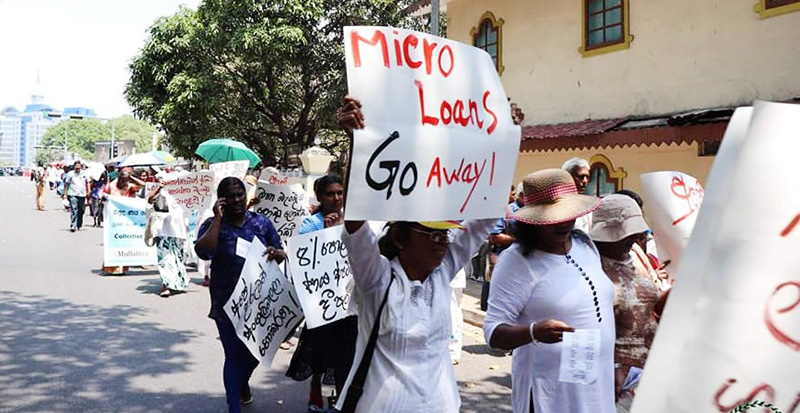
The Microfinance and Credit Regulatory Authority Bill was passed into law by the Parliament of Sri Lanka on 4 March. According to Deputy Minister of Finance and Planning Dr. Anil Jayantha, the main object of the Act is to establish an Authority to “license and supervise the under-regulated microfinance and moneylending sector, aiming to protect borrowers from exploitation and ensure financial stability”.
However, the Yukthi Collective is saddened and disappointed that a government which pledged to take “measures to alleviate the burden of predatory microfinance loans with high interest rates on women” (NPP Manifesto, 2024: Page no. 44), will now add to their unbearable weight.
The new Act, as virtually all legislation enacted by Anura Kumara Dissanayake’s government, is a legacy of the anti-working class Ranil Wickremesinghe regime. It evades the root causes of the microfinance trap, and ignores debt justice for women borrowers.
It fails in understanding the connections between household debt and public debt. The vicious cycle of national debt is sustained by lack of growth in economic activity because of poor access to affordable credit.
It fails to make equal representation of women mandatory in the new Authority. If representatives of women borrowers and their self-run organisations are not present in the regulatory body, how will its members know of their lived experiences and make decisions that value women’s unpaid and paid contributions to sustaining life?
System Change
Millions of indebted households voted for the NPP with hope and expectation of ‘system change’. But instead of honouring its manifesto promise to them, the government has let them down in the law-making process; as well as the focus and substance of the new Act.
It is appalling that NPP parliamentarians, including some of its women members, appear not to have read and understood the bill they enacted into law, nor spoke to the rural credit community providers in their electorates for their views.
Predatory lending exists in the formal and informal sectors. Within this ecosystem, the Act fails to understand, identify, and prohibit predatory lending and recovery practices. It is a cover for the Central Bank’s failure to properly regulate ‘Licensed Finance Companies’ in the interests of citizens.
The biggest offenders are the big finance companies, in which some parliamentarians are deposit-holders. Therefore, some lawmakers benefit from excess profitmaking through exploitative practices, at the expense of poor mostly rural women.
Where law reform should discipline the bullies and thugs in credit delivery, it will instead wipe out, through over-regulation, community-based and managed lenders such as death donation societies, farmer associations, and urban and rural women’s collectives, which have been a lifeline for vulnerable working-class women and a defence from harmful recovery practices.
Structural Adjustment Programmes
The motivation for this new law are the market- and capital- friendly structural reforms insisted by International Financial Institutions; not the concerns and needs of those at the mercy of predatory lenders.
From the Microfinance Act 2016, to the 2023 version of the Ranil Wickremesinghe regime, the Asian Development Bank (ADB) through its loans has been a promoter of these regressive reforms.
The 2026 Act, with some changes suggested by the Supreme Court in 2024 and hardly any of the changes demanded by affected communities, has been moved forward by the NPP government in line with ADB loan conditionalities.
The path of de-regulation for banking, finance, trade, and investment; and over-regulation of poor people’s savings and credit institutions, smacks of the bias to big capital, which the NPP in opposition once criticised.
Reforms needed
The financial and banking reforms we want to see are to make credit from state banks and public funds accessible and affordable to women producers in agriculture and micro and small business operators; with decent wages and social protection for workers; that improve household opportunity for a dignified livelihood and decent lives.
Yukthi is a forum supporting working people’s movements and people’s struggles for democracy and justice in Sri Lanka.
by Yukthi Collective

Australia grants asylum to 2 more members of Iranian women’s football team

Showers are likely in the Northern, Eastern, Sabaragamuwa, Southern and Uva provinces and in Kandy and Nuwara-Eliya districts

CEBEU warns of operational disruptions amid uncertainty over CEB restructuring

Remittances up compared to last year before outbreak of war, but the economic picture is not rosy

The Netherlands alleges Russian Embassy interfering in World Press Photo Exhibition

Switzerland appreciates GoSL’s stand on ME situation

‘Dates have the highest sugar content to fight Coronavirus’

Sunday Island 27 December – Headlines

#SundayIsland 17th December – Headlines

Sunday Island – 28th March

Sunday Island Headlines – 21 March

Sunday Island – 21st February – Headlines
-

 News5 days ago
University of Wolverhampton confirms Ranil was officially invited
-

 News6 days ago
Legal experts decry move to demolish STC dining hall
-

 News5 days ago
Female lawyer given 12 years RI for preparing forged deeds for Borella land
-

 News4 days ago
Peradeniya Uni issues alert over leopards in its premises
-

 News2 days ago
Repatriation of Iranian naval personnel Sri Lanka’s call: Washington
-

 Business7 days ago
Cabinet nod for the removal of Cess tax imposed on imported good
-

 News5 days ago
Library crisis hits Pera university
-

 News4 days ago
Wife raises alarm over Sallay’s detention under PTA