
News
Douglas Wickramaratne – the warrior who defended SL amidst LTTE threats to his life


by Sujeeva Nivunhella in London
There was a time Douglas Wickramaratne, President of the Sinhala Association in the UK, had to be given protection by Scotland Yard after he came under threat for exposing the blatant falsehoods propagated by the LTTE to win the support of the international community.
Despite the machinations of the powerful pro-LTTE lobby at the time, the warrior that he was, Wickramaratne held his ground and pushed ahead with his concerted campaign to lay bare the atrocities of the terrorists and expose to the world the campaign of brutal terror perpetrated by the Tigers.
Many were the times he traveled to Geneva to attend the United Nations Human Rights Council (UNHRC) sessions to help safeguard the interests of Sri Lanka in the face of Tamil diaspora inspired allegations leveled against the government.
This time around, Wickramaratne won’t be able to make his annual journey to the UNHRC sessions in Geneva to stand up and fight for the rights of the Sinhalese.
“For 40 years, I stood by my country and fought for what was right. Many people ask why I am silent now. I cannot continue any longer as my health is not too good”, he says.
He said that over the years, he was the only Sinhalese to address the UNHRC Assembly on time allocated to NGOs. On one such visit, a LTTE leader had greeted him and asked ‘Douglas why are you doing this to us?’
“I continue to receive invitations to visit Geneva to address the UNHRC sessions, but I cannot travel now due to my poor health condition”, he explained.
Recalling the time his life was under threat by LTTE supporters in London and Geneva, Wickramaratne said Scotland Yard ensured his security. At one time, Interpol was alerted about threats on his life in Geneva.
Since 1983, after his TV debate with a LTTE supporter on BBC Newsnight, he was invited by almost every British TV channel, and Al Jazeera and Press TV to participate in regular debates and discussions on Sri Lanka. In addition, he also took part in many radio programs.
Traversing down memory lane, the octogenarian recalled the famous Oxford Union Debate in 1984, where he and Bradman Weerakoon faced Prof. A. J. Wilson, S. Sivasithamparam and Dr. Neelan Thiruchelvam.
“After that, I was invited to deliver many talks and take part in seminars at Oxford University, Cambridge University, London School of Economics, Bath University among others. In addition, I also participated in debates with LTTE activists in France, Sweden, Germany, Belgium, Italy, USA and Canada”, he remarked.
Referring to his 1984 visits to Toronto and the USA at the invitation of Sri Lankans there, Wickramaratne highlighted how the World Federation of Sri Lankan Associations was formed. In 1985, the second convention of the Federation was held at London Hilton attended by delegates from USA, Canada, Australia and France. Among the eminent guest speakers were Minister Lalith Atulathmudali, Anura Bandaranaika and Miss. Betty Boothroyd.
“I was elected President of the Federation and the following year I handed over the presidency to Prof. Christie Weeramantry”, he noted.
Wickramaratne is a product of Ananda College, Colombo, where he led the English debating team. He was a keen cricketer from his childhood days and was instrumental in forming the Dehiwala Sports Club at the age of 10 years, which he captained for 11 years since its inception.
He migrated to the UK in the early 1960s and joined the Savings Bank and later a Clearing Bank. At both institutions, he continued with his addiction to cricket and was elected captain, a rare privilege at the time to head an all white team.
“A Guyanese friend invited me to play for the famous West Indian Wanderers CC. Frank Worrel, Garfield Sobers, Conrad Hunte and many West Indian test cricketers had played for the Wanderers formed by Sir Leary Constantine. I was the only non-West Indian in a team from all Caribbean Islands, and we bonded well together”, he reflected with a smile.
Asked what prompted him to form the Sinhala Association in the UK, he recalled an incident he witnessed during a Sri Lanka versus England cricket match at the Colombo Oval in 1975, where about 50 Tamil youths attacked and injured a small group of cheering Sinhala students.
“On my intervention, police arrested some of the attackers. This episode made me realize the need to form a Sinhala Association. With the help of a group of dedicated patriots, the Association was formed in 1976”, Wickramaratne recalled.
He said the Association organized variety entertainment programs, concerts and meetings to bring people together, and more importantly, to educate the youth of the true situation in Sri Lanka and counter the false claims made by the LTTE.
“We have organized well attended meetings with the participation of Ven. Elle Gunawansa Thera, Prof. Nalin de Silva, Dinesh Gunawardena, the late Gen. Lucky Algama and Cyril Mathew and many others”, he noted.
He further said the Association afforded an opportunity to Sri Lankan artistes to perform in the UK and other European countries by organizing concerts.
Among those who performed were Amaradeva, Nanda Malini, Sisira and Indrani, H. R. Jothipala, Latha Walpola, Victor Ratnayake, Sunil Edirisinghe, T. M. Jayaratne, M. S. Fernando, Malini Bulathsinhala, Clarence Wijewardena and Mariazelle, Angeline Gunatilaka, Ivor Dennis, Gypsies, Desmond Silva and musicians like Stanley Peiris, Wijeratna Ranatunga, Rohana Weerasinghe.



The Landslide Early Warning Center of the National Building Research Organisation [NBRO] has issued landslide early warnings to the districts of Kandy and Nuwara Eliya valid from 06:00 hrs on 13.02.2026 to 06:00 hrs on 14.02.2026
Accordingly,
Level II [AMBER] landslide early warnings have been issued to the Divisional Secretaries Divisions and surrounding areas of Walapane and Nildandahinna in the Nuwara Eliya district.
Level I [YELLOW] landslide early warnings have been issued to the Divisional Secretaries Divisions and surrounding areas of Pathahewheta in the Kandy district.
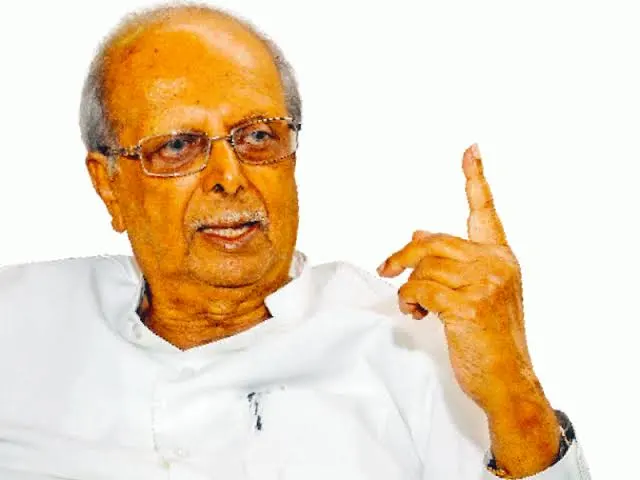
Former Minister Professor Tissa Vitharana has passed away at the age of 91, according to family sources

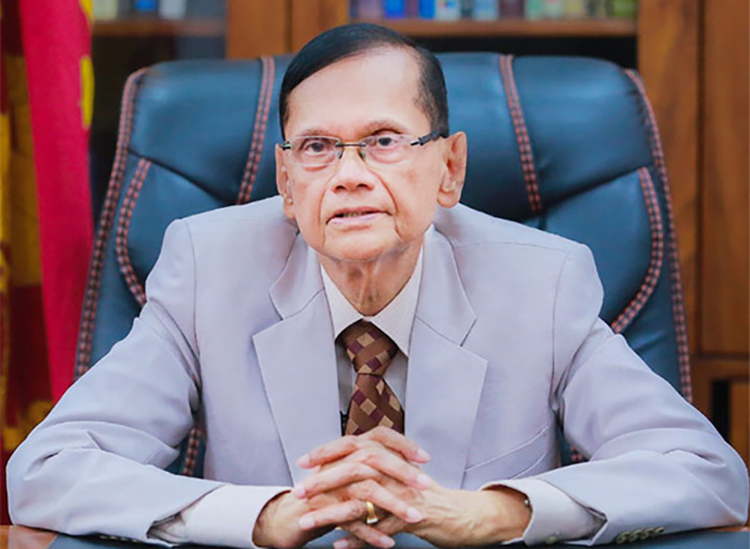
‘Media freedom will be in jeopardy’
Former Minister of Justice, Constitutional Affairs, National Integration and Foreign Affairs Prof. G. L. Peiris has warned that the proposed Protection of the State from Terrorism Act (PSTA) will deal a severe blow to civil liberties and democratic rights, particularly media freedom and the overall freedom of expression.
Addressing a press conference organised by the joint opposition alliance “Maha Jana Handa” (Voice of the People) in Colombo, Prof. Peiris said the proposed legislation at issue had been designed “not to protect people from terrorism but to protect the State.”
Prof. Peiris said that the proposed law would sound the death knell for the rights long enjoyed by citizens, with journalists and media institutions likely to be among those worst affected.
Prof. Peiris took exception to what he described as the generous use of the concept of “recklessness” in the draft, particularly in relation to the publication of statements and dissemination of material. He argued that recklessness was recognised in criminal jurisprudence as a state of mind distinct from intention and its scope was traditionally limited.
“In this draft, it becomes yet another lever for the expansion of liability well beyond the properly designated category of terrorist offences,” Prof. Peiris said, warning that the elasticity of the term could expose individuals to prosecution on tenuous grounds.
Prof. Peiris was particularly critical of a provision enabling a suspect already in judicial custody to be transferred to police custody on the basis of a detention order issued by the Defence Secretary.
According to the proposed laws such a transfer could be justified on the claim that the suspect had committed an offence prior to arrest of which police were previously unaware, he said.
“The desirable direction of movement is from police to judicial custody. Here, the movement is in the opposite direction,” Prof. Peiris said, cautioning that although the authority of a High Court Judge was envisaged, the pressures of an asserted security situation could render judicial oversight ineffective in practice.
Describing the draft as “a travesty rather than a palliative,” Prof. Peiris said the government had reneged on assurances that reform would address longstanding concerns about existing counter-terrorism legislation. Instead of removing objectionable features, he argued, the new bill introduced additional provisions not found in the current Prevention of Terrorism Act (PTA).
Among them is a clause empowering the Defence Secretary to designate “prohibited places”. That was a power not contained in the PTA but previously exercised, if at all, under separate legislation such as the Official Secrets Act of 1955. Entry into such designated places, as well as photographing, video recording, sketching or drawing them, would constitute an offence punishable by up to three years’ imprisonment or a fine of up to Rs. 3 million. Prof. Peiris said. Such provision would have a “particularly chilling effect” on journalists and media personnel, he noted.
The former minister and law professor also criticised the breadth of offences defined under the draft, noting that it sought to create 13 categories of acts carrying the label of terrorism. This, he said, blurred the critical distinction between ordinary criminal offences and acts of terrorism, which require “clear and unambiguous definition with no scope for elasticity of interpretation.”
He cited as examples offences such as serious damage to public property, robbery, extortion, theft, and interference with electronic or computerised systems—acts which, he argued, were already adequately covered under existing penal laws and did not necessarily amount to terrorism.
Ancillary offences, too, had been framed in sweeping terms, Prof. Peiris said. The draft legislation, dealing with acts ‘associated with terrorism,’ imposed liability on persons “concerned in” the commission of a terrorist offence. “This is a vague phrase and catch-all in nature.” he noted.
Similarly, under the subheading ‘Encouragement of Terrorism,’ with its reference to “indirect encouragement,” could potentially encompass a broad spectrum of protest activity, Prof. Peiris maintained, warning that the provision on “Dissemination of Terrorist Publications” could render liable any person who provides a service enabling others to access such material. “The whole range of mainstream and social media is indisputably in jeopardy,” Prof. Peiris said.
Former Minister Anura Priyadarshana Yapa and SLFP Chairman Nimal Siripala de Silva also addressed the media at the briefing.
by Saman Indrajith ✍️

The silent pace revolution in Sri Lanka

Canada, UAE face each other for only the second time in T20Is

Landslide Early Warnings issued to the Districts of Kandy and Nuwara Eliya

Former Minister Professor Tissa Vitharana has passed away at the age of 91

Buoyant Zimbabwe plot massive upset against depleted Australia

Mexican ships arrive in Cuba with humanitarian cargo amid US oil blockade

‘Dates have the highest sugar content to fight Coronavirus’

Sunday Island 27 December – Headlines

#SundayIsland 17th December – Headlines

Sunday Island – 28th March

Sunday Island Headlines – 21 March

Sunday Island – 21st February – Headlines
-
 Features5 days ago
My experience in turning around the Merchant Bank of Sri Lanka (MBSL) – Episode 3
-

 Business6 days ago
Zone24x7 enters 2026 with strong momentum, reinforcing its role as an enterprise AI and automation partner
-
 Business5 days ago
Remotely conducted Business Forum in Paris attracts reputed French companies
-
 Business5 days ago
Four runs, a thousand dreams: How a small-town school bowled its way into the record books
-
 Business5 days ago
ComBank and Hayleys Mobility redefine sustainable mobility with flexible leasing solutions
-

 Business2 days ago
Autodoc 360 relocates to reinforce commitment to premium auto care
-
 Business6 days ago
HNB recognized among Top 10 Best Employers of 2025 at the EFC National Best Employer Awards
-
 Midweek Review2 days ago
A question of national pride