
Sports
Dinara’s presence in tennis has been magical!


By A Special Sports Correspondent
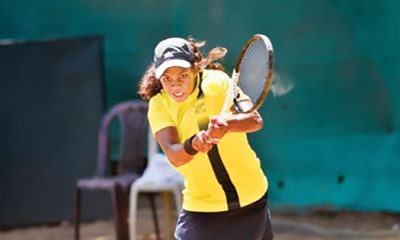
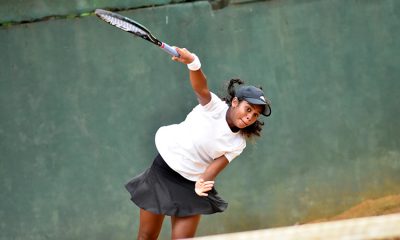
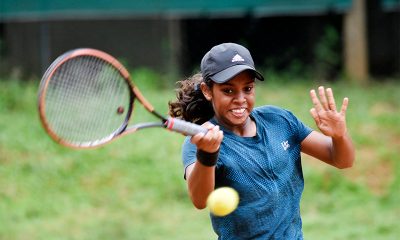
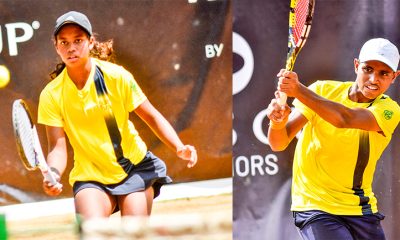
Sri Lanka’s new tennis sensation Dinara De Silva has taken the court by storm and is knocking on the door to achieve greater successes.
Her leap to stardom began last year when she won the National singles crown beating one of her favourite players in the sport; Angelika Kurera.
And this year she followed that spectacle by winning the singles crown at the SSC Open where she beat her schoolmate Saajida Razick in the finals.
The clock has turned full circle for Dinara. Till last year she couldn’t compete at open events because of an ITF age rule; which prohibits junior tennis players from contesting against seniors till they reach age 14. Beating Angelika was perhaps one of her best moments in the game because one rarely gets to beat a player who you admire when the latter is still actively involved in tennis. Till a few years ago Dinara was just a little girl watching the seniors play and dreaming to emulate them. Now she is a feared opponent and even the seniors have to take her presence in a tournament seriously. On a note of encouragement she has said that she was given a huge welcome and much encouragement by the seniors when she stepped into playing in their league.
This year she added another feather in her cap when she was picked to represent Sri Lanka at the first round of the ITF Junior Circuit Tennis tournament (Colombo) where she shone for her country. The other players who did well at this tournament were Methvan Wijemanne and Vichinthya Nilaweera. She has qualified to play in the second round of the tournament which is now in progress at the SLTA courts in Green Path.
In a recent newspaper interview young Dinara had spelt out as her immediate goals to place herself within the top 100 ranked players in the world in the under 18 category. This target she hopes to reach within the next three years. Her present world ranking among juniors who are playing singles is 968 as at January 29, 2024. This apparently is her career best international ranking to date in the singles event.
One factor that stands in good stead for her is that she has supportive parents who encourage her involvement in tennis. However, at the initial stages of trying out sports, Dinara had dabbled in cricket. Her promise and potential shown in hand-eye coordination in the bat and ball game had prompted her dad to send her for tennis practices. Thus began a journey in tennis where she has delivered and done justice to the choice her dad made in picking a sport for her.
She is still a schoolgirl and does her studies at Bishop’s College, Colombo. She has represented her school at tennis, but despite her enthusiasm and appetite for tennis ‘winning’ at the sport came after much hard work and a long wait. According to newspaper articles about her she now practices at the Dineshkanthan Tennis Academy. But she still remembers her first tennis coaches who helped her cut teeth in the sport. She thanks them for introducing her to the sport and helping her in a manner in which the seeds of interest for tennis were planted in a manner in which this teenager would stick with the sport for a long time.
Playing tennis at national level can be very competitive for such a small girl like Dinara. She is aware of her work load in tennis and avoids walking in the path to ‘burn out’. This is why she may have skipped some tournaments which she would have contested in the recent past.
She has been quoted in newspaper interviews saying that tennis demands much physical work and a lot of expenses have to be met just to stay in the game. Right now other than playing tennis and managing her studies she has no time to enjoy some of the fun aspects of life any other teenager would love to experience. Though she must attend physical classroom sessions to pursue her education here in Sri Lanka she has said that in other countries tennis players have the option of following their studies via online education and spend the rest of the time of the day at the tennis academy. This is one area where Sri Lanka’s education authorities must focus on and make the necessary adjustments if they want the island’s teenage sportsmen and women to balance their school education and involvement in professional sport.
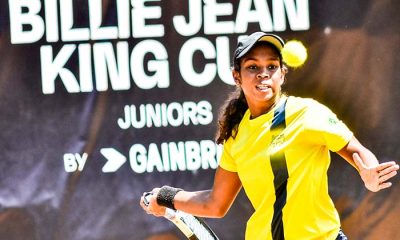
Looking forward to from what she achieved at the SSC Open and the recently concluded ITF Junior Circuit matches she hopes to make the Sri Lanka team at the Billy Jean King Cup (July/August), the Qualifier for Asia Oceania Main Event (April/May) and the Junior Billy Jean King Cup (under 16) Asia Oceania Pre-Qualifier Team Event which is scheduled in Colombo.
This girl who started playing tennis even before she started schooling in the Grade One class has come a long way. She remembers crying before a match when she was new to tennis, but if there are any tears that are shed now they have to be associated with the sweet successes of victory.
When a player young as her achieves stardom and becomes a teenage prodigy she builds a culture around her in what she is good at. The influence she is now able to create on other teenagers through tennis can be very ‘infectious’.







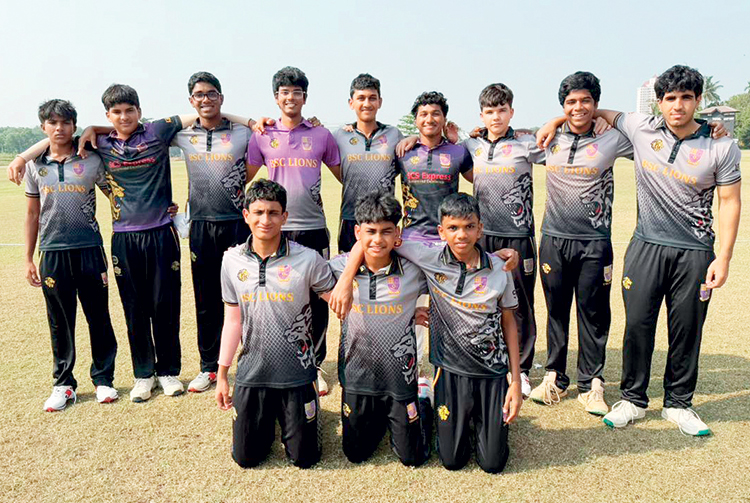
The British School in Colombo will look to retain the Hasan Sohail Memorial Trophy when they take on traditional rivals Colombo International School (CIS) in their annual limited overs cricket encounter on Sunday at the Sri Lanka Land Development Corporation Grounds in Nawala.
The British School in Colombo are the current holders of the Hasan Sohail Memorial Trophy after they edged out CIS by one run in a thrilling match played last year at the same venue.
On that occasion the British School in Colombo piled up 183 for three in 25 overs after they were invited to bat first and then restricted their opponents to 182 for four in 25 overs.
This rivalry between the British School in Colombo and CIS began in 2023 with a Twenty20 match, where CIS claimed victory at the same venue. However, the 2024 encounter was washed out due to bad weather.

Colombo International School Cricket Squad
Lesith Semika will lead the CIS team while Thisath Ganegoda will captain the British School in Colombo.

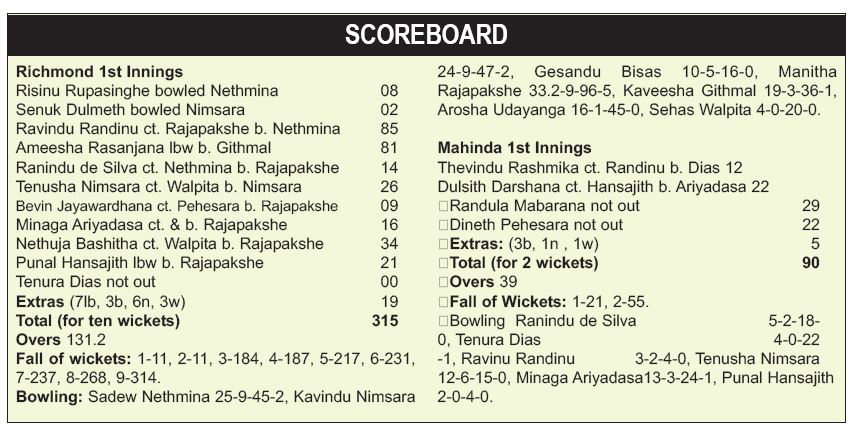
Mahinda College fought back strongly to reach 90 for two wickets at stumps in reply to Richmond College’s 315 on day two of the Lovers’ Quarrel Big Match at the Galle International Stadium on Friday.
In a similar pattern to their arch rivals’ start, Mahinda suffered an early setback, losing two quick wickets in the opening phase of their innings. However, the third-wicket pair of Randula Mabarana and Dineth Pehesara restored stability with a composed stand, ensuring the team closed the day without further damage.
Earlier in the day, spinner Manitha Rajapakshe delivered a standout performance, claiming a five-wicket haul to bring an end to Richmond’s marathon first innings, which extended from day one into the post-lunch session on the second day.
Richmond had recovered impressively from early trouble after slipping to 11 for two on the opening morning. A patient and resilient 173-run partnership for the third wicket between Ravinu Randinu and Ameesha Rasanjana laid the foundation for their competitive total. The duo batted through the bulk of day one and looked set for bigger scores before both were dismissed in the 80s by Sadew Nethmina and Kaveesha Githmal.
Further contributions from Nethusha Nimsara, Nethuja Basitha and Punal Hansajith helped Richmond consolidate, particularly as they faced a sustained and threatening spell from Rajapakshe, who bowled tirelessly to keep Mahinda in the contest.With Mahinda still trailing but having wickets in hand, the match remains finely poised heading into the third day.


Sophie Devine made Eden Park her own little playground as she brought up her 22nd T20I half-century and carried New Zealand to a 2-1 series lead over South Africa with two games to go. She had also picked up a couple of wickets earlier in the day and backed up her words when she said South Africa’s 149 for 7 was a little bit under par.
New Zealand have never chased more than 150 at home. The small boundaries in Auckland were a friend in that regard, particularly with Annerie Dercksen and Ayanda Hlubi occasionally straying down leg. South Africa tightened up though and the wickets of Amelia Kerr and Brooke Halliday in the 10th over left the chase in a tense situation. New Zealand needed 82 off 60 with six wickets in hand. Devine was 13 off 10.
A pull shot off Chloe Tryon to start the 11th over signalled the shift in momentum. The square boundaries are bigger than the straight ones at Eden Park and yet Devine kept finding them. She collected 46 runs at a strike rate of 219 on the leg side. At the time the fifth-wicket partnership had hit 50, Maddy Green had made only 12 off 15. It was all Devine from the other end and it was all Devine till the end. Her superpowers now include winning the game without touching the ball. Dercksen missed the cut strip as she tried to hide it away from the batter’s reach.
Those five no-balls bringing an end to proceedings highlighted how wayward South Africa’s attack was compared to New Zealand’s. Jess Kerr’s early swing dominated the powerplay. Devine and Suzie Bates taking pace off kept control through the middle and barring another Kayla Reyneke onslaught, it was one-way traffic.
South Africa had to wait 23 balls for the first boundary off the bat on Friday. Dercksen made it worth the wait with a neat little flick off her legs that travelled all the way for six over deep midwicket. Dercksen arrived with the score on 9 for 2 in the third over and put the pressure back on New Zealand. While she was at the crease, she was responsible for more then half the boundaries (4 out of 7) her team scored. Thanks to that, Laura Wolvaardt could drop anchor and go at her preferred pace, though 37 off 39 wasn’t a good look for the captain, who later admitted they were well short of a competitive total.
A pitch with 10mm of grass offered enough for the seamers and even someone with their eye in was found out when Devine went into the pitch. The little legcutter – a response to being hit for six the previous ball – found Dercksen in two minds, whether to attack or defend, and took down her off stump. South Africa lost 59 for 5 between the eighth and the 18th overs, going 38 balls without a boundary.
Bates continued to find more success with the ball. She took a wicket in her first over and took responsibility in the death as well. New Zealand held their line and length really well, refusing access to the straight boundary and routinely cramping the batters up, guiding them to hit the areas – midwicket and square leg – that they had covered in the field.
Then Mair missed her length and was clubbed down the ground for six. It highlighted how a bowler had to be perfect against a batter of such power. Reyneke is immense when she can free her arms and go down the ground. She grew up playing in boys’ teams. She came into this series with a 75 off 63 for Western Province, who were 93 for 6 and still ended up winning the Pro50 game thanks to their 20-year-old phenom. She captained South Africa in the Under-19 World Cup when they went to the final last year. She’s marked for big things.
Reyneke’s presence forced Jess Kerr to go wide in the final over – too wide. The umpire penalising her made the bowler shift her line and that little bit was enough for Reyneke to smash two sixes and a four, all down the ground, and hoist South Africa to 149 for 7. She wasn’t given a lot to get under but as soon as she was given one, she smashed it out of the park. The margin for error was breathtakingly small.
Brief scores:
New Zealand Women 152 for 4 in 18.4 overs (Isabella Gaze 17, Amelia Kerr 30, Sophie Devine 59*, Maddie Green 34*; Annerie Dercksen 1-17, Ayanda Hilubi 1-31, Nonkululeko Mlaba 1-30 ) beat South Africa Women 149 for 7 in 20 overs (Laura Wolvaardt 37, Annerie Dercksen 27, Kayla Reyneke 34*; Jess Kerr 1-30, Rosemary Mair 1-32, Sophie Devine 2-21, Suzie Bates 2-10) by six wickets
(Cricinfo)

Sri Lanka’s electric cars running on coal and diesel

Social and economic impact of aging on the family and the country

Asoka Abeyewardene – A Gentle Titan is no more

From screen addiction to storytelling: A schoolgirl’s inspiring turnaround

Sri Lanka Press Association appoints office bearers at 70th AGM

ISRAs of Sri Lanka – Protecting Hidden Shark and Ray Hotspots

‘Dates have the highest sugar content to fight Coronavirus’

Sunday Island 27 December – Headlines

#SundayIsland 17th December – Headlines

Sunday Island – 28th March

Sunday Island Headlines – 21 March

Sunday Island – 21st February – Headlines
-

 Business6 days ago
Browns EV launches fast-charging BAW E7 Pro at Rs. 5.8 million
-

 Life style7 days ago
From culture to empowerment: Indonesia’s vision for Sri Lanka
-

 News4 days ago
CIABOC questions Ex-President GR on house for CJ’s maid
-

 Life style7 days ago
Ranjith Fernando celebrates cricketing journey with Hob Nails to Spikes
-

 News5 days ago
Sri Lankan marine scientist Asha de Vos honoured at UNGA opening
-

 Features6 days ago
Achievements of the Hunduwa!
-

 Latest News7 days ago
QR code system will be implemented for fuel with effect from 06.00 a.m. today (15th)
-

 News5 days ago
Australian HC debunks misleading travel risk claims for Sri Lanka