
Business
DFCC Bank offers Special Deposit Accounts to aid Sri Lanka in a time of need

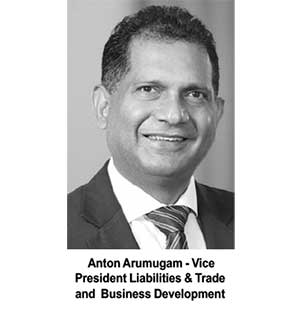
The government in consultation with the Monetary Board of the Central Bank of Sri Lanka (CBSL) introduced the Special Deposit Accounts on the April 8, with the objective of increasing foreign currency inflows to the country and to aid in overcoming the effects of the COVID-19 pandemic. DFCC Bank was one of the first banks in the country to launch the DFCC Special Deposit Account in compliance with CBSL guidelines with the objective of making a significant contribution towards the national cause of aiding Sri Lanka in this hour of need.
With the country’s economy still struggling to recover from this global crisis, DFCC launched the product and gained traction on various platforms including online, digital, and social media in order to encourage Sri Lankans residing in international territories to invest their funds back into the country.
Customers were able to place their funds in a fixed deposit for 6-month and 12-month periods in multiple designated currencies covering LKR, USD, EUR, GBP, AUD, JPY, SGD, CAD and CHF. Promising unparalleled service to customers and the best interest rates possible, those who placed a fixed deposit for 6 months were entitled to received 1% above the normal interest rate and customers who placed fixed deposits for 12 months were entitled to receive 2% above the normal interest rate. The funds are also freely convertible and repatriable upon maturity with customers having the option of transferring the money back overseas through an outward remittance or withdrawing the funds in Sri Lanka at maturity.
Any Sri Lankan individual resident in or outside Sri Lanka including dual citizens, citizens of other states with Sri Lankan origin, and any person resident outside Sri Lanka including funds, corporate bodies, association and other well-wishers are permitted to open and maintain the Special Deposit Account. These accounts can be opened during a 6-month period from the 08th of April 2020 to the 08th of October 2020 with funds received from abroad to Sri Lanka via inward remittances through the banking system during the mentioned 6-month period. Foreign currency legitimately acquired and brought by the account holder to Sri Lanka with proper declaration after 01st January 2020 can also be placed in Special Deposit Accounts up to a predetermined limit. Ensuring that customers enjoy higher returns for their investments and simultaneously contribute towards aiding the Sri Lankan economy, the DFCC Special Deposit Account proves to be a valuable investment for both local and international customers.
DFCC Bank Vice President Liabilities & Trade Business Development, Mr. Anton Arumugam Stated, “The response has been very encouraging with many customers from different countries across the world opening SDA accounts with DFCC and investing their funds. As the first mover, we gained the advantage of generating more deposits from various countries due to the unparalleled customer service offered by DFCC Staff members. They have been working 24×7 to respond to customers who are living overseas by using digital communication modes and assisting them to open the accounts and remit the funds while complying with the relevant requirements.”
This is an excellent opportunity for customers to enjoy higher returns for their investment by opening DFCC Special Deposit Account and also contribute towards the national cause.


By Ifham Nizam
A long-delayed reckoning in Sri Lanka’s power sector is finally beginning to take shape—driven less by choice and more by necessity.
At a time when the country’s fragile economic recovery hinges on stability, the electricity sector—long plagued by inefficiency, political interference, and costly dependence on imported fuel—has re-emerged as both a risk and an opportunity.
It is within this context that The Institution of Engineers, Sri Lanka will host a timely and potentially consequential forum on April 2 at the Wimalasurendra Auditorium, focusing on a “Pragmatic Approach to Electricity Sector Reforms in Sri Lanka and the Way Forward.”
This is not just another technical discussion. It is, in many respects, a reality check.
The keynote address by Eng. Pubudu Niroshan—who stood at the centre of recent reform efforts as Director General of the Power Sector Reforms Secretariat—comes at a moment when the gap between policy ambition and execution has become impossible to ignore.
For over three decades, Sri Lanka has spoken the language of reform. Yet, time and again, progress has been derailed by institutional resistance, political hesitation, and an entrenched reluctance to dismantle inefficient structures.
The result is a sector that continues to bleed financially while passing the burden onto consumers and the broader economy.
High electricity tariffs, supply vulnerabilities, and operational inefficiencies are no longer isolated technical issues—they are macroeconomic threats. Industries struggle to remain competitive, investors remain cautious, and households continue to bear rising costs. The over-reliance on imported fossil fuels has only deepened this vulnerability, exposing the country to global price shocks and geopolitical disruptions.
The economic crisis of 2022 briefly forced a shift in thinking. Under severe fiscal pressure, reform was no longer optional. The passage of the Sri Lanka Electricity Act, No. 36 of 2024 was seen as a breakthrough—an acknowledgment that structural change could no longer be postponed.
But legislation alone does not transform systems.
What has followed is a more grounded, outcome-driven approach—one that attempts to move beyond policy rhetoric. Within a relatively short span, the first phase of restructuring has been pushed through, including the repeal of the decades-old CEB Act, No. 17 of 1969, and the unbundling of the monolithic utility into six state-owned entities.
This is, by any measure, a significant structural shift.
Yet, the real test lies ahead.
Unbundling without genuine market discipline risks becoming another cosmetic exercise.
The promise of a competitive National Electricity Market—long discussed but never realized—will depend heavily on regulatory strength, transparency, and political consistency. Without these, the same inefficiencies could simply be replicated across multiple entities.
Moreover, reform cannot succeed in isolation.
Sri Lanka’s energy transition must be anchored in a broader economic strategy—one that aligns power sector reforms with industrial growth, environmental sustainability, and investment policy.
The proposed “Energy Transition Act,” now under consideration, will be a critical piece of this puzzle. If executed with clarity and discipline, it could provide the legal backbone for a coherent and forward-looking energy framework.
The reference to an Integrated Economic Development Framework (IEDF) in the 2026 Budget underscores this necessity. Energy is not a standalone sector—it is the foundation upon which economic recovery will either stand or falter.
What makes this moment different is the absence of alternatives.
Sri Lanka can no longer afford half-measures or delayed decisions. The cost of inaction is too high, and the margin for error too narrow. Reform, in this sense, is no longer a policy preference—it is an economic imperative.
The upcoming forum at The Institution of Engineers, Sri Lanka is therefore more than a professEng. Pubudu Niroshanional gathering. It is a critical platform where technical expertise must confront political reality, and where long-standing assumptions must be challenged.
For years, Sri Lanka’s electricity sector has been caught in a cycle of discussion without delivery. The shift toward a pragmatic approach signals an understanding that outcomes—not intentions—will define success.
The question now is whether that realization will finally translate into sustained, irreversible change.
Because this time, failure is not just an option—it is a risk the country simply cannot afford.
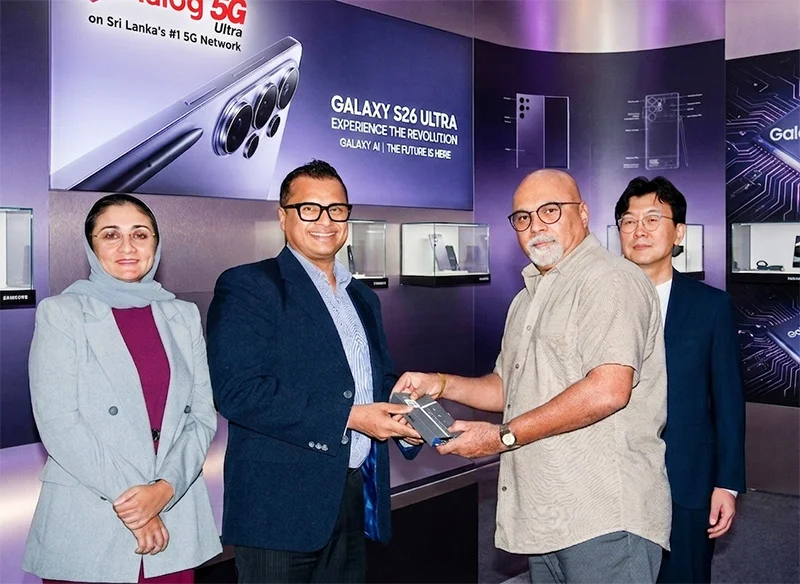
Dialog Axiata PLC, Sri Lanka’s #1 connectivity provider, announced the availability of the Samsung Galaxy S26 Series in Sri Lanka through its retail and digital channels, bringing Samsung’s latest flagship smartphone lineup to local consumers. The series includes the Galaxy S26, Galaxy S26+, and Galaxy S26 Ultra, combining advanced AI-powered capabilities, premium design and next-generation connectivity for everyday mobile use, with customers able to experience the power of Dialog 5G Ultra on the devices.
The Samsung Galaxy S26 Series introduces an AI-powered camera system featuring a 200MP AI-enhanced rear camera with improved low-light performance, advanced zoom and intelligent editing tools for capturing and refining content directly on the device. The lineup also includes Galaxy AI capabilities, a privacy display that limits viewing angles to protect on-screen information, and steady video functionality for smoother and more stable video recording.
The Galaxy S26 Series features Dynamic AMOLED displays across the lineup, including a 6.3-inch Galaxy S26, 6.7-inch Galaxy S26+, and 6.9-inch Galaxy S26 Ultra, supporting smooth performance for streaming, gaming and everyday productivity. The devices are available with 12GB RAM and storage options of 256GB or 512GB, while the Galaxy S26 Ultra also offers a 16GB RAM variant with up to 1TB storage for users requiring additional capacity.

The Mahindra Ideal Excellence Awards ceremony, a grand celebration to recognize dealers and other stakeholders of Ideal Motors, was held at the Wave n’ Lake Banquet Hall & Restaurant in Welisara recently.
The event was graced by the presence of special guests including Nalin Welgama, Founder and Chairman Ideal Motors, Dilani Yatawaka, Group Managing Director/CEO Ideal Motors, Nimisha Welgama, Director Legal and Corporate Affairs Ideal Motors, Sachin Arolkar, Head International Operations, Auto Division Mahindra & Mahindra India. Senthil Selvaraju, Head International Operations and Customer Service Automotive Division Mahindra & Mahindra India, Sujeeth Jayant, Country Head Mahindra & Mahindra India and Shitam Kundu, Head Domestic Services Mahindra & Mahindra India.
Also, in attendance from Ideal Motors were Kasun Fernando, General Manager Commercial Vehicle Sales Division, Sameera Bamunuarachchi, Deputy General Manager Spare Parts, Logistics & Inventory and Prasanna Manamperi, Deputy General Manager After Seles Service.
The Excellence Awards ceremony honoured the top sales dealers at the provincial and national levels. Recipients were presented with awards, certificates of merit, and cash prizes in recognition of their achievements. The three best national‑level sales dealers from the various categories were further rewarded with an opportunity to visit Bangkok, Thailand. In addition, special recognition was extended to banks and financial institutions that partner with Ideal Motors.
Speaking at the event, Nalin Welgama Ideal Motors Founder and Chairman said, “When we began our journey with Mahindra in 2009, the previous company had sold 300 vehicles in the country, of which nearly 150 had various defects. At that time our journey began by engaging with the parent company in India and repairing those vehicles free of charge. That commitment has brought us to where we are today. As we believe, our journey truly begins after the sale. We are dedicated to strengthening our customers, and in doing so, strengthening ourselves. That is how we transformed the after‑sales service experience.”

Amelia Kerr hits 139-ball 179* as New Zealand pull off record chase to level series

Punjab Kings fined for slow over-rate

Ice-cool Connolly leads nervy Punjab Kings home on IPL debut

Showers expected in the Western, Sabaragamuwa and Southern provinces in the evening or night

Heat Index at Caution Level in the Western, Sabaragamuwa, Southern, Eastern, North-western, Northern and North-central provinces and in Monaragala district

Urea shortage threatens Yala harvest: Experts

‘Dates have the highest sugar content to fight Coronavirus’

Sunday Island 27 December – Headlines

#SundayIsland 17th December – Headlines

Sunday Island – 28th March

Sunday Island Headlines – 21 March

Sunday Island – 21st February – Headlines
-

 Features5 days ago
A World Order in Crisis: War, Power, and Resistance
-

 News6 days ago
Energy Minister indicted on corruption charges ahead of no-faith motion against him
-

 News7 days ago
US dodges question on AKD’s claim SL denied permission for military aircraft to land
-

 Business7 days ago
Dialog Unveils Dialog Play Mini with Netflix and Apple TV
-

 Sports6 days ago
SLC to hold EGM in April
-

 Opinion6 days ago
When elephants fight, it is the grass that suffers
-
 Latest News7 days ago
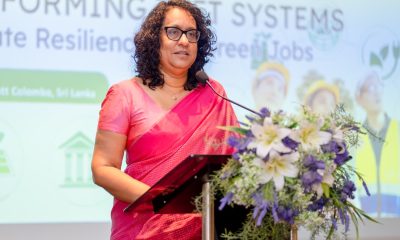
A strong Technical and Vocational Education and Training (TVET) system equips individuals with practical, relevant, and future-oriented skills helping to innovate responsibly towards a greener and sustainable future – PM
-

 Features6 days ago
Lest we forget