
Business
DFCC and CBSL push towards a cashless future in Galle

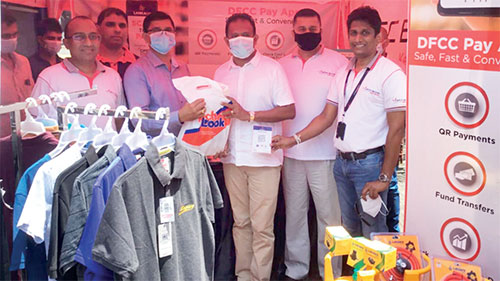
Minister Chandima Weerakkody making a purchase using the DFCC Pay App
DFCC, the bank for everyone, recently participated in the Central Bank of Sri Lanka’s (CBSL) RataPurama QR promotional event, held in the southern economic hub of Galle. The decision by DFCC to maintain a presence at this event comes after the recent success of DFCC’s promotional campaign held at the Narahenpita Economic Centre with the goal of promoting QR payments under the Central Bank of Sri Lanka’s Rata Puraama Quick Response initiative.
Due to the fact that this event’s objective was to promote the national level interest of bringing Sri Lanka into a cashless future, Minister Chandima Weerakkody, CBSL Governor Prof. W D Lakshman, CBSL Director Payments Dharmasri Kumaratunge graced the occasion as the Chief Guests. Representatives present from DFCC were Vice President (Cards) Denver Lewis and Southern Regional ManagerPradeep Alwis.DFCC’s stall caught the attention of many invitees and participants and as a result, countless successful cashless transactions were conducted. This was further driven by the presence of displayed products from Narangoda Group, a prominent dealer for LAUGFS Gas and Hemara Rich Look, a leading clothing store in Galle.
Additionally, DFCC was also able to build increased awareness and usage of the DFCC Pay App that enables QR code transactions – numerous vendors and customers were able to gain insight into the convenience of using a QR-based payment method via DFCC Pay App. As a result, new QR Merchants from the area were onboarded and subsequently promoted QR Payments to their customers. DFCC is no stranger to the benefits of enabling their customers to use QR-based paymentmethods. The launch of DFCC’s Pay App in January 2019 resulted in the bank becoming among the first financial institutions to be certified for the LANKAQR standard which is now accepted as the national common QR.The trailblazing Pay App permits customers to make retail payments using smart mobile devices through funds available in their current or savings account to the merchant’s account directly. The DFCC Pay App provides a convenient, secure and affordable option for making retail payments which is otherwise primarily made by cash. Similarly, the DFCC Pay Merchant App can be used by all types of merchants in the countryfrom large corporates, SMEs to wayside vendors, while QRMerchants can accept payments even with the use of a basic feature phone as the paymentconfirmation can be sent as an SMS Alert.
As an unwavering partner in the Central Bank of Sri Lanka’s efforts to reduce the usage of physical cash by Quick Response (QR) initiative, DFCC has assumed an active role in supporting the CBSL’s vision of building a cashless future. By continuing to leverage the use of advancements in technology and digitalisation, it is expected that the shared values of DFCC and the CBSL will result in an even faster adoption of QR technology among the general public.

During the quarter, macroeconomic conditions reflected selective cost pressures alongside areas of stability, with a moderated net impact on the Group’s performance.
The Sri Lankan Rupee depreciated by 2.4%, driven by higher import-related foreign exchange outflows and cyclone-related economic disruption. This created some pressure on imported inputs, particularly in Consumer Brands and Healthcare, which was partially mitigated through pricing actions, procurement discipline and cost optimisation initiatives.
Monetary conditions tightened, with the Average Weighted Prime Lending Rate (AWPLR) rising by 89 basis points to 8.94%. The impact on the Group was contained due to its strong balance sheet, negative net gearing and disciplined funding strategy, limiting the effect on finance costs.
Inflation remained low at 2.1%, helping to contain operating cost escalation and preserve consumer affordability. In parallel, softer global palm oil and crude oil prices provided relief on input and energy costs, partially offsetting currency pressures.
In December 2025, the IMF approved US$ 206 million in emergency financing to support Sri Lanka’s cyclone recovery. Sovereign credit ratings were maintained during the period, supporting overall macro stability and business confidence.
Impact from Cyclone Ditwah
Cyclone Ditwah, which struck Sri Lanka on 25 November, was one of the most severe natural disasters experienced by the country in recent decades. The cyclone resulted in an estimated US$ 4.1 billion in direct economic damage—approximately 4% of national GDP—impacting homes, agriculture, infrastructure and livelihoods, with nearly two million people affected nationwide.
The Group’s manufacturing and service facilities did not sustain any direct physical damage, reflecting the effectiveness of proactive preparedness measures and robust business continuity frameworks across our operations. However, in the affected areas, the broader business ecosystems were significantly disrupted due to damage to personal assets, commercial premises, inventory losses, and disruptions to public transportation & logistics infrastructure, adversely impacting our employees, distributors and retail partners, including pharmacies.
These factors led to temporary supply-chain and distribution disruption during November and December, alongside a short-term deterioration in consumer sentiment. As a result, demand softness was observed during the latter part of the third quarter, particularly within the Consumer Brands and Healthcare sectors. Demand has since stabilised, with encouraging recovery trends evident, entering the fourth quarter.
In parallel, the Group mobilised a coordinated, multi-sector disaster response, working closely with government authorities, community organisations and local stakeholders. The Group committed approximately Rs. 30 million in financial and in-kind humanitarian assistance, focused on immediate relief for vulnerable communities. In addition, the Group has factored in Rs. 200 million for targeted support to small and medium enterprises across our value chain through extended credit terms, stock replenishment and business restoration initiatives. (Hemas)
Business
Aviyana Ceylon chairman Dr. Thisara Hewawasam wins 2025 People’s Award for Business Leadership
By Ifham Nizam
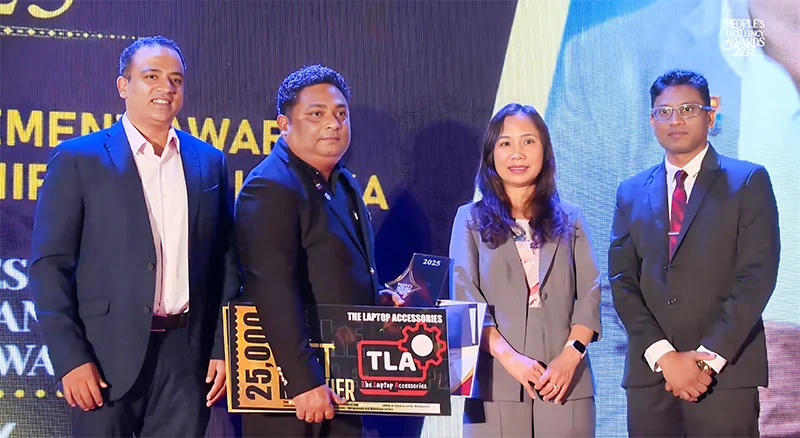
At a time when Sri Lanka is seeking to reposition itself as a premium tourism destination amid economic recovery and declining mass-market margins, Dr. Thisara Hewawasam, Chairman and Founder of Aviyana Ceylon, has been recognised with the 2025 People’s Award – Lifetime Achievement (VIP Category) for his contribution to business leadership and tourism-led economic transformation.
Dr. Hewawasam received the award at the 2025 People’s Awards ceremony held recently in Colombo, in recognition of his role in pioneering Sri Lanka’s first seven-star hotel project, Aviyana Ceylon, and for advancing globally competitive standards within the local hospitality sector.
The award was presented by Vietnam’s Ambassador to Sri Lanka Trinh Thi Tam, along with Parliamentarian Harshana Rajakaruna and Iconic Awards Director Asanka Athapattu, reflecting growing diplomatic and regional attention to Sri Lanka’s private-sector-driven growth narrative.
According to the official citation, the honour recognises Dr. Hewawasam’s leadership as a homegrown entrepreneur who translated long-term vision, discipline and innovation into a hospitality venture designed to compete at the highest international level. His work was acknowledged for strengthening Sri Lanka’s tourism brand while supporting national economic recovery through high-value investment, skills development and employment creation.
Crucially, the citation highlights that Dr. Hewawasam’s contribution extends beyond a single project. By positioning Aviyana Ceylon at the ultra-luxury end of the market, he has helped shift the national tourism conversation away from volume-led growth towards value-based tourism, a model increasingly viewed by policymakers as essential for improving foreign exchange earnings without overburdening infrastructure or natural ecosystems.
Industry analysts note that Sri Lanka’s tourism sector is at an inflection point, where attracting fewer but higher-spending visitors has become a strategic necessity. In this context, flagship developments such as Aviyana Ceylon are seen as confidence signals to international investors, demonstrating that locally led projects can meet global benchmarks in design, service quality and brand ambition.
The People’s Award—conferred only once in a recipient’s lifetime—serves as a public endorsement of leadership that delivers sustained national impact.
In recognising Dr. Hewawasam, the award highlights the growing role of domestic entrepreneurs in shaping Sri Lanka’s post-crisis growth model, particularly in sectors capable of delivering long-term foreign exchange stability.

The CSE commenced on a positive note yesterday but later the All Share Price Index slumped due to corporate quarterly results not reaching expected levels, market analysts said.
Amid those developments both indices indicated mixed reactions. The All Share Price Index went down by 103.17 points, while the S and P SL20 rose by 2.48 points. Turnover stood at Rs 3.55 billion with seven crossings.
Those crossings were: Tokyo Cement 2.58 million shares crossed to the tune of Rs 268 million; its shares traded at Rs 104, ACL Cables one million shares crossed for Rs 100 million; its shares traded at Rs 100, Cargills Ceylon 75000 shares crossed for Rs 54.7 million; its shares traded at Rs 730, LB Finance 302000 shares crossed for Rs 49.5 million; its shares traded at Rs 164, Tokyo Cement (Non-Voting) 570,000 shares crossed for 49 million and its shares traded at Rs 85.90, Seylan Bank 430,000 shares crossed for Rs 47 million; its shares sold at Rs 109.50 and HNB (Non-Voting) 70600 shares crossed for Rs 28 million; its shares traded at Rs 369.
In the retail market top seven companies that mainly contributed to the turnover were; Cargills Rs 206.6 million (283,000 shares traded), Renuka Agri Rs 153.5 million (9.6 million shares traded), ACL Cables Rs 148 million (1.45 million shares traded), Easter Merchants Rs 140 million (8.11 million shares traded), TJ Lanka Rs 109 million (2.8 million shares traded), Ceylon Land and Equity Rs 106 million (4.9 million shares traded) and Colombo Dockyard Rs 76.6 million (517,000 shares traded). During the day 158 million share volumes changed hands in 34681 transactions.
It is said that construction related companies and manufacturing and financial services related companies performed well. Top negative contributors to the ASPI were Senkadagala Finance (down Rs 68.50 at 837), Cargills (Ceylon) (down Rs 21 at 730), and Dialog Axiata (down 60 cents at Rs 32.70).
Yesterday the rupee was quoted at Rs 309.50/55 to the US dollar in the spot market, from Rs 309.43/50 the previous day, dealers said, while bond yields dropped significantly.
A bond maturing on 15.12.2029 was quoted at 9.45/55 percent.
A bond maturing on 15.03.2031 was quoted at 9.82/87 percent.
A bond maturing on 01.10.2032 was quoted at 10.15/20 percent, down from 10.17/21 percent.
A bond maturing on 01.06.2033 was quoted at 10.45/50 percent, down from 10.50/54 percent.
A bond maturing on 01.11.2033 was quoted at 10.60/62 percent.
A bond maturing on 15.06.2034 was quoted at 10.65/70 percent, down from 10.77/81 percent.
A bond maturing on 15.06.2035 was quoted at 10.72/75 percent, down from 10.95/98 percent.
An auction of Rs. 90,000 million Treasury bills is scheduled to take place today and an auction of Rs 51,000 million Treasury bonds tomorrow.
By Hiran H Senewiratne

Amendment of the Inland Revenue Act No. 24 of 2017

Cabinet nod for “National Mineral Policy” – 2026

Twelve sentenced to death by Gampaha High Court
Ten new buses with facilities for people with special needs

Ghosts of 2016 writ large as England, West Indies meet again
Amendment to the regulations for registration of Subscriber SIM Cards (Subscriber Identity Modules- SIM) and reregistration of subscriber information related to the SIM cards obtained before 02-08-2019

‘Dates have the highest sugar content to fight Coronavirus’

Sunday Island 27 December – Headlines

#SundayIsland 17th December – Headlines

Sunday Island – 28th March

Sunday Island Headlines – 21 March

Sunday Island – 21st February – Headlines
-

 Features3 days ago
My experience in turning around the Merchant Bank of Sri Lanka (MBSL) – Episode 3
-

 Business4 days ago
Zone24x7 enters 2026 with strong momentum, reinforcing its role as an enterprise AI and automation partner
-

 Business3 days ago
Remotely conducted Business Forum in Paris attracts reputed French companies
-
 Business3 days ago
Four runs, a thousand dreams: How a small-town school bowled its way into the record books
-
 Business3 days ago
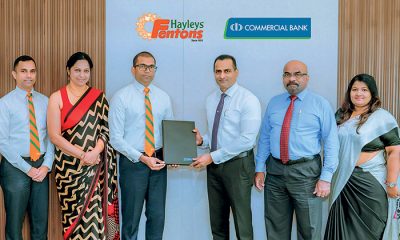
ComBank and Hayleys Mobility redefine sustainable mobility with flexible leasing solutions
-
 Business4 days ago
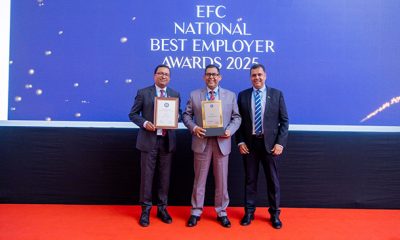
HNB recognized among Top 10 Best Employers of 2025 at the EFC National Best Employer Awards
-

 Editorial6 days ago
All’s not well that ends well?
-

 Business4 days ago
GREAT 2025–2030: Sri Lanka’s Green ambition meets a grid reality check