
Sports
Crunch time for West Indies; all-win South Africa still looking for the perfect game


It isn’t actually called a quarter-final, but for West Indies, this game against South Africa could well be one. Win, and they will be through to the T20 World Cup 2024 semi-finals, irrespective of other results. Lose, and then net run-rate comes into play if England lose to USA; West Indies will be out if England beat USA.
South Africa’s equation is slightly more nuanced. A win will guarantee them a spot in the last four but they could still get there with a close defeat, and by the time the match is played, they will know exactly what the margins they are working with are.
What may be lurking in the back of South Africa’s mind is how close five of their six games so far have been. They have snatched victories from the unlikeliest of scenarios and seem to be riding a wave of good fortune that they have failed to catch in tournaments past. They will be the first to admit that they are yet to put together the perfect game, but they boast a perfect record. Six out of six wins means they are once again being spoken of as champion material. Could this be the year South Africa finally win a T20 World Cup? West Indies might have something to say about that.
The co-hosts were unbeaten through the group stage too. Though they lost to defending champions England in the Super Eight after that, they are still on track to achieving what they set out to: re-establish West Indies as a powerhouse by competing strongly and (hopefully, for them) winning a third T20 World Cup. For now, it all hinges on how they do in this match and though they may take heart from sweeping South Africa 3-0 before the tournament, it’s worth remembering that that was a second-string South Africa side. The real test is now.
Alzarri Joseph has the same number of tournament wickets as Anrich Nortje – 11 – at a slightly higher average (13.81 compared to 12.90) but a slightly better strike rate. Joseph has taken a wicket once every 11 balls at the tournament – and Nortje once every 13 balls – and is rightly seen as West Indies’ biggest threat with the ball.
Joseph has only played two T20Is against South Africa, and in the last one took a series winning 5 for 40 to seal a seven-run win. Four of the five batters Joseph dismissed in that match – Quinton de Kock, Reeza Hendricks, David Miller and Heinrich Klaasen – have been part of South Africa’s XI in every game at the World Cup thus far. On his home ground, Antigua, he will have even more motivation to attempt to repeat the feat.
With Nortje, Kagiso Rabada and Ottneil Baartman all shining at different stages of the competition, Marco Jansesn has flown under the radar despite being an important part of South Africa’s progress. The economy rate of 5.90 includes bowling mostly in the powerplay and is South Africa’s second-lowest after Baartman (though Jansen has played one more game). Though he has gone wicketless in all but one match, Jansen has been match-winning in other ways. Against England, he was tasked with the game’s penultimate over and conceded just seven runs, leaving Nortje 13 to defend. Crucially, he has adapted to conditions when some of his team-mates have not, and he is yet to be given a chance to show what he can do with the bat.
Shai Hope’s unbeaten 39 ball 82 opening the batting against USA may mean West Indies do not have immediate cause to bring in Kyle Mayers, who has replaced the injured Brandon King in their squad. It’s an interesting call to make because Mayers has the advantage of knowing the South African players well, from his time at the SA20, and of being West Indies’ second leading run scorer in the pre-World Cup series played against South Africa last month. Their other decision will be in the make-up of the bowling unit – whether to include an extra seamer in Romario Shepherd or stick to the offspin of Roston Chase.
West Indies (probable): Shai Hope/Kyle Mayers, Johnson Charles, Nicholas Pooran (wk), Rovman Powell (capt), Andre Russell, Sherfane Rutherford, Romario Shepherd/Roston Chase, Obed McCoy, Akeal Hosein, Alzarri Joseph, Gudakesh Motie
The last time South Africa played in Antigua, they opted for two spinners and left Baartman out, and may consider that combination again. However, Tabraiz Shamsi was expensive against USA, which could open the door for the other left-arm spinner in the squad: Bjorn Fortuin, who has not had a game thus far. It’s more likely South Africa will stick to what they like best, with an unchanged batting line-up and one of Shamsi or Baartman.
South Africa (probable): Quinton de Kock (wk), Reeza Hendricks, Aiden Markram (capt), Tristan Stubbs, Heinrich Klaasen, David Miller, Marco Jansen, Keshav Maharaj, Kagiso Rabada, Tabraiz Shamsi/Ottneil Baartman, Anrich Nortje
[Cricinfo]

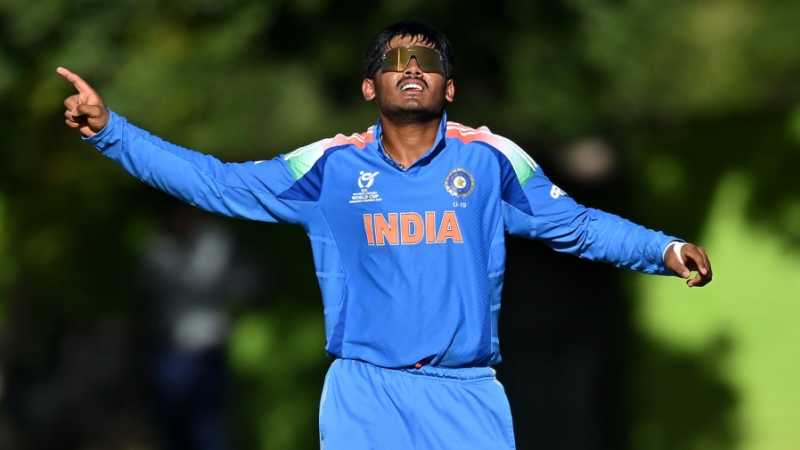
Pakistan Under 19 neither succeeded in qualifying for the semi-under 1final nor managed a win against India Under 19 in the last Super Sixes match of the Under 19 World Cup. Two absolute points and significant net-run-rate points behind India, Pakistan needed to chase down the target of 253 in 33.3 overs, but they never quite went for that outrageous chase on a difficult surface with variable bounce. However, as the game got deeper, the pitch got more and more difficult to bat on, scuttling even the regulation chase, which looked good till 33.3 overs.
India needed a win to end as their group leaders and thus get Afghanistan in the semi-final in Harare while a defeat after 33.3 overs would have pitted them against Australia on the same tired square in the semi-final in Bulawayo. In the end, the depth in India’s line-up trumped Pakistan, who had looked dominant in the early goings in both the innings.
Pakistan had India down at 47 for 3 and 200 for 7, but just couldn’t restrict them to a manageable chase. Vedant Trivedi shored India up with 68 off 98, and then the lower order all contributed: No. 8 Kanishk Chouhan scored 35, No. 7 RS Ambrish hung around for 29, and even No. 9 Khilan Patel hit 21 off 15. It didn’t help that Pakistan were slow in the field, and had to bowl the last four overs with an extra fielder inside the 30-yard circle: 39 runs came off these overs even though India didn’t have wickets in hand.
With the bat, Pakistan got off to a sprightly start, but the dip in quality of batting was quite steep after No. 4. That’s possibly why they didn’t go all out for the qualification. India, on the other hand, had plenty of defensive spin options, which proved to be valuable on a pitch that offered them a lot of turn in the afternoon.
India will look back at a game in which they were tactically superior even though the opposition dominated the early goings. They read the conditions better, deciding to bat first, but it never came to pass as Pakistan won the toss and decided to chase anyway. Vaibhav Sooryavanshi went after the new ball during his 30 off 22, but when they lost three wickets for the score of 47, Trivedi and Vihaan Malhotra dug in, knowing any score over 200 would make it extremely difficult for any outrageous chase. Even with the ball, they bowled defensively to first make sure they qualified and just burst through the narrow opening provided when Pakistan captain Farhan Yousaf was caught at long-on to make it 151 for 3 in 29.4 overs.
The collapse after that was spectacular – 8 for 43 – with the ball turning square and India using their part-time spinners against a left-hand dominated batting order. While Chouhan, who started early, ended with figures of 10-1-30-1, captain Ayush Mhatre picked up three wickets to go with one for Malhotra. Khilan, whose hitting pushed India past 250 earlier, took three bonus wickets.
Pakistan will rue their indiscipline with the ball and in the field, and indecision with the bat. The intent against the new ball wasn’t absolute. One Henil Patel got Sameer Minhas out early, they understandably needed to be a little circumspect, but you would have expected them to turn this into a T20. At 13.3 overs, they needed 174 in 20 overs with nine wickets in hand if they were to qualify, but they never put India under pressure. They took only what was on offer, and Chouhan didn’t offer much.
However, during the 63-run third-wicket stand between Usman Khan and Yousaf, Pakistan looked like they were the favourites for a regulation win. Yousaf picked a slower ball from Ambrish, tried to hit his third six, but couldn’t clear long-on. That is when India started to tighten the noose, and choked Pakistan out of the game.
Brief scores:
India Under-19 252 in 49.5 overs (Vedant Trivedi 68, Kanishk Chouhan 35; Abdul Subhan 3-33) beat Pakistan Under-19 194 in 46.2 overs (Usman Khan 66, Hamza Zahoor 42; Ayush Mhatre 3-21, Khilan Patel 3-35)by 58 runs
(Cricinfo)

Tom Banton’s clinical half-century and a breathless Harry Brook cameo gave England an unassailable 2-0 lead over Sri Lanka, and left them with a problem of plenty ahead of the start of the T20 World Cup next weekend.
England’s solid start in an attempt to chase 190 was interrupted for more than an hour by unexpected rain in Pallekelle, and they were set a stiff DLS-adjusted equation of 111 more runs off the last 9.4 overs when the weather cleared. But Banton’s 54 not out off 29 balls – his first England fifty in four years – and Brook’s 36 off 12 saw them home with two balls unused.
Banton, an opener by trade, has been fashioned into a finisher since returning to the England side last summer and looked like a placeholder for the injured Ben Duckett when picked at No. 4 for this series. But he has been a cut above his England team-mates when facing Sri Lanka’s spinners and will be hard to leave out even when Duckett’s bruised finger has recovered.
For all the doom and gloom in English cricket after another Ashes debacle in Australia, England have now won nine of their last 10 completed T20Is since Brook took over as captain last summer and will head into their opening match against Nepal next week confident that they can mount a genuine challenge for the World Cup title that they surrendered two years ago.
England owed plenty to their three-man spin attack, who returned combined figures of 3 for 81 from 12 overs; their seamers, by contrast, leaked 103 runs from eight overs. It was a familiar story for Sri Lanka, whose innings faded after a bright start. With a platform of 102 for 1 off 10 overs, they should have managed more than 189 for 5 – not least with three dropped catches.
Sri Lanka may also rue their luck, given the unexpected change in conditions. Dasun Shanaka, their captain, was happy to bat first on a used pitch but his bowlers struggled for control with a wet ball after the rain break, and lost Eshan Malinga to a shoulder injury sustained off the first ball of the resumption. “That’s the reason we lost,” Shanaka said.
Banton was a dominant leg-side player when he burst into international cricket as a precocious 20-year-old back in 2019 but expanded his game significantly after dropping out of the England set-up in his early 20s and proved as much when taking on Sri Lanka’s spinners through the middle overs.
He reverse-swept Wanindu Hasaranga and launched Dunith Wellalage over extra cover for sixes, and brought up a 29-ball half-century by drilling Shanaka’s medium pace through wide long-on. “Most of my career I’ve been opening, and I’ve got a new role with England which has been really exciting,” Banton said. “It was a great night. Great to get a series win.”
England lost two early wickets: Phil Salt sliced Matheesha Pathirana’s slower ball to short third, and Jacob Bethell edged behind looking to uppercut Shanaka’s short ball. Joss Buttler looked ominous early on, pinging consecutive boundaries off Pathirana, but fell to an excellent diving catch at deep point by Pavan Rathnayake, looking to hit Wellalage for six.
But the required rate never spiralled out of control thanks to both Banton and Brook, who hit four of the 12 balls he faced for six in an outrageous cameo. He hit four consecutive legal balls from Pathirana for four, six, six and six – with an over’s gap in the middle – as he repeatedly gave himself room and blazed over extra cover, before he was caught trying to lap-pull over fine leg.
It left Banton to see England home, with Sam Curran delivering the winning blow by hoisting Janith Liyanage’s medium pace over wide long-on for six.
Pathum Nissanka got Sri Lanka off to a lively start, hitting Curran for three consecutive boundaries in the first over before flicking Jofra Archer for six. He continued to attack when Brook threw the ball to his spinners, slog-sweeping Will Jacks for six, before chopping Archer onto his own stumps for a 22-ball 34.
Sri Lanka managed 58 for 1 in the Powerplay and Kusal Mendis took over from Nissanka, dragging Adil Rashid through midwicket for back-to-back fours and using his paddle-sweep to get Liam Dawson away. But Kamil Mishara could not score as freely, and picked out long-on on 36 when he tried to launch Jacks for six.
It was thanks to Rathanayake that Sri Lanka’s innings did not completely fade away. Picked on the back of his sparkling century in the third ODI earlier in the week, his 40 off 22 balls featured several slices of luck – a top-edged pull for six, a bottom-edged sweep for four, and a reprieve on 12 thanks to Banton – but may have earned him a spot in their T20 World Cup squad, which is yet to be announced.
But Mendis fell top-edging a sweep, Shanaka was pinned lbw by a googly, and Charith Asalanka never got going despite two reprieves of his own: one tough chance, which Salt parried over the rope, and a much easier drop by Banton at deep square leg. But Banton made amends, and left Sri Lanka with more questions than answers.
Brief scores:
England 173 for 4 in 16.4 overs (Tom Banton 54*, Joss Buttler 39, Jacob Bethell 13, Harry Brook 36, Sam Curran 20*; Matheesha Pathirana 2-47, Dasun Shanaka 1-24, Dunith Wellalage 1-30) beat Sri Lanka 189 for 5 in 20 overs (Pavan Rathnayake 40, Kamil Mishara 36, Pathum Nissanka 34, Kusal Mendis 32, Charith Asalanka 28* ; Jofra Archer 2-42, Will Jacks 1-24, Liam Dawson 1-32, Adil Rashid 1-25 ) by six wickets (DLS method)
(Cricinfo)
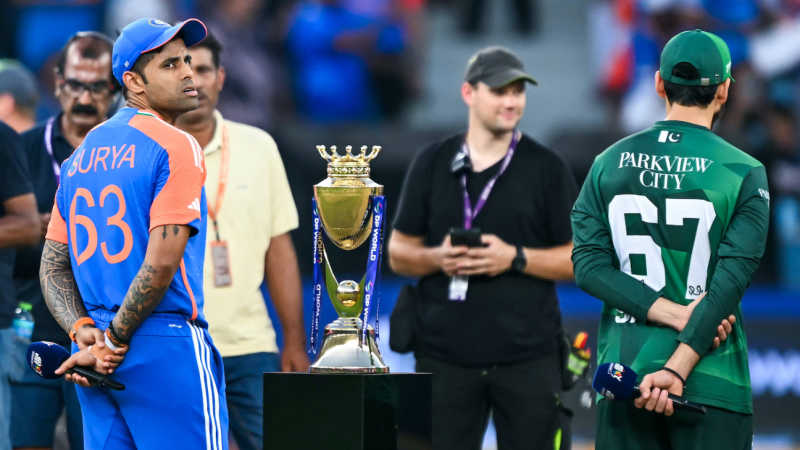
Pakistan will boycott their Group A game against India at the 2026 T20 World Cup. A post issued by the Government of Pakistan’s official X account said the government had granted permission to the Pakistan team to travel to Sri Lanka for the tournament, but that “the Pakistan cricket team shall not take the field in the match scheduled on 15 February 2026 against India”.
The statement did not specify a reason for that decision. The full post on X was as follows: “The Government of the Islamic Republic of Pakistan grants approval to the Pakistan Cricket Team to participate in the ICC World T20 2026, however, the Pakistan Cricket Team shall not take the field in the match scheduled on 15th February 2026 against India.” It is understood the PCB is yet to write to the ICC informing them of the boycott.
The India-Pakistan fixture is by far the most lucrative – and usually most-watched – game of any ICC tournament. To capitalise on that, the ICC has ensured the two teams are always in the same group of any ICC event since 2012, even as worsening diplomatic relations between the two nations means they have not played a bilateral fixture in 14 years. There is no word yet on what will happen should the two sides meet in a knockout game but the 2026 T20 World Cup now looks set to become the first men’s ICC event since 2010 not to feature an India-Pakistan game in the group stages.
Pakistan’s participation, or the extent of it, at the 2026 T20 World Cup had been thrown into doubt by PCB chairman Mohsin Naqvi after Bangladesh were removed from the tournament on January 24 following their refusal to play in India due to security concerns. Pakistan was the only country vocally supportive of Bangladesh’s request for an alternate venue, and reacted to their removal by accusing the ICC of double standards favouring India. He said the government would ultimately decide whether Pakistan were to take part in the tournament.
Two days later, Naqvi, who met Pakistan’s Prime Minister Shehbaz Sharif, said he had been advised to keep all options open to resolve the issue. Naqvi said at the time the decision would be taken on “Friday or next Monday”. One day out from that deadline, the Pakistan government appeared to have made its mind up.
Pakistan are in Group A along with India, Namibia, Netherlands and USA, and are playing all their matches in Sri Lanka, which is a co-host of the tournament along with India. They play their first match against Netherlands on February 7, the opening day of the T20 World Cup, and then take on USA on February 10, and Namibia on February 18. Pakistan will forfeit the two points from their game against India if they boycott the fixture.
The ICC’s Playing Conditions dictate that Pakistan’s net run rate will also be hit by the forfeiture, but India’s will remain unaffected. Clause 16.10.7 states that in the event of a forfeit, “the net run rate of the defaulting team shall be affected in that the full 20 overs of the defaulting team’s innings in such forfeited match shall be taken into account in calculating the average runs per over of the defaulting team over the course of the relevant portion of the competition.”
(Cricinfo)

Iran’s supreme leader warns of regional war if US attacks

India qualify for Under-19 World Cup semi-finals, Pakistan knocked out

Tom Banton fifty steers DLS chase to seal series for England

Pakistan to boycott T20 World Cup group match against India

England to bowl first in Pallekelle

No child should be deprived of vocational or higher education due to poverty – PM

‘Dates have the highest sugar content to fight Coronavirus’

Sunday Island 27 December – Headlines

#SundayIsland 17th December – Headlines

Sunday Island – 28th March

Sunday Island Headlines – 21 March

Sunday Island – 21st February – Headlines
-

 Business7 days ago
ComBank, UnionPay launch SplendorPlus Card for travelers to China
-

 Business4 days ago
Climate risks, poverty, and recovery financing in focus at CEPA policy panel
-
 Opinion3 days ago
Sri Lanka, the Stars,and statesmen
-

 Business2 days ago
Hayleys Mobility ushering in a new era of premium sustainable mobility
-

 Opinion7 days ago
Luck knocks at your door every day
-

 Business2 days ago
Advice Lab unveils new 13,000+ sqft office, marking major expansion in financial services BPO to Australia
-

 Business2 days ago
Arpico NextGen Mattress gains recognition for innovation
-

 Business23 hours ago
Altair issues over 100+ title deeds post ownership change