
News
Croplife highlights agriculture sector woes at interactive event


Once renown as the granary of Asia while being recognized for superior agricultural produce and gifted with unique attributes, Sri Lanka today is experiencing major collapse in overall agricultural productivity.This has resulted in shock waves of food shortages and exorbitant price hikes leading to partial starvation among various socioeconomic strata of the country’s population. This was revealed at an interactive gathering of agri industry professionals and subject experts from the local and global arena on Friday.
Addressing the interactive gathering themed “Role of Agric Inputs in Food Security” at the Waters Edge, Battaramulla, Chairman of Croplife, Chamenda Wijerathna said that numerous economic and policy mishaps were evident during 2021-2022 period; especially the banning of essential fertilizers, pesticides and other vital agri inputs resulted in the collapse in overall agriculture productivity.
Wijerathna said that ranging from Sri Lanka’s sole-staple of rice, all crop sectors including maize, tea, upcountry and low country vegetables suffered substantial negative impacts in the aftermath of short-supplied agri inputs. A recent study revealed the magnitude of the impact where increases in the cost of production has exceeded 67 per cent while reduction of average yield has been recorded at 54 per cent.
Subsequently, the selling price of agricultural produce has increased exponentially causing various consumer segments to reduce or totally give up buying their requirements.Overall, there has been more than a 45% increase of the selling price at every level of agricultural value chains,” Wijerathna said.
He said that achievement of self sufficiency in rice since the 1990’s had been an remarkable milestone reflecting the expertise, dedication and capability of cross-sectoral stakeholders to drive the country’s agriculture in the correct path.
“This progress has been severely affected over the last year, resulting in 51 per cent yield loss, 67 per cent increase in expenditure for crop production while selling prices gained 46 per cent.”
Maize, another remarkable crop, recorded improved productivity and export potential several years back. It has taken a hard hit witnessing 59 per cent yield loss, 66 per cent increase in cost of production while selling price has risen only 47 per cent.
“Vegetables both upcountry and low country have been no exceptions in terms of the depressing impacts of wrong policy decisions. Absence of pesticides and fertilizers have resulted in yield losses in upcountry and low country vegetables at the levels of 61 per cent and 51 per cent consecutively.
“Selling price of both vegetable types touched an increase of 50 per cent. COP of low country vegetables increased by 65 per cent while the upcountry vegetables recorded a staggering 70 per cent increase of production cost.Croplife Secretary Buddhika Ekanayake said that there were deep driven impacts caused by the absence of proper agri inputs which will be hard to tackle in another season or years’ time.
He said that Croplife has recognized following areas that will pause chronic and long term threats for the food production if not dealt with cautiously and collaboratively by all stakeholders: (1) Loss of farm output prompting elevated farm gate prices causing prohibitive prices tags right from the beginning of crop value chains.
(2) Avenues being created for the entry of illegal, substandard and dangerous pesticides to reach to local agrochemical market. Numerous occurrences of smuggled pesticides from India and elsewhere were reported by farmers, consumers and environmental activists.
(3) Unaffordable input costs have largely resulted in farmers giving up cultivation paving way for a multitude of economic and social issues. Farmers protests were widely evident during recent months. Anger and frustration of the uncertainties to be contended with were freely expressed.
Croplife Treasurer, Shamal Abeysinghe, industry professionals and subject experts at local and global arena and local politicians also addressed the interactive gathering.

Latest News
Tri-Forces donate LKR. 372 million, a day’s pay of all ranks to ‘Rebuilding Sri Lanka’ Fund


Members of all ranks from the Sri Lanka Army, Sri Lanka Navy and Sri Lanka Air Force have collectively donated a day’s basic salary to the ‘Rebuilding Sri Lanka’ Fund, which was established to restore livelihoods and rebuild the country following the devastation caused by Cyclone Ditwah.
Accordingly, the total contribution made by the Tri-Forces amounts to LKR. 372,776,918.28.
The cheques representing the financial contributions were handed over on Wednesday (31 December) at the Presidential Secretariat to the Secretary to the President, Dr. Nandika Sanath Kumanayake.
The donations comprised LKR. 250 million from the Commander of the Army, Major General Lasantha Rodrigo; LKR. 73,963,879.71 from the Commander of the Navy, Rear Admiral Kanchana Banagoda and LKR. 48,813,038.97 from the Commander of the Air Force, Air Marshal Vasu Bandu Edirisinghe.
Secretary to the Ministry of Defence, Air Vice Marshal Sampath Thuyacontha, was also present on the occasion.

The Ceylon Electricity Board (CEB) has submitted a proposal to the Public Utilities Commission of Sri Lanka (PUCSL) seeking an 11.57 percent increase in electricity tariffs for the first quarter of 2026, citing an estimated revenue shortfall and additional financial pressures, including cyclone-related damages.
According to documents issued by the PUCSL, the proposed tariff revision would apply to electricity consumption from January to March 2026 and includes changes to both energy charges and fixed monthly charges across all consumer categories, including domestic, religious, industrial, commercial and other users.
Under the proposal, domestic electricity consumers would face increases in unit rates as well as fixed monthly charges across all consumption blocks.
The CEB has estimated a deficit of Rs. 13,094 million for the first quarter of 2026, which it says necessitates the proposed 11.57 per cent tariff hike. The utility has noted that any deviation from this estimate whether a surplus or a shortfall will be adjusted through the Bulk Supply Tariff Adjustment (BSTA) mechanism and taken into account in the next tariff revision.
In its submission, the CEB said the proposed revision is aimed at ensuring the financial and operational stability of the power sector and mitigating potential risks to the reliability of electricity supply. The board-approved tariff structure for the first quarter of 2026 has been submitted to the PUCSL for approval and subsequent implementation, as outlined in Annex II of the proposal.
The CEB has also highlighted the financial impact of Cyclone Ditwah, which it said caused extensive damage to electricity infrastructure, with total losses estimated at around Rs. 20 billion. Of this amount, Rs. 7,016.52 million has been attributed to the first quarter of 2026, which the utility said has a direct bearing on electricity tariffs.
The CEB warned that if external funding is not secured to cover the cyclone-related expenditure, the costs incurred would need to be recovered through electricity tariffs in the second-quarter revision of 2026.
Meanwhile, the PUCSL has said that a decision on whether to approve the proposed tariff increase will be made only after following due regulatory procedures and holding discussions on the matter.
By Sujeewa Thathsara ✍️
Ondansetron controversy
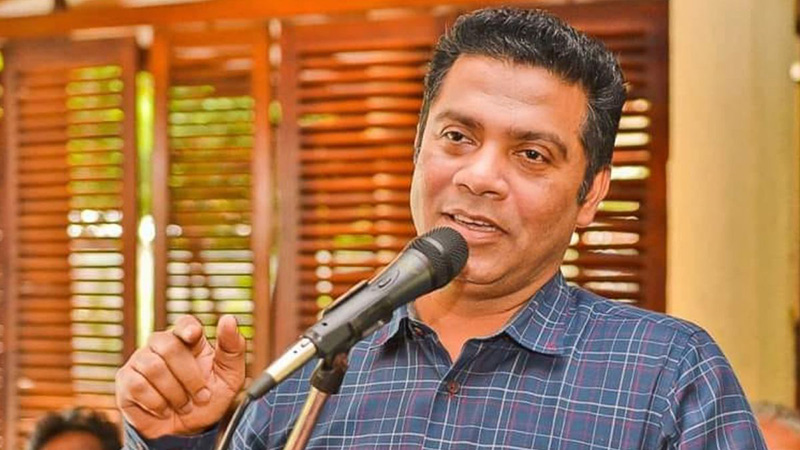
Minister of Health and Mass Media Dr Nalinda Jayatissa has sent a letter of demand for Rs. 1 billion in damages from YouTube content creator Dharmasri Kariyawasam, accusing him of disseminating false and defamatory material linking the Minister to the importation of Ondansetron and inciting public unrest.
The notice, sent through the Minister’s lawyers, states that investigations are currently under way into 10 medicines, including Ondansetron Injection, manufactured by India-based Maan Pharmaceutical Limited.
Ondansetron Injection was among nine injectable drugs recently suspended by the National Medicines Regulatory Authority (NMRA) following reports of patients administered with the drug suffering adverse complications.
Despite the ongoing investigations, Kariyawasam allegedly aired a widely viewed programme on his YouTube channel titled “The hidden story of the Indian drug that claimed lives, Mayor Balthazaar’s relative, and Minister Nalinda’s cover-up.”
According to the letter of demand, the programme falsely portrayed Minister Jayatissa as being directly responsible for importing the drug, colluding with the supplier, and attempting to conceal the issue, while depicting him as indifferent to public suffering.
The Minister’s lawyers maintain that these allegations are entirely false and defamatory, citing passages in which Kariyawasam allegedly accused Jayatissa of lying about the supplier, concealing facts related to PTC Medicals (Pvt) Ltd., the actual importer, and showing a lack of concern over deaths purportedly linked to the drug.
The programme also claimed links between the directors of PTC Medicals and family members of Colombo Mayor Vraîe Cally Balthazaar, implying political favouritism.

Tri-Forces donate LKR. 372 million, a day’s pay of all ranks to ‘Rebuilding Sri Lanka’ Fund

Rabada to lead strong South Africa pace attack at T20 World Cup

Showes about 75 mm are likely at some places in the Eastern and Uva provinces and in Matale, Nuwara-Eliya and Polonnaruwa districts.

CEB demands 11.57 percent power tariff hike in first quarter

Health Minister sends letter of demand for one billion rupees in damages

One killed, two injured in shooting at Kaduwela

‘Dates have the highest sugar content to fight Coronavirus’

Sunday Island 27 December – Headlines

#SundayIsland 17th December – Headlines

Sunday Island – 28th March

Sunday Island Headlines – 21 March

Sunday Island – 21st February – Headlines
-

 Sports5 days ago
Gurusinha’s Boxing Day hundred celebrated in Melbourne
-
 News3 days ago
Leading the Nation’s Connectivity Recovery Amid Unprecedented Challenges
-

 Sports6 days ago
Time to close the Dickwella chapter
-

 Features4 days ago
It’s all over for Maxi Rozairo
-

 News6 days ago
Environmentalists warn Sri Lanka’s ecological safeguards are failing
-
 News4 days ago
Dr. Bellana: “I was removed as NHSL Deputy Director for exposing Rs. 900 mn fraud”
-
 News3 days ago
Dons on warpath over alleged undue interference in university governance
-
 Features6 days ago
Digambaram draws a broad brush canvas of SL’s existing political situation