
News
Crisis won’t derail Covid-19 second jab:

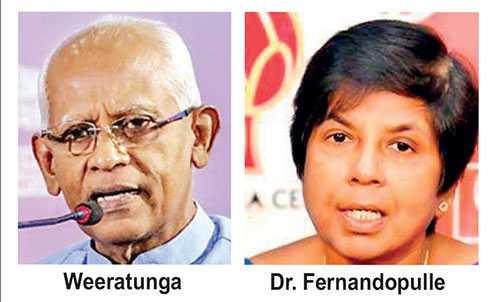
Vaccination drive begins today
… first round halted on 6 April
By Shamindra Ferdinando
Senior Presidential Advisor and head of Covid-19 vaccination project, Lalith Weeratunga said yesterday (27) that in spite of the fresh outbreak of a more virulent variant of the coronavirus in the country, the government was confident of carrying out the second round of immunisation using the Oxford AstraZeneca vaccine as scheduled.
Weeratunga, who also represents the Covid-19 Task Force said so when The Island sought an explanation as regards the growing Opposition accusations regarding the near collapse of the battle against the epidemic. Army Chief Gen. Shavendra Silva heads the Covid Task Force.
“Let us refrain from playing politics with unprecedented health emergency or seeking political advantage at the expense of overall national effort,” Weeratunga said, assuring the government’s unwavering commitment to bringing the situation under control.
Weeratunga said that the second round of the vaccination programme would begin on Wednesday (28).
Responding to another query, Weeratunga said that at the time Sri Lanka launched the vaccination programme on January 29, 2021 after receiving the first consignment from India on the previous day, the manufacturer-Serum Institute of Pune, Maharashtra advised that the second jab should be administered after four weeks. Subsequently, the manufacturer asserted that the second job should be administered between 12 to 16 weeks, Weeratunga said.
Admitting the severe difficulties caused by the spike in Covid-19 cases in the immediate aftermath of the Sinhala and Tamil New Year, Weeratunga emphasized the government wouldn’t try to justify the disruption of the vaccination programme under any circumstances.
Of course, the ongoing crisis in India prompted Sri Lanka to explore ways and means of securing the required doses from other sources, Weeratunga said, adding that the second round gets underway with the country having six weeks supply in its hands.
State Minister of Primary Health Care, Epidemics and Covid Disease Control Dr. Sudarshini Fernandopulle yesterday told The Island that the current challenge was two-fold with the government having to undertake the second vaccination round while trying to contain the fresh outbreak.
Acknowledging a rapid increase in the numbers affected, Dr. Fernandopulle said now younger people had been infected with complications needing high flow oxygen.
Emphasizing the heavy responsibility on all stakeholders, Dr. Fernandopulle said the public support was required to reduce what she called patient load.
The State Minister said that the country was paying a price for lowering the guard during the festive reason.
According to Dr. Fernandopulle, the government stopped the first round on April 6 in the wake of the total number of recipients reaching 927,000.
Commenting on the AstraZeneca received in three separate consignments since the arrival of the first lot on January 28, Dr. Fernandopulle said altogether Sri Lanka received 1,264,000. Of them, India donated 500,000 doses, Sri Lanka purchased 500,000 and bought another 264,000 through high profile Covax project-the global mechanism for equitable access to COVID-19 vaccines.
In terms of the Covax initiative, AstraZeneca, Pfizer-BioNTech and the Serum Institute of India have so far supplied vaccines to over 100 countries funded through the ‘Gavi Covax Advance Market Commitment.’
Dr. Fernandopulle said that the current crisis was believed to have been caused by a new variant. Both State Minister Fernandopulle and Vaccination Chief Weeratunga said that as in the first round the health workers and armed forces would receive priority.
Indian diplomatic sources told The Island that as far as the supply of AstraZeneca to Sri Lanka was concerned the situation remained the same with the last delivery in March in line with the Covax facility. Sources said that Sri Lanka was able to advance the first phase of the vaccination programme due to the early delivery made by the Serum Institute, sources said.
Senior Presidential Advisor Weeratunga also explained the government decision to acquire a substantial stock of Russia Sputnik V vaccine as part of the overall vaccination programme. According to him, the Russian deliveries would commence next week with Sri Lanka receiving 200,000 doses. Weeratunga said that altogether, the government would purchase 13 mn doses of Sputnik V.
The Russian diplomatic sources told The Island yesterday that the Russian Direct Investment Fund was handling the transaction.
Sri Lanka on March 31 received 600,000 doses of China’s Sinopharm vaccine jointly developed by the Beijing Institute of Biological Products and the Wuhan Institute of Biological Products. Sri Lanka awaits WHO approval for the Chinese Vaccine to give it to locals, though Chinese nationals working in Sri Lanka were inoculated with it on a voluntary basis no sooner it was airlifted to the country by the national carrier SriLankan.
Health Secretary Maj. Gen. Dr. Sanjeewa Munasinghe, the Chief Epidemiologist and Director General Health Services Dr Asela Gunawardena couldn’t be reached yesterday for comments as regards the developing situation.


The Inland Revenue Department has succeeded in collecting Rs. 2,203 billion in revenue in 2025, the highest amount recorded in its 93-year history. This represents a surplus of Rs. 33 billion over the revenue target for the year and a 15 per cent increase compared with the revenue collected in the previous year, stated Commissioner-General of Inland Revenue Ms Rukdevi Fernando.
She made these remarks at a discussion held on Tuesday (30) morning at the Department’s auditorium under the patronage of President Anura Kumara Dissanayake.
Marking the first occasion in the 93-year history of the Inland Revenue Department that a President has visited the Department, the President attended a meeting with the staff to review the progress achieved in 2025 and the new plans for 2026.
The President expressed his appreciation to all officers and staff of the Inland Revenue Department for surpassing the revenue expected by the Government and urged everyone to continue working towards a common objective in order to realise the economic transformation required for the country.
Emphasising that no individual is entitled to the privilege of evading taxes, the President stated that the era in which a tax culture prevailed based on personal or political affiliations has come to an end. He further stressed that the law will be enforced without hesitation, irrespective of status, against those who attempt to evade taxes.
The President also pointed out that tax collection is neither repression nor coercion but a legitimate right of the State, adding that necessary changes will be made to laws, regulations, designations and staffing in order to secure this contribution.
He further emphasised that the Government’s objective is to ensure that the benefits of these economic achievements flow to the people of the country. The Government is focusing on improving essential public services to enhance the quality of life, undertaking a new transformation of the transport system and providing adequate allocations for the development of the education and health sectors.
The President also highlighted the need for a targeted programme to properly collect the taxes due to the Government by addressing issues such as improving tax literacy, simplifying the tax system and filling staff shortages.
Ms Rukdevi Fernando stated that the professional competence and dedication of the Department’s officers were the key factors behind this success.
She further noted that a revenue target of Rs. 2,401 billion has been set for 2026 and that the Department expects to achieve this through programmes aimed at enhancing tax compliance and broadening the tax base.
In addition, she said that the Department plans to expand third-party data sharing, strengthen investigations into domestic and overseas assets, take over the RAMIS system, reinforce risk-based auditing, introduce e-invoicing, adopt modern technology for tax administration and enhance tax ethics in 2026.
Minister of Labour and Deputy Minister of Finance and Planning Dr Anil Jayantha Fernando, Deputy Minister of Economic Development Nishantha Jayaweera, Secretary to the President Dr Nandika Sanath Kumanayake, Commissioner-General of Inland Revenue Ms Rukdevi Fernando and senior officials and staff of the Department were present at the occasion.
Business
Sri Lanka Customs exceeds revenue targets to enters 2026 with a surplus of Rs. 300 billion – Director General


The year 2025 has been recorded as the highest revenue-earning year in the history of Sri Lanka Customs, stated Director General of Sri Lanka Customs, Mr. S.P. Arukgoda, noting that the Department had surpassed its expected revenue target of Rs. 2,115 billion, enabling it to enter 2026 with an additional surplus of approximately Rs. 300 billion.
The Director General made these remarks at a discussion held on Tuesday (30) morning at the Sri Lanka Customs Auditorium, chaired by President Anura Kumara Dissanayake.
The President visited the Sri Lanka Customs Department this to review the performance achieved in 2025 and to scrutinize the new plans proposed for 2026. During the visit, the President engaged in extensive discussions with the Director General, Directors and senior officials of the Department.
Commending the vital role played by Sri Lanka Customs in generating much-needed state revenue and contributing to economic and social stability, the President expressed his appreciation to the entire Customs employees for their commitment and service.
Emphasizing that Sri Lanka Customs is one of the country’s key revenue-generating institutions, the President highlighted the importance of maintaining operations in an efficient, transparent and accountable manner. The President also called upon all officers to work collectively, with renewed plans and strategies, to lead the country towards economic success in 2026.
The President further stressed that the economic collapse in 2022 was largely due to the government’s inability at the time to generate sufficient rupee revenue and secure adequate foreign exchange. He pointed out that the government has successfully restored economic stability by achieving revenue targets, a capability that has also been vital in addressing recent disaster situations.
A comprehensive discussion was also held on the overall performance and progress of Sri Lanka Customs in 2025, as well as the new strategic plans for 2026, with several new ideas and proposals being presented.
Sri Lanka Customs currently operates under four main pillars, revenue collection, trade facilitation, social protection and institutional development. The President inquired into the progress achieved under each of these areas.
It was revealed that the Internal Affairs Unit, established to prevent corruption and promote an ethical institutional culture, is functioning effectively.
The President also sought updates on measures taken to address long-standing allegations related to congestion, delays and corruption in Customs operations, as well as on plans to modernize cargo inspection systems.
The discussion further covered Sri Lanka Customs’ digitalization programme planned for 2026, along with issues related to recruitment, promotions, training and salaries and allowances of the staff.
Highlighting the strategic importance of airports in preventing attempts to create instability within the country, the President underscored the necessity for Sri Lanka Customs to operate with a comprehensive awareness of its duty to uphold the stability of the State, while also being ready to face upcoming challenges.
The discussion was attended by Minister of Labour and Deputy Minister of Finance and Planning, Dr. Anil Jayanta Fernando, Deputy Minister of Economic Development, Nishantha Jayaweera, Secretary to the President, Dr. Nandika Sanath Kumanayake, Deputy Secretary to the Treasury, A.N.Hapugala, Director General of Sri Lanka Customs, S.P.Arukgoda, members of the Board of Directors and senior officials of the Department.
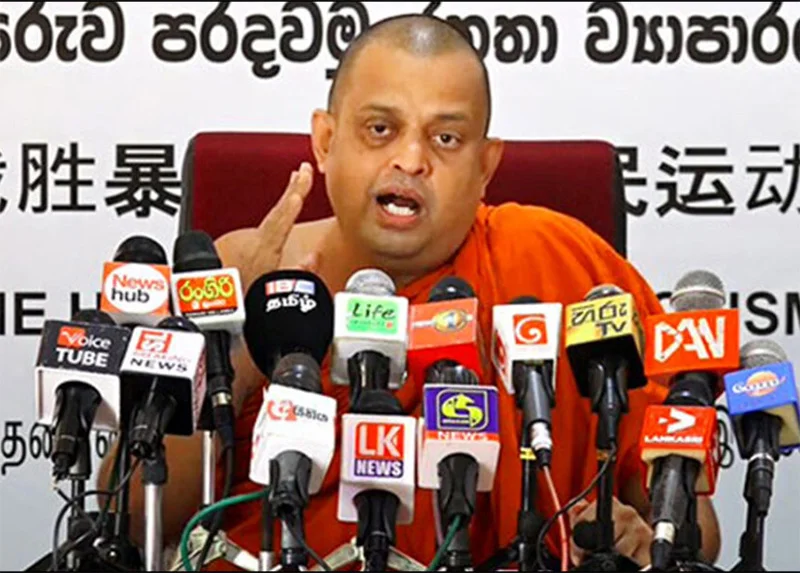
Teachers, principals and education professionals have said the government is unprepared to roll out proposed education reforms scheduled to take effect from next week, and warned of nationwide trade union action if the plans are implemented without adequate consultation and preparation.
Addressing a press conference in Colombo, President of the Association of Education Professionals, Ven. Ulapane Sumangala Thera, said Ministry officials had indicated that the reforms would be implemented from Monday, 05 January, but claimed that the vast majority of educators were opposed to the move.
“More than 90 percent of teachers say they have not received proper training on the new syllabus or the proposed reforms,” Ven. Sumangala Thera said. He alleged that the government was attempting to suppress opposition from teachers and principals by declaring school holidays, instead of addressing their concerns.
“If the government continues with these tactics, we will have no option but to resort to trade union action at a national level,” he warned.
Meanwhile, representatives of 16 teachers’ and principals’ unions who visited the Ministry of Education at Isurupaya on Monday to seek clarification on the reforms were turned away by security officials, reportedly on the grounds that prior appointments were required.
Speaking to the media outside the Ministry, Amila Sandaruwan of the Teacher Principals’ Collective said the delegation had attempted to raise their concerns during the Public Day allocated for visitors. “We wanted to know how these reforms are to be implemented and sought to meet the Secretary to the Ministry of Education, but we were barred,” he said.
Sandaruwan accused the Government of proceeding in an “adamant” manner and claimed the reforms were being driven by a handful of non-governmental organisations closely associated with senior ministry officials. “We will not allow this to happen,” he said.
Graded Principals’ Association representative Nimal Mudunkotuwa said widespread confusion prevailed among teachers and school administrators regarding the practical aspects of implementing the reforms. “There is no clarity on school hours—whether schools are to close at 1.30 p.m. as before, or continue until 2.00 p.m. as proposed,” he said.
He added that uncertainty also remained over the number of daily teaching periods, with conflicting statements suggesting either seven or eight periods. “Schools have yet to receive syllabus modules from the Ministry, and many schools lack smart boards and internet connectivity required to implement these reforms,” Mudunkotuwa said.
Ven. Ulapane Sumangala Thera strongly criticised the proposed reforms, describing them as “bastard reforms,” and accused the NPP Government of undermining the education system. He also raised objections to a unit in the proposed Grade Six English syllabus dealing with gay and lesbian relationships, claiming that senior Buddhist prelates, the Catholic Cardinal and other religious leaders had opposed its inclusion.
“The Government refuses to listen even to religious leaders,” he said.
Concerns were also raised at a National Sangha Council meeting held in Colombo on Monday evening at the Colombo Foundation Institute, organised to discuss the objectives of the proposed reforms. Addressing the gathering, Professor Venerable Induragare Dhammaratana Thera said the reforms required extensive discussion, consultation with subject experts and consideration of the experience of senior administrators.
He warned that the proposed changes could trigger the biggest crisis currently facing the country. “Implementing these reforms in this manner will harm future generations and could even destroy the present Government,” he said, likening the process to “forcing a round peg into a square hole.”

Lasith Malinga to work with the Sri Lanka Team in lead up to T20 World Cup

Highest revenue in 93-year history of Inland Revenue Department collected in 2025

Showers or thundershowers will occur at times in the Northern, Eastern, Central, North-central, North-western and Uva provinces

Israel to bar 37 aid groups from Gaza

Protests spread across Iran for third day after currency hits record low

Sri Lanka Customs exceeds revenue targets to enters 2026 with a surplus of Rs. 300 billion – Director General

‘Dates have the highest sugar content to fight Coronavirus’

Sunday Island 27 December – Headlines

#SundayIsland 17th December – Headlines

Sunday Island – 28th March

Sunday Island Headlines – 21 March

Sunday Island – 21st February – Headlines
-

 News6 days ago
British MP calls on Foreign Secretary to expand sanction package against ‘Sri Lankan war criminals’
-
 News5 days ago
Street vendors banned from Kandy City
-
 Sports6 days ago
Chief selector’s remarks disappointing says Mickey Arthur
-

 Opinion6 days ago
Disasters do not destroy nations; the refusal to change does
-

 Sports2 days ago
Gurusinha’s Boxing Day hundred celebrated in Melbourne
-

 News5 days ago
Lankan aircrew fly daring UN Medevac in hostile conditions in Africa
-

 Sports3 days ago
Time to close the Dickwella chapter
-
 Sports6 days ago
Royal record crushing innings win against Nalanda