
Opinion
Cracks are showing already!

By Dr Upul Wijayawardhana
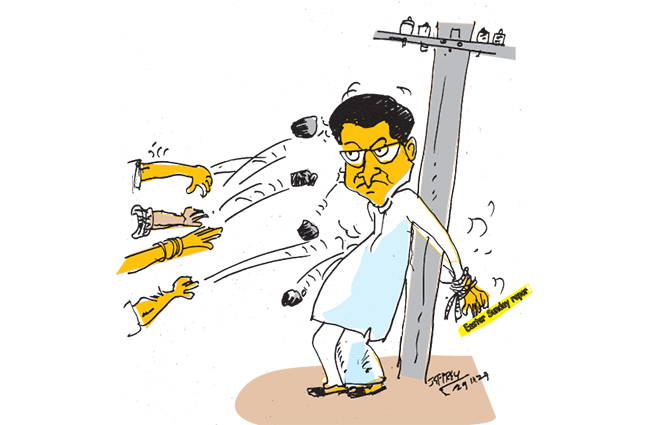
When I wrote “Will SL govt. do better than the UK Labour administration?” (The Island, 18 October), I never imagined that there would be the need for a follow-up anytime soon but, as it happens, a downward spiral seems to have started already and cracks are appearing in the new administration of Sri Lanka. On top of the fracas about the Easter Sunday bomb attack probes, the pretty mask of the NPP, which won votes from even those sceptical about the JVP, seems to be coming off revealing the real JVP underneath.
Many who supported Anura Kumara Dissanayake (AKD) to win the presidency, in the belief that he was a true democrat committed to changing the political culture of Sri Lanka, would have been surprised and felt let down when AKD said at a public rally that there was no need for an Opposition and Parliament should be filled with only NPP members. For sceptics, that call came as no surprise at all, as the JVP is showing its true colours as a Marxist party. Afterall, they believe in the dictatorship of the proletariat!
Worse still is the fracas about the two committees set up by the then President Ranil Wickremesinghe to investigate two aspects of the Easter Sunday bomb attacks. The reports have cast doubts about the judgement of the president and his two ministers responsible for appointing to high positions two retired senior police officers, who are found to have neglected their duties by one of the committees. These two police officers—one arrested last October after crashing his jeep on to a tourist bus and a car, presumably due to inebriation and the other exposed by Ranjan Ramanayake’s audio recordings of telephone conversations—actively campaigned for the NPP.
We do not know what motivated them to play such a prominent role in the AKD presidential campaign; maybe it was because they were convinced by the policies of AKD or maybe they joined the winning side to get into positions of power or may be even avoid being charged with dereliction of duty while they were in the CID. Whatever it is, they got more than adequately rewarded and seem well protected as Minister Vijitha Herath has declared that they would not be removed under any circumstances. His skewed logic is well exposed and heavily criticized in the editorial “Probe reports, skewed logic and emerging threats” (The Island, 24 October)
Salvos fired by the veteran politician, Udaya Gammanpila, and the awkward responses, not only from the government but also from the Catholic Church are well analysed in two previous Island editorials; ‘Mastermind at large; Udaya in crosshairs’ on 21st October and ‘Of that damning report’ on 22nd October. Gammanpila claimed that he was in possession of two reports; one headed by former Justice S. A. Imam, who was tasked with probing some allegations UK Channel-4 levelled against Sri Lanka’s military intelligence in respect of the Easter Sunday carnage and the other, chaired by former judge A. N. J. de Alwis, whose purview was to inquire into intelligence coordination and investigative processes related to the Easter Sunday bombings. Gammanpila challenged the government to release these reports and Minister Herath threw a counter-challenge and issued a veiled threat of legal action.
When Gammanpila released the Alwis committee report, as he said he would, on 21 October, Minister Herath’s response was that they rejected the report, which is puzzling. What one would have expected a government that came to power on the promises of transparency and elimination of corruption to publish the report in keeping with their demand whilst being in the Opposition. Interestingly, initially it was the spokesman of the Catholic church, Father C G Fernando, who gave the reason: that Justice Alwis had conflict of interest as her brother had been disciplined by the two police officers concerned and, subsequently Minister Herath carried out a personal attack on her. Why weren’t those objections raised, if valid, when she was appointed? And, why did her critics wait until they found the committee report was critical of their two favourite ex-cops! Is this good governance that was promised?
Gammanpila released the Imam report 28 October, and one wonders what Father Fernando, who lamented about the loss of that report at a book launch on 01 October, has got to say? Meanwhile, JVP supporters have mounted a massive social media campaign ridiculing Gammanpila. Perhaps, it is the shape of things to come!
Interestingly, at a ceremony held at one of the affected sites, St. Sebastian’s church in Katuwapitiya, conducted by Cardinal Ranjith, President AKD was questioned emotionally by a bereaved mother/wife what action the government was planning to take. His response was that as he was not a judicial officer, he would leave it to the judiciary to take action. As there is an element of doubt, for the sake of the promised transparency and eradication of corruption, he should get the Attorney General to file action against these two officers, as recommended in the Alwis report. If they are cleared by the judiciary, then they can resume their jobs. This would help prevent embarrassment for the government. It looks as if the new government is unaware of the dictum “Justice must not only be done, but must also be seen to be done”.
Then came the sudden issue of the US travel advisory. The government’s response that it had been aware of the threat and had already taken action, seemed an excuse. Had the government liaised with the foreign diplomats, a less damaging advisory could have been issued as the way they had been issued is likely to damage the tourist sector which is reviving. Of course, it is quite possible that this was done purposely, as it was issued the day after the government announced that it had signed the resolution, spearheaded by Chile, supporting the UN Secretary General who had been declared a persona non grata by Israel. If so, the government is heading for a very turbulent period engineered by foreign viceroys!
The credibility of the government is falling fast as they seem to be doing just the opposite of what its leaders preached while they were in the opposition.


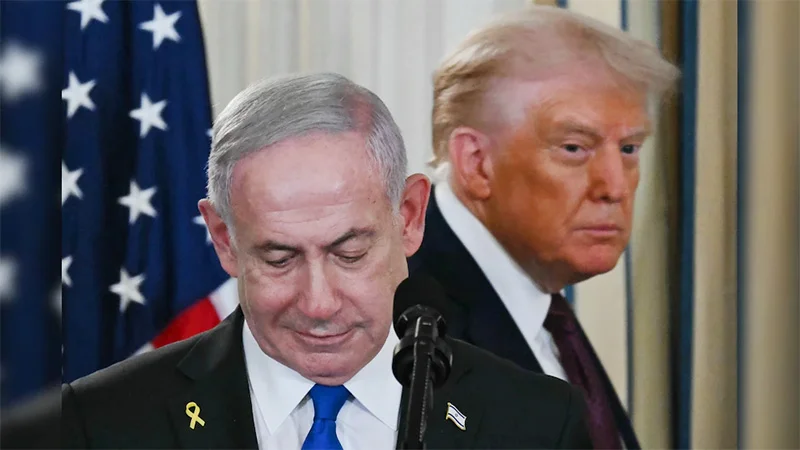
Wars often produce moments when leaders feel compelled to seek a decisive stroke that will end the conflict once and for all. History shows that such moments can generate choices that would have seemed unthinkable only months earlier. When Harry S. Truman authorised the atomic bombings of Hiroshima and Nagasaki in 1945, the decision emerged from precisely such wartime pressures. As the conflict involving the United States, Israel and Iran intensifies today, the world must ensure that a similar moment of desperate calculation does not arise again.
The lesson of that moment in history is not that such weapons can end wars, but that once the logic of escalation begins to dominate wartime decision-making, even the most unthinkable options can enter the realm of strategic calculation. The mere possibility that such debates could arise is reason enough for policymakers everywhere to approach the present conflict with extreme caution.
As the war drags on, both Donald Trump and Benjamin Netanyahu will face mounting pressure to produce decisive results. Wars rarely remain confined to their original scope once expectations of rapid victory begin to fade. Political leaders must demonstrate progress, military planners search for breakthroughs, and public narratives increasingly revolve around the need for a conclusive outcome. In this environment, media speculation about “exit strategies” or “off-ramps” for Washington can unintentionally increase pressure on decision-makers. Even well-intentioned commentary can shape the climate in which leaders make decisions, potentially nudging them toward harder, more dramatic actions.
Neither the United States nor Israel lacks the technological capability associated with advanced nuclear arsenals. The nuclear arsenals of advanced powers today are far more sophisticated than the devices used in 1945. While their existence is intended primarily as deterrence, prolonged wars have historically forced strategic communities to examine every available option. Even the discussion of such possibilities is deeply unsettling, yet ignoring the pressures that produce such debates can be dangerous.
For that reason, policymakers and societies on all sides must recognise the full range of choices that prolonged wars can place before leaders. For Iran’s leadership and its wider strategic community, absorbing this reality may be essential if catastrophic escalation is to be avoided. From Tehran’s perspective, the conflict may well be seen as existential. Yet history also shows that wars framed as existential struggles can generate the most dangerous strategic decisions.
The intellectual climate in Washington has also evolved. A number of influential voices in Washington now argue that the United States has become excessively risk-averse and that restoring global credibility requires a more assertive posture. Such arguments reflect a broader shift toward the language of renewed deterrence and strategic competition. Yet this very logic can make it politically harder for leaders to conclude conflicts without visible demonstrations of strength.
The outcome of this conflict will also be watched closely by other major powers. In 1945, the atomic decision was shaped not only by the desire to end a brutal war but also by the strategic message it sent to rival states observing the emergence of a new geopolitical era. Today, other significant powers will similarly draw lessons from how the United States manages both the conduct and the conclusion of this conflict.
This is why cool judgment is essential at this stage of the war. Whether the original decision to go to war was wise or ill-advised is now largely beside the point. Once a conflict has begun, the overriding priority must be to prevent escalation into something far more dangerous.
In such moments, the international system can benefit from the quiet diplomacy of actors that retain a degree of strategic autonomy. Among emerging nations, India stands out as a major emerging power in this regard. Despite its energy dependence on the Gulf and deep economic engagement with the United States, India has consistently demonstrated a capacity to maintain independent channels of communication across geopolitical divides.
This unique positioning may allow New Delhi to explore, discreetly and without public fanfare, avenues for de-escalation with Washington, Tel Aviv and Tehran alike. At moments of heightened tension in international politics, the world sometimes requires what might be called an “adult in the room”: a state capable of engaging all sides while remaining aligned exclusively with none.
If the present conflict continues to intensify, the value of such diplomacy may soon become evident. The most important lesson from 1945 is not only the destructive power of nuclear weapons but the pressures that can drive leaders toward choices that later generations struggle to comprehend. History shows that when wars reach their most desperate phases, restraint remains the only safeguard against catastrophe.
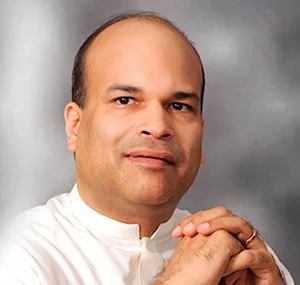
(Milinda Moragoda is a former Cabinet Minister and diplomat from Sri Lanka and founder of the Pathfinder Foundation, a strategic affairs think tank, can be contacted via email@milinda. This was published ndtv.com on 2026.03.1
by Milinda Moragoda

Dr. B.J.C. Perera (Dr. BJCP) in his article ‘Language: The symbolic expression of thought’ (The island 10.03.2026) delves deeper into an area that he has been exploring recently – childhood learning. In this article he writes of ‘a trilingual Sri Lanka’, reminding me of an incident I witnessed some years ago.
Two teenagers, in their mid to late teens, of Muslim ethnicity were admitted to the hospital late at night, following a road traffic accident. They had sustained multiple injuries, a few needing surgical intervention. One boy had sustained an injury (among others) that needed relatively urgent attention, but in itself was not too serious. The other had also sustained a few injuries among which one particular injury was serious and needed sorting out, but not urgently.
After the preliminary stabilisation of their injuries, I had a detailed discussion with them as to what needed to be done. Neither of them spoke Sinhala to any extent, but their English was excellent. They were attending a well-known international school in Colombo since early childhood and had no difficulty in understanding my explanation – in English. The boys were living in Colombo, while their father would travel regularly to the East (of Sri Lanka) on business. The following morning, I met the father to explain the prevailing situation; what needs to be done, urgency vs. importance, a timeline, prioritisation of treatment, possible costs, etc.
Doctor’s dilemma
The father did not speak any English and in conversation informed me that he had put both his boys into an International School (from kindergarten onwards) in order to give them an English education. The issue was that the father’s grasp of Sinhala was somewhat rudimentary and therefore I found that I could not explain the differences in seriousness vs, urgency and prioritisation issues adequately within the possible budget restrictions. This being the case and as the children understood exactly what was needed, I then asked the sons to ‘educate’ the father on the issues that were at hand. The boys spoke to their father and it was then that I realised that their grasp of Tamil was the same as their father’s grasp of Sinhala!
In the end I had to get down a translator, which in this case was a junior doctor who spoke Tamil fluently; explained to him what was needed a few times as he was not that fluent in English, certainly less than the boys, and then getting him to explain the situation to the father.
What was disturbing was having related this episode at the time to be informed that this was not in fact not an isolated occurrence. That there is a growing number of children that converse well in English, but are not so fluent in their mother tongue. Is English ‘the mother tongue’ of this ‘new generation’ of children? The sad truth is no and tragically this generation is getting deprived of ‘learning’ in its most fundamental form. For unfortunately, correct grammar and syntax accompanied with fluency do not equal to learning (through a language). It is the natural process of learning two/three languages (0 to 5 years) that Dr. BJCP refers to as being bilingual/trilingual and is the underlying concept, which is the title of Dr. BJCP’s article ‘Language: The symbolic expression of thought’.
“Introduction into society”
It is critical to understand at a very deep level the extent and process of what learning in a mother tongue entails. The mother’s voice is arguably the first voice that a newborn hears. Generally speaking, from that point onwards till the child is ‘introduced into society’ that is the voice he /she hears most. In our culture this is the Dhorata wedime mangalyaya. Till then the infant gets exposed to only the voices of the immediate /close family.
Once the infant gets exposed to ‘society’ he /she is metaphorically swimming in an ocean of language. Take for example a market. Vendors selling their wares, shouting, customers bargaining, selecting goods, asking about the quality, freshness, other families talking among themselves etc. The infant is literally learning/conceptualizing something new all the time. This learning process happens continuously starting from home, at friends/relatives’ houses, get-to-gathers, festivals, temples etc. This societal exposure plays a dominant role as the child/infant gets older. Their language skills and vocabulary increase in leaps and bounds and by around three years of age they have reached the so-called ‘language explosion’ stage. This entire process of learning that the child undergoes, happens ‘naturally and effortlessly’. This degree of exposure/ learning can only happen in Sinhala or Tamil in this country.
Second language in chilhood
Learning a second language in childhood as pointed out by Dr BJCP is a cognitive gift. In fact, what it actually does is, deepens the understanding of the first language. So, this-learning of a second language- is in no way to be discouraged. However, it is critical to be cognisant of the fact that this learning of the second language also takes place within a natural environment. In other words, the child is picking up the language on his own. As readily illustrated in Dr. BJCP’s article, the home environment where the parents and grandparents speak different languages. He or she is not being ‘forcefully taught’ a language that has no relevance outside the ‘environment in which the second language is taught’. The time period we (myself and Dr. BJCP) are discussing is the 0 to 5-year-old.
It does not matter whether it is two or three languages during this period; provided that it happens naturally. For as Dr. BJCP states in his article ‘By age five, they typically catch up in all languages…’ To express this in a different way, if the child is naturally exposed to a second /third language during this 0 to 5-year-old period, he /she will naturally pick it up. It is unavoidable. He /she will not need any help in order for this to happen. Once the child starts attending school at the age of 5 or later, then being taught a second language formally is a very different concept to what happens before the age of 5.
The tragedy is parents, not understanding this undisputed significance of ‘learning in/a mother tongue’, during the critical years of childhood-0 to 5; with all good and noble intentions forcefully introduce their child to a foreign tongue (English) that is not spoken universally (around them) i. e., It is only spoken in the kindergarten; not at home and certainly nowhere, where the parents take their children.
Attending school
Once the child starts attending school in the English medium, there is no further (or minimal) exposure to his /her mother tongue -be it Sinhala or Tamil. This results in the child losing the ability to converse in his/her original mother tongue, as was seen earlier on. In the above incident that I described at the start of this article, when I finally asked the father did he comprehend what was happening; his eyes filled with tears and I did wonder was this because of his sons’ injuries or was it because his decisions had culminated in a father and a son/s who could no longer communicate with each other in a meaningful way.
Dr BJCP goes on to state that in his opinion ‘a trilingual Sri Lanka will go a long way towards the goals and display of racial harmony, respect for different ethnic groups…’ and ‘Then it would become a utopian heaven, where all people, as just Sri Lankans can live in admirable concordant synchrony, rather than as a splintered clusters divided by ethnicity, language and culture’. Firstly, it must be admitted from the aspect of the child’s learning perspective (0 to 5 years); an environment where all three languages are spoken freely and the child will naturally pick up all three languages (a trilingual reality) does not actually exist in Sri Lanka.
However, the pleasant practical reality is that, there is absolutely no need for a trilingual Sri Lanka for this utopian heaven to be achieved. What is needed is in fact not even a bilingual Sri Lanka, but a Sri Lanka, where all the Sinhalese are taught Tamil and vice versa. Simply stated it is complete lunacy– that two ethnic communities that speak their own language, need to learn another language that is not the mother tongue of either community in order to understand one another! It is the fact that having been ruled by the British for over a hundred years, English has been so close to us, that we are unable to see this for what it is. Imagine a country like Canada that has areas where French is spoken; what happens in order to foster better harmony between the English and French speaking communities? The ‘English’, learn to speak French and the ‘French’ learn to speak English. According to the ‘bridging language theory of Sri Lanka’, this will not work and what needs to happen is both communities need to learn a third language, for example German, in order to communicate with one another!
Learning best done in mother tongue
eiterating what I said in my previous article – ‘Educational reforms: A Perspective (The Island 27.02.2026) Learning is best done in one’s mother tongue. This is a fact, not an opinion. The critical thing parents should understand and appreciate is that the best thing they can do for their child is to allow/encourage learning in his/her mother tongue.
This period from 0 to 5 years is critically important. If your child is exposed naturally to another language during this period, he /she will automatically pick it up. There is no need to ‘forcefully teach’ him /her. Orchestrating your child to learn another language, -English in this instance- between the ages of 0 to 5 at the expense of learning in his /her mother tongue is a disservice to that child.
by Dr. Sumedha S. Amarasekara
APPRECIATION
On Friday, the 20th of March, Vijitha Senevirathna would have celebrated his 85th birthday if not for his sad passing away nearly a year ago.
The passing of Vijitha was a moment of great sorrow to all who knew him.
He was my classmate from Montessori to pre-university at Maris Stella College, Negombo. As a Maristonian, Vijitha excelled in his academic studies.
Eventually, he entered the Law College and practised as an Attorney-at-Law and Notary Public for over 50 years.
As an Attorney-at-Law, Vijitha earned the respect of the judiciary and a wide circle of clients. He upheld the highest and most cherished values of the legal profession and earned the trust of all who knew him. His 50th anniversary in the noble profession of law was celebrated with much pageantry, amidst a distinguished gathering of friends, relations, clerics, and the rich and famous of Sri Lanka.
Vijitha dearly loved his proud wife Nirmali and his six children, who are in the highest professions in Sri Lanka. He inculcated among his children professional efficiency, diligence, and honesty.
We who associated closely with Vijitha miss his warm friendship, sense of humor, and animated conversation. He was a raconteur, and people gathered around him and listened to his narrations and tales of yore, especially at the many celebrations at his residence in Dehiwala, where the waters of Scotland flowed generously.
I have personally admired Vijitha’s patience, grit, and lifetime achievements, despite a physical dysfunctionality he suffered over his lifetime.
For Vijitha, the song has ended, but the melody lingers on, in the words of the popular composer Irving Berlin.
Merrick Gooneratne

Devine’s all-round masterclass hands New Zealand 2-1 series lead

Senegal and Morocco tied by religion and trade but divided by AFCON fallout

Showers expected in the Central, Sabaragamuwa and Uva provinces and in Galle, Matara, Mannar, Anuradhapura and Vavuniya districts after 2.00 pm.

CIABOC tells court Kapila gave Rs 60 mn to MR and Rs. 20 mn to Priyankara

Opposition moves no-faith motion against Energy Minister Kumara Jayakody

NJC takes up cudgels on behalf of Sallay, who played pivotal role in combating terrorism

‘Dates have the highest sugar content to fight Coronavirus’

Sunday Island 27 December – Headlines

#SundayIsland 17th December – Headlines

Sunday Island – 28th March

Sunday Island Headlines – 21 March

Sunday Island – 21st February – Headlines
-

 Business4 days ago
Browns EV launches fast-charging BAW E7 Pro at Rs. 5.8 million
-

 Life style5 days ago
From culture to empowerment: Indonesia’s vision for Sri Lanka
-

 News2 days ago
CIABOC questions Ex-President GR on house for CJ’s maid
-
 Business6 days ago
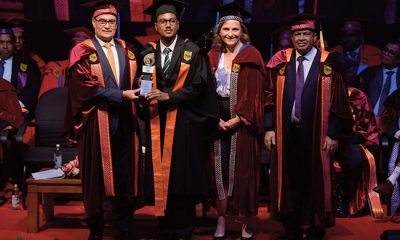
Sri Lanka Institute of Information Technology raises the bar for academic excellence
-

 Life style5 days ago
Ranjith Fernando celebrates cricketing journey with Hob Nails to Spikes
-

 Latest News5 days ago
QR code system will be implemented for fuel with effect from 06.00 a.m. today (15th)
-

 News3 days ago
Australian HC debunks misleading travel risk claims for Sri Lanka
-

 News3 days ago
Sri Lankan marine scientist Asha de Vos honoured at UNGA opening