
News
CPC unions all out to scuttle restructuring bid


By Rathindra Kuruwita
The Ceylon Petroleum Corporation (CPC) trade unions yesterday (18) warned that they would go all out to end the political careers of those who would vote for the Petroleum Products (Special Provisions) Amendment Bill tabled in Parliament.
Most trade unions of the CPC were on strike yesterday although the government made the petroleum sector an essential service. Fuel was not distributed from Kolonnawa or Muthurajawela terminals.
President of the Petroleum Public Employees Union Asoka Ranwala said that the Petroleum Products (Special Provisions) Amendment Bill, if passed, would destroy the CPC.
Ranwala said that CPC unions had filed a case against the Bill, but the Minister of Power and Energy, Kanchana Wijesekera, had not even discussed the proposed amendments with them.
“The Minister seems to think that he can manage the power and energy sector with Twitter. The Bill will have serious consequences on the CPC and when one tries to make major changes to a strategic sector, all stakeholders must be consulted,” he said.
Meanwhile, SLPP Progressive Trade Unions National Centre held a demonstration at the Polduwa entrance to the Parliament, warning MPs not to vote for the act.
Head of the union, Bandula Saman Kumara, said that in the past 18 months successive line ministers and their acolytes have tried to convince the people that the CPC is making a loss due to the ‘high’ salaries and overtime.
“A lot of people say we should privatise the CPC. This is the result of a sustained campaign, which was started by Minister Udaya Gammanpila. The current minister is a master of misinformation. The government took steps to close the Sapugaskanda Oil Refinery. If it was functioning and if the government had imported quality crude oil, we could have minted money by selling jet fuel. In the early 2000s, they took bunkering away from the CPC. With this Act, they are trying to take away jet fuel from the CPC,” he said.
Kumara warned that if the petroleum sector became a monopoly of the private sector, the prices would rise drastically and the industries would collapse.
“We are a pro-SLPP union and we did a lot of work to bring the current government into power. However, they have become an embarrassment for everyone. We would like to warn the government, and Opposition MPs, that if you vote in favour of this Bll, we will not stop until your political careers are over,” he said.
Co-secretary of the union, Jayantha Pareigama said that following price revisions, the CPC had been making profits. In July, the CPC made 6.3 billion rupees in profit, he said,
“In August, the CPC earned two billion rupees in profit. In September, the profit was five billion. Why are you trying to privatize this? Is it because you have cut a deal with friends to make a quick buck?”



The Minister of Education, Higher Education and Vocational Education Prime Minister Dr. Harini Amarasuriya stated that aligning with the development activities carried out under the new education reforms, decisions at the rural level will not be taken from Colombo and plans should be sent based on the requirements of the rural level through the District Coordination Committees by structural committees. She further noted that all officials, from the Ministry of Education down to the school level, must commit to working efficiently and with a human-centered approach.
The Prime Minister made these remarks while addressing a discussion held with education authorities of the Hambantota District on Thursday [February 12] at the auditorium of the Hambantota District Secretariat regarding the new education reforms and prevailing issues in the education sector.
During the meeting, the Prime Minister provided an opportunity for education authorities including chief prelates of pirivenas, zonal education directors, teacher advisors, and principals to present the challenges they face and officials raised concerns including salary disparities among principals, developing school infrastructure, issues arising from the division between national and provincial schools, and uplifting pirivena education.
Further elaborating, Prime Minister stated:
“The new education reforms were initiated from 2025 through dialogue, consultations, and the collection of necessary data. As officials, you have extended your support to us during this process. We have embarked on a difficult and long journey, and we look forward to your continued cooperation.
We initiated these reforms in response to a strong social demand. Many have attempted such reforms at different times. Within our political vision, we understood clearly that if this country is to be rebuilt, an educational transformation is essential. The human resource is the most valuable resource of this country and it should be nurtured properly.
Solutions to many of the crises our country faces lie within the education system. Addressing the issues in economic challenges, social issues, drug abuse, violence, the breakdown of political culture, corruption, waste, and even the deterioration of human relationships all lie within the education.
In order to achieve the transformation we envision as a government, that an education transformation is necessary.
This education system should focus on reducing the pressures within the system, minimize school dropouts, increase employability, and instill confidence in children about their future.
There are disparities within the school system, between rural and urban schools, national and provincial schools, and difficult schools. This should not happen. All children must have equal opportunities.
Decisions regarding the establishment of schools or expansion of classes should not be political decisions. They must be decisions taken through Structural Committees. Those representatives understand their divisions, village economies, and population dynamics. Based on your decisions and assessments of needs, prepare the plans, discuss them with the District Coordination Committees, and submit them to us. We will then take steps to provide the necessary allocations and other support. We will not make decisions for the rural level while sitting in Colombo.
We are taking steps to minimize salary disparities. A Cabinet paper regarding the salary anomalies of principals has already been prepared for submission. Steps are also being taken to introduce new reforms in pirivena education through the Pirivena Committee of the Ministry of Education. We require the support of the chief prelates in this regard.
A significant number of teachers turn to human rights due to delays caused by inefficiency. Therefore, all officials from the Ministry of Education down to the schools must commit to working efficiently and in a humane manner”
The discussion was attended by Chief prelates of pirivenas, deputy ministers, Members of Parliament, zonal directors, principals, and other education sector officials.


[Prime Minister’s Media Division]

The Landslide Early Warning Center of the National Building Research Organisation [NBRO] has issued landslide early warnings to the districts of Kandy and Nuwara Eliya valid from 06:00 hrs on 13.02.2026 to 06:00 hrs on 14.02.2026
Accordingly,
Level II [AMBER] landslide early warnings have been issued to the Divisional Secretaries Divisions and surrounding areas of Walapane and Nildandahinna in the Nuwara Eliya district.
Level I [YELLOW] landslide early warnings have been issued to the Divisional Secretaries Divisions and surrounding areas of Pathahewheta in the Kandy district.
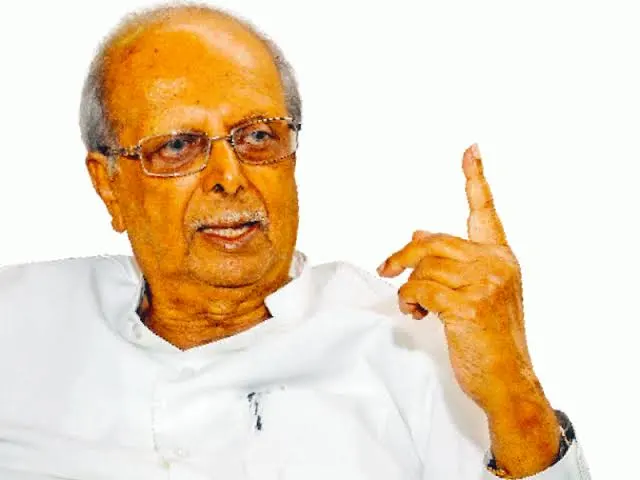
Former Minister Professor Tissa Vitharana has passed away at the age of 91, according to family sources

“We will not make decisions for rural level schools while sitting in Colombo” – PM

USA need to overturn history to beat Netherlands and stay alive

Paul Stirling ruled out of World Cup with knee injury

The silent pace revolution in Sri Lanka

Canada, UAE face each other for only the second time in T20Is

Landslide Early Warnings issued to the Districts of Kandy and Nuwara Eliya

‘Dates have the highest sugar content to fight Coronavirus’

Sunday Island 27 December – Headlines

#SundayIsland 17th December – Headlines

Sunday Island – 28th March

Sunday Island Headlines – 21 March

Sunday Island – 21st February – Headlines
-
 Features5 days ago
My experience in turning around the Merchant Bank of Sri Lanka (MBSL) – Episode 3
-

 Business6 days ago
Zone24x7 enters 2026 with strong momentum, reinforcing its role as an enterprise AI and automation partner
-

 Business5 days ago
Remotely conducted Business Forum in Paris attracts reputed French companies
-

 Business5 days ago
Four runs, a thousand dreams: How a small-town school bowled its way into the record books
-

 Business5 days ago
ComBank and Hayleys Mobility redefine sustainable mobility with flexible leasing solutions
-
 Business2 days ago
Autodoc 360 relocates to reinforce commitment to premium auto care
-

 Midweek Review2 days ago
A question of national pride
-

 Business6 days ago
HNB recognized among Top 10 Best Employers of 2025 at the EFC National Best Employer Awards