
Business
COVID-19 response: Emirates SkyCargo to set up world’s largest GDP compliant air cargo hub


Emirates SkyCentral DWC has extensive temperature controlled facilities for storing and distributing vaccines
The freight division of Emirates has also set up a dedicated rapid response team to coordinate requests from the various partners involved in the international vaccine distribution ecosystem and to streamline the carrier’s response to vaccine transportation requests.
Sheikh Ahmed bin Saeed Al Maktoum, Emirates chairman and Chief Executive said: “Dubai is well positioned to serve as a gateway and distribution hub for COVID-19 vaccines to the rest of the world. We have the infrastructure and logistics connections, and a geographic location that puts markets representing more than two-thirds of the world’s population within an 8-hour flying radius. Over the years, through our continuous investment in capabilities and processes for the transport of temperature sensitive pharmaceuticals, Emirates SkyCargo has managed to position Dubai amongst major global pharmaceutical customers as the year-round preferred point of transit for their valuable cargo. Setting up a dedicated airside hub for COVID-19 vaccines is a keystone project harnessing our network, reach and competencies to positively impact the lives of people around the world.”
Emirates SkyCargo’s vaccine hub in Dubai South will be the largest dedicated airside facility in the world for COVID-19 vaccines. The Dubai hub will allow the air cargo carrier to fly in vaccines from manufacturing sites globally, store and prepare shipments for regional and global distribution.
Emirates SkyCentral DWC has over 4,000 square metres of temperature controlled GDP certified dedicated pharma storage area allowing for large scale storage and distribution of the potential COVID-19 vaccines. Overall, it is estimated that the facility can hold around 10 million vials of vaccine at a 2-8 degrees Celsius temperature range at any one point of time.
The state of the art infrastructure at Emirates SkyCentral DWC is also complemented by one of the world’s largest fleet of Cool Dollys helping protect temperature sensitive cargo during transit between the aircraft and cargo terminal. Additionally, the availability of a large number of temperature controlled trucking docks and the proximity of the terminal to the aircraft parking gates will ensure rapid and efficient clearance of cargo for further distribution.
In addition to cold storage, Emirates SkyCargo will also offer dedicated zones for value-added services such as re-icing and repackaging of vaccines for global distribution for its customers.
The extensive size of the facility, which can potentially handle millions of vaccine doses, along with the creation of a dedicated team to handle and execute requests will allow Emirates SkyCargo to be able to effectively handle the large volume of time critical requests for cross-border vaccine movement that will follow the successful introduction of a vaccine.


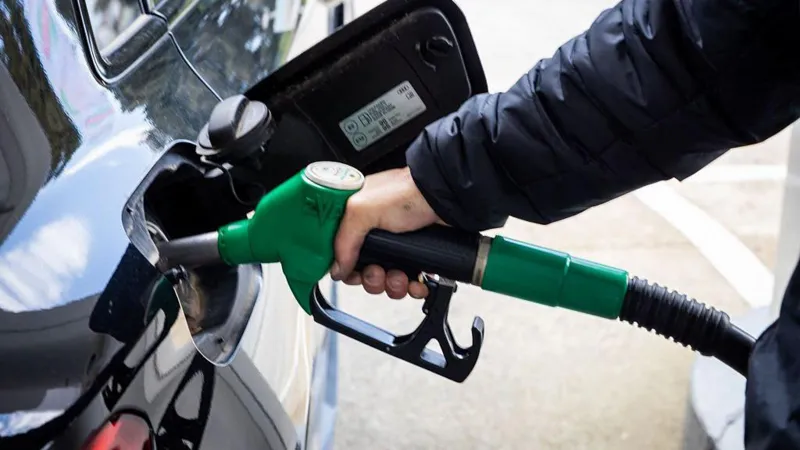
Major stock markets in Asia slumped on Monday after Washington and Tehran threatened to escalate hostilities, as the Iran war enters its fourth week.
Japan’s benchmark Nikkei 225 index was almost 3.6% lower, while South Korea’s Kospi fell by almost 6%.
US President Donald Trump warned on Saturday that he would “obliterate” Iranian power plants if Iran did not open the key Strait of Hormuz shipping route. Iran said it would respond to any such strikes by targeting key infrastructure in the region, including energy facilities.
Japan and South Korea have been particularly impacted by the conflict, as they are heavily dependent on oil and gas that would normally pass through the strait.
Iran has effectively blocked the Strait of Hormuz, one of the world’s busiest shipping channels, since the US and Israel attacked the country on 28 February.
About 20% of the world’s oil and liquefied natural gas (LNG) usually passes through the waterway – and the war has sent global fuel prices soaring.
On Monday, International Energy Agency chief Fatih Birol said that the war could see the world facing its worst energy crisis in decades.
Speaking at the National Press Club in Australia’s capital, Birol compared the current energy crisis to those of the 1970s and the impact of Russia’s 2022 invasion of Ukraine.
“This crisis as things stand is now two oil crises and one gas crash put all together,” he said.
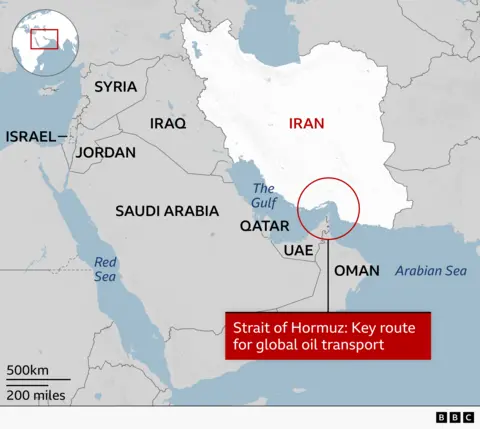
“If Iran doesn’t FULLY OPEN, WITHOUT THREAT, the Strait of Hormuz, within 48 HOURS from this exact point in time, the United States of America will hit and obliterate their various POWER PLANTS, STARTING WITH THE BIGGEST ONE FIRST!,” Trump said in a social media post published at 23:44 GMT Saturday.
That threat came after Iranian missiles hit the Israeli city of Dimona, and shortly before a second attack on the town of Arad nearby.
Mohammad Bagher Ghalibaf, the speaker of the Iranian parliament, said on Sunday that energy and desalination infrastructure in the region would be “irreversibly destroyed” if his country’s power plants were attacked.
Such action would significantly escalate the conflict, which has already disrupted global energy supplies, pushing up prices and causing fuel shortages.
Other markets in the Asia-Pacific region were also lower on Monday.
Hong Kong’s Hang was down by almost 3.5% and the Shanghai Stock Exchange Composite index 2.5% lower.
Global oil prices were broadly steady, with Brent crude 0.45% higher at $112.69 (£84.56) a barrel and US-traded oil was up by 0.7% at $98.93.
[BBC]

Human resources remain the biggest challenge despite advanced logistics
Industry-wide cost pressures are also beginning to surface
In Sri Lanka’s pharmaceutical trade, the journey of a medicine does not end when it arrives at the port. It must still travel safely across the island – through regulated warehouses, temperature-controlled transport and complex distribution routes – before reaching the pharmacy shelf where patients need it.
That journey is increasingly being powered by Healthguard Distribution, the pharmaceutical logistics arm of Sunshine Holdings, whose expanding distribution network now plays a critical role in ensuring the reliable movement of medicines across the country.
At the centre of that network is the company’s Western Regional Distribution Centre (WRDC), a temperature-controlled logistics hub designed to support the safe storage and efficient distribution of pharmaceutical products across the Western Province.
Spanning nearly 18,920 square feet, the facility functions as a key node in the company’s islandwide distribution system. Originally acquired in 2008 to serve as the main warehouse for Swiss Biogenic Ltd., the site evolved alongside the company’s growing operations. Following a major upgrade programme that began in July 2024, the facility recommenced operations in July 2025 as a fully compliant regional distribution centre aligned with international quality standards.
According to Sunshine Pharmaceuticals and Healthguard Distribution Chief Executive Officer Shantha Bandara, the company’s logistics model is built around a simple but comprehensive concept.
“Our approach is ‘Port to Pharmacy’,” Bandara said during a recent media visit. “We collect pharmaceutical consignments from the Port of Colombo, clear them through Customs, store them under regulated conditions and then distribute them to pharmacies across the country. Importers and manufacturers do not have to worry about logistics – we manage the entire process.”
The distribution network today serves over 4,500 authorised pharmaceutical outlets, including pharmacies, hospitals, channeling centres, supermarkets and SPC Osusala outlets. Operations span 150 main towns and 466 sub towns, supported by 111 active delivery routes and seven regional distribution centres located across the island.
Within that system, the WRDC is the largest and among the most technologically advanced hubs.
The facility maintains strict cold-chain conditions for temperature-sensitive medicines. Its cold room capacity has been expanded from 15 cubic metres to 30 cubic metres, enabling compliant storage of products such as insulin within the required 2–8°C range. Online temperature monitoring systems operate across all storage zones while data loggers are used for insulin deliveries to ensure product integrity throughout the supply chain.
Delivery vehicles are also equipped with GPS tracking and temperature monitoring systems, allowing real-time visibility of shipments.
Automation and digital systems are increasingly shaping the operation. Software automation supports invoicing and customer credit verification, while sales teams use digital tools for order canvassing. The company’s enterprise systems provide real-time inventory and accounting visibility, supported by data dashboards used for operational decision-making.
To safeguard continuity, the facility is equipped with a high-capacity backup generator and dedicated on-site fuel storage, ensuring cold rooms, monitoring systems and warehouse operations remain functional even during power outages.
Behind the infrastructure is a workforce of 102 employees, supported by a specialised 15-member value-added services team trained in Good Distribution Practice (GDP), cold-chain management, safety and emergency response.
Yet despite the sophisticated logistics and infrastructure, Bandara told The Island that the most persistent operational challenge lies in human resources.
“We have the infrastructure, the logistics systems and the operational capability,” he noted. “However, maintaining the required number of skilled employees is an ongoing challenge because the labour market is constantly fluctuating. Our HR team is continuously recruiting and training to keep the workforce at the required level.”
Industry-wide cost pressures are also beginning to surface. Company officials noted that rising fuel prices could eventually affect transportation and electricity costs within the distribution chain, which may in turn influence pharmaceutical logistics expenses in the short term.
Still, the broader goal of the company remains unchanged – ensuring that medicines reach patients safely and on time.
From the moment a shipment arrives at the Port of Colombo to the point it reaches a pharmacy shelf, the process depends on precision logistics, regulatory compliance and operational discipline. For Sri Lanka’s healthcare supply chain, Healthguard Distribution’s growing network is becoming a key driver of that journey from port to pharmacy.
By Sanath Nanayakkare

Singer Sri Lanka, the nation’s foremost retailer of consumer durables, celebrates a truly historic milestone at the SLIM-KANTAR People’s Awards 2026, securing a prestigious triple victory while marking 20 consecutive years as the People’s Brand of the Year, an achievement made possible by the enduring trust and loyalty of Sri Lankan consumers.
This year, SINGER was honoured with yet another triple win with People’s Brand of the Year, Youth Brand of the Year and People’s Durables Brand of the Year at the awards ceremony. This remarkable recognition reflects the deep and lasting relationship the brand has built with Sri Lankans across generations, standing as a symbol of trust in homes across the island.
Janmesh Antony, Director – Marketing said: “This award belongs to our customers. Being recognised as People’s Brand for 20 years, alongside Youth and Durables Brand, reflects our commitment to staying relevant across generations.”
Mahesh Wijewardene, Group Managing Director said: “Twenty consecutive years as the People’s Brand is humbling and inspiring. This milestone strengthens our commitment to keeping customers at the heart of everything we do.”

Two killed when Air Canada jet hits fire truck at NYC’s LaGuardia Airport

Bus fares increased by 12.19% from midnight today [23]
Public will not be served as Computer system failure at Department of Registration of Persons

Trump says he is postponing strikes on Iran power plants after ‘productive’ talks on ending war

Asia stocks slide as US and Iran threaten to escalate war

Heat Index at Caution Level in the Western, Sabaragamuwa, Southern and North-western provinces and in Anuradhapura, Mannar and Vavuniya districts

‘Dates have the highest sugar content to fight Coronavirus’

Sunday Island 27 December – Headlines

#SundayIsland 17th December – Headlines

Sunday Island – 28th March

Sunday Island Headlines – 21 March

Sunday Island – 21st February – Headlines
-

 News6 days ago
CIABOC questions Ex-President GR on house for CJ’s maid
-

 News7 days ago
Sri Lankan marine scientist Asha de Vos honoured at UNGA opening
-

 News7 days ago
Australian HC debunks misleading travel risk claims for Sri Lanka
-

 News5 days ago
Bailey Bridge inaugurated at Chilaw
-
 Latest News7 days ago
Wednesdays declared a government holiday with effect from 18th March
-

 News5 days ago
Pay hike demand: CEB workers climb down from 40 % to 15–20%
-

 News4 days ago
CIABOC tells court Kapila gave Rs 60 mn to MR and Rs. 20 mn to Priyankara
-

 Editorial6 days ago
Couple QR-based quota with odd-even rationing