
News
Covid-19 pandemic can be overcome if it’s dealt as a National Challenge

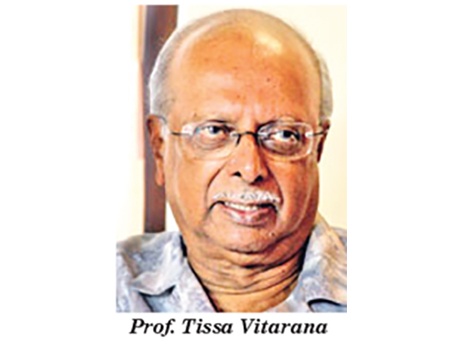
It is clear that the coronavirus pandemic in Sri Lanka has gone beyond the patient and group of contacts (“Cluster”) stage, and is now widespread around the country and is in the stage of “Community” spread. Thus, everyone must assume that anyone can be a source of infection, and must learn to protect oneself.
While proper contact tracing and isolation, which was adequate at the early stage must continue, a community-based approach is also necessary. There are as yet many areas, specially rural, that are free of the virus, but it will not be long before they too can have cases. The more crowded areas, like towns, will have many more cases. The government must take a policy decision to ensure that people avoid forming crowds.
For example clinic patients in government hospitals form crowds to obtain their medicines. Using the personnel of the Health Department, it should be possible to supply the necessary medicine as indicated in their clinic records to the patients on the due date once a month. Similarly by using digital technology collection of crowds in offices and schools must be avoided. The Covid-19 risk could be minimized if most public and social activities are conducted digitally so that personal contact is avoided. Thereby the efficiency of the public and private services as a whole can be done more speedily and efficiently.
The emergence of a new strain of the virus causing Covid-19 in the UK, which is more transmissible (that is spreads faster) has led to a substantial increase in the occurrence of cases in the UK. Naturally, there has been an increase in deaths. But, as the case fatality rate does appear to have gone up, it would appear that the severity has not increased. But in a virus that is prone to undergo mutations, this too can occur. This is why sensible countries even in Europe have stopped all flights to and back from the UK. I am glad that Sri Lanka too has done so, but it must ensure that UK residents do not come here indirectly.
Frequent sequencing of Covid viruses isolated in Sri Lanka must be done so as to detect the entry of the UK strain of the virus or any other varieties as early as possible so that effective preventive action can be taken immediately. It is regrettable that by not performing sequences since the beginning of December, we are still unable to determine whether the UK strain has entered our country. During an epidemic, such lapses should not be allowed to occur.
It is becoming evident that the world, including Sri Lanka, will have to learn to live with the virus for a long period. How long depends on the correctness of national policy decisions and the strict inculcation of health rules. Their implementation as a habit by the entire population must be achieved by an intensive health education program. If everyone in society properly understands the nature of the virus and its mode of spread and ensures that he or she does not get infected, then the virus will automatically die out.
This is because the Covid-19 virus cannot multiply on its own but can do so only in live cells of the human respiratory tract, according to current knowledge. The pandemic will then automatically come to an end in Sri Lanka at minimal cost.
The health education program focuses on ensuring that everyone follows the three health rules (wearing a mask when outside one’s house, observing the distance rule of at least one meter, better two, and washing hands with soap and water frequently, specially after touching any object that anyone else has touched). These three rules must be practiced as a habit by everyone. This message must reach every house, both urban and rural.
Trade unions must educate their members and insist that management gives the necessary support. The teachers must drill it into the mind of every student. I have published a leaflet in all three languages with illustrations so that even a child can understand. I have published over 100,000 leaflets and distributed them to the best of my ability with the help of my party, the LSSP.
The Health Department could print and distribute that leaflet as it is, or suitably modified. The mass media and social media should be fully utilized for this program.
As this must become a national campaign to eliminate the Covid-19 virus, everyone must be drawn into it. A Committee of Party Leaders must be established, possibly in Parliament, which will make all political parties and their supporters participants in the campaign. We must stop criticizing each other but must come together as one nation fighting a common enemy.
Cooperation should extend down to every village and urban slum. Anti-Covid Committees should be set up at village and workplace levels and the people should help each other e.g. provide food for those who need it. The rest of the village can help those who are quarantined. They can ensure that the maximum support is obtained from the state agencies and services and supplies are distributed to the needy. The PHIs, the PHNs, the midwives and other health staff should play a leading role in health education as they are used to delivering health messages to the people and the people have confidence in them and will listen and absorb what they say. A cooperative spirit must be promoted at all levels.
But, thereafter, wise policies must be carried out. If in addition to Sri Lankan citizens living abroad being allowed to return, tourists are also being encouraged to come as an important source of foreign exchange, then the exclusion of all infected persons must be ensured. If anyone escapes the preventive net, then the cluster control techniques must be strictly enforced. In particular, the entry of the more transmissible strains from abroad must be prevented. This is on the presumption that no animal host exists or appears, but to detect this if it exists, an animal surveillance program must be carried out worldwide, Sri Lanka included, continuously.
But the ultimate solution is the development of an effective and safe vaccine and ensuring that every person is properly immunized. At least 80% of the population needs to be immunized if the chain of transmission is to be interrupted. The fact that this is a new virus to the world, and as there is no herd immunity, more frequent administration of vaccine may be necessary.
The various vaccines that have been developed very rapidly (in less than one year when the usual minimum is about seven years – reflect the advances in new technology) have not had the time to be fully tested. But, it is with time that the duration of the protection given by these vaccines after two shots can be properly determined.
Therefore, it may be necessary to give many more shots and even as frequently as every year if the immunity developed is not sustained. The two mRNA vaccines developed in the USA, besides the excessive cost, are questionable on scientific grounds as mRNA vaccines have never been developed and used before and they may have side effects that could be serious. If we are getting vaccines from the WHO, the best option would be to obtain the Oxford/Zeneca vaccine which uses an Adenovirus as a vector, and there is no danger of untoured consequences. As this is being produced in India by the reputed Indian Serum Institute, it would be safer to get it from them as the price too will be very much lower. This would enable the Government to purchase the added requirement for at least 60% of the population, who do not get the vaccine supplied by WHO.
Finally, I must say something on the controversial question of the non-burial of Covid 19 victims. In my view, as a scientist, I would tend to permit burials as the risk of transmission through water is extremely remote and has as yet not been reported to have occurred. With the death of the Covid patient, the replication of the virus in the dead body ceases. Whatever virus may have been produced earlier would have died in a matter of hours, but certainly within a day. It would appear from the decision been taken by the Minister of Health, she wishes to make absolutely certain that there is no danger to society, even though there is no scientific evidence as yet to confirm that there is a risk to society.
– Prof. Tissa Vitarana


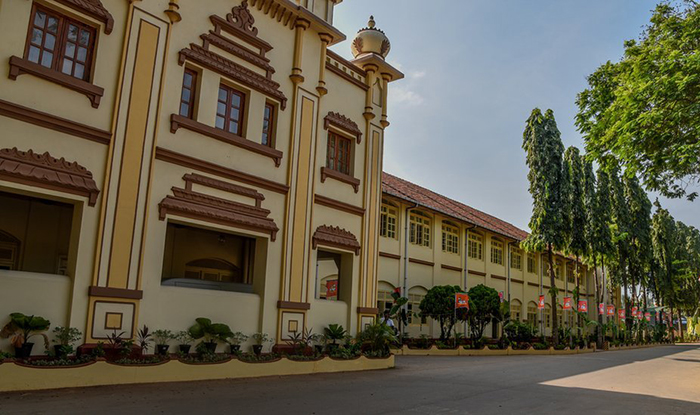
A thought-provoking lecture titled “When Ceylon Found Its Voice” was delivered by Avishka Mario Senewiratne, Editor of The Ceylon Journal, at the University of Jaffna. The event was organized by the Department of Linguistics and English and drew a keen audience of students and academics.
Senewiratne explored the development of 19th-century English newspapers and journals in Sri Lanka, with particular emphasis on the vibrant but understudied periodical culture of Jaffna. He highlighted how these publications contributed to shaping intellectual discourse and public opinion during a formative period in the island’s history.
The lecture was followed by an engaging discussion, during which several important questions and perspectives were raised. Participants from the North offered valuable insights, making the session a meaningful cultural and intellectual exchange.
Senewiratne noted that the Jaffna peninsula remains a largely untapped field for historical research and encouraged interested scholars and students to contribute their findings to The Ceylon Journal, fostering further collaboration and discovery.
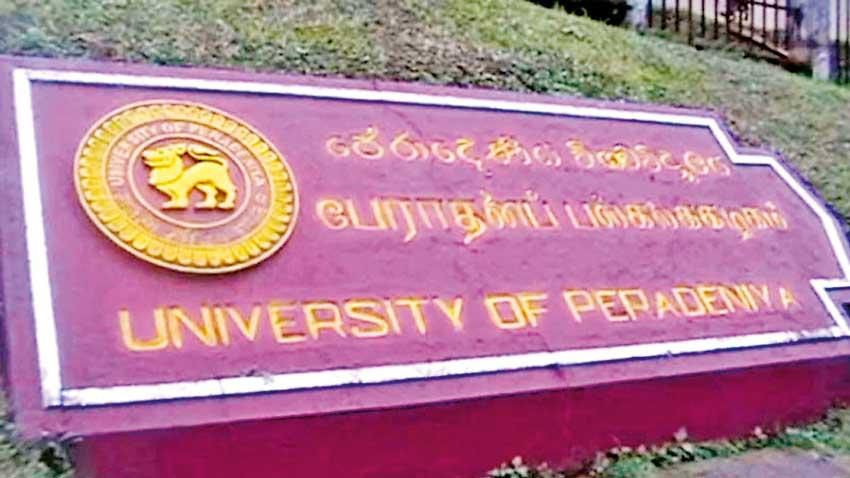
The 35th Annual General Meeting of the Alumni Association of the University of Peradeniya-Colombo Chapter will be held on Sunday March 29 from 09.30 am to 12.30 pm at the Main Auditorium (Sanhinda), Sri Lanka Institute of Development Administration (SLIDA), 28/10, Malalasekara Mawatha, Colombo 07, the organizers said.
For details, please visit the web site www.aaupcc.org or contact AAUPCC General Secretary Chandika Indikadahena (cindikadahena@gmail.com or 0715656384).
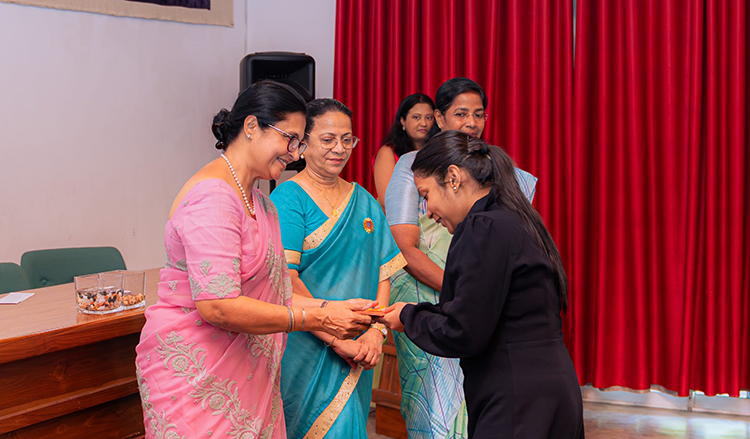
The Sri Lanka Federation of University Women celebrated International Women’s Day in its auditorium at Kitulwatte on March 7, 2026, at an event attended by academics, professionals, and other members of high achievement, including four past Presidents of the SLFUW, an SLFUW news release said.
Proceedings commenced with the traditional lighting of the oil lamp, the singing of the National Anthem, and a minute’s silence in memory of departed members followed by a welcome dance. Thereafter, SLFUW President, Engineer Lakmini Nonis made her address extending a warm welcome to the three guest speakers and the assembled gathering.
This year’s UN theme ‘Give to Gain’, has been the Federation’s mission in practice over the years, she said extolling the services rendered by the SLFUW during its 85-year history to help not only graduate women, but also the poor, the disadvantaged and physically impaired women and children of Sri Lanka.
However, much more remains to be done for their uplifting towards which university women must play an important role in advocating, promoting and ensuring the rights of women in our country are maintained, she said.
The distinguished chief guest on this occasion was Professor Chandrika Wijeyaratne, former Vice Chancellor of the University of Colombo, and a towering figure in Sri Lankan higher education, who currently serves as Vice Chancellor of the SLTC Research University.
In her speech, Professor Wijeyaratne drew from her experiences with the ‘girl-child’ and women in Sri Lanka, and the pathetic, helpless and horrific situations some of them are exposed to. Being vulnerable, they need protection, justice, and empowerment which is a continuous process, she said.
Dr. Lilangani de Silva, Consultant Radiologist, gave a power point presentation of the history of the IWD movement, and spoke on the topic ‘Do you regret being born a woman?’ Apparently not!
Dr. Krishanthi Anandawansa, Senior Lecturer in English at the Kotalawala Defence
University, provided an insightful perspective on the evolving role of women in specialized sectors, and the intersection of education, discipline, and career longevity.
In accord with the ‘Give to Gain’ policy, three scholarships were awarded to undergraduates who were severely affected by Cyclone Ditwah.
Mrs. Anjali Gamage, Head, Academic Affairs and Senior Lecturer at Curtin University, Colombo, compered the proceedings, while Mrs. Rukmani Samaranayake, delivered the vote of thanks noting that the American-born educationist, Mrs. Clara Motwani and a group of
selfless, educated ladies set up the SLFUW in 1941 to further the welfare of women in Sri Lanka.

The Iran War, Global Oil Crisis, and Local Options

President in Parliament

River of Life in Peril: Shantha Jayaweera’s Four-Decade Vigil in Boralugoda

Champa Stores Marks 70 Years of Trusted Service in Kandy

Dialog Voted Service Brand and Telecommunication Brand of the Year at SLIM-KANTAR People’s Awards 2026

Two Decades of Trust: SINGER Wins People’s Brand of the Year for the 20th Consecutive Time

‘Dates have the highest sugar content to fight Coronavirus’

Sunday Island 27 December – Headlines

#SundayIsland 17th December – Headlines

Sunday Island – 28th March

Sunday Island Headlines – 21 March

Sunday Island – 21st February – Headlines
-

 Business6 days ago
Browns EV launches fast-charging BAW E7 Pro at Rs. 5.8 million
-

 News4 days ago
CIABOC questions Ex-President GR on house for CJ’s maid
-

 News5 days ago
Sri Lankan marine scientist Asha de Vos honoured at UNGA opening
-

 Features6 days ago
Achievements of the Hunduwa!
-

 Latest News7 days ago
QR code system will be implemented for fuel with effect from 06.00 a.m. today (15th)
-

 News5 days ago
Australian HC debunks misleading travel risk claims for Sri Lanka
-

 Latest News5 days ago
Wednesdays declared a government holiday with effect from 18th March
-

 News3 days ago
Pay hike demand: CEB workers climb down from 40 % to 15–20%